
Building and maintaining safe gas distribution networks in Jordan requires reliable, field-proven welding equipment. Contractors, municipal utilities, and private gas service companies need butt fusion and electrofusion solutions that perform in hot summers, dusty sites, and remote desert locations while meeting international and local quality expectations.
Trusted Gas Line Welder Solutions for Jordan
Durability, precision, and ease of use are essential when selecting pipe welding machines for gas pipelines. Equipment designed for HDPE gas lines must deliver consistent joint strength, simple on-site operation, and long-term serviceability to support Jordan’s expanding distribution and infrastructure projects.
Core Machine Types
- Manual Butt Fusion Machines — compact and portable for small-diameter field repairs and remote village connections.
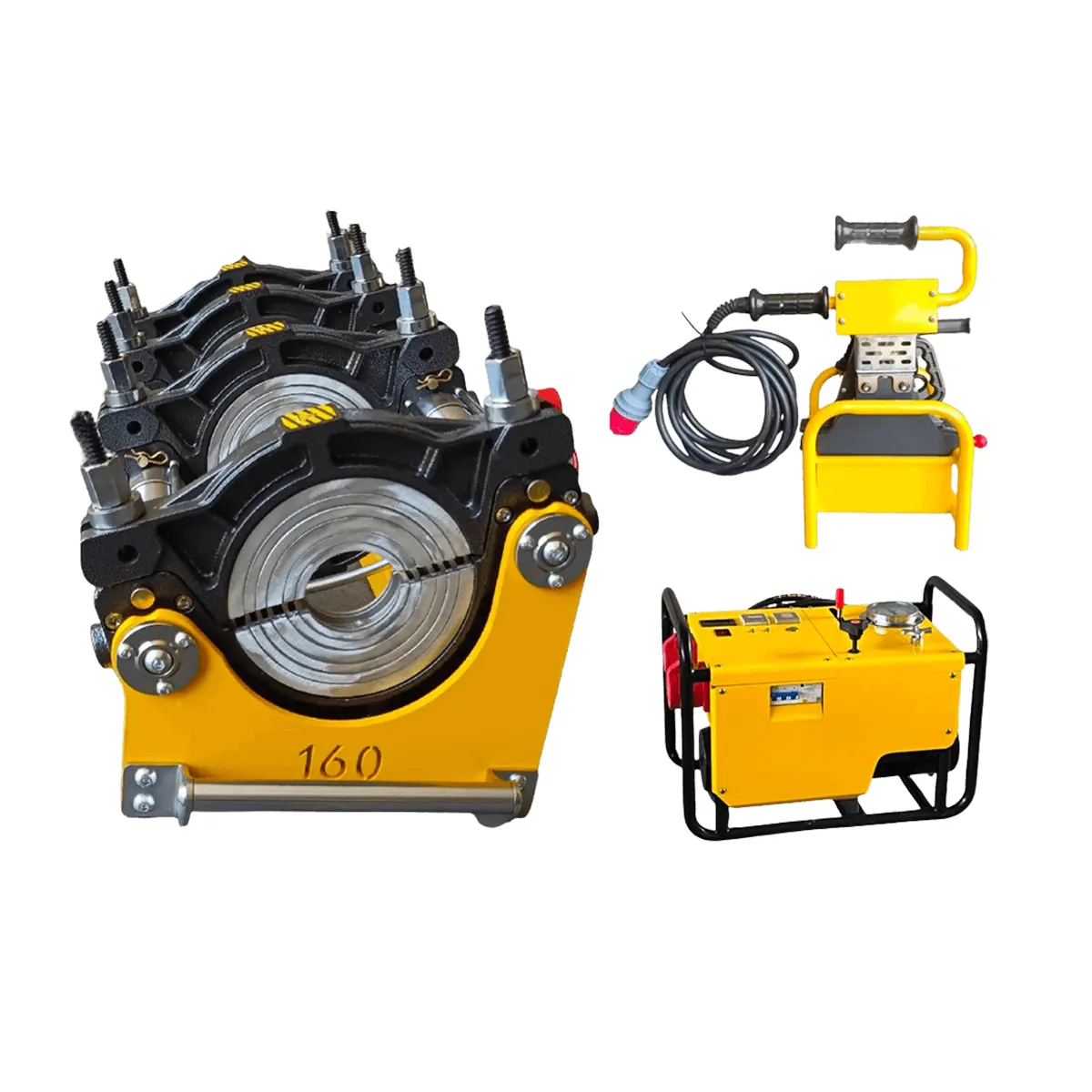
- Hydraulic Butt Fusion Machines — ideal for medium to large diameters on pipeline construction with higher force control and repeatability.
- Automatic/CNC Butt Fusion Machines — best for long production runs and factory-style welding where traceable process control is required.
- Electrofusion Units — suitable for fittings and smaller connections where controlled heating of couplers is preferred.
Why These Features Matter in Jordan
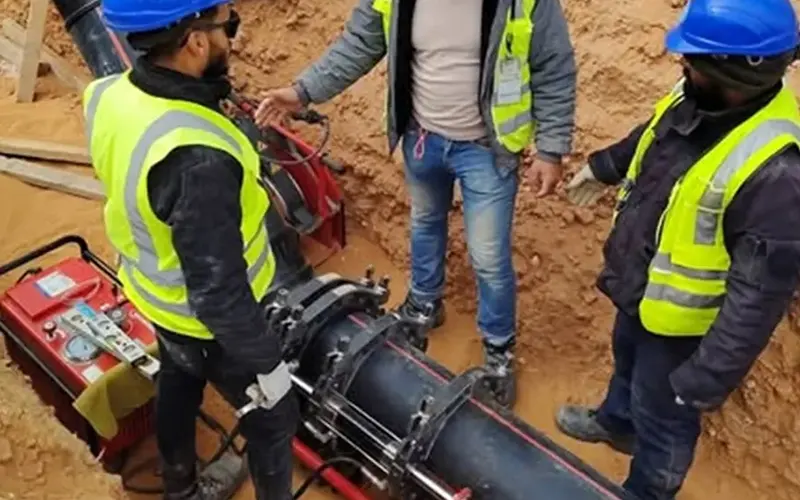
Jordan’s project sites vary from urban infrastructure upgrades in Amman to long rural gas feeder lines across arid terrain. Machines must:
- Operate reliably under high temperatures and dust exposure
- Be transportable for desert and mountainous access routes
- Support a wide pipe size range (small service lines to large distribution mains)
- Provide clear, auditable welding parameters for safety and regulatory compliance
Compare Machine Options
| Type | Pipe Range | Best For | Key Benefit |
|---|---|---|---|
| Manual Butt Fusion | 20–315 mm | Field repairs, service lines | Lightweight, portable |
| Hydraulic Butt Fusion | 63–2250 mm | Distribution mains, large networks | High force, consistent welds |
| Automatic/CNC Machines | 63–630+ mm | Factory welding, traceable projects | Process control, data logging |
Selecting the Right Machine — Practical Checklist
- Identify the typical pipe diameters used on Jordan sites and choose machines covering that range.
- Decide on portability vs. production capacity (manual for mobility, automatic for high-volume accuracy).
- Confirm available power sources on-site (generator compatibility, three-phase availability).
- Ask about spare parts availability and remote technical support for fast uptime.
- Verify welding logs and parameter export options to satisfy project QA/QC requirements.
Training, Standards, and After-Sales
Local teams benefit from operator training, certification of welders, and adherence to international best practices. Ensure any supplier commits to training and can provide spare parts quickly. Many Jordanian projects also require documentation showing compliance with international standards and site-specific safety protocols.
Getting Equipment in Jordan
For procurement, local distributors and regional partners can assist with customs, logistics, and on-site commissioning. JQ-Fusion offers a range of butt fusion and electrofusion machines suitable for gas pipeline work, backed by technical support and customizable options for Jordanian projects.
Quick Action Tips
- Match machine type to project scale before requesting quotes.
- Request references for projects completed in similar climate conditions.
- Prioritize vendors who provide training and spare parts kits for field service.
Equip your Jordan gas pipeline projects with the right welding technology to improve safety, speed, and long-term reliability.



