
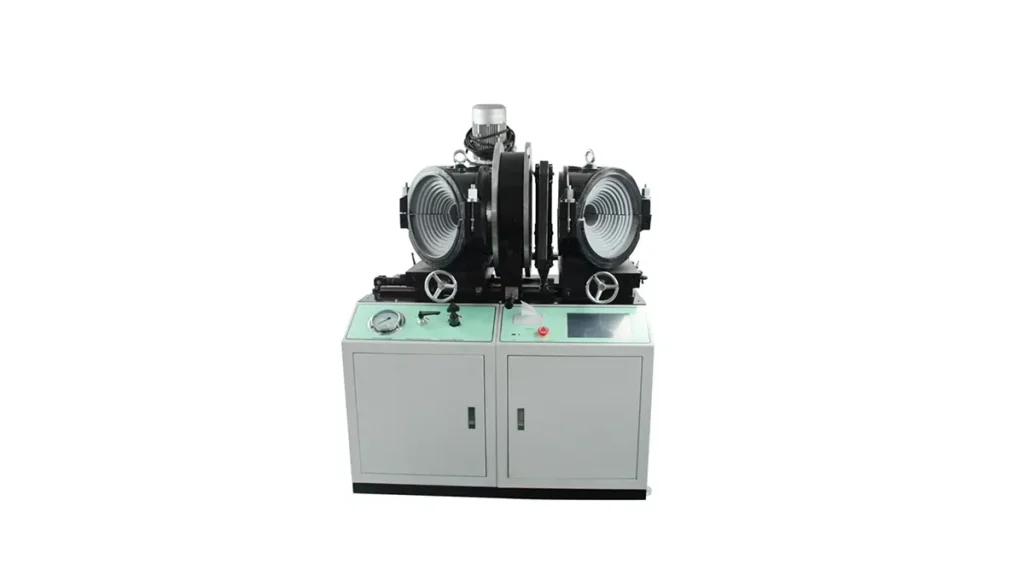
The efficiency of HDPE pipe welding can make or break a pipeline project. When crews work with limited time, high installation demands, and strict quality requirements, even small improvements in welding workflow can lead to major gains in productivity, consistency, and long-term performance. In practice, improving HDPE pipe welding efficiency is not about rushing the process; it is about controlling every step with precision, choosing the right equipment, and reducing avoidable downtime.
Whether the job involves water supply, gas distribution, mining, or industrial piping, a well-organized fusion workflow helps teams complete more joints with fewer errors. Reliable equipment, trained operators, clean pipe surfaces, accurate heating, and stable pressure all contribute to faster and stronger results. For companies looking to improve overall output, the right welding system and the right process discipline matter equally. If you want to explore professional fusion equipment, you can learn more about a trusted butt fusion machine solution designed for different pipeline demands.
Why HDPE Pipe Welding Efficiency Matters
HDPE pipe welding efficiency is important because every joint is part of a long-term system. A weak weld does not just slow the project down; it can lead to rework, material waste, safety risks, and later maintenance issues. By improving efficiency, contractors can shorten installation time while maintaining weld quality, which is especially valuable on large-scale infrastructure projects.
Key point: Efficiency in HDPE welding is not only speed. It is the balance of fast setup, accurate fusion, stable quality, and reduced rework.
In many projects, the biggest loss of time comes from preventable problems such as improper temperature control, misaligned pipes, dirty fusion surfaces, or machine instability. When these issues are minimized, crews can complete welding tasks more predictably and safely. This is why process improvement should begin with equipment quality and operator discipline, not with pressure to move faster.
Start with the Right Welding Equipment
The most effective way to improve welding efficiency is to use equipment that matches the pipe diameter, site conditions, and project scale. A machine that is too small, poorly maintained, or unsuitable for the application can create unnecessary delays. By contrast, a stable and well-configured system supports smoother clamping, better heating control, and more consistent joint formation.
JQ-Fusion offers a wide range of solutions for different job requirements, including manual, hydraulic, and CNC automatic systems. For contractors who need dependable performance across multiple site conditions, a properly selected machine can significantly reduce operator fatigue and improve output. Companies working in demanding environments often benefit from machines that are designed for durability, easy adjustment, and reliable alignment.
- Manual machines are useful for smaller projects and simpler pipe sizes.
- Hydraulic systems help improve force control and repeatability on medium and large projects.
- CNC automatic machines are ideal when consistency and productivity are top priorities.
When selecting a machine, it is also smart to consider whether the supplier provides customization options, technical support, and spare parts availability. Equipment performance improves when the system is supported by a reliable manufacturer and a responsive after-sales team.
Prepare the Pipe Surface Correctly
Pipe preparation has a direct impact on welding speed and quality. If the pipe ends are not cleaned, trimmed, and aligned correctly, the operator may need to repeat steps or correct the joint later. That means more downtime and more material loss. Efficient projects usually begin with a clean, organized preparation process.
Before fusion begins, the pipe ends should be checked for roundness, surface cleanliness, and correct squareness. Dust, moisture, grease, and oxidation layers must be removed carefully. A clean surface allows heat to transfer properly and improves the strength of the fused joint. The time invested here saves much more time later because it reduces the risk of repair or failure.
Practical tip: Create a standard pre-welding checklist for every crew so the same cleaning and inspection steps are repeated on every joint.
Control Temperature and Heating Time
Accurate temperature control is one of the most important factors in HDPE pipe welding. If the heating plate is too hot, the material may become damaged or deformed. If it is too cool, fusion may be incomplete, causing weak joints and possible failure. To improve efficiency, the crew should avoid guesswork and follow consistent heating standards.
Well-maintained machines with stable temperature systems help operators work faster because they do not need to stop and recheck the process repeatedly. This is where quality equipment makes a visible difference. JQ-Fusion focuses on stable performance and strict quality control to ensure temperature accuracy and pressure stability, which supports more efficient welding operations in real projects.
Operators should also understand that heating time can vary based on pipe diameter, wall thickness, ambient temperature, and material condition. Training workers to follow standard procedures reduces confusion and helps keep the process moving without sacrificing quality.
Improve Alignment and Pressure Stability
Pipe alignment affects both joint quality and overall workflow. If the pipes are not clamped correctly, the joint may be uneven, and the operator may need to start over. This creates unnecessary delay and increases material use. A stable clamping system helps ensure the pipe ends stay centered and secure throughout the welding cycle.
Pressure control is equally important. Too much or too little pressure can affect bead formation and fusion strength. Efficient welding requires machines that maintain reliable hydraulic stability and consistent clamp alignment. That is why regular machine inspection should be part of every project routine.
For teams managing large pipeline installations, consistency is usually more valuable than raw speed. Once the pipe is aligned correctly and pressure is stable, the operator can move through the remaining steps with confidence and fewer interruptions.
Train Operators to Work Faster Without Errors
Even the best equipment cannot deliver high efficiency if operators are not well trained. Skilled technicians know how to prepare the pipe, set up the machine, monitor the heating plate, and confirm proper fusion conditions. Training reduces the chance of mistakes and helps workers complete each joint with fewer delays.
Effective training should cover machine operation, safety procedures, troubleshooting, and maintenance basics. Teams that understand why each step matters are less likely to skip important details. They are also better prepared to respond to changing site conditions, such as low temperatures, wind, dust, or limited workspace.
Efficiency insight: A well-trained operator can often save more time than a faster machine because fewer mistakes means fewer interruptions, less rework, and more consistent output.
Plan the Workflow Before Welding Begins
Good planning is one of the simplest ways to improve HDPE pipe welding efficiency. When materials, tools, and personnel are organized in advance, the crew spends less time waiting and more time welding. A project with a clear workflow is easier to manage, especially when multiple joints must be completed under tight deadlines.
Planning should include material staging, tool inspection, power supply checks, machine positioning, and joint sequence planning. If the site layout forces frequent movement of heavy equipment, that can slow down the entire operation. A better layout shortens travel time between tasks and supports smoother production.
It is also helpful to assign responsibilities clearly. One worker may prepare pipe ends, another may monitor machine settings, and another may handle cleaning and cooling. Defined roles reduce confusion and increase efficiency across the whole crew.
Use Preventive Maintenance to Reduce Downtime
Maintenance is often overlooked until a machine begins to fail. However, a preventive maintenance routine can protect welding efficiency by reducing breakdowns and unexpected stoppages. Regular checks on hydraulic systems, heating plates, clamps, electrical components, and control panels help keep the machine ready for continuous use.
JQ-Fusion’s factory and manufacturing capability are built around precision production and quality assurance, which helps support reliable equipment performance in the field. Choosing machines from a manufacturer that emphasizes testing and durability can lower the likelihood of repeated service interruptions.
Preventive maintenance also extends equipment life. That means lower replacement costs over time and better return on investment for contractors and distributors. In busy pipeline projects, less downtime often translates directly into more completed joints per day.
Choose Equipment that Fits the Project Environment
Different projects require different welding solutions. A water supply line in an urban area may need compact, easy-to-operate equipment, while a mining project may require rugged machines built for difficult field conditions. The more closely the machine matches the site environment, the easier it becomes to work efficiently.
JQ-Fusion supports global pipeline projects with customizable machines for a wide range of applications. This flexibility is valuable because project requirements are not always standard. Voltage, design, branding, and functional features can all affect how well a machine integrates into a contractor’s working process.
When a supplier offers OEM and ODM services, contractors can adapt the equipment to match project needs more precisely. That customization can improve both daily workflow and long-term competitive advantage.
Use Quality Control to Protect Productivity
Quality control and efficiency should work together, not against each other. A strong quality control process actually improves productivity because it prevents defective joints from moving further down the pipeline. Every failed weld costs time, material, labor, and reputation.
Good quality control includes visual inspection, pressure verification, temperature checking, and clamp alignment review. In advanced systems, digital controls can make these checks easier and more repeatable. The more accurate the process, the less time the crew spends correcting mistakes.
If your goal is to build consistent output for global projects, choosing products certified to international standards is a smart step. Certification gives buyers greater confidence that the equipment has been designed and tested for reliable use.
Why JQ-Fusion Helps Improve Welding Efficiency
As a professional manufacturer specializing in HDPE pipe welding machines, JQ-Fusion is focused on reliable butt fusion solutions for water supply, gas distribution, mining, and industrial pipeline installations. With over 20 years of industry experience, the company combines modern manufacturing technology, strict quality control, and flexible customization services to support different project needs.
Its product range includes hydraulic butt fusion welding machines, automatic butt fusion welding machines, electrofusion welding machines, and multi-angle pipe fitting welding machines. This broad range makes it easier for customers to choose equipment that fits the exact task rather than forcing one machine to handle every situation. That kind of fit can make a major difference in efficiency, especially when the pipeline project involves changing conditions and multiple pipe sizes.
Reliable global support is another important factor. Fast response, technical guidance, and efficient logistics help customers reduce downtime and keep projects moving. For contractors and distributors who value stable stock supply, training, and after-sales support, a dependable manufacturer can be part of the efficiency strategy, not just the equipment supplier.
Common Questions About HDPE Pipe Welding Efficiency
Q1: What is the fastest way to improve HDPE pipe welding efficiency?
The fastest improvement usually comes from combining proper machine selection, accurate pipe preparation, and trained operators. When these three factors are aligned, welding becomes faster and more consistent.
Q2: Does a CNC automatic machine really improve productivity?
Yes. In many projects, CNC automatic systems improve repeatability, reduce manual adjustment, and help operators complete joints more consistently, which can lead to better productivity.
Q3: Why do welds fail even when the machine looks fine?
Failures often come from poor surface preparation, incorrect temperature, bad alignment, or inconsistent pressure. The machine may be fine, but the process may not be controlled properly.
Q4: How often should a butt fusion machine be maintained?
Maintenance should follow the manufacturer’s schedule, but basic checks should be done regularly before use. Hydraulic pressure, heating performance, clamp condition, and alignment should always be inspected.
Q5: Can customization help improve welding efficiency?
Yes. Custom features can make the machine better suited to the project environment, which improves workflow, reduces setup time, and supports smoother operation.



