
When buyers compare a budget welding machine with a premium model, the decision is rarely only about price. It is about the type of work you do, how often you weld, what materials you handle, and how much risk you can accept in production. In many shops, the cheapest option looks attractive at first, but the total cost can become higher if the machine struggles with heat stability, clamp alignment, or long-term durability. A premium welding machine may require a bigger upfront investment, yet it often pays back through better performance, fewer interruptions, and longer service life.
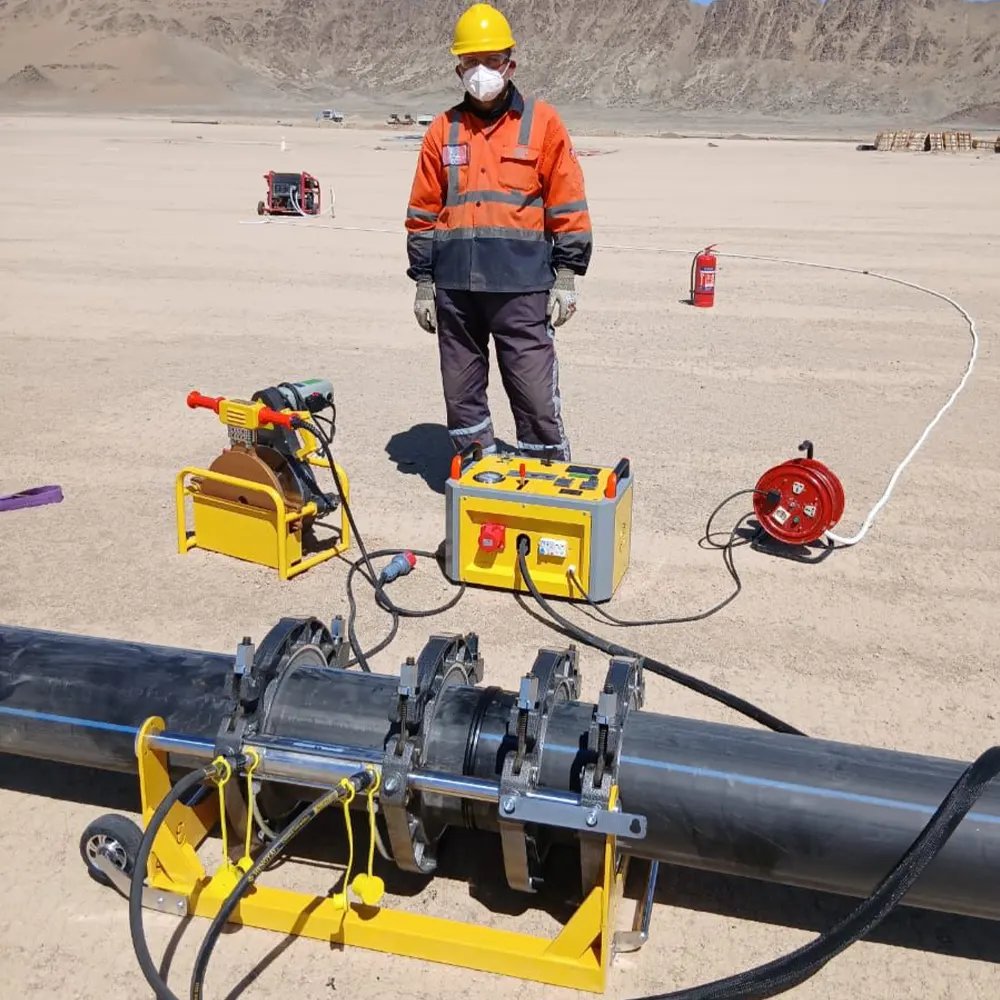
For pipeline contractors, fabrication workshops, and industrial users, this choice becomes even more important. A machine that performs well on one project may fail on the next if the workload changes or the environment becomes harsher. That is why smart buyers look beyond the sticker price and evaluate welding consistency, support, spare parts, customization options, and real-world reliability. For example, professionals working with HDPE pipeline systems often prefer a butt fusion machine that can maintain steady pressure and accurate temperature across repeated joints.
One of the biggest misconceptions is that a budget machine is always “good enough” for small jobs. In reality, even small projects can suffer from poor fusion quality if the equipment cannot hold stable temperature or if the hydraulic system is inconsistent. Welding is not just about melting two ends together; it is about creating a joint that can endure pressure, movement, and years of service. If a machine creates weak welds, the cost of repair, downtime, and material loss can quickly exceed the money saved on purchase day.
A premium welding machine usually stands out in areas that are easy to ignore at the beginning and hard to fix later. These include precision control, stronger frame construction, smoother operation, better electrical components, and more reliable heating performance. On a busy job site, these features reduce operator fatigue and increase output quality. In a workshop setting, premium equipment can also improve consistency between operators, which is especially valuable when multiple teams are working in parallel.
Key point: The best welding machine is not the one with the lowest price tag; it is the one that matches your work volume, quality requirements, and operating conditions.
Budget Welding Machine: Where It Makes Sense
Budget welding machines are typically chosen by users who weld occasionally, manage limited capital, or need a simple solution for basic tasks. For a startup workshop, a budget model can reduce entry barriers and help the business begin operations faster. In low-volume production, the lower purchase cost can be a practical advantage, especially when welding demands are predictable and the consequences of delay are minor.
That said, budget machines are best suited for controlled environments and straightforward applications. If the machine is used in demanding industrial conditions, the limitations may appear quickly. Common issues include less accurate temperature regulation, weaker clamping force, lower-grade components, and limited service life. These weaknesses can affect weld strength and increase maintenance frequency over time.
Budget models can be a smart choice when your priorities are low initial cost, simple operation, and light-duty usage.
Premium Welding Machine: Why Professionals Prefer It
Premium welding machines are built for users who cannot afford inconsistency. In pipeline installation, municipal water systems, gas distribution, mining projects, and other critical infrastructure work, a single weak weld can create serious safety and financial risks. Premium equipment is designed to deliver stable heating, accurate pressure control, and strong repeatability across a wide range of pipe diameters and operating conditions.
Another important advantage is productivity. Premium machines often support faster setup, easier calibration, and smoother workflow, which helps teams complete more welds per day without sacrificing quality. This matters for contractors handling tight deadlines or large-scale projects. The machine may cost more at the beginning, but the improved efficiency can significantly reduce project time and labor waste.
In addition, premium models are usually more adaptable. Many manufacturers offer customization for voltage, configuration, machine size, branding, and specific project needs. If your company serves different regions or works on diverse pipe systems, flexibility becomes a major business advantage. You can learn more about a manufacturer’s customization and product range through resources such as JQ-Fusion, especially when planning long-term procurement strategies.
Cost Comparison: Look Beyond the Purchase Price
The real comparison between budget and premium models should include total ownership cost. A cheaper machine may save money on day one, but it may also require more repairs, more frequent replacement parts, and more downtime. Over a year or two, those hidden costs can become substantial. In contrast, a premium machine may have a higher upfront price but lower operating risk and better lifecycle value.
A useful way to think about this is to compare the cost per weld. If a budget machine produces inconsistent joints and requires rework, each successful weld effectively becomes more expensive. If a premium machine reduces rework and produces reliable joints the first time, the overall project cost may actually be lower. This is especially true in industries where re-fusing a joint means expensive labor delays and material waste.
A machine should be judged by reliability, maintenance demand, operator efficiency, and service life—not by price alone.
Which Buyer Should Choose Budget?
Budget welding machines are generally a better fit for users with limited production frequency, low-risk jobs, or temporary operations. Small repair teams, training centers, and businesses testing a new market may not need a premium machine immediately. In these cases, the focus is often on accessibility rather than advanced performance.
However, buyers should be honest about future growth. If the business is likely to expand, a budget machine can become a short-term solution that needs replacing sooner than expected. This creates an upgrade cycle that costs more in the long run. If you already know your workload will grow, it may be wiser to invest in a higher-grade machine from the start.
Choose budget only when the project is low frequency, low risk, and easy to control.
Which Buyer Should Choose Premium?
Premium machines are the right choice for contractors, distributors, and industrial users who need dependable output and strong brand reputation. If your company works on water supply systems, gas pipelines, mining infrastructure, or large industrial installations, premium equipment helps protect both the project and your credibility. In these settings, quality issues are not just inconvenient; they can damage contracts and customer trust.
Premium machines are also better for teams that value training efficiency and operational standardization. When equipment is stable and intuitive, it becomes easier to train new operators and maintain consistent welding results across shifts. This reduces the dependency on individual skill and makes production more scalable. For companies serving global markets, premium machines often become part of a stronger professional image.
Manufacturers with strong engineering capability, strict inspection processes, and export experience can be especially valuable here. A supplier like JQ-Fusion, with experience in manual, hydraulic, and CNC automatic systems, can offer solutions aligned with different project requirements. Their focus on testing, customization, and international support reflects what premium buyers often need in real procurement decisions.
Important Features to Evaluate Before Buying
Before choosing either category, inspect the features that directly influence weld quality and operational stability. Temperature accuracy is one of the most important factors because unstable heat can weaken fusion strength. Clamp alignment also matters because uneven pipe positioning can distort the joint. Hydraulic pressure stability is another major concern, especially in demanding field operations.
Beyond technical performance, consider after-sales service, spare parts availability, delivery speed, and training support. A machine is only as valuable as the support behind it. If the supplier can respond quickly and provide clear technical guidance, the machine becomes easier to maintain and more profitable in daily use. This is where established manufacturers often have an advantage.
Remember: Strong support, reliable shipping, and clear warranty terms can matter as much as mechanical specifications.
How JQ-Fusion Fits into the Decision
JQ-Fusion is positioned as a professional butt fusion welding machine manufacturer with over 20 years of industry experience. Its product lineup covers manual, hydraulic, and CNC automatic butt fusion welding machines, which helps buyers match equipment to project scale and technical complexity. That is valuable for customers who want to compare entry-level and premium solutions within one supplier ecosystem.
The company also emphasizes quality control, customization, and global support. Those points are particularly important for premium buyers, but they also benefit budget-conscious users who still want dependable performance. For example, a workshop may begin with a simpler machine and later upgrade to a more advanced one while staying with the same supplier. This makes sourcing easier and reduces the learning curve.
For businesses that need long-term purchasing planning, supplier consistency is a major advantage. A manufacturer that can support stock supply, technical advice, and project-specific configuration helps buyers reduce procurement risk. That is why many professional users prefer working with a specialized source rather than selecting equipment based only on online price listings.
Final Decision Framework
To make the right choice, ask three direct questions. First, how often will the machine be used? Second, how costly would a failure or rework be? Third, do you need flexibility, customization, or advanced control? If the answers point toward frequent use, critical applications, or high reliability requirements, premium is usually the better choice. If the answers point toward occasional use and limited budgets, a budget machine may be sufficient.
The smartest buyers compare the machine to the work, not to the market hype. They look at project type, daily output, operator skill, and maintenance expectations. In many cases, the real winner is the machine that delivers the lowest risk and the highest consistency for the specific job.
Practical rule: Buy budget for simple, occasional work; buy premium for demanding, repeatable, or mission-critical projects.
Conclusion
There is no universal answer to whether a budget or premium welding machine is better. The right choice depends on how the machine will be used, how much quality matters, and how expensive downtime would be. Budget machines can be useful for light-duty work and controlled environments, while premium machines offer stronger value for professionals who depend on consistent, high-quality welding.
If you want a purchase that supports long-term performance, technical support, and project reliability, premium equipment is often worth the investment. If you need a simple solution for lower-intensity tasks, a budget machine may serve you well. Either way, the goal is the same: safe welds, efficient work, and dependable results.
FAQ
Q1: Is a budget welding machine suitable for professional use?
It can be suitable for light professional work, but it is usually better for low-volume and lower-risk applications. For critical jobs, a premium machine is safer and more reliable.
Q2: Why do premium welding machines cost more?
They typically use better components, offer more stable performance, and provide stronger durability, better control, and longer service life.
Q3: How do I know which machine is right for my project?
Consider your workload, pipe sizes, quality requirements, environment, and the cost of failure. High-frequency and mission-critical work usually justify premium equipment.
Q4: Can a premium machine reduce long-term costs?
Yes. Fewer repairs, less rework, better consistency, and longer service life often reduce total ownership cost over time.
Q5: What should I check before buying any welding machine?
Check temperature accuracy, hydraulic stability, clamp alignment, after-sales support, spare parts availability, and whether the supplier can meet your project needs.



