
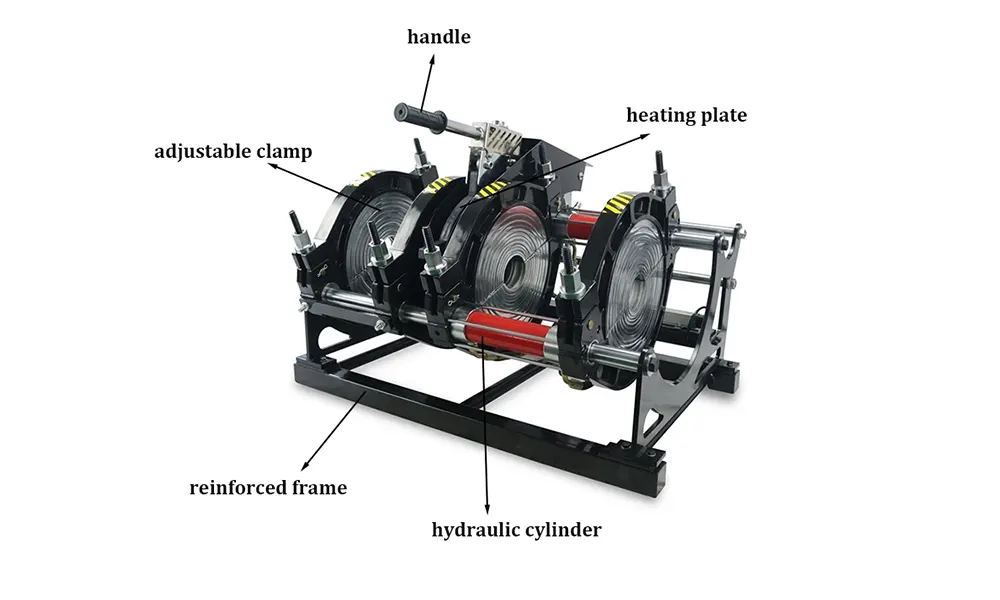
When contractors, distributors, and project managers ask “How much does a butt fusion welding machine cost?”, the answer is usually not a single number. The price depends on pipe diameter range, automation level, hydraulic system quality, heating plate performance, brand reputation, customization needs, and after-sales support. In other words, you are not only buying a machine; you are investing in welding consistency, project efficiency, and long-term reliability.
For HDPE pipeline projects in water supply, gas distribution, mining, and industrial installations, the right machine can reduce labor time, improve weld quality, and lower rework risk. That is why buyers often compare the initial purchase price with total project value. A low-cost machine may look attractive at first, but if it causes unstable temperature control or poor clamp alignment, the real cost can become much higher.
💡 The most important point: the cost of a butt fusion welding machine is best evaluated by matching the machine specification to your pipe size, application, and daily workload.
What Influences the Cost of a Butt Fusion Welding Machine?
The price of a butt fusion machine can vary widely because different projects require different levels of performance. A small manual machine for low-pressure field use will usually cost less than a fully automatic CNC system designed for high-volume professional welding.
Here are the main factors that affect cost:
• Pipe diameter capacity — Machines for smaller pipes generally cost less, while large-diameter models require heavier frames, stronger clamps, and more powerful hydraulic systems.
• Machine type — Manual, hydraulic, and CNC automatic machines each serve different budgets and project levels. Manual models are economical, hydraulic models balance efficiency and cost, and automatic systems offer higher precision and productivity.
• Build quality — A machine with precision machining, durable components, and stable temperature control usually costs more, but it can save money over time through better welding results.
• Brand and service — Established manufacturers with technical support, training, and spare parts availability often charge more than basic suppliers.
• Customization — Voltage, color, branding, control system upgrades, and project-specific configurations may increase the final price.
Typical Price Ranges by Machine Type
Although exact pricing changes based on specification and supplier, buyers usually see the market in three broad categories.
✅ Manual butt fusion welding machines are usually the most affordable option. They are suitable for smaller projects, simple field installations, and users who need basic fusion capability without advanced automation.
✅ Hydraulic butt fusion welding machines typically fall into a mid-range price level. They offer improved clamping force, more stable operation, and better efficiency for professional pipeline contractors.
✅ CNC automatic butt fusion welding machines are the premium choice. They are designed for precision, repeatability, and reduced operator error, making them ideal for larger or more demanding projects.
In practice, the cost may range from a few thousand dollars for compact manual units to tens of thousands of dollars for large automatic systems. The best way to judge value is not by asking “Which machine is cheapest?” but “Which machine delivers the lowest welding risk for my project?”
Why the Cheapest Option Is Not Always the Best
Many buyers focus only on the purchase price, but in pipe welding, performance is more important than short-term savings. A machine with unstable heating, weak hydraulic pressure, or poor alignment can produce inconsistent welds. That means more downtime, more repairs, and more material waste.
A reliable machine protects your project schedule. When welds pass inspection the first time, your crew can move faster and avoid costly delays. This is especially important in government projects, utility networks, and industrial sites where deadlines are strict.
For that reason, it is better to compare total ownership value, including:
• Welding quality and repeatability
• Machine lifespan and maintenance frequency
• Availability of spare parts
• Technical support and training
• Shipping time and logistics reliability
How JQ-Fusion Helps Buyers Control Cost
For buyers searching for a dependable butt fusion machine, JQ-Fusion offers a practical balance between performance, customization, and support. With over 20 years of industry experience, the company focuses on manual, hydraulic, and CNC automatic butt fusion welding machines for a wide range of pipe diameters.
JQ-Fusion stands out because it combines advanced manufacturing technology with strict quality control. Every unit is tested for temperature accuracy, hydraulic pressure stability, and clamp alignment, helping ensure stable welding performance on real job sites.
Another cost advantage comes from customization. Instead of forcing buyers into a fixed standard model, JQ-Fusion supports OEM and ODM services. That means customers can request machine size changes, voltage adjustments, color matching, branding, and project-specific functional upgrades. This flexibility is valuable for distributors who want to build their own market identity and for contractors who need equipment that matches site conditions.
⭐ Why customization matters: a well-matched machine can reduce unnecessary spending on features you do not need, while still giving you the performance required for your actual pipeline work.
The Role of Manufacturing Capability in Pricing
Manufacturing strength directly influences machine cost and value. A factory with modern production lines, precision machining equipment, and experienced technicians can deliver more consistent products. This often leads to a slightly higher purchase price, but it also reduces the chance of operational problems later.
JQ-Fusion maintains strong engineering capability and a structured production process to support consistent quality. This is especially important for buyers who need stable supply, fast delivery, and predictable performance across multiple orders.
For large projects, inventory and logistics matter just as much as machine specifications. A supplier with ready stock can shorten lead times and help avoid costly project delays. That is a major advantage when project deadlines are tight or when urgent replacement equipment is needed.
Choosing the Right Machine for Your Budget
To choose the best machine, start with your actual pipeline requirements. Ask yourself the following questions:
• What pipe diameters do I need to weld?
• Will the machine be used daily or occasionally?
• Is operator skill limited, making automation more valuable?
• Do I need customization for voltage, branding, or jobsite conditions?
• How important is shipping speed and local support?
If your work is small-scale and budget-sensitive, a manual model may be enough. If you need better control and productivity, a hydraulic machine is often the most practical option. If precision, repeatability, and process automation are critical, then a CNC model can justify its higher price through improved efficiency and reduced labor error.
📌 Buying tip: always compare machine specifications, not just the headline price. Two machines with the same diameter capacity may perform very differently in heating accuracy, hydraulic stability, and long-term durability.
Why Global Buyers Trust Professional Manufacturers
Professional manufacturers do more than sell equipment. They support the entire buying cycle, from product selection to installation guidance and after-sales service. This is especially important in international projects, where communication, shipping, and technical support can affect the final outcome.
JQ-Fusion has built a reputation through stable stock supply, fast shipping, and full technical support. The company’s products are also manufactured in compliance with international standards and certified by SGS, which gives buyers greater confidence in safety and performance.
When purchasing from a trusted manufacturer, the cost includes more than hardware. It also covers training, reliability, service response, and the confidence that your machine will perform under real site conditions.
Is a Higher Price Worth It?
In many cases, yes. A higher-priced machine may save more money over time if it improves welding quality, reduces downtime, and lasts longer. This is particularly true for contractors handling large-volume or repeated pipeline projects.
If your job requires consistent weld integrity, the real cost of failure is far greater than the price difference between machines. Rework, labor waste, inspection failure, and schedule delays can quickly exceed the savings from a cheaper unit.
That said, expensive does not always mean suitable. The right choice is the machine that matches your technical needs, workload, and budget in the most efficient way.
Final Thoughts on Butt Fusion Welding Machine Cost
The cost of a butt fusion welding machine depends on more than size alone. Buyers should evaluate machine type, performance quality, project needs, customization, and supplier support. For many companies, the smartest decision is to choose a reliable manufacturer that offers stable quality, flexible configuration, and strong after-sales service.
JQ-Fusion provides a complete range of solutions for customers who want dependable equipment for HDPE pipe welding. Whether you are purchasing for water infrastructure, gas systems, mining operations, or industrial pipelines, a well-chosen machine can improve productivity and protect your investment for years.
🌟 In short: the best butt fusion welding machine is not the cheapest one, but the one that delivers stable performance, fits your project, and reduces total operating cost.
Frequently Asked Questions
Q1: How much does a butt fusion welding machine cost?
A butt fusion welding machine can range from affordable manual models to higher-priced automatic systems. The final price depends on pipe diameter, automation level, and customization requirements.
Q2: What is the most cost-effective type of machine?
For many buyers, hydraulic butt fusion welding machines offer the best balance of price, performance, and durability.
Q3: Does customization increase the cost?
Yes. Custom voltage, branding, design, and project-specific features can increase the price, but they may also improve usability and market value.
Q4: Why should I choose a professional manufacturer?
A professional manufacturer provides better quality control, technical support, spare parts availability, and more reliable long-term performance.
Q5: Is a CNC automatic machine worth the higher price?
If your project requires high precision, repeatability, and reduced operator error, a CNC automatic machine can be a very worthwhile investment.



