
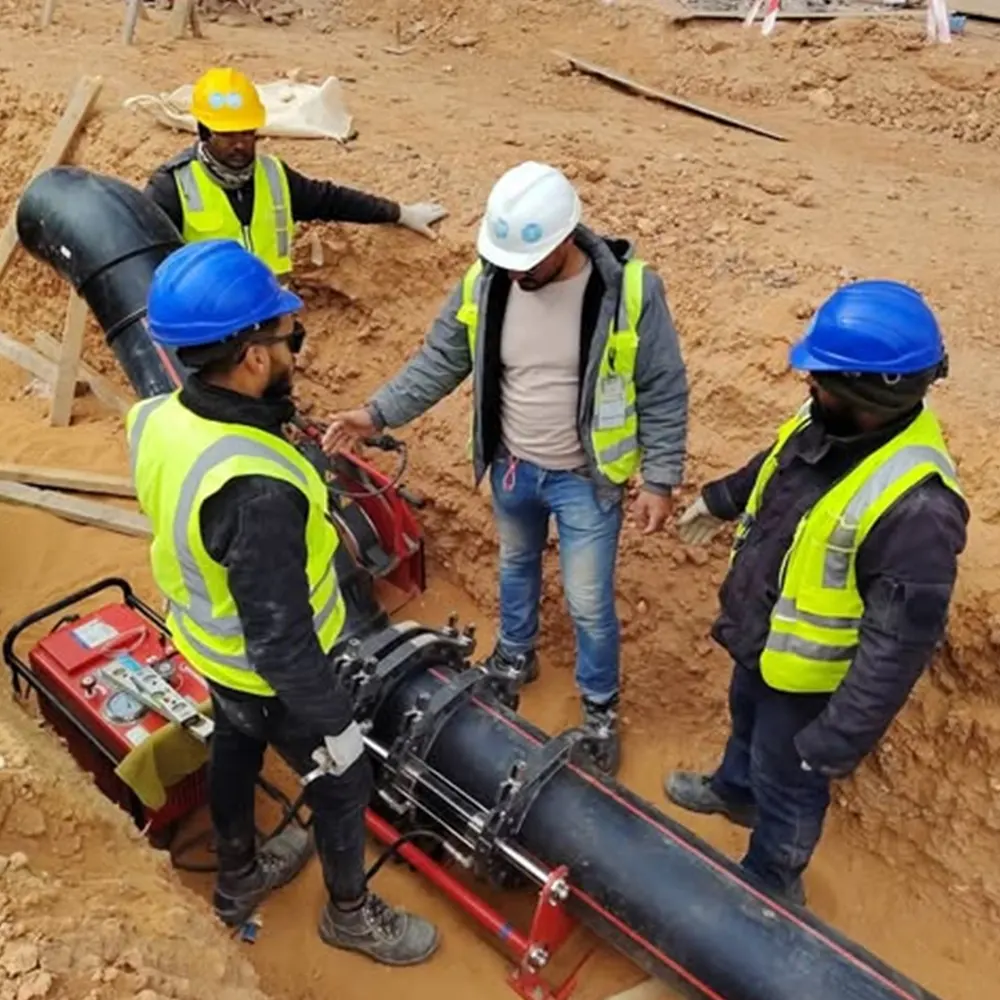
In modern pipeline construction, the quality of a welded joint can determine whether a system operates safely for decades or fails under pressure far too early. For HDPE pipelines, where flexibility, corrosion resistance, and long service life are essential, welding quality tracking is not just a technical formality; it is a critical part of project success. A butt fusion machine can create strong joints, but only when every stage of the process is monitored, recorded, and controlled with precision.
Quality tracking in HDPE welding means observing and documenting the full fusion process, from machine setup and pipe preparation to heating, joining, cooling, and final inspection. It helps contractors verify that each weld meets project requirements, industry standards, and safety expectations. In water supply systems, gas distribution networks, mining sites, and industrial pipelines, this level of control is especially important because a single weak joint may lead to leaks, downtime, environmental damage, or costly repairs.
🟡 Quality tracking is the bridge between welding equipment performance and real-world pipeline reliability. Even the best machine cannot guarantee success without proper process control, operator discipline, and inspection records.
What Quality Tracking Means in HDPE Welding
HDPE welding quality tracking is the systematic collection of information about each weld to confirm that it was completed under correct conditions. This includes heating plate temperature, fusion pressure, alignment, ambient conditions, joint preparation, cooling time, and operator behavior. By tracking these variables, companies can identify whether a weld is likely to perform well over time.
This process is valuable for both small contractors and large engineering teams. For smaller projects, quality tracking helps prevent basic mistakes and improves consistency. For large infrastructure projects, it creates traceability, supports compliance, and gives owners confidence that every welded section has been properly handled.
In practice, quality tracking may involve manual log sheets, digital control systems, machine data records, visual inspection notes, and post-weld testing reports. The more complex the project, the more important it becomes to use a structured quality management approach.
Why HDPE Welding Requires Careful Monitoring
HDPE is widely used because it is durable and resistant to chemicals, corrosion, and ground movement. However, achieving a dependable fusion joint requires the operator to follow precise steps. Unlike mechanical connections, fusion welding creates a permanent bond by heating the pipe ends and joining them under controlled pressure. If the temperature is too low, the joint may not fuse correctly. If it is too high, the material may degrade. If alignment is poor, stress points can develop.
That is why quality tracking is so important. It does not simply check whether a weld has been made; it checks whether the weld was made correctly. This distinction matters in applications where failure could affect public utilities, industrial production, or safety systems.
Quality tracking also reduces guesswork. When weld data is recorded consistently, engineers and supervisors can compare results across operators, shifts, and project sites. This improves training, identifies weak points in the workflow, and helps teams make better decisions based on evidence rather than assumptions.
Key point: HDPE welding quality is not judged by appearance alone. A smooth-looking weld can still be weak if pressure, temperature, or timing were incorrect.
Main Elements That Should Be Tracked
To ensure reliable welds, teams should monitor several essential elements throughout the process. First, pipe preparation must be recorded. The pipe ends should be clean, square, and free from contamination. Dust, moisture, oil, or uneven cutting can reduce bond strength.
Second, machine settings should be checked and documented. This includes heating plate temperature, fusion pressure, drag pressure, and cooling time. A reliable machine provides stability, but operators must still confirm that the settings match the pipe size and material requirements.
Third, environmental conditions should be noted when necessary. Extreme cold, strong wind, rain, or unstable work surfaces can affect welding quality. In outdoor projects, these factors may require additional control measures such as shelters or temperature adjustments.
Fourth, the operator’s actions must be part of the record. Even experienced technicians can make mistakes if they rush the process or skip a step. A quality tracking system creates accountability and helps maintain consistent standards.
Tracked variables often include: pipe condition, alignment, machine calibration, heating time, pressure application, cooling duration, and final inspection results.
The Role of Equipment in Quality Tracking
Welding equipment plays a major role in achieving stable results. Manual, hydraulic, and CNC automatic systems all contribute to different levels of control and repeatability. In many professional projects, automation improves traceability because machine data can be stored more accurately and consistently than manual notes.
Companies like butt fusion machine manufacturers focus on design features that support reliable fusion, such as temperature accuracy, hydraulic pressure stability, and clamp alignment inspection. These features are not just about convenience; they directly affect weld quality and the ability to track performance over time.
When equipment is built with strong control systems, users can standardize operations more easily. This is especially important for contractors handling multiple sites or distributors supplying machines to different regions. Quality tracking becomes much more effective when the machine itself supports accurate data collection and stable output.
For detailed product and company information, teams may also review resources such as https://jq-fusionwelding.com/, where professional butt fusion solutions are presented for global pipeline projects.
How Quality Tracking Improves Project Safety
Safety is one of the strongest reasons to track welding quality. A leaking or failed HDPE joint may cause service interruptions, contamination risks, or pressure loss in the line. In gas systems, the consequences can be even more serious. Quality tracking lowers these risks by making it easier to detect problems before a pipeline is put into service.
It also helps teams respond faster if a defect appears. When records are available, supervisors can identify which weld was affected, who completed it, what settings were used, and whether the issue may be linked to equipment, material, or environmental conditions. This traceability saves time during investigation and supports more accurate corrective action.
In regulated industries, documentation can also support audits, compliance checks, and client acceptance. A well-maintained tracking system shows professionalism and gives project owners confidence that the installation was completed with care.
📌 Strong quality tracking reduces hidden risk. It makes defects easier to find, easier to analyze, and easier to prevent in future welds.
Benefits for Contractors, Owners, and Distributors
For contractors, quality tracking improves productivity and reduces rework. When welding procedures are stable and documented, fewer joints need to be repaired or repeated. That saves labor time, material costs, and schedule delays.
For pipeline owners, quality tracking increases confidence in long-term performance. It proves that installation standards were followed and that the system is likely to perform as intended. This is especially useful for critical infrastructure, where service life and reliability matter as much as initial cost.
For distributors and equipment suppliers, quality tracking helps build brand reputation. Customers are more likely to trust machines that are associated with stable results and clear technical support. That is one reason professional manufacturers emphasize testing, calibration, and strict quality assurance before delivery.
With the right combination of machine performance and process discipline, quality tracking becomes a competitive advantage rather than a paperwork burden.
Best Practices for Effective Tracking
To make quality tracking useful, it should be simple, consistent, and practical. The first best practice is to standardize procedures across all welds. Operators should follow the same preparation, heating, joining, and cooling steps every time.
The second best practice is to train personnel thoroughly. A tracking system is only as strong as the people using it. Workers need to understand why the data matters and how to record it correctly.
The third best practice is to inspect and calibrate equipment regularly. Even a high-quality machine requires maintenance. Temperature checks, hydraulic inspections, and clamp alignment reviews should be part of the routine.
The fourth best practice is to store records in an organized way. Whether the system is paper-based or digital, the information should be easy to retrieve for review, audit, or troubleshooting.
Finally, teams should use the collected data to improve future work. Quality tracking is most valuable when it leads to better decisions, stronger procedures, and fewer repeated mistakes.
Practical rule: if the weld cannot be traced, it is harder to trust. If it can be traced, it can be improved.
Why Global Pipeline Projects Depend on It
Large pipeline projects often involve multiple teams, long distances, and strict deadlines. In these environments, quality tracking becomes essential because it creates a shared language for performance. Every weld can be linked to a specific operator, machine, batch, or location, which makes project management far more transparent.
In international projects, this also supports cross-team coordination. Engineering consultants, inspectors, contractors, and owners can review the same data and make decisions based on the same facts. This reduces conflict and speeds up approval processes.
As HDPE systems continue to expand in water, gas, mining, and industrial applications, the need for measurable welding quality will only grow. The companies that invest in strong tracking practices today will be better prepared for stricter standards tomorrow.
Frequently Asked Questions
Q1: What is the main purpose of quality tracking in HDPE welding?
It ensures each weld is completed under correct conditions and can be traced, inspected, and verified for reliability.
Q2: Does a good-looking weld always mean good quality?
No. Appearance alone is not enough. Temperature, pressure, alignment, and cooling time also determine weld strength.
Q3: What data should be recorded during butt fusion welding?
Important data includes pipe preparation details, machine settings, pressure, temperature, ambient conditions, and inspection results.
Q4: How does quality tracking help reduce costs?
It lowers the chance of rework, repair, downtime, and material waste by identifying issues early and improving process consistency.
Q5: Why is equipment quality important for tracking results?
Because stable temperature control, pressure accuracy, and alignment help ensure that recorded data reflects a reliable welding process.



