
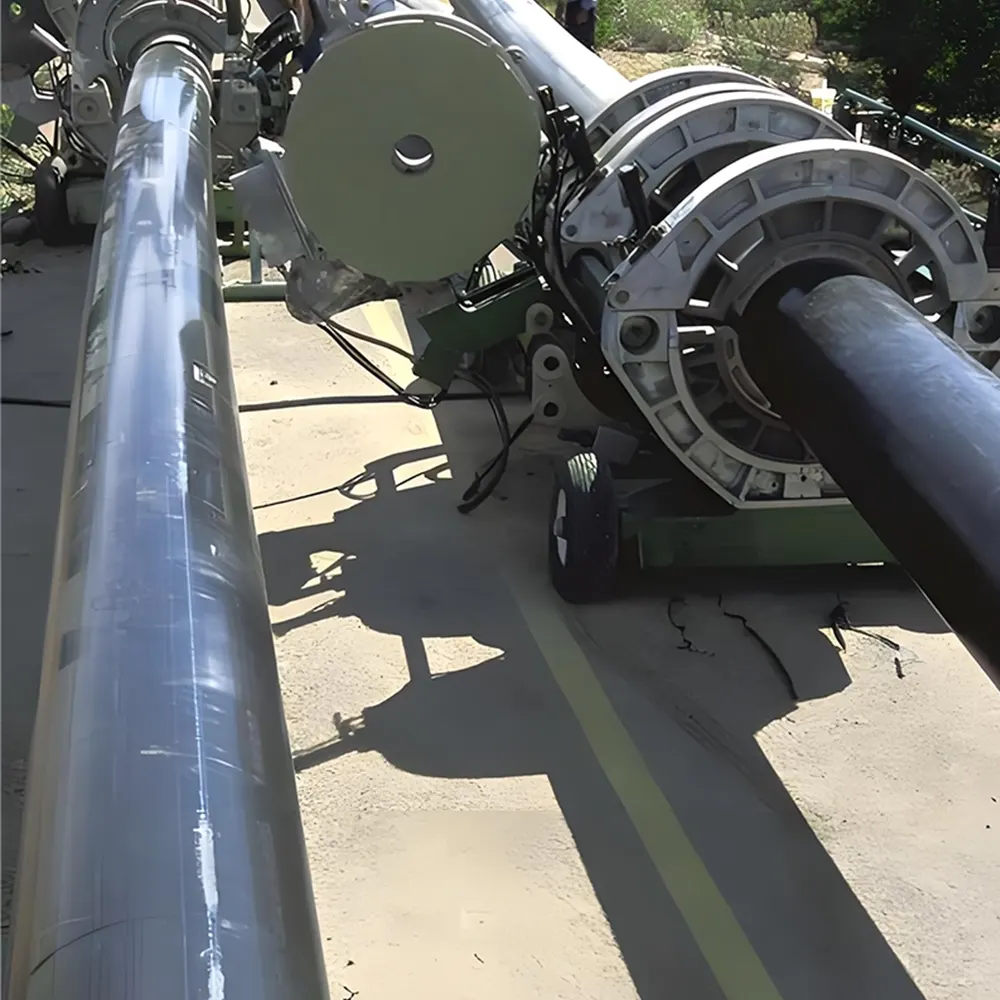
HDPE piping systems are widely used in water supply, gas distribution, mining, and industrial infrastructure because they are lightweight, corrosion-resistant, and built for long service life. Among the available joining methods, butt fusion is one of the most trusted techniques for creating a strong, leak-free, and permanent connection. When performed correctly, it produces a joint that is as strong as the pipe itself and suitable for demanding field conditions.
The butt fusion machine plays a central role in this process. It controls heating, alignment, pressure, and cooling to ensure that every weld meets the necessary quality standard. Understanding the full butt fusion welding procedure helps contractors, technicians, and distributors achieve consistent results while reducing installation risks.
Key idea: Butt fusion is not just “melting and pressing” two pipe ends together. It is a controlled thermal welding process that requires proper pipe preparation, accurate temperature management, correct fusion pressure, and sufficient cooling time.
What Is Butt Fusion Welding for HDPE Pipe?
Butt fusion welding is a thermal joining method used for HDPE pipes and fittings of the same material and diameter range. The ends of two components are first trimmed, aligned, heated with a fusion plate, and then joined under controlled pressure. After cooling, the result is a single continuous pipeline with excellent mechanical strength and sealing performance.
This welding method is especially important in projects where long-term reliability matters. Water pipelines, gas networks, and industrial transport systems often require joints that can withstand pressure fluctuations, soil movement, and harsh operating environments. For that reason, a proper procedure is essential, not optional.
Why Butt Fusion Is Preferred in HDPE Projects
Benefits of butt fusion welding:
✓ Creates a joint with high structural strength
✓ Reduces the risk of leakage in pressurized systems
✓ Supports long pipe runs with fewer weak points
✓ Suitable for large-diameter HDPE pipes
✓ Helps lower maintenance costs over the lifecycle of the project
Compared with mechanical joints, butt fusion offers a more permanent and uniform connection. It is also ideal for systems exposed to vibration, ground settlement, or thermal expansion. However, the quality of the weld depends heavily on the skill of the operator and the condition of the welding machine.
Step-by-Step Butt Fusion Welding Procedure
1. Prepare the Work Area
Before welding begins, the work area should be clean, dry, and stable. Dust, water, oil, and mud can seriously affect joint quality. If the job is performed outdoors, technicians should also protect the pipe ends from wind, rain, and direct contamination.
Important: Good preparation reduces welding defects. Even a high-quality machine cannot compensate for poor site conditions or dirty pipe ends.
2. Inspect the Pipe and Machine
The HDPE pipe must be checked for ovality, damage, and dimensional accuracy. The fusion machine should also be inspected for hydraulic pressure stability, clamp alignment, heating plate cleanliness, and cutter sharpness. These checks are essential for maintaining accurate fusion conditions.
Reliable equipment makes a major difference. Manufacturers with strict quality control and stable production standards help ensure that every unit performs consistently in the field. This is one reason many contractors choose trusted suppliers with engineering support and proven export experience.
3. Clamp and Align the Pipe Ends
The pipe sections are placed into the machine clamps and carefully aligned. Proper alignment is critical because even a small offset can create stress concentration in the final joint. The operator should ensure that the pipe axes are centered and that the ends are securely held without slippage.
At this stage, the machine must maintain firm grip and symmetry. In professional settings, clamp alignment inspection is part of quality control because precise positioning directly affects joint integrity.
4. Face the Pipe Ends
A facer or trimmer is used to remove a thin layer from both pipe ends, creating smooth, even surfaces. Facing eliminates oxidation, dust, and surface irregularities, allowing the two ends to meet perfectly during fusion. After facing, the operator should close the pipe ends together briefly to check whether a uniform gap has been removed.
Tip: A clean facing result indicates good alignment. If the cut surface is uneven, the pipes should be refaced before continuing.
5. Heat the Pipe Ends
The heated fusion plate is inserted between the pipe ends. Both ends are pressed against the plate under the specified initial pressure so the surface material softens evenly. The heating temperature must be controlled accurately; too little heat results in weak fusion, while excessive heat can degrade the polymer and weaken the joint.
Most HDPE butt fusion machines are designed to deliver stable heating performance. Advanced equipment often includes precise temperature control and reliable plate calibration, which helps reduce operator error and improve consistency across different job sites.
6. Remove the Heating Plate and Join the Pipe Ends
After the heating time is complete, the heating plate is removed quickly and cleanly. The softened pipe ends are then brought together under the prescribed fusion pressure. This transfer must happen promptly to avoid heat loss. Once joined, a uniform bead should form around the circumference of the weld.
Remember: Timing matters. Delays during plate removal and joint closure can reduce the quality of the fusion and affect the final bead shape.
7. Hold and Cool Under Pressure
After joining, the pipe must remain clamped and undisturbed during the cooling phase. Cooling under pressure allows the molten material to solidify properly and form a stable bond. If the joint is moved too early, the weld may be distorted or weakened.
Cooling time depends on pipe size, wall thickness, and ambient conditions. Professional welding procedures always include this step because it is essential for long-term joint durability.
8. Inspect the Finished Weld
A completed butt fusion joint should have a symmetrical bead, consistent size, and no visible defects such as burn marks, contamination, misalignment, or uneven extrusion. Visual inspection is the first step, but quality assurance may also include logging weld parameters for traceability.
In major projects, especially gas or municipal infrastructure, documented inspection is often required. This helps contractors prove compliance and maintain confidence in the installation quality.
Main Factors That Affect Welding Quality
Temperature control: Stable heat is essential for proper softening and fusion.
Pressure accuracy: Fusion pressure must be set according to pipe diameter and wall thickness.
Pipe cleanliness: Contamination can weaken the bond and increase failure risk.
Operator skill: Correct timing and handling are vital for a smooth, strong weld.
Machine quality: A durable machine with stable clamping and heating systems improves repeatability.
Types of Butt Fusion Welding Machines
Different project requirements call for different machine configurations. Manual machines are often suitable for smaller jobs and simpler site conditions. Hydraulic machines provide better pressure control for medium and large pipe sizes. CNC automatic machines are preferred where precision, productivity, and standardized parameter control are especially important.
Professional manufacturers such as JQ-Fusion supply a wide range of solutions to cover various pipe diameters and project needs. Their product range includes hydraulic butt fusion welding machine, automatic butt fusion welding machine, electrofusion welding machine, and multi-angle pipe fitting welding machine, helping contractors choose the right tool for the right application.
Where Butt Fusion Is Commonly Used
Butt fusion welding is used across many industries because HDPE piping is versatile and durable. In water supply systems, it helps create secure transmission lines. In gas distribution, it supports tight, reliable connections that are critical for safety. In mining, it performs well under demanding conditions. In industrial installations, it helps connect process lines with long service life and reduced leakage risk.
Typical applications include:
★ Municipal water pipelines
★ Gas networks
★ Mining slurry and drainage systems
★ Industrial fluid transport pipelines
Why Choose a Reliable Manufacturer
Selecting a trusted manufacturer is just as important as understanding the welding procedure. A reliable supplier provides stable performance, strict quality control, technical guidance, and after-sales support. This is especially valuable for international contractors and distributors who need fast delivery and consistent product quality.
JQ-Fusion stands out with more than 20 years of industry experience, advanced manufacturing technology, and flexible OEM & ODM customization. Their factory capability, large inventory, and global support make them a practical partner for project-based procurement and long-term market development. Certifications such as SGS compliance further support confidence in product reliability and safety.
For contractors and distributors: choosing a supplier with strong technical support, stable stock, and proven export experience can reduce project delays and improve customer satisfaction.
Best Practices for Successful HDPE Butt Fusion
To achieve dependable results, welders should follow standard procedures, keep tools clean, record parameters, and never rush the cooling stage. Training is also important, because even a good machine requires correct operation. A disciplined approach leads to stronger joints, fewer repairs, and better long-term pipeline performance.
In addition, regular maintenance of the welding machine helps preserve temperature accuracy, hydraulic pressure stability, and clamp alignment. These factors directly affect weld quality and should be part of every project management plan.
FAQ
Q1: How strong is a butt fusion joint for HDPE pipe?
A properly executed butt fusion joint can be as strong as the pipe itself, making it suitable for pressure piping applications.
Q2: Can different HDPE pipe brands be butt fused together?
In most cases, yes, if the materials are compatible and the pipe dimensions match. Always confirm material grade and standards before welding.
Q3: What is the most common cause of weld failure?
Poor pipe preparation, incorrect temperature, improper pressure, or contamination are among the most common causes of failure.
Q4: Which machine is better for large HDPE projects?
Hydraulic or CNC automatic butt fusion welding machines are generally preferred for larger pipe diameters and projects that require better precision and productivity.
Q5: Why is cooling time so important?
Cooling time allows the fused material to solidify under pressure, which helps create a durable, stable, and reliable joint.



