
The success of a pipe welding project is determined long before the first joint is fused. A safe and efficient welding result depends on how well the site is prepared, how the crew is organized, and how the equipment is handled from the beginning. For contractors, project managers, and welders working with HDPE and other pipeline systems, a structured preparation process helps reduce defects, improve productivity, and protect workers on site. When the work area is planned correctly, the welding operation becomes smoother, more predictable, and more durable in the long term.
Pipe welding site preparation is not only about cleaning the work area. It includes access planning, equipment placement, safety control, weather protection, material inspection, power readiness, alignment support, and quality documentation. Each step has a direct effect on the fusion quality and on the efficiency of the whole project. A well-prepared site reduces rework, shortens downtime, and creates the right conditions for consistent welding performance.
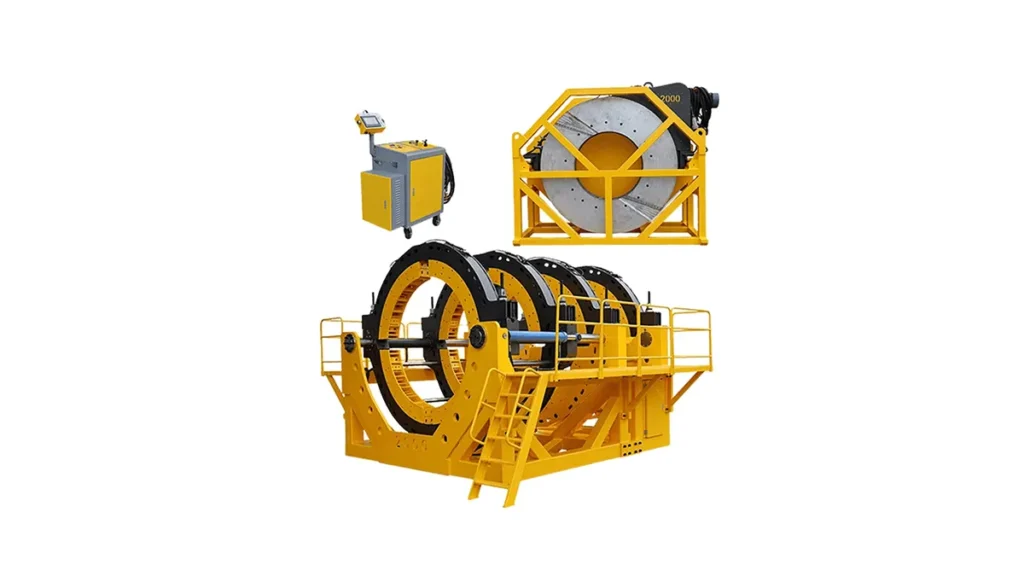
For projects that require dependable fusion equipment, choosing a reliable butt fusion machine can also make site preparation easier, because stable machinery supports accurate alignment, controlled heating, and repeatable joint quality. That is why many engineers treat the welding site as part of the quality system rather than just a work location.
1. Start With a Site Survey
Before any welding begins, the team should inspect the full site and understand the working conditions. A site survey identifies space limitations, uneven ground, access routes, nearby hazards, and environmental challenges. This first step helps the project team decide where to place the machine, where to store pipes, and where to organize the welding sequence.
During the survey, confirm whether the site can support the weight of the welding machine and pipe sections. Ground stability matters because any movement during heating or fusion can damage the alignment of the joint. If the surface is soft, muddy, or sloped, the area should be compacted or leveled before work starts.
⚠ Key point: A stable, level working area is one of the most important conditions for achieving strong and uniform pipe welds.
2. Prepare a Safe Work Zone
Safety is the foundation of efficient pipe welding. The work zone should be clearly marked and separated from unauthorized personnel. Use barriers, warning signs, and access control measures to keep the area organized and reduce accidental exposure to hot surfaces, moving equipment, and electrical hazards.
It is also important to ensure that the welding zone is free of flammable materials, loose tools, and unnecessary traffic. Workers should have enough room to move safely around the machine, pipe ends, and auxiliary tools. In large projects, the site should be divided into functional areas such as pipe storage, preparation, welding, inspection, and cooling.
Tip: Keep the welding area dry and well-drained. Water, mud, and dust can create safety issues and reduce joint quality.
3. Check Environmental Conditions
Environmental conditions affect heat transfer, operator comfort, and weld consistency. Wind, rain, dust, extreme heat, and extreme cold can all interfere with fusion performance. If the site is outdoors, the team should plan for weather protection such as tents, wind shields, or temporary shelters.
Temperature control is especially important in pipe welding. Excessive cold can make pipe ends harder to heat evenly, while strong sunlight may increase surface temperature and affect timing. Dust and airborne particles should also be controlled because contamination on the pipe surface can weaken the weld.
In many industrial projects, stable site conditions are as important as the machine itself. That is why professional contractors often combine good site planning with reliable equipment from experienced manufacturers such as JQ-Fusion, whose welding solutions are designed for demanding pipeline work.
4. Inspect and Organize Materials
Proper material handling begins before the weld is made. All pipe sections, fittings, and accessories should be checked for damage, contamination, deformation, and dimensional accuracy. Any scratched, cracked, or out-of-round pipe should be set aside for review, because damaged ends can create weak fusion areas.
Pipe storage should be arranged so that materials are easy to access without causing damage. Keep pipes on supports or racks instead of placing them directly on the ground. This helps prevent bending, dirt buildup, and accidental impact. If the project uses different pipe sizes or batches, clear labeling is important to avoid mix-ups during installation.
Checklist: verify pipe diameter, wall thickness, cleanliness, storage condition, and traceability before welding starts.
5. Position the Welding Machine Correctly
The machine setup has a major impact on joint quality. The butt fusion machine should be placed on a firm, level base with enough room for pipe movement, clamp operation, heater placement, and facing tools. Poor placement can cause alignment errors and increase operator fatigue.
Operators should also confirm that the machine is properly calibrated and that all components are functioning correctly. The clamps must hold the pipe securely without slippage, and the heating plate should reach and maintain the correct temperature. Hydraulic and electrical systems should be checked before production begins.
For contractors seeking consistent performance in demanding projects, a reliable butt fusion machine helps reduce setup issues and improve repeatability across multiple joints. Strong machine performance supports both efficiency and weld reliability.
6. Ensure Power and Utility Readiness
Many welding delays are caused by incomplete utility preparation. Before work begins, confirm that the site has the correct power supply, extension cable capacity, generator support if needed, and grounding protection. The machine should receive stable voltage to prevent heating errors or unexpected shutdowns.
If the site uses a generator, the output must be sufficient for the welding machine and any auxiliary devices. Cable routes should be safe, protected from traffic, and free of damage. In addition, operators should know where emergency shutoff points are located in case of power failure or equipment malfunction.
Important: Unstable power can cause temperature fluctuation, which directly affects weld strength and joint consistency.
7. Train the Crew Before Welding Begins
Even the best equipment cannot deliver safe results without trained operators. Every crew member should understand the welding sequence, safety procedures, emergency actions, machine controls, and inspection requirements. Training reduces mistakes and improves the speed of the entire operation.
A pre-job briefing is a practical way to make sure everyone understands the day’s tasks. The team should review pipe size, weld count, temperature targets, cooling time, inspection steps, and communication signals. If multiple crews are working on the same project, coordination becomes even more important.
Companies with strong technical support, such as JQ-Fusion, often provide guidance for installation and operation. This can help contractors shorten learning time and improve their field results.
8. Control Surface Cleanliness and Joint Preparation
Pipe ends must be clean before facing and heating. Dirt, grease, moisture, and oxidation layers can all interfere with fusion. The joint area should be wiped and inspected carefully so that the pipe surfaces are ready for accurate trimming and heating.
Joint preparation includes facing the pipe ends, checking alignment, and removing debris from the work area. The operator should confirm that the ends are square and that the gap, mismatch, and ovality are within acceptable limits. If the pipe is not aligned correctly, the weld may fail under pressure or during long-term use.
Clean preparation also improves efficiency because it reduces troubleshooting later. A neat joint area lets the operator move through the process faster and with more confidence.
Essential pre-weld cleanliness checks
- Remove dust, mud, and oil from all pipe ends
- Inspect for cracks, dents, and deformation
- Keep tools and consumables organized and dry
- Protect prepared surfaces from recontamination
9. Plan the Welding Sequence and Workflow
Efficient welding is the result of good workflow planning. The team should know which joints will be welded first, how pipe sections will be moved, and where each completed weld will be inspected. Proper sequencing reduces waiting time and avoids unnecessary machine repositioning.
On larger pipeline projects, it is often useful to stage materials by section and weld priority. This prevents congestion and supports continuous operation. When the work sequence is organized correctly, workers can focus on quality rather than on searching for materials or clearing the workspace.
Workflow advantage: A clear sequence improves productivity, reduces machine idle time, and helps maintain stable weld quality.
10. Prepare Quality Control and Documentation
Quality control should start before the first weld, not after a defect is found. Inspection forms, traceability records, temperature logs, and operator checklists should be ready on site. These documents help verify that the welding process followed project requirements and industry standards.
Good documentation is useful for accountability, project handover, and future maintenance. It also helps identify recurring problems, such as temperature variation, pipe mismatch, or equipment wear. When records are complete, the project team can make better decisions and improve future performance.
For companies with international project requirements, equipment sourced from certified manufacturers can support documentation needs. JQ-Fusion products are manufactured with quality control procedures and are certified by SGS, helping customers maintain confidence in machine reliability.
Documentation items to prepare
- Machine inspection checklist
- Joint temperature and pressure records
- Pipe identification and batch tracking
- Operator sign-off and quality approval forms
11. Use the Right Equipment for the Project
Different projects need different welding solutions. Small utility lines may require compact equipment, while large-diameter pipelines often need hydraulic or CNC automatic systems. Choosing the right machine improves both safety and efficiency because the equipment matches the project’s scale and technical demands.
A professional supplier should be able to offer multiple configurations, such as manual, hydraulic, and automatic systems, along with customization for voltage, machine size, and branding. This flexibility matters for contractors working across different regions and pipeline standards.
Best practice: Match the machine to the pipe diameter, project location, and required welding output instead of using one general setup for every job.
12. Final Pre-Weld Confirmation
Before welding starts, the site should pass a final review. This includes checking the machine setup, pipe alignment, safety barriers, environmental conditions, utility supply, and crew readiness. A final confirmation prevents avoidable mistakes and allows the team to begin with confidence.
At this stage, the supervisor should confirm that the work zone is clear, the heater is clean, the pipe ends are prepared, and the parameters are correct. Any issue found during the final review should be corrected immediately rather than ignored. Small problems at the beginning often become larger problems after the first weld is made.
Conclusion
Pipe welding site preparation is the core of safe and efficient welding performance. A successful project depends on more than technical skill; it requires a well-organized environment, reliable equipment, trained personnel, and strict attention to detail. From the first site survey to the final pre-weld inspection, every step contributes to joint strength, operator safety, and project productivity.
When contractors invest time in preparation, they reduce rework, improve output, and protect the long-term reliability of the pipeline. That is why experienced teams treat site setup as a quality control process, not a simple formality. The right preparation process creates the right conditions for consistent fusion and smoother project delivery.
Frequently Asked Questions
What is the most important step in pipe welding site preparation?
The most important step is creating a stable, clean, and safe work area. Without proper ground support, safety control, and environmental management, weld quality can suffer and production may slow down.
Why does machine positioning matter so much?
Correct machine positioning helps maintain alignment, prevents pipe movement, and supports accurate heating and fusion. Poor placement can lead to defects and extra downtime.
How can weather affect welding quality?
Wind, rain, dust, and extreme temperatures can change heating behavior, contaminate pipe surfaces, and reduce operator control. Protective measures such as shelters and wind barriers help maintain stable conditions.
What should be checked before the first weld?
Confirm pipe cleanliness, alignment, machine temperature, hydraulic pressure, power supply, site safety, and crew readiness. A final checklist prevents avoidable errors.
How does good preparation improve efficiency?
Good preparation reduces delays, prevents rework, and keeps the welding process moving smoothly. It allows the crew to focus on consistent output instead of solving preventable problems.



