

Choosing the right pipe welding equipment is a critical decision for engineering teams and contractors working on HDPE, PE, or thermoplastic pipeline projects. This guide breaks down selection criteria, cost drivers, and a practical cost-analysis approach to help you choose equipment that delivers reliability, efficiency, and long-term value.
Why Proper Equipment Selection Matters
The right welding machine reduces rework, increases joint integrity, and lowers project lifecycle costs. Factors such as pipe diameter, wall thickness, environmental conditions, production rate, and operator skill determine whether a manual, hydraulic, or automatic system is most appropriate. A wrong choice can lead to higher operating costs, schedule delays, and potential safety issues.
Common Welding Equipment Types
Select the class of machine based on job scale and precision requirements:
Manual Butt Fusion Machines
Simple, portable, and cost-effective for small-diameter pipelines and low-volume jobs. Requires skilled operators to ensure consistent heating and alignment.
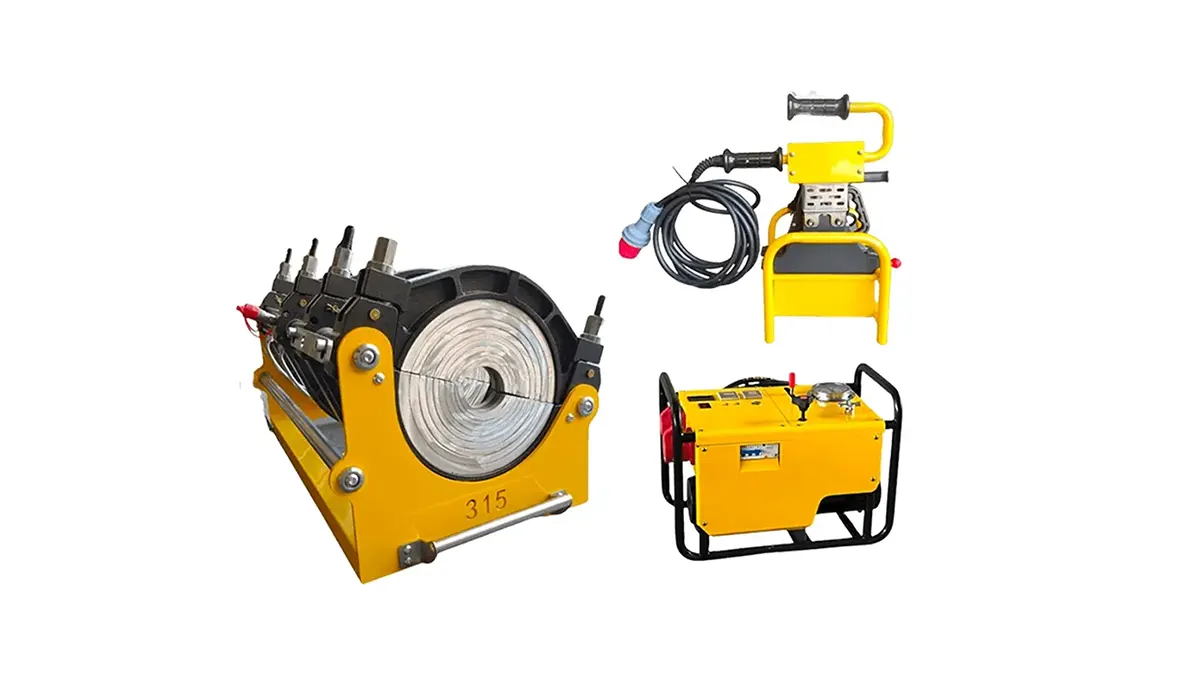
Hydraulic Butt Fusion Machines
Provide stronger clamping and controlled pressure — ideal for medium to large diameters and frequent site work. Good balance of portability and power.
Automatic / CNC Butt Fusion Machines
Offer programmable cycles, data logging, and high repeatability. Best for long runs, factory settings, or projects requiring traceability.
Electrofusion Units & Multi-Angle Fitting Machines
Electrofusion excels for fittings and repairs, while multi-angle machines speed up production for complex fittings or prefabricated assemblies.
Side-by-side Cost & Capability Table
| Machine Type | Diameter Range | Typical Unit Cost (USD) | Best For |
|---|---|---|---|
| Manual Butt Fusion | 20–315 mm | $1,500–$6,000 | Small jobs, contractors |
| Hydraulic Butt Fusion | 63–2000 mm | $8,000–$120,000 | Medium–large projects, site work |
| Automatic / CNC Machines | 63–1250+ mm | $25,000–$150,000+ | High throughput, traceability |
| Electrofusion Units | Couplers & fittings | $1,200–$10,000 | Repairs, small-bore works |
Selection Checklist — Key Factors to Evaluate
Use this checklist to match equipment to project needs:
- Pipe diameter & SDR/Wall thickness — determine clamp and heater plate sizes.
- Project scale & throughput — manual for low volume, automatic for continuous production.
- Site conditions — rugged hydraulic frames for remote or harsh environments.
- Power availability — some automatic machines require stable mains or generator supply.
- Traceability & control — automatic/CNC units offer data logging and consistent parameters.
- Operator training — invest in certified training to reduce joint failure risk.
Cost Analysis: CAPEX vs OPEX
A robust cost model includes initial capital expenditure (CAPEX), operating expenses (OPEX), consumables, and downtime risk. Typical cost categories:
- CAPEX: machine purchase, transport, and setup.
- OPEX: fuel or power, maintenance, replacement heater plates, electrodes, and hydraulic oil.
- Labor: operator wages and training time.
- Quality control: testing, certification, and documentation costs.
- Depreciation & resale value.
Illustrative ROI Example
Example: A contractor chooses a hydraulic butt fusion machine for medium-diameter mains.
– Purchase price: $28,000
– Average weld time: 30–45 min (including prep) → about 12–16 joints/day
– Labor & fuel per day: $220
– Revenue per joint (contract rate): $40
Daily margin = (16 joints × $40) – $220 = $420 → Monthly margin (~22 working days) ≈ $9,240.
Payback period (CAPEX / monthly margin) ≈ $28,000 / $9,240 ≈ 3.0 months (simple example, before tax & overhead).
This demonstrates how higher initial investment in faster, reliable equipment can produce rapid payback on recurring pipeline projects.
Procurement & Cost-saving Tips
– Compare total cost of ownership, not just unit price. Include training, spare parts, and service availability.
– For repeated city-wide projects, prioritize automatic machines for speed and traceability.
– Negotiate bundled packages: machines + spare heater plates + training often lower life-cycle cost.
– Check standards compliance and certificate support for gas or water distribution projects.
Maintenance & After-sales Considerations
Routine maintenance ensures consistent joint quality: check heater plate surfaces, calibrate pressure gauges, replace seals and hydraulic oil on schedule. Evaluate supplier service terms and availability of consumables. Quick spare parts delivery and responsive technical support can prevent costly downtime.
Vendor Selection — What to Ask
Ask potential suppliers about warranty terms, training offerings, local technical support, certification documentation, and real project references. Request sample weld records or data logs from automatic machines. Verify compatibility with your pipe materials and project-specific standards.
Final Note
For reliable HDPE butt fusion solutions and a broad product range covering manual, hydraulic, and automatic machines, consider contacting JQ-Fusion for model recommendations, pricing, and training options tailored to your project scale and technical requirements: JQ-Fusion.



