
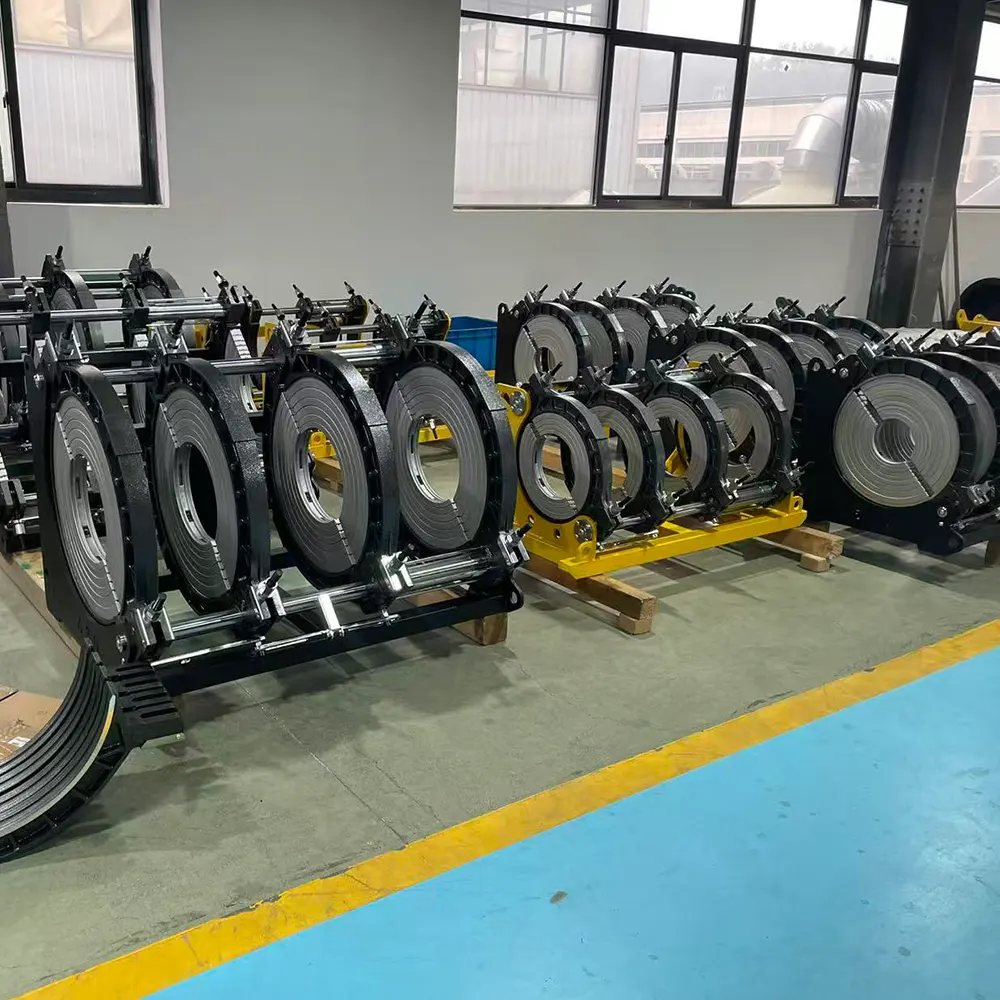
In modern pipeline construction, welding quality is not just a technical requirement—it is a direct factor that affects safety, service life, and long-term project cost. Whether the job involves water supply systems, gas distribution networks, mining pipelines, or industrial installations, the final weld must be stable, precise, and traceable. That is why more and more contractors and manufacturers are turning to a butt fusion machine equipped with a data logging system to improve process control and welding consistency.
A welding machine data logger is a built-in or connected digital recording device that captures key welding parameters during the fusion process. These parameters usually include temperature, pressure, heating time, cooling time, hydraulic data, and operator actions. By recording this information in real time, the system creates a complete trace of each weld. This is especially valuable in projects where quality documentation, repeatability, and compliance are essential.
For pipe welding operations, a data logger acts like a digital witness. Instead of relying only on manual notes or operator memory, it records every critical stage automatically. This helps teams detect deviations immediately, analyze weld performance later, and prove that every joint was completed under the correct conditions. In large-scale infrastructure projects, this level of control can make a major difference in overall project quality.
Key point: A welding machine data logger improves quality by making the welding process measurable, repeatable, and verifiable. That means fewer hidden errors and stronger confidence in every joint.
What Is a Welding Machine Data Logger?
A welding machine data logger is an electronic monitoring and recording unit used to capture the parameters of each welding cycle. In butt fusion welding, the logger may be integrated into the machine control system or installed as an external module. Either way, its purpose is the same: to track what happens during the weld and store the data for review.
Typical recorded data can include:
● Heating plate temperature
● Fusion pressure
● Bead-up time
● Soak time
● Cooling time
● Joint number and operator ID
Some advanced systems also store ambient conditions, GPS location, machine serial number, and USB or cloud export files. This makes the weld record more complete and easier to use for inspection or project handover.
How the Data Logger Works
The working principle is straightforward. During the welding cycle, sensors and control components collect data from the machine and the fusion process. The logger converts these signals into readable values and stores them in memory. Depending on the machine design, the operator may view live information on a display, print a report, or export the data to a computer or mobile device.
In a typical butt fusion sequence, the logger monitors the following stages:
1. Preparation stage: The operator enters pipe size, job number, and other required details.
2. Heating stage: The logger records temperature stability and heating duration.
3. Fusion stage: Pressure and timing are tracked to ensure the pipe ends join under correct force.
4. Cooling stage: The logger confirms that the joint remains undisturbed for the proper cooling period.
This continuous record helps remove guesswork from the process. If a weld fails inspection, the team can go back to the logged data and identify whether the issue came from low temperature, incorrect pressure, premature movement, or operator error.
Important: Data logging does not replace skilled operators. Instead, it supports them by reducing risk and making high-quality results easier to repeat.
Why It Matters for Welding Quality
Welding quality depends on consistency. Even a small variation in temperature or pressure can weaken the bond between pipe ends. In pipeline systems that carry water, gas, slurry, or chemical fluids, a weak weld may lead to leakage, pressure loss, or costly repairs. A data logger helps solve this problem by ensuring each weld follows the same approved procedure.
It improves quality in several important ways:
Better process control: Operators can maintain correct settings throughout the weld cycle.
Higher repeatability: The same procedure can be repeated across many joints with less variation.
Faster troubleshooting: If problems occur, logged data helps identify the root cause quickly.
Improved accountability: Each weld can be linked to a specific machine, operator, and time.
Stronger compliance: Project managers can present records during inspection or quality audits.
For contractors handling large diameter pipe projects, this is especially valuable. When dozens or hundreds of joints must meet the same quality standard, manual supervision alone is rarely enough. The logger provides a consistent digital record that supports both quality assurance and project documentation.
Benefits for Butt Fusion Projects
JQ-Fusion focuses on professional HDPE pipe welding equipment designed for reliable performance in demanding environments. In this field, data logging brings practical benefits across the whole workflow, from setup to final inspection.
1. Reduced welding errors
When the machine records key parameters automatically, the operator is less likely to miss a step or use the wrong setting.
2. Better project traceability
Each weld can be documented and traced, which is useful for quality management and warranty support.
3. Easier team training
Supervisors can review recorded welds with new staff and show exactly where improvements are needed.
4. More confidence in inspection
Inspectors and clients often feel more secure when they can review actual welding records instead of relying only on verbal confirmation.
5. Better long-term reliability
When welds are produced under controlled, recorded conditions, the completed pipeline is more likely to perform well over time.
For buyers looking for a dependable butt fusion machine, data logging is no longer just a premium feature. In many cases, it has become a practical requirement for professional pipeline work.
Manual, Hydraulic, and CNC Systems
Different types of fusion machines may include data logging in different ways. Manual butt fusion machines may rely on a separate recording tool or operator input. Hydraulic models often combine pressure monitoring with digital recording. CNC automatic machines usually offer the highest level of logging precision because they can control and record the full cycle automatically.
JQ-Fusion’s product range includes hydraulic butt fusion welding machines, automatic butt fusion welding machines, electrofusion welding machines, and multi-angle pipe fitting welding machines. In automated systems especially, the data logger can help standardize results across operators and shifts. This is useful when a project needs uniform quality in challenging field conditions.
The right system depends on pipe diameter, project type, local standards, and the level of documentation required. For smaller jobs, a simple logger may be enough. For large infrastructure projects, more advanced control and storage features may offer better value.
What to Look for in a Good Data Logger
Not all data logging systems are the same. A reliable welding machine logger should be accurate, easy to read, and durable enough for field use. It should also be simple enough for operators to use without slowing down the welding process.
Recommended features include: clear display, stable sensor reading, memory storage, report export, easy operation, and reliable protection against dust or vibration.
In addition, quality control matters. A manufacturer with strict testing procedures can ensure the logging system works properly with the machine’s temperature and pressure controls. At JQ-Fusion, machines are tested for temperature accuracy, hydraulic pressure stability, and clamp alignment inspection before delivery. This kind of quality discipline helps ensure the logger is recording real process conditions, not misleading data.
It is also wise to choose a supplier with strong technical support. If the logger needs setup, calibration, or troubleshooting, fast assistance can save valuable project time.
How Data Logging Supports Global Projects
International pipeline projects often involve strict standards, different work crews, and demanding timelines. A data logger helps unify the process across locations by creating a shared record format. This is useful for contractors working in water supply systems, gas networks, mining sites, and industrial installations.
JQ-Fusion’s experience in global markets shows that customers often need more than just a machine—they need a complete solution. That includes stable welding performance, customized configurations, fast delivery, and technical support. A data logging system fits naturally into that approach because it improves both operational control and documentation quality.
For OEM and ODM clients, customization can be especially important. Branding, voltage, machine design, and project-specific settings may all need adjustment. In many cases, the logging interface can also be tailored to local language or reporting preferences, making the equipment easier to use across different markets.
Learn more about the company and product solutions at https://jq-fusionwelding.com/.
Common Problems a Data Logger Helps Prevent
Many welding defects are caused by small but important process deviations. A logger helps reduce the chance of these issues becoming hidden problems.
Incorrect fusion temperature: If the heating plate is too hot or too cold, the joint may not form properly.
Wrong pressure application: Too much or too little force can affect bead formation and bond strength.
Short heating or cooling time: Rushing the cycle can weaken the joint before it stabilizes.
Operator inconsistency: Different workers may follow steps differently unless the machine supports a controlled process.
Missing records: Without documentation, it becomes harder to prove that the weld met project requirements.
By capturing these details automatically, the machine helps the team stay focused on quality instead of paperwork. That is a major advantage on busy construction sites where time and accuracy both matter.
Practical takeaway: The best welding quality comes from combining skilled operation, stable equipment, and accurate recording. The data logger supports all three.
Conclusion
A welding machine data logger is more than a convenience feature. It is a quality control tool that helps transform welding from a manual, experience-based process into a controlled and documented operation. By recording temperature, pressure, timing, and other key parameters, it improves consistency, reduces mistakes, and supports project compliance.
For butt fusion applications, especially in critical pipeline systems, this technology can significantly improve confidence in every joint. When combined with reliable equipment, strict quality control, and professional support, it helps contractors achieve stronger, safer, and more traceable welding results.
As projects become larger and standards become stricter, the role of data logging will continue to grow. Manufacturers like JQ-Fusion, with over 20 years of industry experience and a focus on stable, customizable solutions, are helping the industry move toward smarter and more reliable welding practices.
Frequently Asked Questions
Q1: What does a welding machine data logger actually record?
It records important welding parameters such as temperature, pressure, heating time, and cooling time so each weld can be reviewed later.
Q2: Does a data logger improve weld strength?
It does not physically increase strength by itself, but it helps ensure the welding process follows the correct parameters, which leads to stronger and more reliable joints.
Q3: Is data logging useful for small projects?
Yes. Even small projects benefit from better traceability, fewer mistakes, and easier quality checks.
Q4: Can logged welding data be used for inspections?
Yes. Logged records are often used for quality audits, inspection reports, and project handover documentation.
Q5: Which welding machines usually have data loggers?
Hydraulic and CNC automatic butt fusion machines often include logging features, though some manual systems may use separate recording tools as well.



