
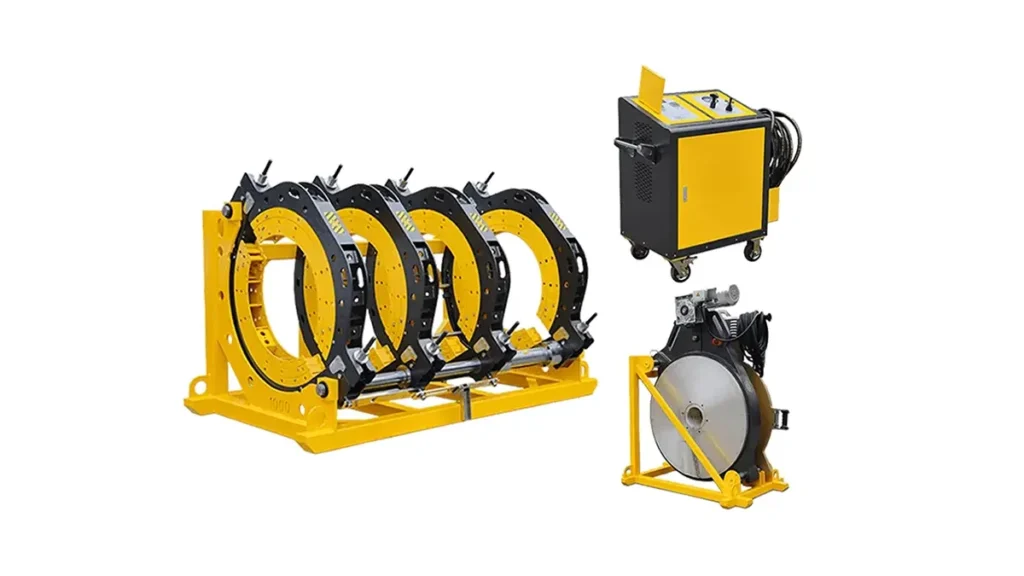
Pipe welding machines are essential tools for modern pipeline construction and industrial welding projects. This guide explains the types, applications, selection tips, and maintenance best practices for machines used to join HDPE and other thermoplastic pipes. Whether you manage municipal water networks, gas distribution, or large industrial systems, understanding pipe welding machine capabilities will help you deliver reliable, long-lasting welds.
Overview: What Is a Pipe Welding Machine?
Pipe welding machines — commonly referred to as butt fusion or electrofusion units — heat and fuse thermoplastic pipe ends to create continuous, leak-free joints. These machines range from compact manual frames for small-diameter work to large hydraulic and CNC automatic systems designed for heavy infrastructure projects. The right equipment improves joint strength, welding speed, and operator consistency.
Common Applications
Typical uses include:
-
Water supply and sanitation pipeline installation and repair.
-
Gas distribution networks where leak-free joints are mandatory.
-
Mining and slurry lines with abrasion-resistant HDPE pipes.
-
Industrial process piping for chemical and high-temperature fluids when compatible materials are used.
Types of Pipe Welding Machines
Choosing a machine type depends on pipe diameter, project scale, budget, and site conditions. Below are the main categories:
Manual Butt Fusion Machines
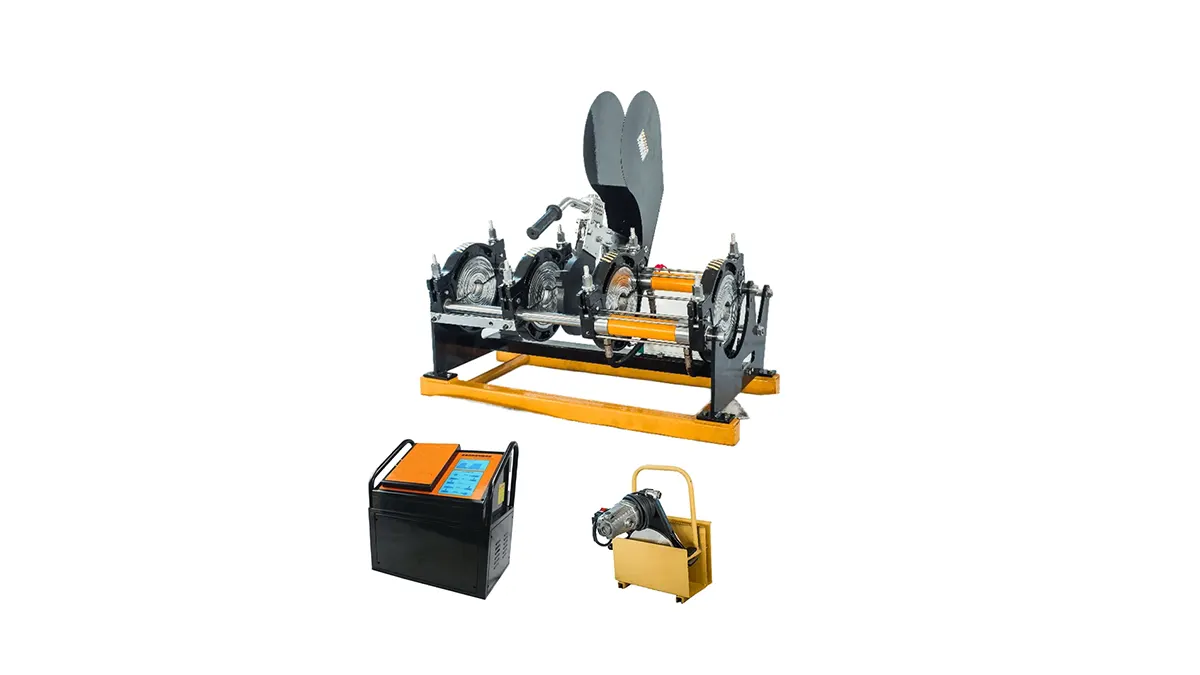
Lightweight and portable, these frames are ideal for small-diameter HDPE pipes and field repairs. Operators control alignment, heating, and fusion manually — a cost-effective choice for remote work.
Hydraulic Butt Fusion Machines
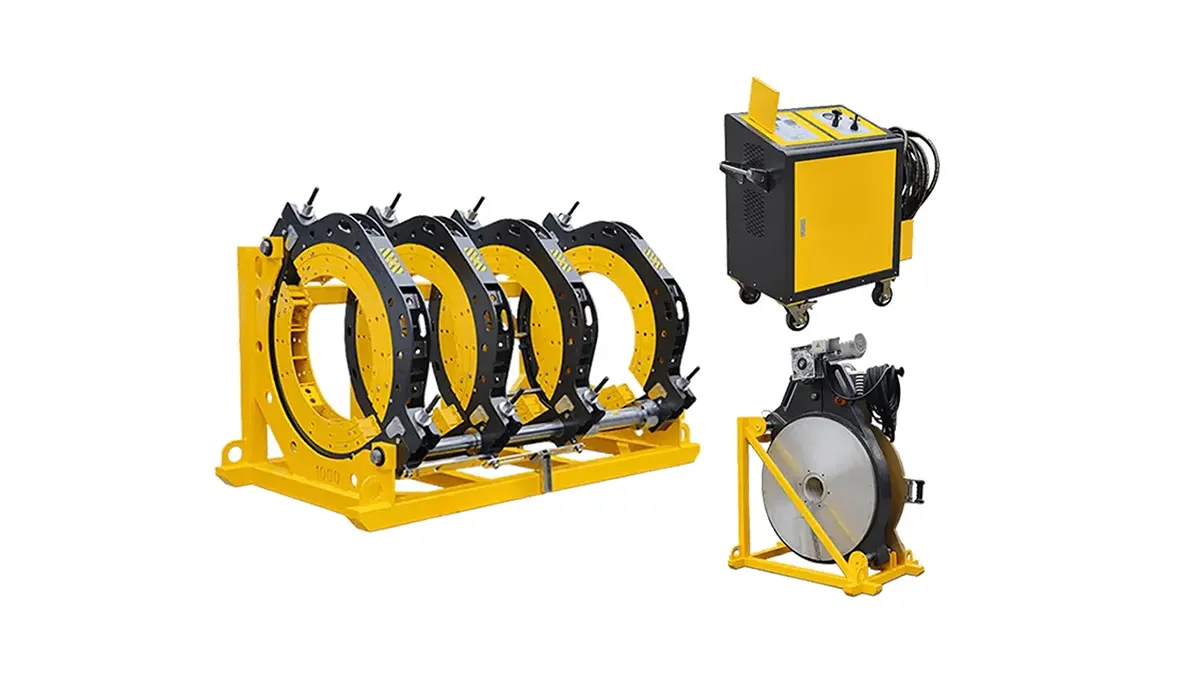
Hydraulic units provide powerful, consistent clamping and force for medium to large diameters. They are common on construction sites and in factory environments where repeatable weld quality is required.
Automatic and CNC Butt Fusion Machines
Automatic/CNC machines manage the full welding cycle electronically, ideal for high-volume production and strict QA/QC demands. They reduce operator error and document welding parameters for traceability.
Electrofusion Machines
Electrofusion units are used with specialized couplers and fittings that contain embedded heating elements. They are especially useful for confined spaces and repair work on existing pipelines.
Quick Comparison: Which Machine Fits Your Project?
| Machine Type | Best For | Pros |
|---|---|---|
| Manual Butt Fusion | Small diameters, remote sites | Lightweight, low cost |
| Hydraulic Butt Fusion | Medium to large diameters | High clamping force, consistent |
| Automatic / CNC | Production lines, strict QA | Traceable, low operator variance |
| Electrofusion | Repairs, fittings, tight spaces | Simple jointing, minimal prep |
How to Choose the Right Pipe Welding Machine
Evaluate the following criteria to select equipment that meets your project’s technical and commercial needs:
-
Pipe size range: Confirm the machine supports the minimum and maximum diameters you will weld.
-
Material compatibility: Most machines are optimized for HDPE and similar thermoplastics; verify compatibility with PE100, PE80, or other resins.
-
Site mobility vs. production capacity: Manual frames are portable; hydraulic and CNC units suit fixed production or heavy-duty pipelines.
-
Certification and traceability: For municipal and gas projects, choose machines that log welding parameters and comply with relevant standards.
-
Service and spare parts: Local support can reduce downtime; factor warranty and parts availability into purchase decisions.
Key Technical Specs to Check
Look for rated clamping force, heater plate uniformity, control accuracy (for CNC), hydraulic pressure range, and the machine’s documented welding procedure capabilities.
Maintenance, Safety, and Best Practices
Maintaining peak performance requires routine checks and safe operation:
-
Keep heater plates clean and scratch-free; defects affect fusion quality.
-
Calibrate pressure gauges and temperature controllers regularly.
-
Follow manufacturer welding procedures and environmental tolerances (temperature, humidity).
-
Train operators on joint preparation, alignment, and safety protocols — safety reduces rework and project delays.
Cost Considerations and ROI
Initial purchase cost varies widely by type and automation level. Factor in reduced labor costs, fewer reworks, and faster installation times when calculating ROI. For contractors engaged in repeated pipeline projects, investing in hydraulic or automatic systems often pays off through higher throughput and consistent quality.
Where to Buy and Support
Choose a reputable manufacturer with proven experience in HDPE welding equipment, clear documentation, and after-sales service. JQ-Fusion offers a wide range of manual, hydraulic, and automatic butt fusion welding machines for global infrastructure projects and provides technical support to help contractors maximize welding quality and efficiency. Visit https://jq-fusionwelding.com/ for product details and contact options.
Final Tips for Project Managers
Plan for proper storage of machines and accessories on site, ensure trained personnel are rostered for welding operations, and require welding logs for critical networks. Prioritizing quality and traceability early will prevent costly failures and secure long-term pipeline integrity.
Frequently Asked Questions
Can HDPE pipes be welded in cold weather?
Yes, but you must account for ambient temperature in the welding procedure. Use heaters with accurate temperature control and follow manufacturer cold-weather guidelines to ensure proper fusion.
What is the typical weld inspection method?
Common inspection methods include visual checks, mechanical testing of sample joints, and non-destructive testing where applicable. Automatic machines that log weld parameters make post-weld verification straightforward.
If you need tailored recommendations for specific pipe diameters, materials, or project environments, a manufacturer with broad product lines and application experience can advise on the optimal machine model and accessories.



