
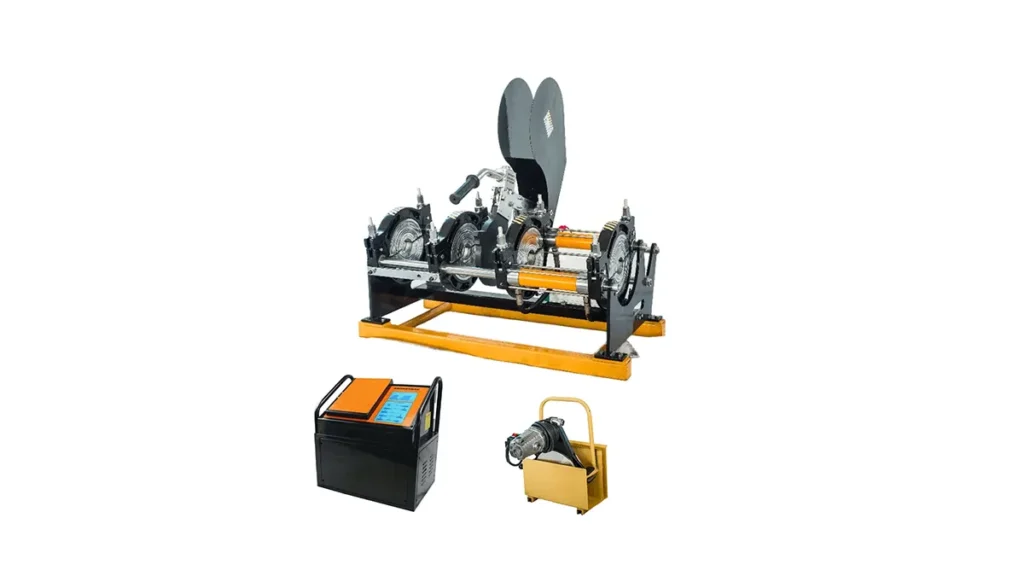
Efficient HDPE pipeline construction depends on the right butt fusion equipment, correct welding procedures, and disciplined maintenance. This guide explains HDPE pipe butt fusion machines, from manual units to fully automatic CNC systems, and provides practical selection, operation, and safety advice to help contractors and utility teams deliver leak-free, long-lasting joints.
What Is Butt Fusion Welding for HDPE Pipes?
Butt fusion welding joins two thermoplastic pipe ends by heating and pressing them together until the material flows and fuses into a homogeneous joint. This method is widely used for HDPE pipelines because it produces strong, corrosion-resistant connections suitable for water, gas, mining, irrigation, and industrial systems.
Key Advantages
-
Durability: Joints become as strong as or stronger than the base material.
-
Leak Resistance: Fusion produces continuous, seamless joints that resist leakage and infiltration.
-
Low Maintenance: Properly fused HDPE systems reduce lifecycle repair needs.
Types of Butt Fusion Machines
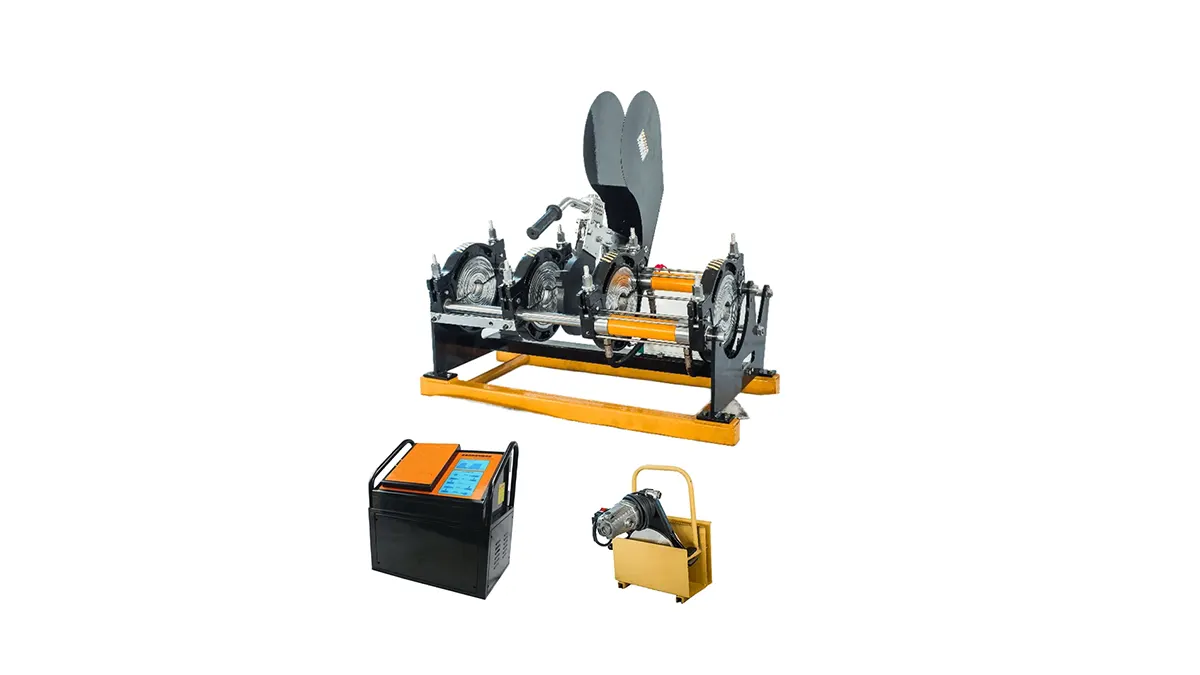
Manual Butt Fusion
Compact and affordable, manual machines are ideal for small-diameter pipes and remote jobs. They require experienced operators to control alignment, heating, and fusion time.
Hydraulic Butt Fusion
Hydraulic systems deliver controlled pressure and consistent clamping for medium to large diameters. They reduce operator fatigue and improve repeatability on longer pipeline runs.
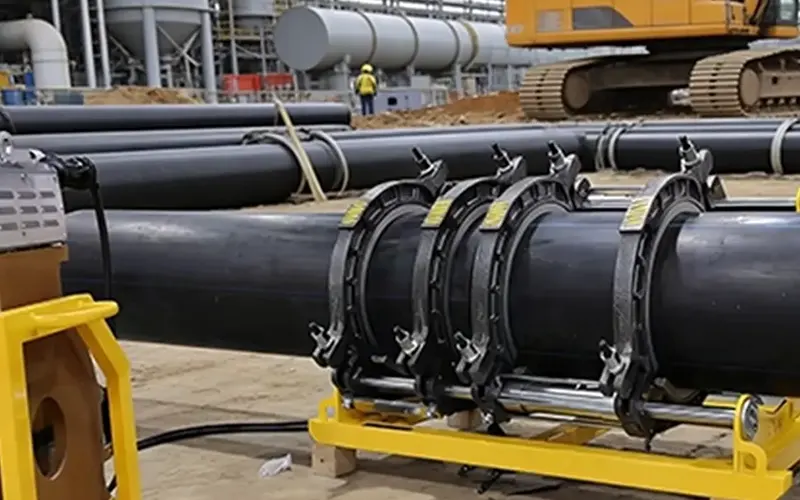
Automatic / CNC Butt Fusion
CNC automatic machines integrate programmable controls to manage heating, facing, and fusion pressures with exact timing. They are ideal for high-volume projects, critical infrastructure, and contractors seeking maximum consistency and traceability.
How to Choose the Right Machine
Select a butt fusion machine based on pipe diameter range, project scale, site conditions, and required automation. Consider the following:
-
Pipe Diameter Range: Confirm minimum and maximum sizes the unit accepts.
-
Automation Level: Manual for small jobs; hydraulic or CNC for productivity and consistency.
-
Site Mobility: Portable frames for fieldwork vs. heavy-stationary units for factory settings.
-
Service & Parts: Availability of spare parts and local support shortens downtime.
Standard Butt Fusion Procedure (Best Practices)
Follow a controlled, repeatable process to achieve reliable joints:
-
Preparation: Clean pipe ends, check for dimensional compliance, and align pipes in clamps.
-
Facing: Use a trimmer to create smooth, square surfaces.
-
Heating: Apply the heater plate at the correct temperature until a uniform melt bead forms.
-
Fusion: Remove heater and apply pressure per material and diameter specifications; hold until cool.
-
Cooling: Allow the joint to cool under restraint to prevent deformation.
Safety & Quality Controls
Ensure operator training, use of PPE, and adherence to recognized fusion standards (e.g., ISO, ASTM) to prevent failures. Regularly verify heating plate calibration, facing tool sharpness, and hydraulic system integrity.
Maintenance Checklist
-
Inspect and clean heater plates after use; avoid abrasive cleaners.
-
Check hydraulic fluid levels and hoses for leak-free operation.
-
Sharpen or replace facing cutters to maintain square ends.
-
Verify control electronics and sensors on automatic machines.
-
Store machines indoors or under cover to minimize corrosion.
Technical Comparison Table
| Type | Pipe Range (mm) | Automation | Typical Use |
|---|---|---|---|
| Manual | 20–160 | Low | Small repairs, rural sites |
| Hydraulic | 63–1600 | Medium | Municipal and industrial pipelines |
| Automatic / CNC | 63–2250+ | High | Large projects, quality-critical applications |
Common Applications
-
Water Supply: Pressure-rated mains and distribution networks.
-
Gas Distribution: Low-permeability joints reduce leak risk.
-
Mining & Industrial: Abrasion- and chemical-resistant HDPE piping for slurries and process fluids.
-
Agriculture & Irrigation: Long, reliable runs with minimal maintenance.
Buying Tips & ROI
-
Buy to match your typical project size — an oversized automatic unit isn’t cost-effective for occasional small-diameter work.
-
Consider long-term savings from reduced rework and faster cycle times with automated controls.
-
Request traceability and calibration records for machines used on safety-critical pipelines.
FAQ — Quick Answers
How long does a fusion joint take? Cycle time depends on diameter and machine type; small diameters can fuse in minutes, while large-diameter cooling may take much longer.
Can any operator run an automatic machine? Trained technicians are still required to set parameters, inspect joints, and maintain the equipment.
About JQ-Fusion
JQ-Fusion is a professional manufacturer specializing in HDPE pipe welding machines, offering manual, hydraulic, and CNC automatic butt fusion solutions tailored to global infrastructure projects. Visit https://jq-fusionwelding.com/ for product details and support.



