
When pipeline contractors, distributors, and project engineers compare joining technologies, one question comes up often: What are the advantages of electrofusion vs butt fusion? Both methods are widely used for polyethylene (PE) and HDPE piping systems, and both can produce strong, long-lasting joints when applied correctly. However, the right choice depends on project conditions, pipe size, available space, installation speed, operator skill, and long-term maintenance goals.
In simple terms, butt fusion is usually preferred for larger-diameter pipes, straight-line installations, and projects that demand high productivity. Electrofusion, on the other hand, is often the better solution for tight spaces, repair work, branch connections, and situations where alignment is difficult. Understanding the strengths of each process can help project teams improve welding quality, reduce risk, and save time on site.
What Is Butt Fusion?
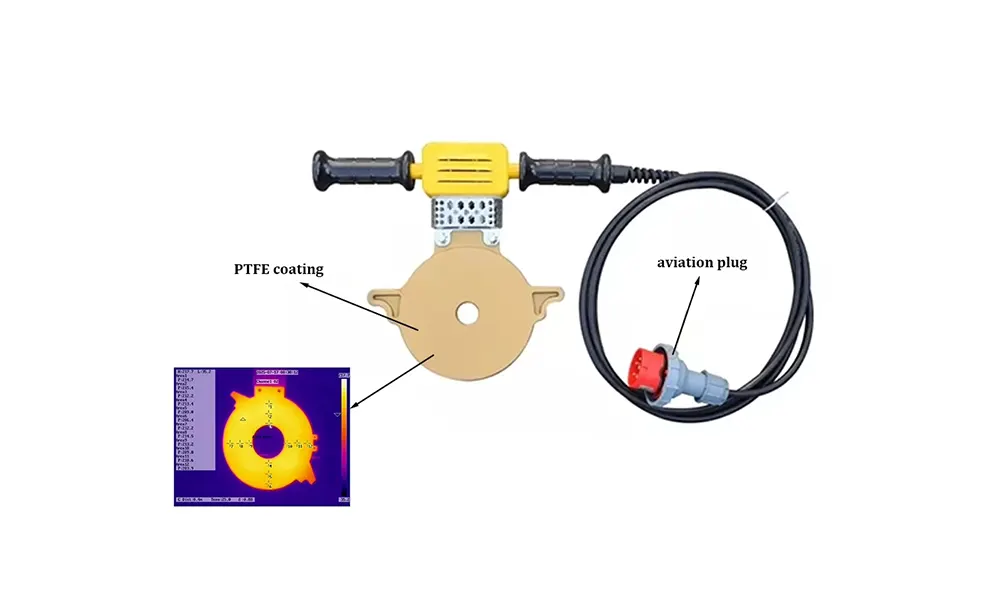
Butt fusion is a welding process where two pipe ends are heated with a fusion plate and then pressed together under controlled pressure until they form a single continuous joint. It is one of the most common methods for joining HDPE pipes in water supply, gas distribution, mining, and industrial pipeline projects. The method requires clean pipe ends, accurate alignment, and the right temperature and pressure settings.
Key benefit: butt fusion creates a homogeneous joint that can be as strong as or even stronger than the pipe itself when performed correctly.
For companies looking for dependable welding equipment, a high-quality butt fusion machine is essential. Reliable temperature control, stable hydraulic pressure, and accurate clamp alignment all contribute to successful results on site.
What Is Electrofusion?
Electrofusion uses fittings with embedded resistance wires. When electricity passes through the wires, the fitting and pipe surface melt and fuse together. This process is especially useful when the piping environment makes traditional fusion difficult. It is commonly used for branch connections, repairs, confined spaces, and locations where a machine cannot be easily installed.
Electrofusion fittings are highly practical because they reduce the need for large welding equipment and can be applied in compact work areas. In many network maintenance projects, this flexibility becomes a major advantage.
Advantages of Electrofusion vs Butt Fusion
Choosing between these two methods is not about which one is “better” in every case. It is about which one fits the project requirement most efficiently. Below are the major advantages of electrofusion compared with butt fusion, and also where butt fusion still holds a clear advantage.
1. Electrofusion Works Better in Tight or Restricted Spaces
One of the biggest advantages of electrofusion is its ability to work in confined areas. Since the process does not require large fusion machines, it is well suited for trenches, urban pipelines, utility corridors, and repair sites with limited room. This is especially helpful when pipe movement is restricted and setup time must be minimized.
Icon Tip: Electrofusion is often the preferred choice for emergency repairs and branch fittings where access is limited.
2. Easier for Complex Connections and Branching
Electrofusion is especially effective for tees, elbows, saddles, and irregular connection points. Butt fusion is excellent for straight pipe-to-pipe welding, but it is not as convenient for branch connections or fitting-based installations. When a project requires frequent transitions and accessory fittings, electrofusion can simplify the workflow.
For water distribution and gas networks, where many joints are not linear, this flexibility can reduce labor complexity and help crews complete installations more efficiently.
3. Less Dependence on Heavy Equipment
Butt fusion machines are highly effective, but they do require equipment setup, pipe clamping, alignment, and controlled pressure. Electrofusion reduces the need for large machinery, which can be useful for small crews or locations where transport and machine positioning are difficult. This makes electrofusion a practical option for field teams that need mobility and speed.
Practical note: fewer large tools on site can mean faster deployment, especially in repair and maintenance scenarios.
4. Better for Certain Repair Applications
When an existing pipeline requires partial replacement or local repair, electrofusion often provides a more practical solution. Crews can isolate the damaged area, prepare the surfaces, and install fittings without needing long pipe sections to be moved into a welding machine. This is one reason electrofusion is widely used in service lines and municipal maintenance work.
5. Butt Fusion Offers Excellent Joint Strength for Long Runs
Although electrofusion has many advantages, butt fusion remains highly valuable because of its strong, continuous joint structure. For long-distance pipelines and large-diameter projects, butt fusion typically offers better speed and lower joint cost per meter. The process is efficient for repetitive straight-line welding, making it ideal for infrastructure construction.
In many cases, the real advantage of butt fusion is not just strength, but productivity. When the site is open, well organized, and pipe alignment is simple, butt fusion can deliver outstanding performance with high consistency.
6. Better Cost Efficiency in Large Projects
Electrofusion fittings are usually more expensive than standard butt fusion joints, especially when many connections are required. For large-scale pipeline installation, butt fusion often becomes the more economical choice because the overall consumable cost is lower. If the project has long straight runs and repeatable pipe sizes, butt fusion is usually the more cost-effective solution.
Important: the lowest initial tooling cost is not always the best indicator of total project value. Consider labor, fittings, productivity, and rework risk.
7. Lower Operator Dependency in Some Cases
Electrofusion can be easier to standardize because the fitting itself controls the heating process. That said, surface preparation and fitting cleanliness are still critical. Butt fusion depends more heavily on machine setup, pressure control, and operator discipline. For teams with limited fusion experience, electrofusion can sometimes reduce the learning curve.
Where Butt Fusion Still Has Clear Advantages
Even though electrofusion is flexible, butt fusion remains the first choice in many industrial and utility projects. It is especially strong in the following areas:
Best for: large-diameter pipes, long straight pipelines, high-volume construction, and projects requiring efficient joint repetition.
Higher efficiency for linear pipeline systems: Butt fusion can weld pipe after pipe with minimal fitting cost, which is ideal for long-distance transmission lines.
Stronger productivity in open areas: When crews have enough workspace, butt fusion machines can keep output high and reduce downtime between joints.
Lower consumable cost: Butt fusion generally uses less expensive joint materials than electrofusion, making it more attractive for large-scale budgets.
Excellent for diameter range flexibility: Many modern welding systems can handle a broad range of pipe sizes, from smaller utility lines to very large industrial pipelines.
Which Method Is More Reliable?
Both methods can be highly reliable if the welding process is done correctly. The reliability of a joint depends more on operator training, site conditions, material quality, and equipment accuracy than on the method alone. Poor preparation can damage either process, while proper procedures can make both solutions very dependable.
For butt fusion, the machine must maintain stable temperature and hydraulic pressure, and the pipe ends must be properly faced and aligned. For electrofusion, the pipe surface must be clean, dry, and prepared according to the fitting manufacturer’s instructions. In both cases, quality control is the key to long-term performance.
How to Choose Between Electrofusion and Butt Fusion
To select the right process, project teams should consider the following questions:
Is the installation area tight or difficult to access? If yes, electrofusion may be the better option.
Are you welding long straight pipe runs? If yes, butt fusion is usually more efficient.
Do you need many branch or fitting connections? Electrofusion is often easier and more flexible.
Is budget a major concern for a large project? Butt fusion may offer better cost efficiency.
Is mobility and fast field repair important? Electrofusion can reduce equipment burden and simplify work.
In practice, many pipeline projects use both methods. Butt fusion may be used for the main line, while electrofusion is used for branches, tie-ins, and repairs. This combined approach often delivers the best balance of cost, speed, and installation flexibility.
Why Equipment Quality Matters
The performance of a fusion joint is closely connected to the quality of the welding machine and related tools. Stable heating, precise pressure, and reliable clamps all improve the result. That is why many contractors choose experienced manufacturers with proven technical support and strict quality control.
JQ-Fusion, for example, focuses on professional HDPE welding equipment for global pipeline applications, including manual, hydraulic, and CNC automatic systems. With experience in water supply, gas distribution, mining, and industrial installations, the company supports customers who need durable and customizable equipment for demanding projects.
Focus point: stable machine performance can reduce fusion errors and improve long-term pipeline integrity.
Conclusion
Electrofusion and butt fusion are both essential technologies in modern pipeline construction. Electrofusion stands out for flexibility, confined-space work, branch connections, and repair applications. Butt fusion is stronger in long straight runs, large-diameter pipelines, and high-volume installation projects. The best choice depends on your project environment and operational goals.
For many contractors, the ideal strategy is not to choose one method exclusively, but to understand when each method delivers the most value. With the right equipment, trained operators, and consistent quality control, both processes can deliver reliable and durable pipeline joints.
FAQs
1. Is electrofusion stronger than butt fusion?
Not necessarily. Both can produce strong joints, but butt fusion often provides a continuous joint structure that is highly effective for straight pipe systems.
2. Why is electrofusion used for repairs?
Because it works well in restricted spaces and does not require large fusion machinery, making it practical for maintenance and emergency work.
3. Which method is more cost-effective?
Butt fusion is often more cost-effective for large projects, while electrofusion may be worth the extra cost when flexibility and access are more important.
4. Can both methods be used in the same project?
Yes. Many projects use butt fusion for main pipeline runs and electrofusion for branches, fittings, or repair sections.
5. What matters most for a good fusion joint?
Proper preparation, correct equipment settings, clean surfaces, operator training, and strict quality control are the most important factors.



