
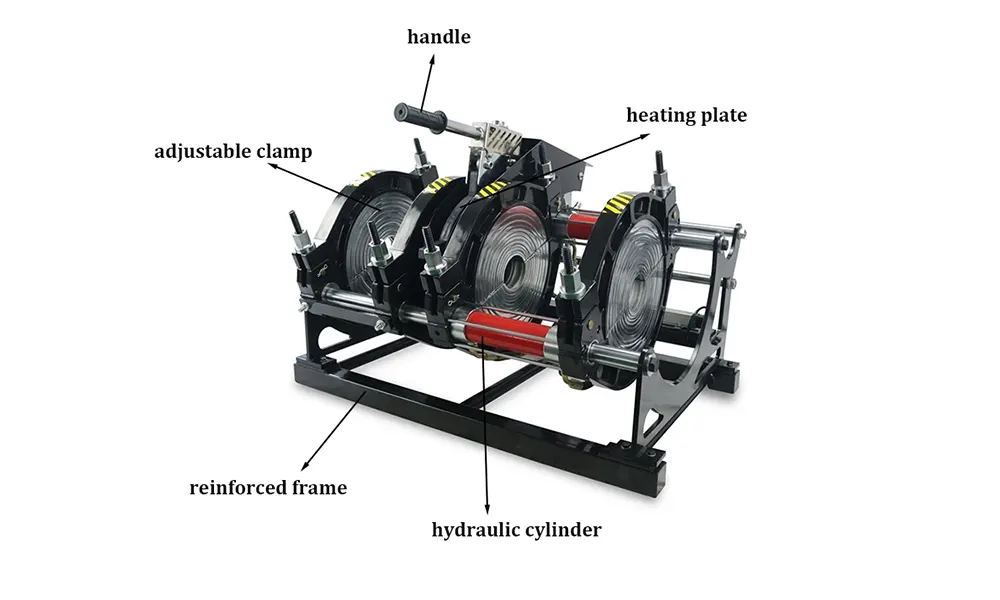
The hydraulic system is the heart of a fusion welding machine, especially in butt fusion applications where precision, pressure stability, and repeatable control determine the quality of every joint. In modern pipeline construction, the machine must do more than simply heat and press pipe ends together; it must deliver consistent force, maintain alignment, and respond smoothly throughout the welding cycle. That is why the hydraulic system plays such a critical role in ensuring reliable performance for HDPE pipeline projects in water supply, gas distribution, mining, and industrial installations.
In a butt fusion machine, the hydraulic system controls the movement of the clamps and the pressure applied during the heating, changeover, and fusion stages. Without accurate hydraulic control, even a well-heated pipe end can produce a weak or uneven weld. The system helps operators maintain the required fusion pressure, which is essential for forming a strong molecular bond between the pipe surfaces. This is one of the main reasons why hydraulic butt fusion machines are widely preferred for medium and large-diameter pipe welding projects.
The hydraulic system typically includes a power unit, oil tank, control valves, hoses, cylinders, and pressure gauges or digital monitoring components. These parts work together to move the clamping frame and apply force in a controlled manner. When the operator starts the process, the hydraulic unit generates pressure and sends it through the cylinders, allowing the pipe clamps to open, close, and hold the pipes in exact position. This precise mechanical control is important because even a small misalignment can affect the final weld quality.
Key point: the hydraulic system is not only about power. It is about stable pressure, accurate movement, and repeatable welding results. These three elements directly influence joint strength, sealing performance, and the long-term safety of the pipeline.
One of the most important functions of the hydraulic system is maintaining uniform pressure during the fusion cycle. During the heating stage, the pipe ends are pressed against the heating plate with a specific force. After heating, the system must allow a quick but controlled changeover before the melted surfaces lose temperature. Then, during the fusion stage, the hydraulic unit must apply the correct joining pressure until the weld cools and solidifies. A system that responds slowly or fluctuates under load can cause defects such as poor bead formation, incomplete fusion, or internal stress.
Hydraulic stability is especially valuable in projects where pipe diameter is large and the welding force required is high. Manual systems can work well for smaller pipes, but when pipe sizes increase, the force needed to move and hold the clamps becomes too demanding for purely manual operation. Hydraulic pressure makes the operation smoother and safer, reducing operator fatigue while improving welding consistency. This is why many contractors choose a hydraulic butt fusion solution for demanding field environments.
Another major advantage of hydraulic control is alignment accuracy. Fusion welding depends on the pipe ends being concentric and parallel before heating begins. The hydraulic system helps the operator adjust the clamps and maintain stable positioning while the machine prepares the pipe surfaces. In high-quality machines, the hydraulic frame is designed to move evenly, minimizing vibration and keeping the pipe ends in a fixed position. This is particularly important when working with long pipelines, where even slight deviations can affect flow performance and structural integrity.
Tip: a well-designed hydraulic system should offer smooth start-stop control, precise pressure adjustment, and reliable sealing performance to reduce the risk of oil leakage or pressure loss during long welding cycles.
The hydraulic system also contributes to safety. Fusion welding involves heating tools, high clamping force, and heavy pipe sections, so the equipment must be able to operate in a controlled and predictable way. Hydraulic systems reduce the need for excessive manual force and help prevent sudden clamp movement. Many modern machines also include pressure relief protection, allowing the system to release excess force if needed. This is especially helpful in maintaining equipment integrity and protecting both the operator and the pipeline material.
For manufacturers such as JQ-Fusion, hydraulic system design is a central part of machine quality. As a professional manufacturer with over 20 years of experience in HDPE pipe welding equipment, JQ-Fusion focuses on stable performance, strong structural design, and dependable hydraulic operation. Their product range includes manual, hydraulic, and CNC automatic solutions for different pipe diameters and project requirements. This flexibility allows customers to select the most suitable machine configuration for their specific application needs.
The performance of the hydraulic system is closely linked to the quality of manufacturing and testing. A reliable machine should undergo inspection for hydraulic pressure stability, temperature accuracy, and clamp alignment before delivery. These tests ensure that the system can deliver the same quality in real construction conditions as it does in the factory. In pipeline projects, this consistency matters because the finished weld must withstand pressure, environmental stress, and long-term service conditions.
Why pressure stability matters: if the hydraulic pressure changes during welding, the fusion bead may become uneven, the pipe ends may not bond properly, and the weld could lose strength. Stable pressure is one of the strongest indicators of a reliable machine.
Hydraulic systems are also important for productivity. In a construction project, time is money, and welding equipment must support efficient operation without sacrificing quality. A responsive hydraulic unit helps reduce setup time, shortens the changeover phase, and improves the overall welding rhythm. When combined with clear controls and durable components, the machine can handle repetitive jobs with minimal interruption. This is especially useful for contractors working on large-scale water networks, gas pipelines, or mining installations where many joints must be completed in sequence.
In addition, the hydraulic system can support customization. Many manufacturers offer OEM and ODM options that allow clients to choose machine size, voltage, design, branding, and project-specific features. Depending on the application, hydraulic pressure settings and frame configurations may also be adjusted to match local standards or operating preferences. This makes the hydraulic system not just a technical component, but part of a broader engineering solution that can be tailored to different markets.
For distributors and contractors, the reliability of the hydraulic system can also affect after-sales satisfaction. A machine with a stable hydraulic unit is easier to maintain, more dependable in the field, and less likely to cause downtime. This matters in global projects where delivery deadlines are tight and technical support must be responsive. Fast service, technical guidance, and readily available spare parts help ensure the hydraulic system continues to perform as expected throughout the machine’s lifespan.
Another factor worth noting is energy efficiency. A well-optimized hydraulic system uses power effectively and avoids unnecessary strain on the pump and other components. When pressure is delivered smoothly and only when needed, the system can reduce wear and extend service life. This improves the long-term value of the machine and lowers maintenance costs for end users. Over time, this becomes a major advantage for businesses that depend on stable equipment performance in competitive markets.
Hydraulic systems also help standardize welding results across different operators. In the field, not every worker has the same experience level, so the machine must support repeatable control. By relying on a properly calibrated hydraulic system, operators can follow the welding procedure more accurately and achieve more consistent joints. This is one reason why professional pipeline contractors often prefer hydraulic fusion machines over simpler alternatives when weld quality is critical.
From a practical standpoint, the operator should always monitor pressure readings, oil condition, hose connections, and cylinder movement before starting a welding cycle. Regular checks reduce the chance of performance issues and keep the machine working at optimal levels. Basic maintenance such as cleaning, lubrication, and periodic inspection can extend the life of the hydraulic components and preserve welding precision. When the system is properly maintained, the machine can perform reliably across many job sites and operating conditions.
JQ-Fusion’s commitment to global support, quality assurance, and fast delivery makes it a strong partner for businesses seeking dependable fusion welding solutions. Their machines are designed for professional use, with a focus on stable welding performance, custom solutions, and strict testing standards. For customers who need strong, consistent results in real-world pipeline projects, the hydraulic system is one of the key reasons these machines deliver value.
In practice: the hydraulic system transforms a fusion welding machine from a heating device into a precision engineering tool capable of producing safe, durable, and high-quality pipe joints.
In summary, the hydraulic system is essential because it powers the clamp movement, controls fusion pressure, improves alignment, enhances safety, and supports efficient operation. It is one of the most important elements behind reliable butt fusion welding performance. Whether used in a small infrastructure job or a large industrial pipeline project, the quality of the hydraulic system has a direct impact on the final weld and the long-term success of the installation.
Frequently Asked Questions
What does the hydraulic system do in a fusion welding machine?
The hydraulic system controls clamp movement, applies fusion pressure, and keeps the pipe ends aligned during the welding cycle. It ensures the machine can perform repeatable and stable welding operations.
Why is hydraulic pressure important for butt fusion welding?
Hydraulic pressure determines how firmly the pipe ends are pressed together during heating and fusion. Correct pressure helps create a strong molecular bond and reduces the risk of weak or uneven welds.
Can a hydraulic system improve welding accuracy?
Yes. A stable hydraulic system improves alignment, minimizes vibration, and helps maintain precise pressure throughout the process. This leads to more accurate and consistent welding results.
What maintenance does a hydraulic system need?
It should be checked regularly for oil level, hose condition, seal integrity, pressure stability, and cylinder movement. Routine maintenance helps prevent leaks, wear, and pressure loss.
Why choose a hydraulic butt fusion machine for large projects?
Hydraulic machines are ideal for larger pipe sizes because they provide stronger clamping force, smoother control, and better consistency. This makes them suitable for demanding pipeline installations that require high reliability.



