
Introduction
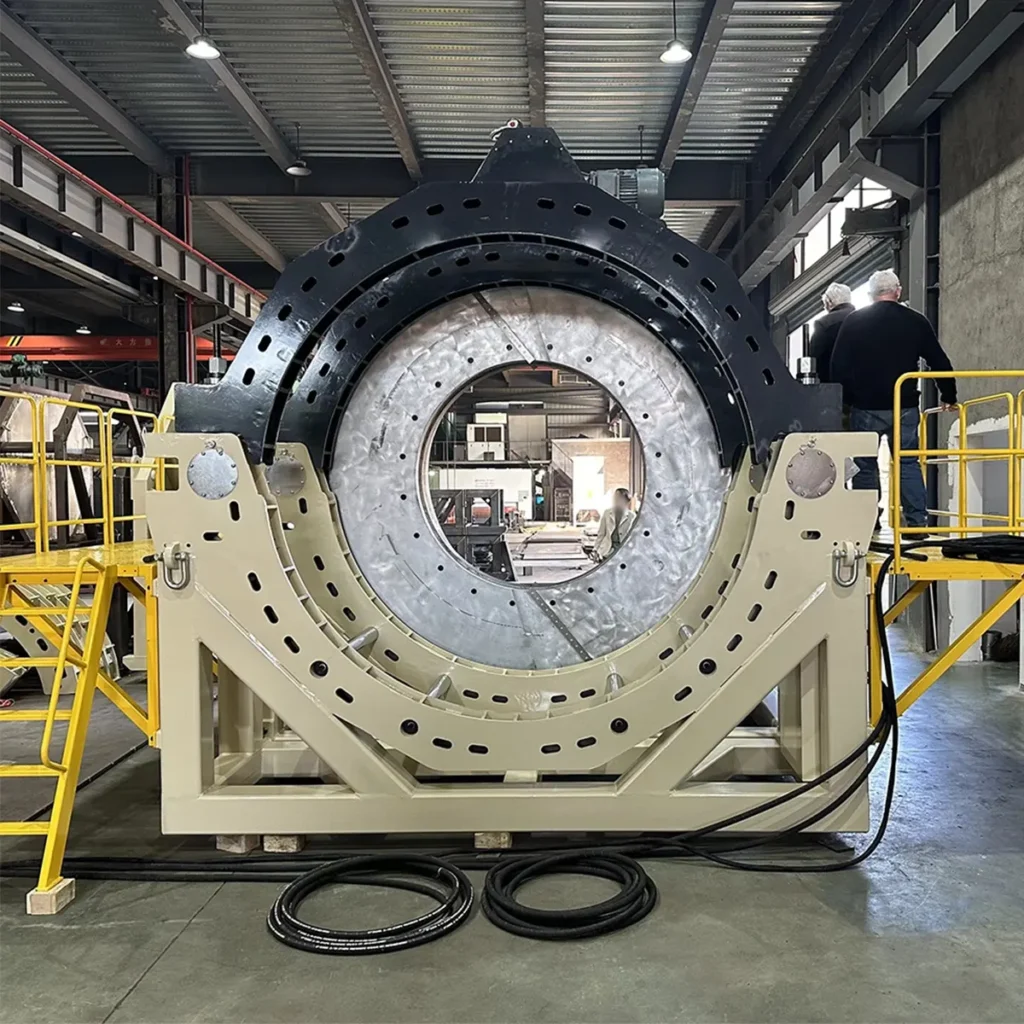
Butt welding machines — often called butt fusion welding machines — are essential equipment for joining thermoplastic pipes like HDPE, PP, and PE. These machines create strong, leak-proof joints by heating and pressing pipe ends together. Whether used in municipal water networks, gas distribution, or industrial piping, understanding the types, uses, and working principles of a butt welding machine helps procurement teams, site engineers, and contractors make the right choice for reliable long-term performance.
What Is a Butt Welding Machine?
A butt welding machine aligns, heats, and fuses two pipe ends until they become one continuous material. The process is non-filler, meaning no additional welding rod is needed; the molten polymer from both pipe ends merges under pressure to form a homogeneous joint with mechanical strength close to the base material.
Common Uses and Applications
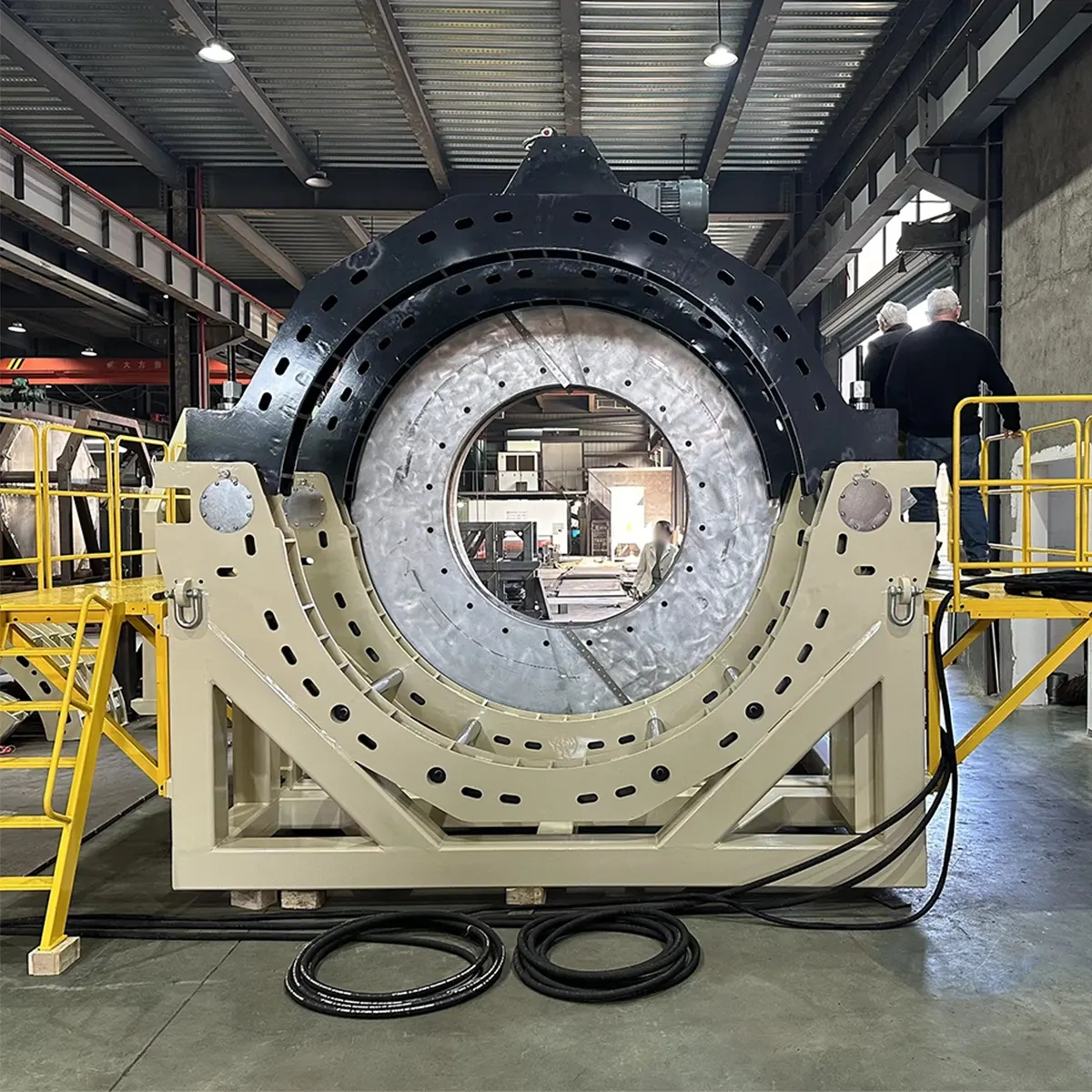
Butt fusion is widely used across sectors that require continuous, corrosion-resistant piping systems. Typical applications include:
Water supply and distribution: large-diameter HDPE lines for municipal networks and irrigation.
Gas distribution: medium- to small-diameter PE pipes for low-pressure gas networks.
Mining and slurry pipelines: abrasion-resistant, welded HDPE pipelines for harsh environments.
Industrial process piping: chemical and wastewater handling where corrosion resistance matters.
Why installers prefer butt fusion
Butt fusion delivers continuous, joint-integral strength with minimal leakage risk. The method is field-friendly, scalable from short on-site repairs to multi-kilometer pipeline systems, and performs well in many climates when correct procedures are followed.
Types of Butt Welding Machines
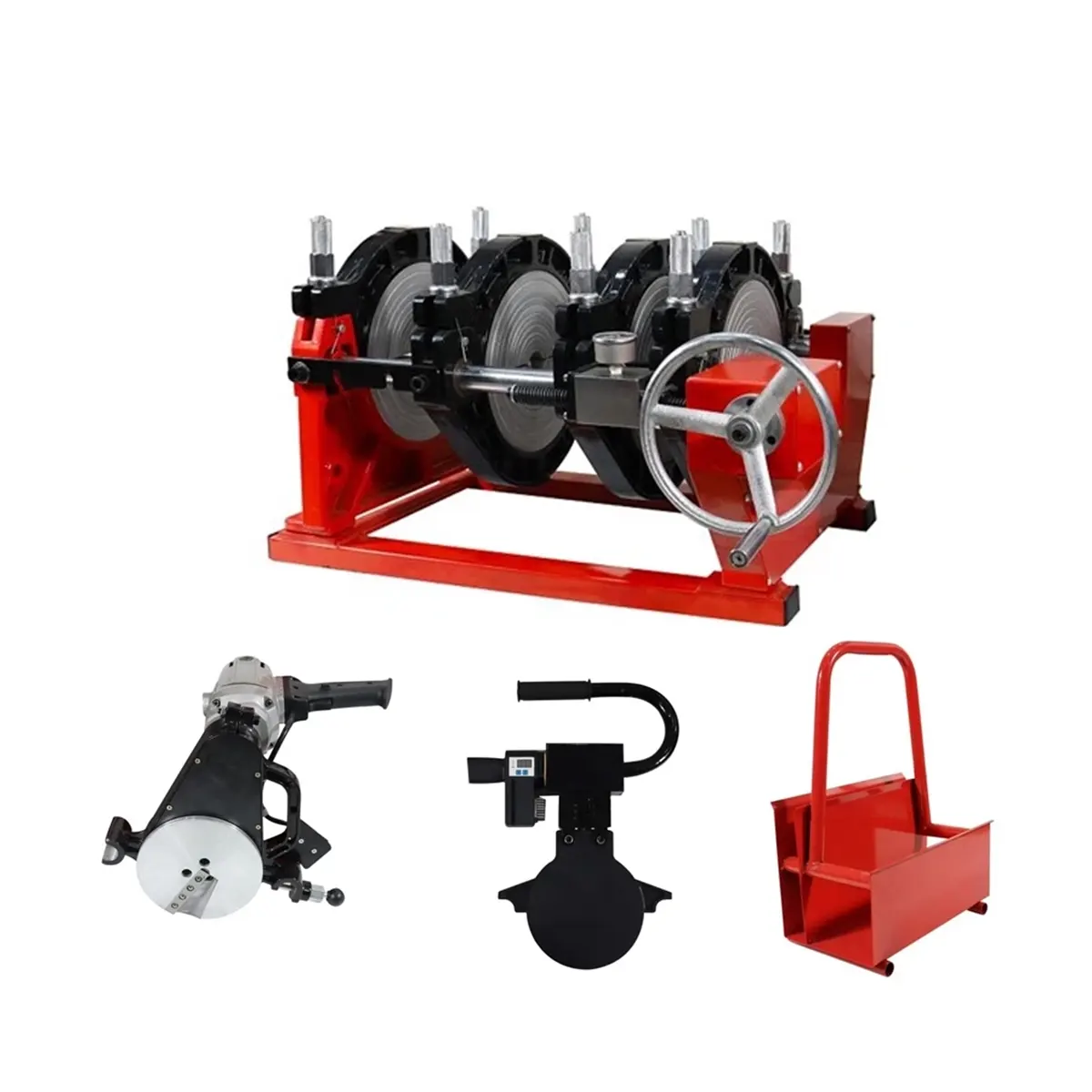
Choosing the right type depends on pipe diameter, job mobility, automation needs, and budget. The main categories are:
Manual Butt Fusion Machines
Compact and cost-effective, manual machines require operators to perform alignment, clamping, heating, and joining steps manually. Ideal for small diameters (e.g., 16–315 mm) and on-site repairs.
Hydraulic Butt Fusion Machines
Hydraulic units automate the advancing and pressure stages with a hydraulic pump, improving consistency and enabling larger pipe diameters and heavier-duty applications. Suitable for medium to large pipes and frequent field work.
Automatic / CNC Butt Fusion Machines
Fully automated machines with programmable welding cycles and real-time control of temperature, pressure, and time. Best for high-volume fabrication yards and precision welding requirements, especially for large-diameter pipelines.
Specialized Variants
There are also multi-angle fitting machines for T- or Y-fittings, electrofusion units for fittings with embedded heating elements, and trimmers/face aligners that prepare pipe ends for fusion.
Key Components and Their Roles
| Component | Function |
|---|---|
| Clamping Frames | Hold pipe ends securely and maintain alignment during heating and fusion. |
| Facing/Trimming Tool | Removes oxides and uneven surfaces to create flat, parallel pipe faces. |
| Heater Plate | Provides uniform heating to melt pipe ends; plate temperature is critical for weld quality. |
| Hydraulic or Mechanical Unit | Applies and controls axial pressure during welding and cooling phases. |
| Control Panel / PLC (Automatic machines) | Programs and monitors welding parameters (time, pressure, temperature). |
Working Principles: Step-by-Step
The butt fusion process follows a controlled sequence to ensure a reliable joint:
1. Preparation: Clean pipe ends and secure pipes in aligned clamps. Check pipe dimensions and wall thickness.
2. Facing: Use the trimming tool to square the ends and remove oxides, ensuring full surface contact.
3. Heating: Position the heated plate between pipe ends and apply contact under light pressure until the melt bead forms. Correct temperature and heating time are essential.
4. Welding (Joining): Remove the heater plate and immediately apply axial force to press the molten faces together. Maintain specified fusion pressure for a set time.
5. Cooling: Keep the joint clamped during cooling to allow polymer crystallization. Do not disturb until the joint reaches required cooling time.
Quality Controls and Best Practices
To achieve repeatable welds, follow these critical controls:
Temperature accuracy: Regularly verify heater plate temperature with calibrated sensors.
Facing quality: Parallel and clean pipe ends reduce voids and weak spots.
Pressure control: Use machines with stable pressure systems and pressure gauges to meet welding parameters.
Documentation: Record welding parameters (time, temperature, pressure, pipe details) for traceability and QA.
How to Choose the Right Butt Welding Machine
Consider the following when selecting equipment:
Pipe diameter range: Match machine capacity to the minimum and maximum pipe sizes you will weld.
Project scale: Manual machines suit low-volume field jobs; hydraulic or automatic machines are better for frequent or high-volume work.
Mobility vs. automation: Portable units are useful for remote sites; CNC units are ideal for consistent yard fabrication.
Service and support: Choose suppliers who offer spare parts, training, and technical support to maintain uptime.
Maintenance and Safety Tips
Regular maintenance extends machine life and improves weld quality:
– Inspect clamping jaws and replace worn elements promptly.
– Keep heater plates clean and free from scratches; use protective covers.
– Maintain hydraulic fluid levels and follow scheduled service intervals.
– Follow PPE and hot-surface precautions during heating phases; ensure operators are trained in safe welding procedures.
Quick Comparison: Manual vs Hydraulic vs Automatic
| Type | Best For | Pros | Cons |
|---|---|---|---|
| Manual | Small diameters, low budget | Portable, low cost | Operator-dependent consistency |
| Hydraulic | Medium to large pipes | Better pressure control, robust | Heavier, needs maintenance |
| Automatic / CNC | High-volume, precision work | Consistent, programmable cycles | Higher upfront cost |
Final Notes
Selecting and operating a butt welding machine with correct parameters is crucial for safe, long-lasting pipelines. Investing in reliable equipment and operator training pays off in fewer failures and lower lifecycle costs. For custom solutions and a wide range of machines from manual to large-diameter hydraulic and CNC models, consider industry suppliers that provide full technical support.
About JQ-Fusion: JQ-Fusion is a professional manufacturer specializing in HDPE pipe welding machines, providing reliable butt fusion solutions for global infrastructure projects. https://jq-fusionwelding.com/



