
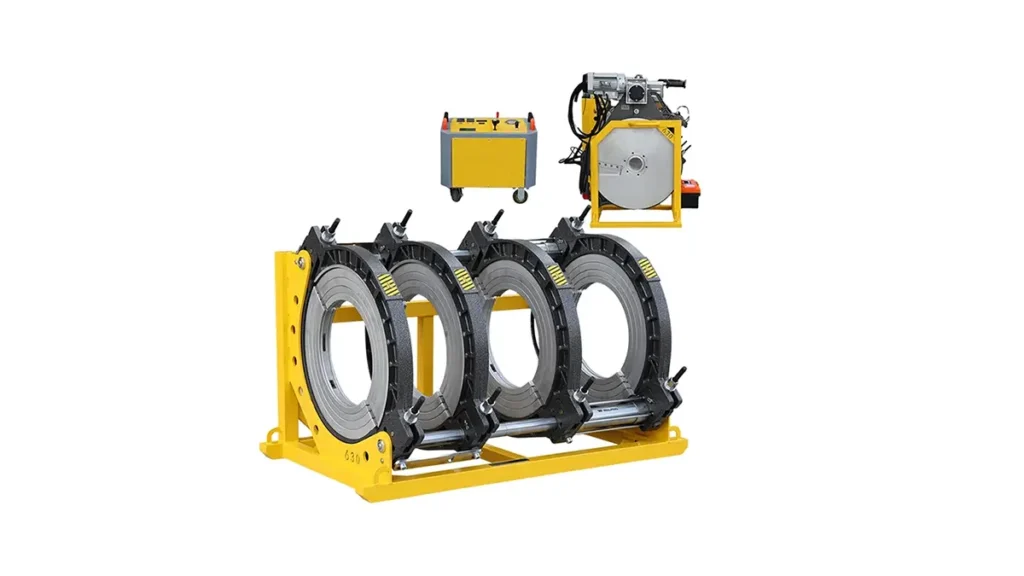
When people search for a butt fusion machine, they are often looking for a reliable way to join polyethylene pipes with strong, leak-free, and long-lasting results. Among the many available models, the hydraulic butt fusion machine is one of the most widely used solutions in water supply, gas distribution, mining, and industrial pipeline construction. It is designed to deliver consistent heating, pressing, and alignment control, making it a practical choice for contractors who need quality and efficiency on site.
In simple terms, a hydraulic butt fusion machine uses controlled hydraulic pressure to press two heated pipe ends together after they have been softened by a heating plate. The result is a joint that becomes as strong as, or even stronger than, the pipe itself when operated correctly. For projects that demand safety, durability, and repeatable performance, this machine has become a trusted standard in modern pipe welding.
The reason this equipment matters is not only its ability to create a strong joint, but also its ability to improve productivity on the job site. A well-designed machine can help reduce operator errors, support different pipe diameters, and maintain fusion quality across repeated operations. That is why many professional pipeline teams choose equipment from experienced manufacturers such as JQ-Fusion, which specializes in HDPE pipe welding machines for global projects.
What Is a Hydraulic Butt Fusion Machine?
A hydraulic butt fusion machine is a pipe welding device used to connect thermoplastic pipes, especially HDPE pipes, by heating the pipe ends and applying hydraulic force to fuse them together. The machine usually includes a frame, clamps, a hydraulic unit, a heating plate, and a facer. Each part plays a specific role in ensuring the pipe ends are aligned, cleaned, softened, and pressed together under controlled conditions.
The “hydraulic” part of the name refers to the system that applies pressure during the welding cycle. Instead of depending only on manual force, the machine uses hydraulic power to maintain a stable and even pressure. This is especially valuable when working with larger pipe sizes, where consistent force becomes more difficult to maintain manually.
Key idea: the machine does not “glue” pipes together. It melts the surfaces and fuses them into one continuous joint, creating a durable connection for demanding pipeline systems.
Hydraulic butt fusion machines are commonly used for projects where pipe integrity is critical. This includes municipal water networks, gas pipelines, mining water transport, industrial drainage, and agricultural irrigation. Since these applications often operate under pressure or in harsh environments, a reliable fusion joint is essential for long-term safety and performance.
How Does It Work?
The working principle of a hydraulic butt fusion machine is based on heat, alignment, pressure, and cooling. Although the process is technical, it follows a clear sequence. First, the pipe ends are secured in the machine clamps. Then the facing tool trims the pipe ends to create smooth and even surfaces. After that, the heating plate is inserted between the pipes to soften the surfaces to the required fusion temperature.
Once the pipe ends have reached the proper softening stage, the heating plate is removed and the hydraulic system pushes the pipes together with controlled force. The softened surfaces join and form a molten interface. After a short holding period and proper cooling, the pipe ends become one solid fused unit.
In one sentence: the machine heats, aligns, presses, and cools pipe ends until they become a single welded body.
This process may look simple, but precision matters at every step. If the temperature is too low, the joint may not fuse correctly. If the pressure is too high, molten material may be forced out unevenly. If the alignment is poor, the final connection may be weak. This is why operators often rely on machines with accurate temperature control and stable hydraulic systems.
For more details about professional equipment options, you can review the full product range from JQ-Fusion, including hydraulic butt fusion welding machines, automatic butt fusion machines, and electrofusion solutions.
Main Components of the Machine
To understand how the equipment works, it helps to look at its main parts. A hydraulic butt fusion machine usually includes the following elements:
① Frame and clamps — hold the pipes securely and keep them aligned during the entire welding process.
② Hydraulic unit — supplies the pressure needed to press the pipes together consistently.
③ Heating plate — heats the pipe ends to the correct fusion temperature.
④ Facer — trims pipe ends to ensure flat, clean, and matching surfaces.
⑤ Control system — helps the operator monitor temperature, pressure, and timing.
Each of these parts contributes to the final result. The clamps prevent movement, the facer improves surface accuracy, the heating plate prepares the material, and the hydraulic system controls the pressing force. When all these elements work together properly, the machine produces stable and repeatable welds.
High-quality machines also benefit from strict quality control during manufacturing. At professional factories, every unit may undergo checks for temperature accuracy, hydraulic pressure stability, and clamp alignment. These inspections are important because even small variations can affect weld quality in actual project conditions.
Why Hydraulic Pressure Matters
Hydraulic pressure is one of the biggest advantages of this machine type. Compared with manual systems, hydraulic machines can apply uniform force more efficiently and with less operator fatigue. This is especially important for medium and large pipe diameters, where the required pressure can be significant.
Stable pressure helps ensure that both heated pipe ends meet evenly. It also reduces the risk of gaps, misalignment, or inconsistent joint formation. In real engineering work, these details can make the difference between a reliable installation and a costly repair later.
Another benefit is that hydraulic control makes the machine more suitable for repeatable production work. Contractors working on long pipeline runs often need to fuse many joints in the same way. A hydraulic system helps maintain consistency from the first weld to the last.
Applications in Real Projects
Hydraulic butt fusion machines are used across many industries because HDPE pipes are popular for their corrosion resistance, flexibility, and long service life. In water supply systems, they help build pipelines that can withstand changing ground conditions and internal pressure. In gas distribution, the quality of each weld is especially important for safety. In mining, the pipes often face abrasive conditions and heavy workload, so strong joints are essential.
Industrial projects also depend on this technology for transporting process water, chemicals, and waste materials. In agriculture, fusion-welded HDPE pipelines help create efficient irrigation systems that reduce leakage and maintenance costs. Across all these applications, the common requirement is the same: strong, sealed, dependable connections.
Best for: water projects, gas lines, mining pipelines, industrial piping, irrigation networks, and any installation that demands long-term joint reliability.
Advantages Over Other Joining Methods
One reason the hydraulic butt fusion machine is so popular is that it offers significant advantages over mechanical fittings or adhesive-based joining methods. A fused joint does not rely on bolts, seals, or chemical bonding agents. Instead, it creates a continuous pipe structure that can better resist leaks and external stress.
Compared with traditional connection methods, butt fusion can offer better flow performance because the internal diameter remains smooth. This helps reduce pressure loss and buildup inside the pipe. It also lowers the need for frequent maintenance, which is important for remote or large-scale projects.
Another advantage is compatibility with a wide range of pipe diameters. From smaller installations to major infrastructure systems, the same fusion principle can be adapted to different project needs. Manufacturers that provide multiple machine sizes and custom options are especially helpful for contractors who work on diverse job sites.
What to Look for in a Good Machine
Not all hydraulic butt fusion machines are the same. When choosing equipment, buyers should pay attention to build quality, pressure control, temperature stability, and the overall design of the clamping system. A good machine should feel solid, operate smoothly, and maintain accuracy under regular use.
Customization is also important. Some projects require specific voltage options, branding, colors, or machine configurations. This is where OEM and ODM support can be valuable. A manufacturer with flexible production capability can help customers build a solution that matches their market or project needs.
For example, JQ-Fusion offers customized solutions, stable stock supply, and technical support, which can be useful for global contractors and distributors who need reliable delivery and project assistance.
Why JQ-Fusion Is a Strong Choice
JQ-Fusion has over 20 years of industry experience and focuses on HDPE pipe welding machines for international markets. Its product lineup includes manual, hydraulic, automatic, and electrofusion equipment, which allows customers to choose the right solution for different applications. This range is useful because not every job requires the same level of automation or pipe size capacity.
The company also emphasizes manufacturing quality. Advanced production lines, precision machining equipment, and comprehensive testing help ensure that each machine performs reliably. In addition, the company supports global customers with fast response, professional technical guidance, and efficient logistics.
Why this matters: professional welding equipment is not only about machinery; it is also about support, delivery, and long-term project confidence.
Maintenance and Safe Operation
To keep a hydraulic butt fusion machine working properly, regular maintenance is essential. Operators should inspect the heating plate, check hydraulic oil levels, clean clamps and surfaces, and verify that temperature and pressure readings remain accurate. Small preventive steps can significantly extend machine life and improve weld consistency.
Safety is equally important. The heating plate reaches high temperatures, so protective handling is necessary. Operators should also confirm that pipes are correctly secured before applying pressure. Proper training can reduce mistakes and improve the quality of each fusion cycle.
Good welding results depend on both machine performance and operator discipline. Even a high-end machine needs correct setup, proper timing, and careful handling to achieve the best results.
Conclusion
The hydraulic butt fusion machine is an essential tool for modern pipeline construction because it provides strength, consistency, and efficiency. By using heat and hydraulic pressure to fuse thermoplastic pipe ends, it creates joints that are highly reliable for water, gas, mining, and industrial applications. Its performance depends on accurate alignment, stable temperature control, and proper pressure management, which is why quality manufacturing matters so much.
For contractors and distributors seeking dependable equipment, manufacturers with proven experience and strong support capabilities can make a major difference. With its wide product range, customization options, and international service focus, JQ-Fusion represents the kind of professional partner many pipeline projects require. If your work depends on durable, leak-free pipe joining, understanding how this machine works is the first step toward better welding results.
Frequently Asked Questions
Q1: What materials can a hydraulic butt fusion machine weld?
It is mainly used for thermoplastic pipes, especially HDPE pipes, in water, gas, and industrial systems.
Q2: Is hydraulic butt fusion better than manual fusion?
For larger pipes and more demanding projects, hydraulic control usually provides more stable pressure and better consistency than manual operation.
Q3: Why is temperature control important?
Correct temperature ensures the pipe ends soften properly and fuse into a strong joint without underheating or overheating.
Q4: Can these machines be customized?
Yes. Many manufacturers offer OEM and ODM customization for size, voltage, design, branding, and project-specific needs.
Q5: How do I choose a reliable supplier?
Look for manufacturing experience, quality testing, technical support, fast delivery, and proven performance in global markets.



