
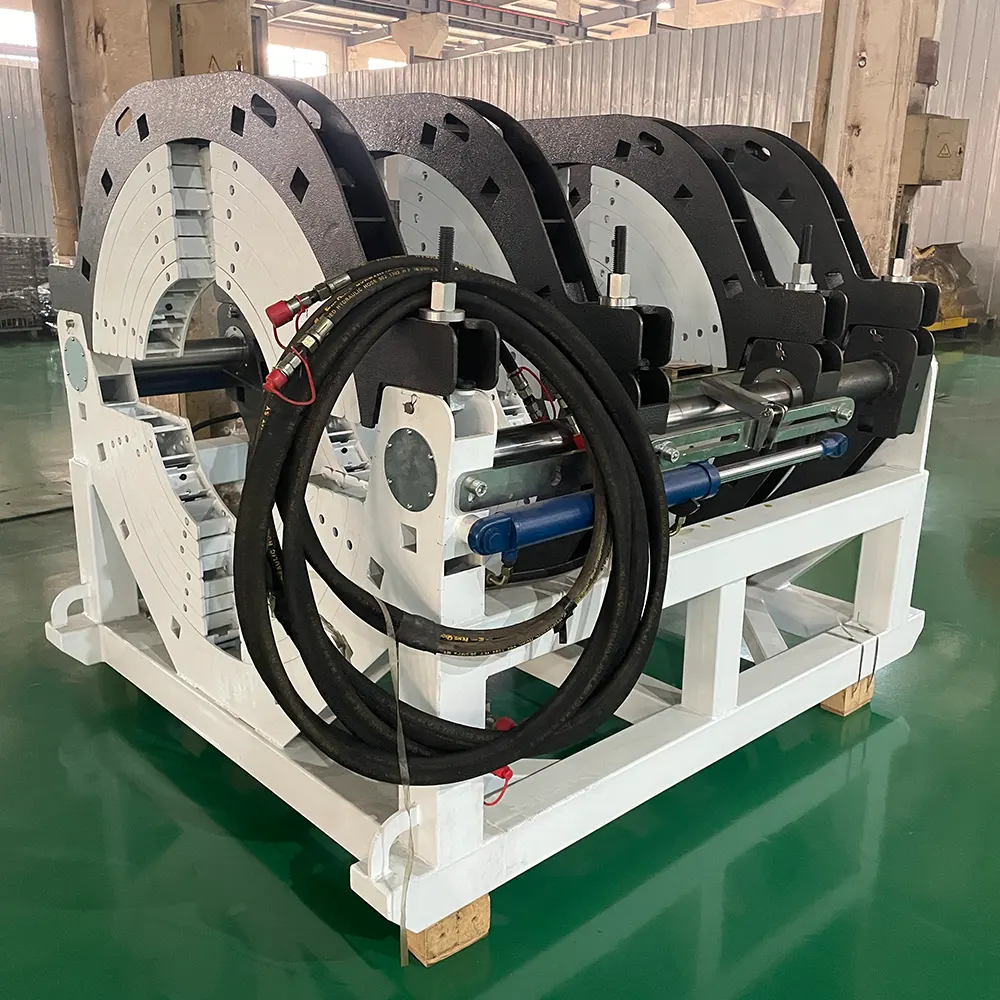
In modern water supply systems, the need for clean, durable, and leak-free pipelines is greater than ever. Among the many joining methods available for polyethylene pipelines, butt fusion machine welding has become one of the most trusted solutions. It creates a permanent joint by heating two HDPE pipe ends and pressing them together under controlled pressure until they fuse into a single, continuous pipe. This process is widely used in municipal water networks, rural water projects, irrigation systems, and industrial water transportation because it offers strength, reliability, and long service life.
HDPE, or high-density polyethylene, is valued for its flexibility, corrosion resistance, and smooth inner surface. These properties make it an excellent material for transporting potable water over long distances. However, the performance of an HDPE pipeline depends heavily on the quality of the joints. If a connection is weak or poorly aligned, it can become the main point of failure. That is why welding technology, especially butt fusion welding, plays such a critical role in water supply construction.
Butt fusion welding is not simply about joining two pipes. It is a controlled process that requires proper temperature, alignment, pressure, and cooling time. When performed correctly, the joint can be as strong as or even stronger than the pipe itself. This is one of the main reasons why water utilities and contractors prefer this method for large-scale pipe installation. It reduces leakage risk, supports long-term system stability, and helps lower maintenance costs over the lifetime of the pipeline.
Key advantage: HDPE butt fusion creates a homogeneous joint with no mechanical connectors, no gaskets, and no metal corrosion issues. For water supply systems, this means fewer weak points and greater reliability in underground and exposed installations.
How Butt Fusion Welding Works in Water Supply Systems
The butt fusion process begins by placing two HDPE pipe ends into a fusion machine. The machine clamps the pipes firmly to ensure correct alignment. A facing tool trims the ends so they are flat and clean, which is essential for a proper weld. Next, a heating plate is inserted between the pipe ends. Both surfaces are heated until the material reaches the required fusion temperature. After a brief heating phase, the plate is removed, and the two softened ends are pressed together with specific force. As the molten polyethylene cools, the materials merge into one continuous structure.
This method is ideal for water supply systems because it produces a smooth internal bore. Smooth flow is important in water networks because it reduces friction loss and helps maintain efficient delivery. It also minimizes areas where deposits or bacterial buildup could occur. In potable water systems, hygienic performance is just as important as mechanical strength, and butt fusion supports both.
Compared with threaded joints, flanges, and solvent-based connections, butt fusion is especially beneficial for buried pipelines and long-distance water mains. There are no intermediate parts that can loosen over time, and the joint does not depend on external sealing materials. This improves pipeline integrity and makes the system better suited for demanding environmental conditions.
Why HDPE Pipe Welding Is Preferred for Water Projects
Water supply projects require a joining method that can withstand pressure fluctuations, soil movement, temperature variation, and long service cycles. HDPE pipe welding addresses these challenges effectively. One of its strongest advantages is flexibility. HDPE pipelines can absorb movement caused by ground settlement or thermal expansion better than rigid piping systems. When fused correctly, the welded joints move with the pipe body instead of creating stress concentration points.
Another reason for its popularity is chemical resistance. Water systems may carry treated water, raw water, or water with varying mineral content. HDPE does not rust, scale, or react easily with many substances found in water and soil. This makes it highly suitable for modern water distribution infrastructures. Its long service life also supports sustainable construction goals by reducing the frequency of replacement.
Important note: The strength of HDPE welding depends on proper machine performance and operator skill. Precise temperature control, pipe alignment, and pressure management are essential for a dependable water pipeline.
Types of Butt Fusion Machines Used in Water Supply Welding
Different water projects require different equipment configurations. Manual butt fusion machines are often used for smaller installations and basic pipeline work. They are practical, easy to transport, and suitable for contractors working on low- to medium-volume projects. Hydraulic butt fusion machines are more common for medium and large water supply systems because they provide better clamping force and more consistent fusion pressure.
For large municipal or industrial pipeline projects, CNC automatic butt fusion machines offer advanced control, repeatability, and higher efficiency. These systems help reduce human error and improve welding consistency across many joints. In projects where quality documentation and standardized procedures are essential, automated equipment can be especially valuable.
JQ-Fusion, a professional manufacturer with over 20 years of industry experience, provides a wide range of solutions for HDPE pipe welding. Their product line includes hydraulic butt fusion welding machines, automatic butt fusion welding machines, electrofusion welding machines, and multi-angle pipe fitting welding machines. With strong OEM and ODM capability, they can also support custom configurations for different project needs.
For more information about their manufacturing capability and product range, visit JQ-Fusion.
The Role of Quality Control in Reliable Water Pipeline Welding
In water supply systems, quality control is not optional. A poorly fused joint can cause leakage, pressure loss, or service interruption. To prevent this, reliable manufacturers and contractors follow strict inspection procedures. These usually include heating plate temperature verification, hydraulic pressure stability checks, clamp alignment inspection, and final machine testing before delivery.
JQ-Fusion emphasizes strict quality control in every machine they produce. Each unit is tested to ensure stable welding performance, long service life, and safe operation in real project conditions. This is particularly important for global water supply projects, where the machine may need to operate in different climates, elevations, and jobsite environments.
Factory insight: Advanced production lines and precision machining equipment help improve weld stability by ensuring the fusion machine maintains accurate alignment and consistent pressure during every cycle.
Common Application Scenarios in Water Supply Systems
HDPE pipe welding is used in a wide variety of water-related projects. In municipal water distribution, it supports the installation of main transmission lines and branch networks that deliver potable water to communities. In rural water supply systems, HDPE welding helps create cost-effective and low-maintenance pipelines that can be installed over long distances.
It is also widely used in irrigation systems, where water needs to be transported efficiently across agricultural land. Because HDPE is lightweight and resistant to environmental stress, it is easy to deploy in open fields and uneven terrain. In industrial water transport, butt fusion joints provide dependable performance under more demanding operating conditions, including process water movement and utility infrastructure connections.
Where soil conditions are challenging, the flexibility of HDPE and the strength of fused joints offer a major advantage. Underground pipelines may face vibration, pressure surges, or small movements in the surrounding ground. Butt fusion welding helps the pipeline behave as a continuous system, reducing the chance of failure at joint points.
Benefits of Using Butt Fusion in Drinking Water Networks
Drinking water systems must meet high standards for safety, cleanliness, and durability. Butt fusion supports these standards in several ways. First, it eliminates the need for adhesives or sealing compounds that may not be suitable for potable water applications. Second, the fused connection is smooth and continuous, which helps preserve water quality by reducing areas of stagnation or contamination buildup.
Third, the method supports long-term cost efficiency. Although the initial equipment investment may be higher than simpler joining methods, the reduced maintenance and lower leakage risk often provide better value over time. Fourth, the technology is suitable for a wide range of pipe diameters, making it adaptable for small service lines and major transmission mains alike.
When contractors work with a trusted supplier such as JQ-Fusion, they gain access to durable machines, customization options, and technical support that can improve project outcomes. This is important for distributors and contractors who need dependable equipment for domestic and international water projects.
How JQ-Fusion Supports Global Water Supply Projects
As a professional butt fusion welding machine manufacturer, JQ-Fusion focuses on providing stable, efficient, and customizable solutions for global pipeline work. Their equipment is used in water supply systems, gas distribution networks, mining projects, and industrial pipeline installations worldwide. For water infrastructure projects, this broad application experience is valuable because it reflects the company’s understanding of demanding field conditions.
JQ-Fusion offers flexible OEM and ODM customization, allowing clients to adjust machine size, voltage, color, branding, and special project configurations. This is especially helpful for distributors who want to build their own market identity or contractors who need equipment tailored to local standards. The company also provides reliable global support, fast response, and efficient logistics to help avoid delays in project execution.
Support advantage: From machine selection to installation guidance and after-sales service, professional technical support can significantly improve the welding success rate in water supply projects.
Best Practices for HDPE Pipe Welding in Water Supply Construction
To achieve strong and durable joints, welders should follow proven best practices. The pipe ends must be clean, dry, and properly prepared before fusion begins. Alignment should be checked carefully to ensure the two pipe sections meet evenly. The heating plate must be at the correct temperature, and the fusion pressure should match the pipe specifications and machine requirements.
Cooling time is another critical factor. If the joint is disturbed before it has fully cooled, the final weld may lose strength. Operators should also document fusion parameters for quality tracking, especially in large municipal projects where traceability matters. Regular machine maintenance, including checking hydraulic systems and heating components, helps preserve consistent performance.
Using certified and well-tested equipment further improves reliability. Machines manufactured in compliance with international standards, such as those certified by SGS, give contractors greater confidence in the welding process and the final pipeline result.
Frequently Asked Questions
Q1: Is butt fusion welding suitable for potable water pipelines?
Yes. It is one of the most widely used methods for drinking water systems because it creates strong, hygienic, and leak-resistant joints.
Q2: What size of HDPE pipes can be welded with butt fusion machines?
Butt fusion machines are available for a broad range of diameters, from small service pipes to large transmission lines, depending on the model.
Q3: Why is butt fusion better than mechanical joints for water systems?
It removes gaskets and connectors that may fail over time, resulting in a stronger and more durable pipeline with fewer maintenance issues.
Q4: Do operators need special training to use HDPE butt fusion machines?
Yes. Proper training is important to control temperature, pressure, alignment, and cooling time so that each joint meets quality requirements.
Q5: How can project buyers choose a reliable welding machine supplier?
They should look for industry experience, strict quality control, customization options, technical support, and proven performance in global projects.



