
Plastic pipe welding equipment plays a critical role in modern pipeline construction, especially when durability, leak resistance, and long-term performance matter. Whether the project involves water supply, gas distribution, mining, or industrial transport, the quality of the welding equipment directly affects the strength of the final joint. For contractors, distributors, and project managers, choosing the right machine is not just a technical decision—it is a business decision that influences efficiency, safety, and project cost.
In simple terms, plastic pipe welding equipment is used to join thermoplastic pipes and fittings by heating the material and fusing it into one continuous structure. This process is widely used for HDPE, PP, and other plastic piping systems because it creates a strong connection without glue, threads, or mechanical fasteners. Among the most common solutions is the butt fusion machine, which is trusted for large-scale pipeline installations that demand reliability and repeatability.
Today’s welding equipment comes in different forms, including manual, hydraulic, and CNC automatic systems. Each type serves a different purpose depending on pipe size, operator skill, project scale, and required precision. The right choice can improve productivity, reduce waste, and help ensure that every joint meets engineering expectations.
What Plastic Pipe Welding Equipment Actually Does
Plastic pipe welding equipment is designed to create a fusion joint by applying controlled heat and pressure to pipe ends or pipe surfaces. Once the material reaches the proper melting point, the machine aligns the components and holds them under pressure as they cool. The result is a seamless joint that can perform almost like the original pipe material.
This technology is especially valuable in systems where leakage must be avoided. Water lines, gas networks, and industrial pipelines are often installed underground or in hard-to-access locations. A weak joint in these environments can cause expensive repairs, service disruption, and safety risks. That is why contractors often prefer fusion welding over methods that rely on adhesives or metal connectors.
Key advantage: a properly fused plastic pipe joint can deliver excellent tensile strength and long service life, making it one of the most dependable connection methods in pipeline construction.
Main Types of Plastic Pipe Welding Equipment
Understanding the differences between equipment types is the first step in making a smart purchase. The most common options include manual butt fusion machines, hydraulic butt fusion machines, CNC automatic butt fusion machines, and electrofusion welding machines. Each one has unique strengths.
Manual Butt Fusion Machines
Manual systems are often used for smaller pipe diameters or simpler job sites. They are relatively easy to operate and usually cost less than automated models. For contractors handling light-duty work or occasional installation tasks, manual machines can be a practical option. However, they rely more heavily on operator skill, so consistency may vary.
Hydraulic Butt Fusion Machines
Hydraulic units are widely used in professional pipeline projects because they offer better pressure control and support larger pipe sizes. They are suitable for water supply systems, gas distribution lines, and industrial installations. A well-built hydraulic system helps maintain alignment and stable fusion pressure, which are essential for strong welds.
For many buyers, hydraulic machines strike the best balance between cost, performance, and versatility. This is one reason why the butt fusion machine remains a leading choice in global pipeline markets.
CNC Automatic Butt Fusion Machines
Automatic systems are designed for high precision, repeatability, and reduced operator error. They are particularly valuable in projects that require strict welding records, standardized results, or high-volume output. CNC control can help manage the heating, joining, and cooling cycle with exceptional consistency.
Best for: contractors and organizations that prioritize precision, data traceability, and stable output in demanding projects.
Electrofusion Welding Machines
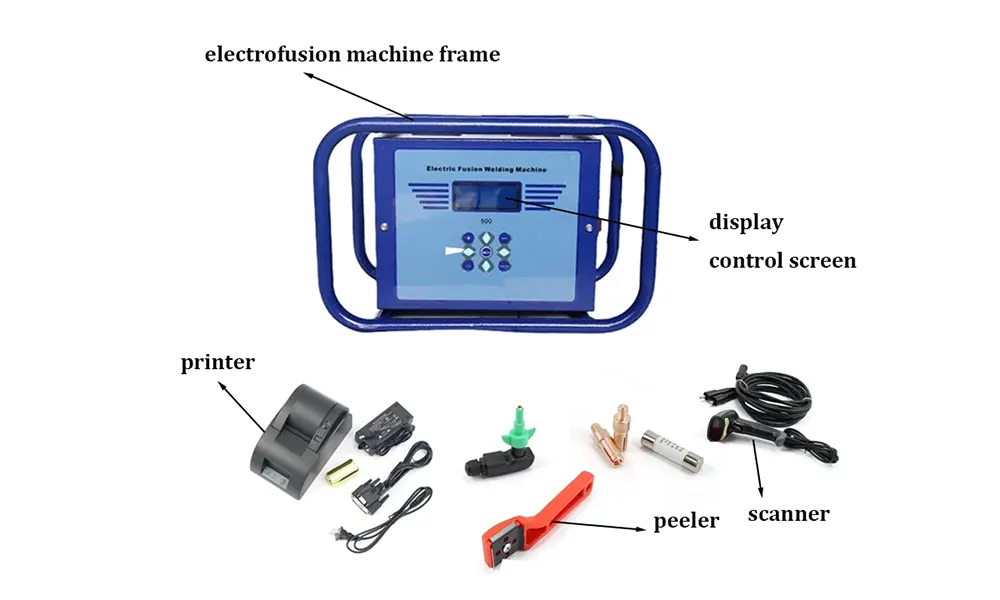
Electrofusion equipment is used to weld fittings with embedded heating coils. It is often selected for repairs, branches, and confined areas where butt fusion is not practical. While it serves a different purpose than a butt fusion system, it remains an important part of the broader pipe welding equipment category.
Where This Equipment Is Commonly Used
Plastic pipe welding equipment is now found in a wide range of industries. In water supply systems, it is used to build dependable distribution networks that can operate for many years with minimal leakage. In gas distribution, the quality of the weld is especially important because safety standards are strict and failure is not an option.
Mining projects also depend on durable plastic pipe systems for slurry transport, drainage, and process water. In industrial pipeline installations, fusion equipment helps connect pipes used in chemical handling, cooling systems, and production facilities. Because these environments are often harsh, the weld must hold up under pressure, vibration, and environmental exposure.
For businesses serving international infrastructure markets, products from experienced manufacturers such as JQ-Fusion can offer the stability and support needed for large projects.
What to Look for When Choosing the Right Machine
Choosing the right equipment starts with the project requirements. Pipe diameter, pipe material, welding frequency, and site conditions all influence the best machine type. A machine that is perfect for small maintenance work may not be suitable for a large municipal installation.
1. Pipe size range
Make sure the machine supports the full diameter range required by your current and future projects. If you expect to work with large pipes, a hydraulic or automatic system is usually more suitable.
2. Material compatibility
Check whether the machine is designed for the types of plastic pipe you will weld most often. HDPE is one of the most common materials, but not every machine handles every material equally well.
3. Temperature control
Stable heating is essential. Poor temperature accuracy can cause weak fusion, overheating, or uneven weld quality. Reliable machines should maintain precise temperature performance under repeated use.
4. Hydraulic stability
If you choose a hydraulic unit, pressure consistency matters. Stable hydraulic pressure helps keep the pipe ends aligned and reduces the risk of poor joints.
5. Clamp alignment
Accurate alignment improves welding quality. A strong clamping system helps ensure that both pipe ends stay in position during the fusion cycle.
6. Portability and job site conditions
Some projects require frequent movement between locations. In that case, weight, frame design, and ease of transport become important factors. Compact equipment can be helpful for field work, while larger systems may be better for fixed production sites.
7. After-sales support
Technical guidance, spare parts, and service responsiveness are often overlooked, but they matter a lot over the life of the machine. A supplier with strong support can reduce downtime and protect your investment.
Why Manufacturing Quality Matters
Even if two machines look similar, their performance can be very different. Manufacturing quality affects heating consistency, frame durability, hydraulic stability, and service life. In professional pipeline work, equipment must perform reliably in real-world conditions, not just in a catalog.
Experienced manufacturers often use modern machining equipment, precise assembly processes, and comprehensive testing to ensure dependable output. For example, a trusted supplier may inspect temperature accuracy, hydraulic stability, and clamp alignment before shipment. These checks help reduce the chance of field failures and improve customer confidence.
Important note: when a machine is used on critical infrastructure, quality control is not a luxury—it is a necessity.
How Customization Can Improve Your Results
Not every buyer needs the same configuration. Some projects require special voltage settings, branding, color preferences, or size adjustments. Others need machine upgrades designed for specific pipe conditions or regional standards. This is where OEM and ODM customization becomes valuable.
Customization can help contractors match equipment to project demands more closely. It can also help distributors build a differentiated product line for their market. A manufacturer with flexible engineering capability can adapt the machine design to support better workflow, easier operation, or improved positioning in the marketplace.
For global buyers, customization is especially useful because project requirements vary by country, industry, and client specification. A flexible supplier can reduce adaptation costs and speed up deployment.
Operational Benefits That Influence Purchasing Decisions
Beyond the technical specs, buyers should think about how the equipment affects day-to-day operations. Good welding machines save time during setup, reduce rework, and make operator training easier. They also support more predictable project scheduling.
Another important factor is inventory and delivery speed. If a supplier maintains ready stock and a well-managed supply chain, urgent projects can move faster. This is especially important for contractors working under strict deadlines or in remote regions where delays are expensive.
Some manufacturers also offer full support from selection to installation and after-sales service. That kind of support can be very valuable for teams that need training or technical guidance to get the best results from their equipment.
Why JQ-Fusion Is a Relevant Example
When evaluating suppliers, it helps to look for companies with proven experience, strong product coverage, and international service capability. JQ-Fusion is a professional manufacturer specializing in HDPE pipe welding machines, with over 20 years of industry experience. Their product range includes manual, hydraulic, and CNC automatic butt fusion welding machines, as well as other welding solutions used in global pipeline projects.
They also emphasize advanced manufacturing, strict quality control, OEM and ODM customization, and reliable global support. For buyers who need stable output and long-term performance, these are practical indicators of supplier strength. You can explore their product and company information at jq-fusionwelding.com.
Practical Buying Tips Before You Decide
Before placing an order, ask for clear specifications, operating instructions, and testing details. Confirm the pipe diameters supported by the machine, the heating temperature range, and the pressure control method. If possible, request information on certifications, spare parts availability, and warranty coverage.
It is also wise to compare suppliers based on service, not just price. A lower-cost machine may become expensive if it requires frequent repairs or produces inconsistent welds. In contrast, a well-engineered machine from a dependable manufacturer can lower long-term operating costs.
Finally, consider the learning curve. If your operators are experienced, a manual or hydraulic machine may be enough. If you need repeatable results with minimal human error, an automatic system may be the better investment.
Conclusion
Plastic pipe welding equipment is more than a construction tool; it is a foundation for safe, efficient, and durable pipeline systems. The right machine can improve weld quality, reduce downtime, and support project success across water, gas, mining, and industrial applications. By understanding the differences among manual, hydraulic, automatic, and electrofusion systems, buyers can make better decisions that match their workflow and budget.
When choosing equipment, focus on pipe size, material compatibility, temperature control, hydraulic stability, clamp alignment, and supplier support. A reliable manufacturer with strong engineering and quality assurance can make a significant difference in the final result. In many cases, the best choice is not simply the cheapest one, but the one that delivers consistent performance over time.
FAQs
Q1: What is the difference between butt fusion and electrofusion?
Butt fusion joins two pipe ends directly by heating and pressing them together, while electrofusion uses fittings with embedded heating coils. Butt fusion is often used for straight pipe joints, while electrofusion is useful for branches and tight spaces.
Q2: Which type of plastic pipe welding equipment is best for large projects?
Hydraulic and CNC automatic butt fusion machines are usually better for larger projects because they provide stronger pressure control, better alignment, and more consistent results.
Q3: How do I know if a machine is reliable?
Look for stable temperature control, solid hydraulic performance, accurate clamp alignment, quality testing, and a manufacturer with proven industry experience and after-sales support.
Q4: Can one machine handle different pipe sizes?
Yes, many machines are designed for a range of diameters, but you should always verify the supported size range before buying to ensure it matches your project needs.
Q5: Why is after-sales support important?
Because installation guidance, spare parts, and technical assistance can reduce downtime, improve operator confidence, and help keep the machine working efficiently over time.



