
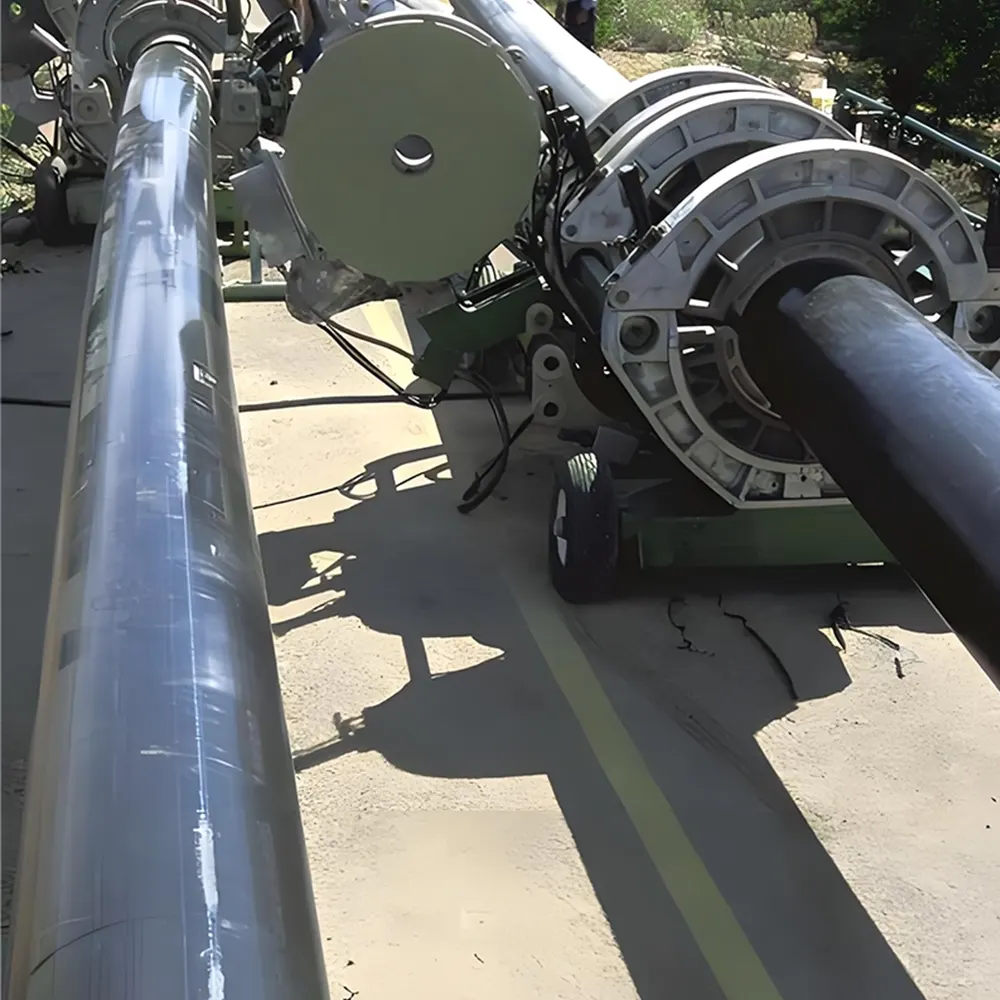
When people first hear the term butt fusion machine, they often imagine a complicated industrial system used only by specialized pipeline crews. In reality, it is one of the most important tools in modern plastic piping work, especially for HDPE, PE, and other thermoplastic pipelines. From water supply networks to gas distribution lines, this machine plays a critical role in creating strong, leak-resistant joints that can last for decades.
In simple terms, a poly pipe fusion machine joins two lengths of plastic pipe by heating their ends and pressing them together under controlled force. The process creates a permanent bond that is as strong as, or often stronger than, the pipe itself. Because the joint is fused at the molecular level, it avoids the weaknesses of mechanical connectors and reduces the risk of leakage, corrosion, and long-term maintenance problems.
For contractors, distributors, and project managers, understanding how this equipment works is essential before choosing the right model. Different pipe diameters, project scales, and installation environments require different machine configurations. That is why companies like JQ-Fusion offer manual, hydraulic, and CNC automatic systems designed for a wide range of applications.
Key point: A poly pipe fusion machine does not simply “glue” pipes together. It uses heat, pressure, and precise timing to create a seamless fused joint that can handle high pressure and demanding field conditions.
What Is a Poly Pipe Fusion Machine?
A poly pipe fusion machine is a specialized welding device used to join thermoplastic pipes, most commonly HDPE pipes. The machine aligns, heats, and compresses pipe ends so they melt and merge into one continuous structure. In many industries, this method is preferred over threaded, clamped, or glued connections because it delivers higher reliability and better hydraulic performance.
The machine is typically used with pipes that carry water, gas, slurry, or industrial fluids. Because the resulting joint has no rubber seals or metallic fasteners, the system is less vulnerable to aging, vibration, and chemical attack. This makes it especially valuable in harsh environments such as mining projects, municipal infrastructure, and industrial pipeline installations.
There are several types of fusion machines available. Manual models are usually suited for small-scale jobs or low-frequency use. Hydraulic machines provide more force and consistency for medium to large pipes. CNC automatic butt fusion machines are built for high precision and are ideal when repeatability and productivity are top priorities.
Why Fusion Technology Matters in Pipe Installation
Traditional pipe joining methods can introduce weak points into a pipeline system. A gasket may fail, a threaded joint may loosen, and adhesive joints can degrade over time. Fusion technology removes many of these concerns by creating a homogeneous joint. Once the pipe ends are fused correctly, the connection behaves like a single piece of pipe.
This is why the butt fusion machine is widely used in critical infrastructure. Water systems demand leak-free performance. Gas networks require absolute integrity. Mining and industrial projects often face pressure changes, vibration, and soil movement. Fusion welding helps address these challenges with a durable, consistent solution.
Important: The quality of the final joint depends not only on the machine, but also on pipe preparation, alignment, heating temperature, cooling time, and operator skill.
How Does a Butt Fusion Machine Work?
The fusion process follows a clear sequence. Although machine designs vary, the working principle remains similar across most systems. The first step is to securely clamp the pipes in the machine. Proper alignment is essential because even small deviations can weaken the joint or create unnecessary stress during service.
Next, the pipe ends are faced with a planer or facer to ensure they are flat, clean, and parallel. This step removes oxidation and surface irregularities. After facing, a heated plate is inserted between the pipe ends. The plate brings both surfaces to the correct melting temperature, softening the material without degrading it.
Once the ends reach the proper condition, the heating plate is removed and the pipe ends are pressed together under controlled hydraulic or mechanical pressure. This creates a molten interface where the two surfaces merge. The joint is then held in place during cooling, allowing the fused material to solidify into a continuous bond.
To better understand the process, think of it as precision-controlled plastic welding rather than simple heating. Every phase matters: alignment, facing, heating, changeover, fusion pressure, and cooling. If any step is rushed or performed incorrectly, the joint quality can be affected.
Main Components of the Machine
A standard poly pipe fusion machine includes several important parts. The frame or chassis supports the entire structure and maintains alignment. Clamps hold the pipes securely in place. The facer prepares the pipe ends. The heating plate provides a uniform temperature across the welding surface. The hydraulic unit or pressure system controls fusion force. In automatic models, the control unit manages timing, pressure, and temperature more accurately.
Each component contributes to welding quality. For example, if the heating plate has inconsistent temperature distribution, the fusion may be uneven. If the clamps are not aligned properly, the final joint may be stressed. High-quality machines are built to reduce these risks and provide stable, repeatable results in real project conditions.
Pro tip: When evaluating equipment, look for stable clamp alignment, accurate temperature control, and smooth hydraulic pressure adjustment. These features directly affect welding performance.
Different Types of Fusion Machines
Manual butt fusion machines are usually selected for smaller pipe sizes and occasional use. They are simpler to operate and cost-effective, making them suitable for light-duty applications. However, they rely more on operator judgment and may be less efficient on large projects.
Hydraulic butt fusion machines are more common in professional pipeline construction. They provide stronger and more consistent pressure, which improves weld uniformity and productivity. These systems are widely used in water supply and gas distribution projects where reliability is critical.
CNC automatic butt fusion machines represent the most advanced category. They automate key steps such as temperature control, fusion timing, and pressure management. This reduces human error and helps ensure consistency across multiple welds. For large projects or contractors who require repeatable quality, automation can be a major advantage.
JQ-Fusion supplies all of these product categories, along with models suitable for different pipe diameters and jobsite requirements. Their manufacturing approach focuses on durability, precision, and customization for global buyers.
Where Are Poly Pipe Fusion Machines Used?
These machines are used in a wide variety of industries. Municipal water systems rely on fused HDPE pipelines because they can reduce leakage and maintenance costs. Gas distribution networks use them for safe and secure joining. Mining operations depend on them for slurry and process pipelines exposed to rough conditions.
Industrial facilities also use fusion welding for transport lines carrying chemicals, cooling water, and process fluids. In agricultural and irrigation projects, the machine supports long-distance pipe installation with fewer failure points. The same principle applies across all these sectors: a strong fused joint improves system reliability.
Because of this broad application range, it is important to choose a machine that matches the project scale. A small manual system may be enough for local repairs, while a large infrastructure project may require a hydraulic or CNC solution with advanced control.
What Makes a Good Fusion Joint?
A good fusion joint should look uniform, symmetrical, and properly formed. The bead created during welding should be even on both sides of the pipe. More importantly, the internal structure should be fully fused without contamination or cold spots. Achieving this requires clean pipe ends, correct temperature, proper pressure, and sufficient cooling time.
Environmental conditions can also influence the result. Wind, dust, moisture, and extreme temperature can affect heating and cooling behavior. Skilled operators know how to adjust procedures based on site conditions, which is why training and experience matter so much in fusion welding.
Quality control is not optional in pipeline construction. A failed joint can lead to downtime, safety issues, and expensive repairs. That is why manufacturers such as JQ-Fusion implement temperature accuracy checks, hydraulic pressure stability tests, and clamp alignment inspections before delivery.
Why Choose a Reliable Manufacturer?
When buying a poly pipe fusion machine, the manufacturer matters as much as the machine itself. A reliable supplier can provide technical guidance, spare parts, customization, and after-sales support. They can also help customers choose the right configuration for a specific project or market.
JQ-Fusion is known for its professional focus on HDPE pipe welding machines and butt fusion solutions. With more than 20 years of industry experience, the company offers equipment for global pipeline projects and supports OEM and ODM customization. That means buyers can request adjustments in machine size, voltage, color, branding, or design to match their business needs.
For contractors and distributors, this kind of flexibility is valuable. It helps build product differentiation and supports project-specific requirements. It also makes long-term procurement easier when a supplier can maintain stock availability and respond quickly to urgent orders.
Checklist before purchase:
• Confirm pipe diameter range
• Check voltage and power compatibility
• Review clamp and heating plate quality
• Ask about warranty and technical support
• Verify delivery time and spare parts supply
Maintenance and Operator Best Practices
Even a high-quality butt fusion machine needs proper care. Regular cleaning of the heating plate, inspection of hydraulic components, and checking clamp surfaces can help maintain performance. The machine should be stored safely when not in use, and calibration should be verified according to the manufacturer’s recommendations.
Operators should also receive proper training. They need to understand how to prepare the pipe, set the correct temperature, monitor fusion time, and observe the cooling period. A well-trained team can prevent many common welding problems before they happen. In large projects, this can save substantial time and money.
Preventive maintenance and good welding discipline are the foundation of long-term reliability. When these practices are combined with a well-built machine, the result is a pipeline system that performs efficiently for years.
Final Thoughts
The poly pipe fusion machine is a vital tool in modern pipeline construction because it provides a secure, durable, and efficient way to join thermoplastic pipes. Its working principle is straightforward, but the quality of the result depends on precision at every stage. From alignment and heating to pressure and cooling, each step must be controlled carefully.
Whether the project involves water, gas, mining, or industrial transport, choosing the right machine and the right supplier can make a major difference. Professional manufacturers like JQ-Fusion support this process with durable equipment, strict quality control, and flexible customization options. For buyers who value performance and long-term reliability, that combination is especially important.
In summary: The best fusion results come from the right machine, proper preparation, skilled operation, and dependable manufacturer support.
FAQs
What does a poly pipe fusion machine do?
It joins plastic pipes by heating and pressing the ends together, creating a strong and permanent fused connection.
Is butt fusion stronger than mechanical joining methods?
In most cases, yes. A properly fused joint can be as strong as the pipe itself and is less likely to leak or loosen over time.
What pipe materials can be fused?
The most common materials are HDPE and other thermoplastic pipes designed for heat fusion applications.
How do I choose the right machine?
Consider pipe diameter, project size, power requirements, automation needs, and the level of technical support offered by the manufacturer.
Can JQ-Fusion provide customized equipment?
Yes. JQ-Fusion offers OEM and ODM customization, including size, voltage, design, branding, and project-specific configurations.



