
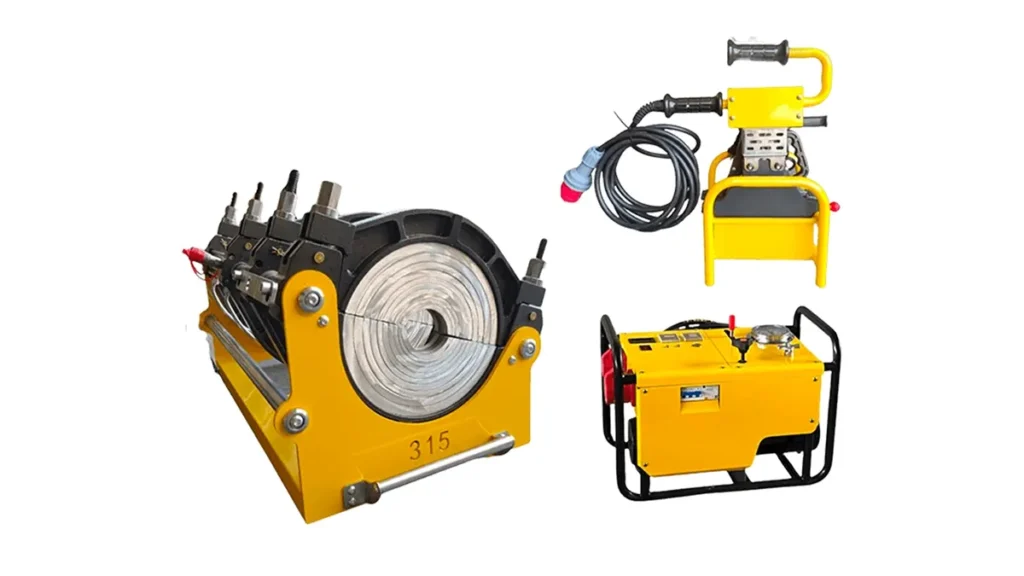
The Democratic Republic of Congo (DR Congo) is investing in water supply, mining infrastructure, and rural piped systems — projects where HDPE piping and reliable fusion joints matter. A butt fusion machine is a core tool for joining HDPE pipes on-site, ensuring leak-free, long-lasting pipelines even in remote Congolese sites. This guide explains what a butt fusion machine is and how to pick the right type for projects across DR Congo’s varied environments.
What Is a Butt Fusion Machine?
Butt fusion is a welding method for thermoplastic pipes (mainly HDPE) where two pipe ends are heated and pressed together until they form a homogeneous molecular bond. A butt fusion machine aligns, clamps, heats, and fuses pipe ends to produce durable, leak-proof joints that match or exceed the parent pipe strength — ideal for potable water, mining slurry lines, and industrial pipelines common in DR Congo.
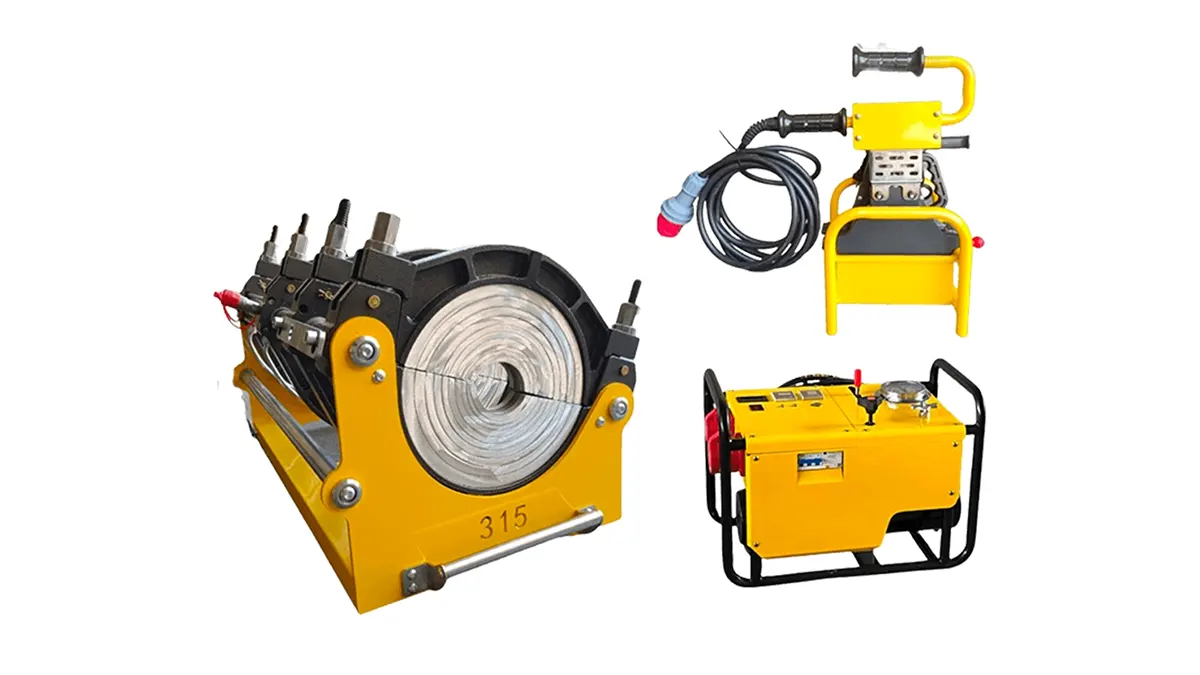
Main Types of Butt Fusion Equipment
- Manual Butt Fusion — Simple, portable, low-cost; good for small-diameter pipes and rural water projects.
- Hydraulic Butt Fusion — Faster, consistent pressure control, suitable for medium to large diameters and frequent on-site use.
- Automatic / CNC Butt Fusion — High precision, digital controls, ideal for large-diameter pipelines and contractors with high productivity needs.
- Related: Electrofusion units for fittings and repair work where electrofusion couplers are used instead of butt fusion.
Why Butt Fusion Suits DR Congo Projects
DR Congo projects often face long distances, limited access to repair centers, and harsh site conditions. Butt-fused HDPE pipelines offer:
- Corrosion resistance for mineral-rich and tropical soils.
- High joint integrity for water distribution and mining applications.
- Field-friendly installation with portable options for remote villages and construction camps.
- Minimal maintenance once properly fused.
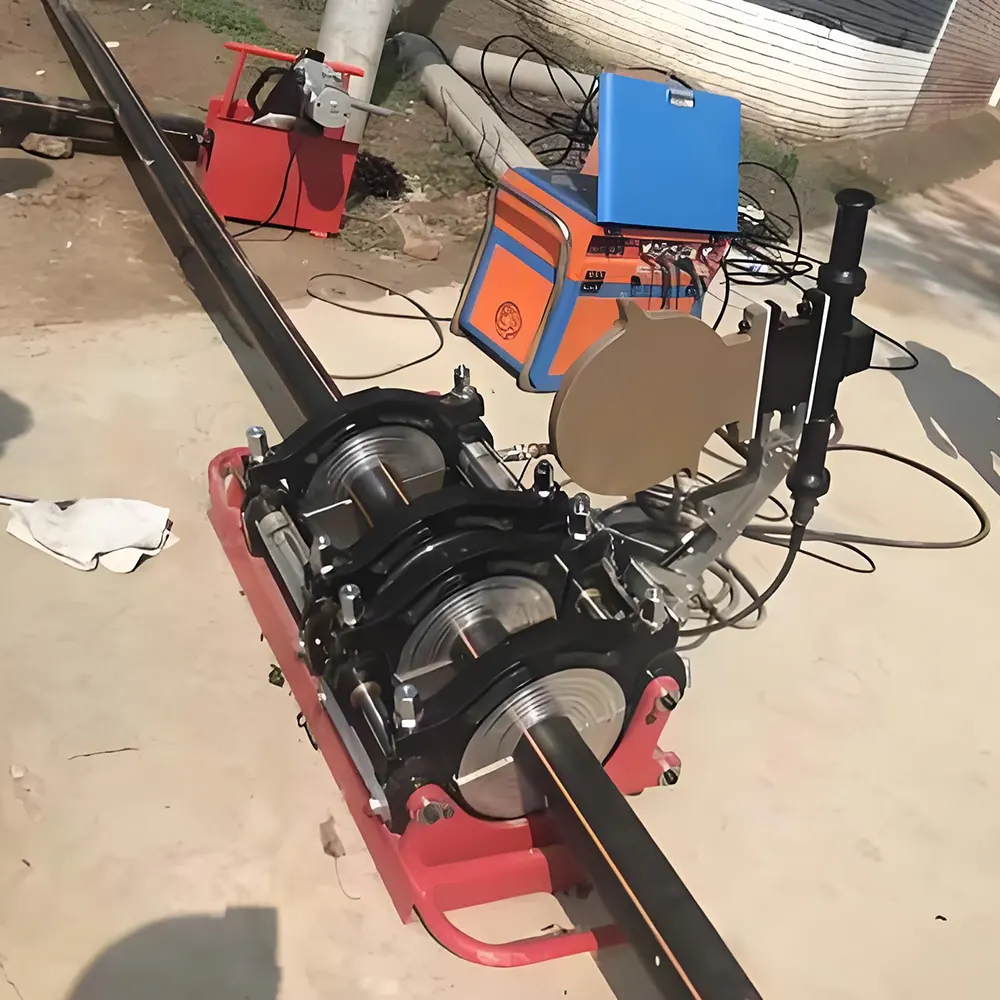
How to Choose the Right Butt Fusion Machine in DR Congo
Selecting the correct machine depends on project scale, site conditions, and available support. Use this checklist to match equipment to your needs:
- Pipe diameter range — Confirm the machine supports the pipe sizes you will weld (common ranges: 20–160mm, 160–630mm, 630–2000mm).
- Portability — For rural and remote jobs pick compact, manual or small hydraulic units that can be transported by pickup or river barge.
- Power and voltage compatibility — DR Congo sites often rely on generators (220V single-phase or 380V three-phase). Ensure the machine can run from local supply or generators.
- Automation level — Automatic machines reduce operator variance and are worth the investment for long pipeline runs; manual machines are cost-effective for occasional work.
- Clamping and alignment — Robust clamps and easy alignment save time and reduce rework in dusty, uneven job sites.
- Heating platen quality — Even heating with good temperature control improves joint strength.
- Spare parts & consumables — Confirm availability of blades, heaters, hydraulic seals, and other parts; plan spare kits for remote projects.
- Training & documentation — Choose a supplier that provides operation manuals in French or offers on-site training for local crews.
- After-sales & warranty — Make sure warranty terms and technical support cover shipping to major DR Congo ports and inland transfer.
- Budget & ROI — Balance upfront cost vs. expected job frequency: renting may suit short-term projects while purchase pays off for repeated, large programs.
Quick Comparison Table
| Machine Type | Typical Pipe Range | Power | Best For |
|---|---|---|---|
| Manual Butt Fusion | 20mm – 315mm | Low (hand hydraulic or small generator) | Rural water supply, repairs, small jobs |
| Hydraulic Butt Fusion | 63mm – 1250mm | Medium (generator or site power) | Municipal pipelines, mining service lines |
| Automatic / CNC Butt Fusion | 160mm – 2250mm+ | High (3-phase recommended) | Large projects, long pipeline runs, contractors |
Site Considerations Specific to DR Congo
When planning procurement and deployment, keep these local realities in mind:
- Major ports and access: shipments commonly arrive via Matadi or Lobito (for southern routes), then transported by road or river to Kinshasa and mining regions. Factor transit time and inland handling.
- Road and terrain challenges: choose machines that can be broken down for easier transport to remote sites using 4×4 vehicles or river barges.
- Power stability: provision robust generator sets and voltage converters; include fuel logistics for isolated sites.
- Language and training: French is widely used; equipment manuals and training in French or with French-speaking trainers improve adoption by local teams.
- Security and storage: protect equipment from humidity, dust, and theft — durable cases and secure onsite storage help preserve machine life.
Inspection, Testing, and Quality
Require pre-shipment factory tests and request welding procedure specifications (WPS). On arrival, perform test welds and destructive or non-destructive testing as project specs require. Regular calibration of heating plates and pressure systems is essential to maintain joint quality.
Supplier & After-Sales Tip
Before final purchase, confirm lead time, shipping terms to DR Congo, spare parts availability, and training options. A reliable supplier will provide documentation, recommended welding parameters, and remote or on-site support for initial projects.
About JQ-Fusion
JQ-Fusion — https://jq-fusionwelding.com/ — is a professional manufacturer specializing in HDPE pipe welding machines, offering manual, hydraulic, and CNC automatic butt fusion equipment for global infrastructure projects. They provide solutions covering a wide range of pipe sizes and support services aimed at contractors and distributors worldwide.



