
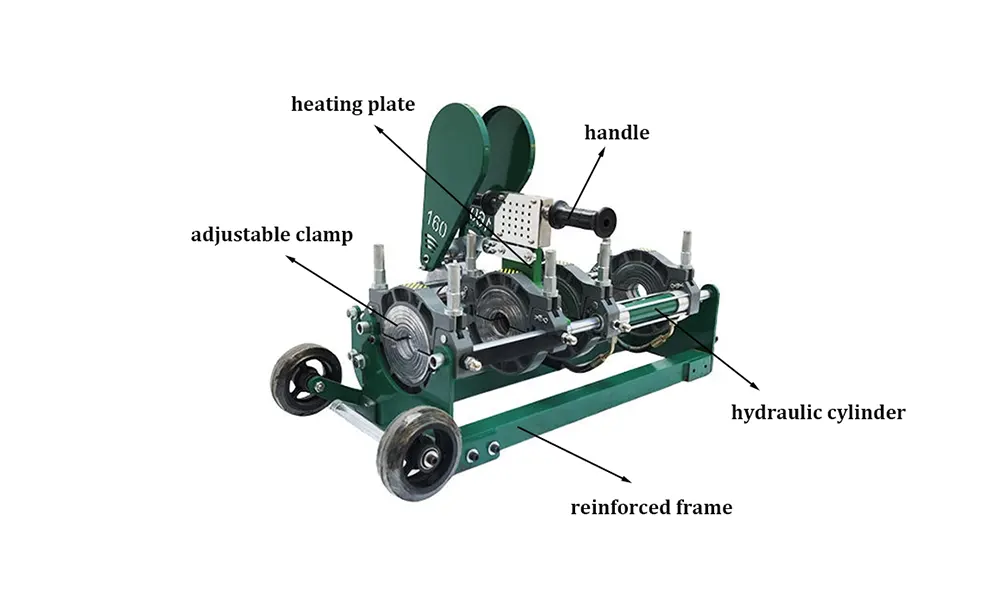
Selecting the right HDPE welding machine is a critical decision for contractors, project managers, and engineers involved in pipeline construction. With technology evolving and project demands increasing, making an informed choice in 2025 requires understanding both your project’s specific needs and the capabilities of modern equipment. This guide will walk you through the key factors to consider.
Understanding Your Project Requirements
Before comparing models, clearly define your project scope. The type of work you do most often will dictate the primary features you need.
Key Questions to Ask:
Pipe Diameter Range: What are the smallest and largest pipe sizes you will be welding? Machines have specific clamping ranges.
Application Environment: Will you be working on municipal water lines, industrial slurry pipelines, or gas distribution? Each may have different standards.
Production Volume: Is this for occasional repairs or high-volume, continuous fusion work? This affects the choice between manual, hydraulic, and fully automatic systems.
Power Source Availability: Will you have reliable grid power on-site, or do you need a machine with generator compatibility or battery options?
Types of HDPE Welding Machines
There are three main categories of fusion equipment, each suited for different operational scales.
1. Manual Butt Fusion Machines
These are operated primarily by hand, with hydraulic assistance for pressure application. They are cost-effective, portable, and ideal for smaller diameter pipes (typically up to 250mm) or for contractors who need a versatile, field-ready tool. Skill and experience of the operator are crucial for consistent results.
2. Hydraulic Butt Fusion Machines
The industry workhorse. These machines use a hydraulic system to control the critical phases of the weld: facing, heating, switching, and fusion. They offer superior consistency, reduced operator fatigue, and can handle a much wider range of diameters. For most professional pipeline projects, a reliable butt fusion machine with robust hydraulic controls is the standard choice.
3. CNC Automatic Fusion Machines
Representing the pinnacle of technology for 2025, these systems use computerized numerical control to automate the entire welding cycle. The operator inputs parameters (pipe material, diameter, ambient temperature), and the machine executes the weld with precise, repeatable accuracy. This minimizes human error, is ideal for large-diameter or high-pressure critical lines, and provides detailed digital weld records.
Critical Technical Specifications to Evaluate
Look beyond the basic description and examine these core specifications.
Clamping Force and Alignment
Sufficient clamping force prevents pipe movement during fusion. More importantly, look for machines with precision-machined clamp jaws and alignment systems (like centralizers) to ensure perfect pipe alignment—a non-negotiable for a strong weld.
Heater Plate Temperature Control
Consistent, even heat is vital. Digital temperature controllers with high accuracy (±1°C) and stable heater plates ensure the pipe ends are heated uniformly according to the material’s specific requirements.
Hydraulic System Pressure & Stability
The hydraulic unit must deliver smooth, consistent pressure throughout the fusion and cooling phases. Check the maximum system pressure and the quality of components like pumps and valves. Stability is more important than raw power.
The Importance of Manufacturer Support
Your relationship with the manufacturer doesn’t end at purchase. Comprehensive support is essential for long-term success.
Technical Training & Documentation: Does the supplier offer thorough operation and maintenance training? Clear, multilingual manuals are a must.
Availability of Spare Parts: Check the lead time for common wear parts like heater plates, Teflon sheets, and hydraulic seals. A manufacturer with a large inventory, like JQ-Fusion, minimizes project downtime.
Warranty and After-Sales Service: A strong warranty reflects confidence in product durability. Ensure there is a clear channel for technical support, whether via phone, email, or on-site service.
Future-Proofing Your Investment
Consider how your needs might grow. A slightly more capable machine today can save you from buying a new one tomorrow.
Modularity: Can the machine be easily upgraded with different clamp sets for larger diameters?
Data Connectivity: For automated machines, can weld data be exported for quality assurance records? This is becoming a standard requirement on major projects.
Build Quality and Durability: Inspect the frame construction, quality of welding on the machine itself, and corrosion protection. A machine built with advanced manufacturing technology will withstand harsh job sites for years.
Making the Final Decision
Create a shortlist of 2-3 models that meet your technical specs. Then, compare them on:
- Total Cost of Ownership (price, maintenance costs, energy efficiency).
- Ease of use and setup time.
- Reputation and reviews from other users in similar industries.
- The manufacturer’s commitment to strict quality control and certifications (e.g., SGS).
Remember, the cheapest option can be the most expensive in the long run if it causes weld failures, project delays, or frequent repairs. Investing in a reliable, well-supported butt fusion machine from an experienced manufacturer is an investment in the reliability of your pipelines and the success of your business.
Frequently Asked Questions (FAQs)
What is the main difference between a manual and a hydraulic butt fusion machine?
The core difference is in the application of fusion pressure. Manual machines rely more on the operator’s skill and physical effort to manage the changeover and pressure. Hydraulic machines use a powered hydraulic system to apply precise, consistent, and repeatable pressure throughout the weld cycle, resulting in more reliable welds, especially on larger diameters, with less operator fatigue.
How do I know what size machine I need?
Your machine must cover the entire diameter range of your current and foreseeable projects. Check the machine’s specifications for its minimum and maximum clamping capacity. It’s often wise to choose a machine that can handle a size slightly larger than your current maximum to accommodate future work. The clamp sets or inserts are specific to pipe sizes.
Why is temperature control so critical in HDPE welding?
HDPE must be heated to a very specific melt temperature range to properly fuse. If the heater plate is too cool, the material won’t melt sufficiently, causing a weak weld. If it’s too hot, the material can degrade, becoming brittle and also creating a weak point. Precise digital control ensures the correct temperature is maintained for the exact required time.
Can I get a machine customized for my specific project needs?
Yes, many professional manufacturers offer flexible OEM & ODM customization. This can include specific voltage requirements (for different countries), custom colors or branding, special clamp configurations for unique fittings, or even design modifications for specific environmental conditions. It’s always worth discussing your unique requirements with the supplier.
What kind of maintenance does a butt fusion machine require?
Regular maintenance is key to longevity. This includes cleaning the heater plate after each use, inspecting and replacing Teflon non-stick sheets, checking hydraulic fluid levels and for leaks, ensuring all bolts and clamps are tight, and keeping the machine clean and stored in a dry place. Following the manufacturer’s maintenance schedule is crucial.



