
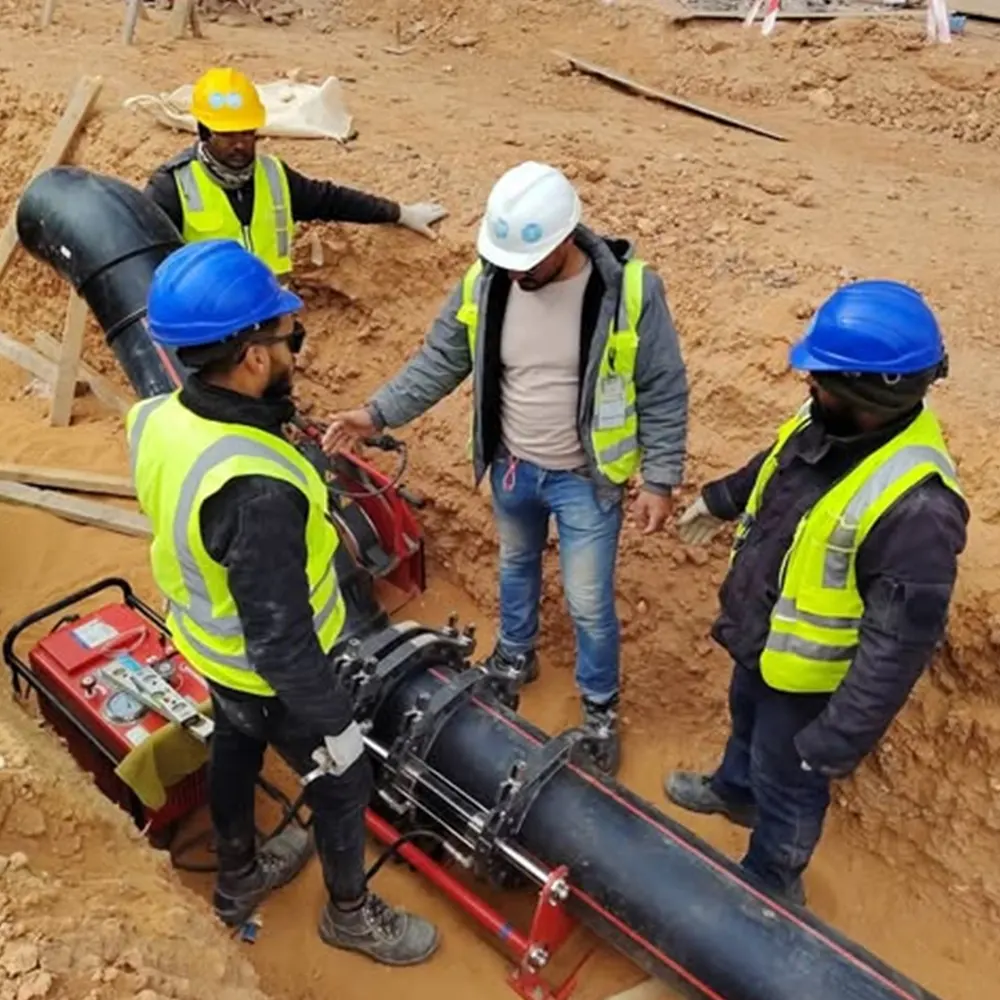
When a pipeline project moves from planning to installation, one practical question often comes up: Which is better for pipe joining: plastic pipe or metal pipe? The answer is not always simple, because the “best” option depends on the operating environment, the type of fluid or gas being transported, the pressure level, long-term maintenance expectations, and the installation method. In many modern systems, plastic pipe has become a preferred choice for its corrosion resistance and ease of joining, while metal pipe still remains important in applications that demand high temperature resistance, high mechanical strength, or specialized industrial performance.
For contractors, engineers, and distributors, the real decision is usually not only about material cost. It is about whether the pipe material can deliver dependable performance over the full lifecycle of the project. In this article, we compare plastic pipe and metal pipe from the perspective of pipe joining, installation efficiency, durability, welding methods, and project suitability. We will also explain why many global pipeline projects rely on advanced fusion technology and how a reliable butt fusion machine can improve joint quality in plastic pipe systems.
Understanding Pipe Joining in Real Projects
Pipe joining is one of the most critical steps in any pipeline system because a joint is often the most vulnerable point in the entire line. A strong pipe body means little if the connection is weak, misaligned, or poorly sealed. In practical terms, pipe joining must ensure structural integrity, leak prevention, and long service life. Different materials require different joining technologies, and that is where plastic and metal diverge significantly.
Plastic pipe is commonly joined through heat fusion, electrofusion, solvent cement, or mechanical fittings, depending on the material type and diameter. Metal pipe, by contrast, is usually joined by welding, threading, flanging, or compression fittings. Each method has advantages, but each also creates different risks in installation speed, operator skill, and future maintenance. For this reason, choosing between plastic and metal pipe is also a choice about the joining system itself.
Key point: In most pipeline projects, the quality of the joint matters more than the material alone. A well-joined plastic pipe can outperform a poorly joined metal pipe in reliability, while a well-engineered metal system may still be the right choice in harsh industrial conditions.
Why Plastic Pipe Is Often Easier to Join
Plastic pipe has gained strong popularity in water supply, gas distribution, mining, and industrial networks because it is lightweight, corrosion-resistant, and relatively easy to install. The joining process is usually simpler than with metal pipe, especially in systems using butt fusion or electrofusion. Because the ends of the pipe are heated and fused together, the resulting joint can become as strong as the pipe itself when the process is performed correctly.
This is one of the biggest advantages of plastic pipe: it reduces the number of weak points in the system. Unlike threaded or gasketed joints, fusion joints do not depend on sealing compounds or external mechanical pressure to maintain integrity. They are especially useful in underground pipelines, where long-term leak resistance and low maintenance are highly valued.
Plastic pipe also allows faster installation in many cases. The materials are easier to transport, easier to cut, and easier to align. That can reduce labor costs and shorten project schedules. For contractors managing large-area installations, these benefits can be substantial. At the same time, the fusion process demands consistent temperature control, correct alignment, and proper cooling time, which means quality equipment and trained operators remain essential.
Advantages of Plastic Pipe Joining
- Corrosion resistance: Plastic does not rust or oxidize like many metal materials.
- Lightweight handling: Easier transport and faster positioning during installation.
- Leak-resistant fusion joints: Properly fused joints can perform very reliably.
- Lower maintenance: Reduced risk of corrosion-related failures over time.
In many municipal and industrial projects, these advantages make plastic pipe the preferred option. The ability to create strong, repeatable joints is one reason why professionals often invest in dependable fusion tools. A high-quality welding process does not just connect pipes; it protects the long-term economics of the entire system.
Where Metal Pipe Still Performs Better
Metal pipe is still widely used because it offers excellent strength, pressure resistance, and temperature tolerance. In certain industrial applications, plastic cannot match the mechanical resilience or heat performance of steel, stainless steel, copper, or other metal materials. Systems involving very high temperatures, aggressive mechanical stress, or strict structural requirements may still favor metal pipe joining.
Metal pipe also has a long history in industries where welding expertise is already established. Skilled welders can create strong joints that serve reliably in heavy-duty environments. However, metal joining can be more labor-intensive, more sensitive to corrosion, and more dependent on post-installation protection such as coatings or anti-rust treatments.
Important note: Metal pipe is not “better” in every case. It is better when the project demands high temperature resistance, exceptional structural strength, or compatibility with existing metal systems. For water and gas distribution, however, plastic pipe often provides a more efficient and economical solution.
Advantages of Metal Pipe Joining
- High temperature performance: Suitable for hot fluids and demanding environments.
- Strong mechanical durability: Handles impact and structural stress well.
- Established industrial use: Common in many legacy and high-spec systems.
- Wide fabrication familiarity: Many workshops already have metal welding capability.
Still, the disadvantages should not be ignored. Metal pipe can corrode, especially in humid, chemical, or underground environments. Some joining methods require skilled labor and strict safety measures. In addition, the total cost of installation can increase due to heavier materials, more complex fabrication, and protective finishing requirements.
Plastic Pipe vs. Metal Pipe: A Practical Comparison
To decide which material is better for pipe joining, it helps to compare them side by side based on practical project factors rather than theory alone.
1. Installation Speed: Plastic pipe is generally faster and simpler to join, especially using fusion methods. Metal pipe often requires more labor and more preparation.
2. Corrosion Resistance: Plastic pipe has a major advantage because it does not rust. Metal pipe may need coatings, maintenance, or protective design measures.
3. Temperature Resistance: Metal pipe is stronger in high-temperature environments, making it better for certain industrial systems.
4. Long-Term Maintenance: Plastic systems usually need less maintenance, while metal systems may require periodic inspection for corrosion or joint wear.
5. Total Project Cost: Plastic pipe often provides a lower lifecycle cost because of faster installation and reduced maintenance, although the right answer depends on project specifications.
The Role of Fusion Technology in Plastic Pipe Joining
One reason plastic pipe has become so competitive is the maturity of fusion technology. Butt fusion, in particular, is widely used for joining HDPE pipe because it creates a seamless bond between pipe ends. When the process is performed with accurate heating, controlled pressure, and proper alignment, the result is a joint that can be highly durable and leak-resistant.
Professional fusion equipment is essential. Manufacturers such as JQ-Fusion, with more than 20 years of experience in HDPE pipe welding machines, support projects that require stable welding performance, strict quality control, and flexible customization. Their product range includes manual, hydraulic, and CNC automatic butt fusion solutions designed for a variety of pipe diameters and project conditions. In large infrastructure projects, the right machine selection can directly influence joint consistency and installation efficiency.
If a project depends on repeatable and reliable plastic pipe joining, it is worth looking beyond the pipe itself and focusing on the welding system, operator training, and inspection process. For many contractors, that means using trusted equipment, maintaining correct welding parameters, and choosing tools that are suitable for the pipe size and field conditions.
What Makes a Strong Plastic Pipe Joint?
- Correct pipe preparation: Clean, aligned, and properly cut pipe ends.
- Stable heating temperature: Essential for a uniform fusion surface.
- Controlled pressure: Ensures the joint forms correctly without distortion.
- Adequate cooling time: Prevents premature movement before the bond stabilizes.
These details may sound simple, but they are what separate a strong pipeline from a risky one. In practice, successful joining depends on equipment quality and process discipline. That is why manufacturers that provide technical support, training, and stable production standards are valuable partners for global contractors and distributors.
When to Choose Plastic Pipe
Plastic pipe is often the better choice when the project priorities include corrosion resistance, low maintenance, quick installation, and long-term leak prevention. It is especially suitable for water supply systems, gas distribution, mining lines, and industrial applications where flexibility and durability are important. If the project uses HDPE pipe, butt fusion can be an excellent joining method because it eliminates many of the failure points associated with mechanical fittings.
Plastic pipe is also attractive when the site conditions are challenging. Underground installation, humid environments, and chemically active soils can all shorten the life of some metal systems. In those cases, plastic pipe offers a practical and durable alternative that can reduce repair needs over time.
Best fit for plastic pipe: water distribution, gas networks, mining pipelines, industrial process lines, and projects that prioritize long service life with minimal corrosion risk.
When to Choose Metal Pipe
Metal pipe is still the better choice in environments where high heat, high structural load, or specific industrial standards are involved. It is also useful in systems where an existing metal infrastructure already dominates, making material consistency and joining compatibility important. In some applications, metal pipe can provide superior rigidity and temperature resilience.
However, metal pipe should be selected with full awareness of the total lifecycle cost. If corrosion protection, specialized labor, or frequent inspection will be necessary, the project budget must account for those factors. The best solution is not always the most robust material in isolation, but the one that delivers the safest and most cost-effective result for the intended use.
Why Project Buyers Care About the Joining Method
Buyers and project managers often focus on pipe material first, but joining method can be just as important. A plastic pipeline joined by precise fusion can deliver excellent performance over many years. A metal pipeline joined with poor workmanship or inadequate protection can fail earlier than expected. This is why experienced procurement teams evaluate not only the pipe but also the equipment, training, standards, and service support behind the installation.
JQ-Fusion supports this kind of project thinking by offering advanced manufacturing capability, strict testing, OEM and ODM customization, and global technical support. Their emphasis on stability, quality, and fast delivery aligns well with the demands of modern pipeline construction, where reliability and efficiency are equally important. In that context, the choice of joining technology is not separate from the choice of supplier; both shape the project outcome.
Conclusion: Which Is Better for Pipe Joining?
In most modern pipeline applications, plastic pipe is better for pipe joining when the priorities are corrosion resistance, ease of installation, leak prevention, and long-term maintenance reduction. Metal pipe remains the stronger choice in certain high-temperature or heavy-duty environments, but it usually requires more attention to corrosion protection and welding quality. The best answer depends on the project’s technical demands, budget, and operating conditions.
If the goal is a durable, efficient, and cost-effective pipeline with strong joint performance, plastic pipe joined by the right fusion equipment is often the smarter option. If the project demands exceptional heat tolerance or structural rigidity, metal pipe may still be the preferred material. In either case, the quality of the joining process is what ultimately determines system reliability.
FAQs
Q1: Is plastic pipe always better than metal pipe?
No. Plastic pipe is often better for corrosion resistance and easy joining, but metal pipe may be better for high-temperature or heavy-duty industrial use.
Q2: Which pipe type is easier to install?
Plastic pipe is usually easier and faster to install because it is lighter and commonly joined with efficient fusion methods.
Q3: Do plastic pipe joints last long?
Yes, when properly fused with correct temperature, pressure, and alignment, plastic pipe joints can last a very long time.
Q4: Why do some projects still choose metal pipe?
Metal pipe is chosen for applications that require high heat resistance, strong mechanical performance, or compatibility with existing metal systems.
Q5: What is the most important factor in pipe joining?
The most important factor is joint quality. Even the best pipe material can fail if the joining process is poor.



