
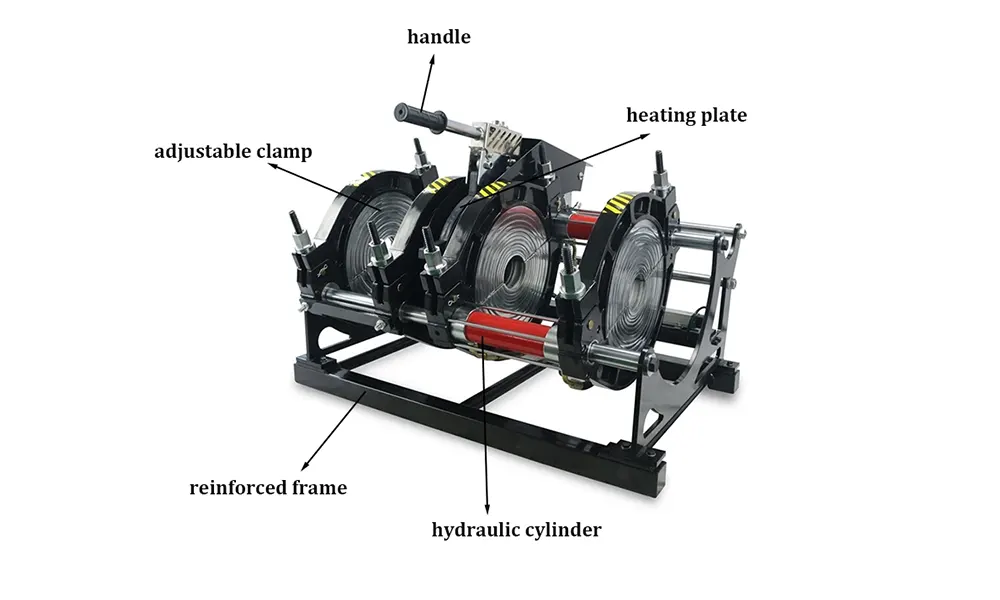
When project managers compare HDPE pipeline installation costs, welding labor often becomes one of the largest controllable expenses. The challenge is simple: reduce labor time and crew fatigue without creating weak joints, rework, or schedule risk. The good news is that with the right machine setup, jobsite process, and operator strategy, you can lower HDPE welding labor costs while still producing durable, high-quality fusion joints.
In practice, labor savings do not come from rushing the weld. They come from eliminating wasted motion, reducing setup errors, improving repeatability, and choosing equipment that matches the scale of the job. A well-planned fusion workflow can save hours every week, especially on long-distance water, gas, mining, and industrial pipe projects.
Why Welding Labor Costs Rise So Quickly
Labor costs in HDPE pipe welding increase for several common reasons. Crews spend too much time moving machines, aligning pipes manually, correcting temperature issues, and repeating welds that failed inspection. On many sites, the biggest hidden cost is not the fusion cycle itself, but all the work around it: pipe preparation, positioning, cleaning, clamping, and documentation.
Key point: Labor becomes expensive when the process depends too much on manual correction. The more consistent the machine and the workflow, the fewer workers and the fewer hours needed per joint.
Another major reason is poor equipment fit. If a welding machine is too small for the pipe size, too slow for the schedule, or not stable enough for repetitive field use, operators must compensate with extra effort. That compensation increases both direct labor and quality risk. For this reason, selecting a reliable butt fusion machine can have a direct impact on total project economics.
Start With the Right Machine for the Job
The fastest way to control labor cost is to match the machine to the pipe diameter, project type, and production volume. Manual units can be effective for smaller jobs or low-volume maintenance work. Hydraulic systems reduce physical strain and improve alignment, while CNC automatic machines help standardize the process on larger projects where repeatability matters most.
A properly selected machine reduces operator effort in several ways. It clamps more accurately, keeps the pipe ends aligned, maintains steadier pressure, and shortens the chance of human error. That means fewer adjustments, fewer failed joints, and less supervision time from experienced technicians.
Practical rule: choose equipment that can handle your pipe range comfortably, not just barely. Machines operating near their limit often slow the crew down and increase maintenance interruptions.
Invest in Repeatable Setup, Not Just Faster Welding
Many teams focus only on reducing fusion time, but the bigger opportunity is reducing setup time. If pipe preparation, alignment, and cleaning are standardized, each joint becomes easier and faster to complete. The crew spends less time deciding what to do next and more time executing a proven sequence.
A repeatable setup should include stable support for the pipe, clear station layout, organized tools, and a defined inspection routine. When the crew knows exactly where the scraper, thermometer, facing tool, and cleaning cloth are located, the job moves smoothly. This kind of organization may seem small, but across dozens or hundreds of joints, it creates major labor savings.
Tip: A well-organized fusion station often saves more labor than an extra worker does. Good layout reduces confusion, walking time, and double handling.
Train Operators to Prevent Rework
Rework is one of the most expensive labor drains in HDPE welding. A single failed joint does not just cost material; it also consumes labor, delays the schedule, and may require additional inspection. Skilled operators reduce these losses by maintaining consistent heating, pressure control, and cooling discipline.
Training should not be limited to machine operation. Crews should also understand pipe end preparation, environmental conditions, joint timing, and visual inspection. In outdoor construction, temperature fluctuations, dust, wind, and moisture can all affect welding quality. Operators who recognize these factors early can adjust procedure before defects occur.
For companies with multiple crews or subcontractors, standard training is especially important. A common procedure reduces the need for constant supervision and allows one skilled lead operator to oversee more output. That is a direct labor efficiency gain without sacrificing quality.
Use Automation Where It Makes Economic Sense
Automation does not always mean replacing people. In HDPE fusion work, automation often means giving the crew tools that reduce manual adjustment and improve process consistency. CNC automatic butt fusion systems can store parameters, control timing more precisely, and reduce the chance of operator variation from joint to joint.
This is especially valuable for contractors handling large-scale municipal, mining, or industrial jobs. On long pipe runs, even small time savings per weld add up quickly. Automation also helps reduce dependence on a single highly experienced operator, which lowers labor risk if staff availability changes during the project.
Important: Automation is most valuable when it standardizes quality and reduces repeat work. The goal is not speed alone, but stable output with fewer labor hours.
Maintain the Equipment to Avoid Unplanned Downtime
Even the best machine cannot save labor if it breaks down repeatedly. Preventive maintenance is a labor-saving strategy because it avoids emergency repairs, delay-related overtime, and crew downtime. Hydraulic systems, heating plates, clamps, and control components should be checked on a fixed schedule.
Temperature accuracy, hydraulic pressure stability, and clamp alignment are especially important in butt fusion work. If any of these drift out of specification, weld quality can suffer and the team may need to stop production. A reliable manufacturer that tests these factors carefully can help ensure stable field performance and lower maintenance-driven labor costs.
For project teams, maintenance should be viewed as part of production, not as a separate burden. A small amount of planned service is far cheaper than repeated stop-start operations caused by equipment failure.
Choose a Supplier That Supports Productivity
Supplier support affects labor cost more than many buyers realize. Fast response time, technical guidance, spare part availability, and clear operating instructions all help crews stay productive. When a supplier can quickly answer setup questions or help solve jobsite issues, the project avoids idle labor hours.
JQ-Fusion, for example, focuses on professional butt fusion solutions for global pipeline projects, offering manual, hydraulic, and CNC automatic equipment across a wide range of pipe diameters. This type of product range allows contractors to choose the right solution for different project stages instead of forcing one machine type to handle every task.
A strong partner also helps with OEM and ODM customization. When the machine is configured for the jobsite, voltage, branding, or workflow requirements, crews work more efficiently. Customization can reduce training friction and improve compatibility with local operating conditions.
How Quality Control Protects Labor Savings
Reducing labor cost is only useful if quality stays high. In fusion welding, quality control protects productivity by preventing the hidden labor costs of failures. A machine that produces stable, precise joints lowers the need for inspection repeat work and reduces the chance of expensive field corrections later.
This is why factory testing matters. Machines that are checked before delivery for performance stability, pressure control, and alignment consistency create fewer surprises on site. Contractors gain a smoother start-up, fewer production interruptions, and better confidence in meeting deadlines.
Quality note: The cheapest machine is not always the lowest-cost machine. The lowest total labor cost usually comes from equipment that performs consistently, reduces rework, and keeps crews moving.
Practical Ways to Cut Labor Cost Without Cutting Corners
The most effective labor-saving methods are usually simple and practical. First, pre-stage pipes and tools so the crew does not waste time searching or moving materials. Second, set a standard fusion checklist so every joint follows the same steps. Third, use the correct machine size and control type for the project scale.
Next, assign roles clearly. One operator should not be responsible for everything if the job volume is high. A good crew divides responsibilities between preparation, machine operation, and inspection. This reduces bottlenecks and keeps the welding line flowing.
Finally, measure performance. Track joints completed per shift, rework rate, setup time, and downtime. These numbers reveal where labor is being lost and which improvements are actually working. Without measurement, even good teams can miss major efficiency opportunities.
Why JQ-Fusion Fits Cost-Conscious HDPE Projects
For contractors seeking lower labor costs, the right partner should offer more than equipment. They should provide stable manufacturing, flexible customization, fast shipping, and technical support that helps crews stay productive from day one. JQ-Fusion combines these advantages with a broad product range that includes hydraulic butt fusion welding machines, automatic butt fusion welding machines, electrofusion welding machines, and multi-angle pipe fitting welding machines.
With over 20 years of industry experience, the company supports global pipeline projects in water supply, gas distribution, mining, and industrial installations. That experience matters because labor savings depend on real-world reliability, not just specifications on paper. When equipment is stable and support is responsive, contractors can focus on output instead of troubleshooting.
Conclusion
Reducing HDPE welding labor costs without sacrificing quality is absolutely possible, but it requires a disciplined approach. The best results come from matching the right machine to the project, standardizing setup, training operators well, maintaining equipment properly, and choosing suppliers that support long-term productivity. In other words, labor cost control is not about doing less work; it is about doing the right work more efficiently.
Final takeaway: If you want lower welding labor costs, invest in consistency. Consistency reduces mistakes, shortens cycle time, and protects joint quality at the same time.
FAQ 1: What is the biggest hidden labor cost in HDPE welding?
The biggest hidden cost is usually rework caused by poor setup, misalignment, or inconsistent operator procedure. Failed joints consume time twice: once for the original weld and again for correction.
FAQ 2: Is a CNC automatic machine always better than a hydraulic machine?
Not always. CNC automatic systems are ideal for larger or more repetitive projects, while hydraulic machines may be more cost-effective for many field applications. The best choice depends on pipe size, production volume, and crew experience.
FAQ 3: How can a contractor reduce labor without hiring fewer workers?
Contractors can reduce labor per joint by improving workflow, standardizing training, organizing the work area, and using reliable equipment. This increases output from the same team without lowering quality.
FAQ 4: Why does machine quality affect labor cost?
A higher-quality machine is more likely to maintain pressure, alignment, and temperature stability. That reduces operator corrections, lowers failure rates, and shortens the time needed per weld.
FAQ 5: What should I look for in a welding machine supplier?
Look for consistent product quality, customization options, fast delivery, technical support, and proven industry experience. These factors help protect productivity and lower total labor cost over the life of the project.



