
Finding certified HDPE welding equipment suppliers is not just about comparing prices. It is about choosing a partner that can help your pipeline project stay safe, efficient, and compliant from the first weld to the final inspection. Whether you are working on water supply systems, gas distribution networks, mining pipelines, or industrial installations, the supplier you choose will directly affect weld quality, project speed, and long-term operating costs.
A reliable supplier should offer more than machines. They should provide technical guidance, consistent manufacturing quality, documentation, after-sales support, and customization options that match your project requirements. In the HDPE welding industry, certification and production capability are especially important because pipeline failures can lead to expensive repairs, downtime, and safety risks.
If you are searching for a trusted source, it helps to understand what “certified” really means, what equipment categories matter, and how to evaluate a manufacturer’s experience. Companies like JQ-Fusion, a professional manufacturer specializing in HDPE pipe welding machines, have built their reputation by delivering dependable butt fusion solutions to global projects for more than 20 years. You can also explore their butt fusion machine page to better understand available machine types and technical support.
What “Certified” HDPE Welding Equipment Really Means
When suppliers say their HDPE welding equipment is certified, they should be able to prove that the machines meet recognized quality and safety standards. In practical terms, certification often indicates that the equipment has passed testing for performance stability, material quality, electrical safety, and welding consistency. For contractors, this reduces uncertainty and helps ensure the machine can perform reliably under real jobsite conditions.
A certified supplier should also be ready to provide relevant documents, such as quality inspection reports, test records, and product compliance information. These materials matter when equipment is used in regulated infrastructure projects or when international buyers need proof of conformity before shipment and installation.
Key point: certification is not only a label; it is evidence that the supplier has a repeatable quality system and a machine design that can support safe, stable welding results.
Where to Start Your Supplier Search
The best place to start is with manufacturers that focus specifically on HDPE pipe welding equipment rather than general industrial machinery. Specialized manufacturers usually understand pipe diameter ranges, heat plate control, hydraulic pressure stability, clamp alignment, and operator workflow much better. This technical focus matters because HDPE welding depends on precise temperature and pressure control.
You can search through industry websites, project supplier directories, trade exhibitions, and manufacturer platforms. Look for companies with clear product lines, transparent specifications, and visible support for different machine categories. A strong supplier should be able to explain whether you need manual, hydraulic, or CNC automatic butt fusion machines based on your project scale and working environment.
Tip: suppliers with a broad but focused product range are often better equipped to support different project phases, from small site repairs to large infrastructure installations.
Why Manufacturer Experience Matters
Experience in HDPE welding equipment production can make a major difference in product durability and operational reliability. A manufacturer with years of industry knowledge is more likely to understand the real challenges faced by contractors, such as unstable power supply, harsh jobsite conditions, frequent transportation, and strict project deadlines. This experience is reflected in smarter machine design and better after-sales service.
JQ-Fusion, for example, focuses on manual, hydraulic, and CNC automatic butt fusion welding machines and serves global pipeline projects in water supply, gas distribution, mining, and industrial applications. This type of specialization gives buyers confidence that the supplier knows how to build equipment for practical use, not just for display catalogs.
Important experience signals to look for
- 20+ years of industry focus or similar long-term production history
- Clear specialization in HDPE pipe welding equipment
- Evidence of global project use and export experience
- Engineering support for customization and troubleshooting
- Consistent quality control during manufacturing and testing
How to Evaluate Product Quality
Product quality should always be evaluated before choosing a supplier. Ask how the machine is built, what materials are used, and how each unit is tested before delivery. Reliable manufacturers perform inspections on temperature accuracy, hydraulic pressure stability, and clamp alignment because these factors directly affect weld integrity.
High-quality HDPE welding equipment should also be designed for easy operation and maintenance. Good ergonomics, stable structure, and intuitive controls can reduce operator error and improve productivity. For larger projects, machines with automated control systems can help maintain consistency across multiple welding cycles.
Look for suppliers that test every unit before delivery and provide traceable quality assurance records. This is one of the clearest signs of a dependable manufacturer.
The Role of OEM and ODM Customization
Many buyers need more than a standard machine. Some projects require specific voltage settings, unique frame dimensions, color branding, or special functional upgrades. That is why OEM and ODM support is a major advantage when selecting a supplier. A manufacturer that offers customization can adapt the equipment to local market needs or project-specific requirements.
Customization also helps distributors build stronger market identity. If you are purchasing for resale, branding and design flexibility can improve your competitiveness. If you are buying for internal project use, custom configurations can help optimize machine performance and operator convenience.
Common customization options
• Machine size: adapted for different pipe diameters
• Voltage: matched to regional power standards
• Branding: logo, color, and packaging customization
• Function upgrades: special controls or operational features
Support, Delivery, and Inventory: The Hidden Value Factors
A certified supplier should not only deliver a good machine but also support the full project lifecycle. That includes technical guidance before purchase, help during installation, responsive troubleshooting, and spare parts support after delivery. In pipeline projects, delays can be expensive, so supplier responsiveness is a real business advantage.
Inventory strength is also important. Suppliers with ready stock can shorten delivery times and reduce project delays. This matters especially for urgent work or bulk orders. JQ-Fusion emphasizes large inventory and fast delivery, which is valuable for contractors who cannot wait for long production cycles.
Strong suppliers combine stock availability, shipping efficiency, and technical support so customers can move from purchase to operation with fewer interruptions.
Types of HDPE Welding Equipment You May Need
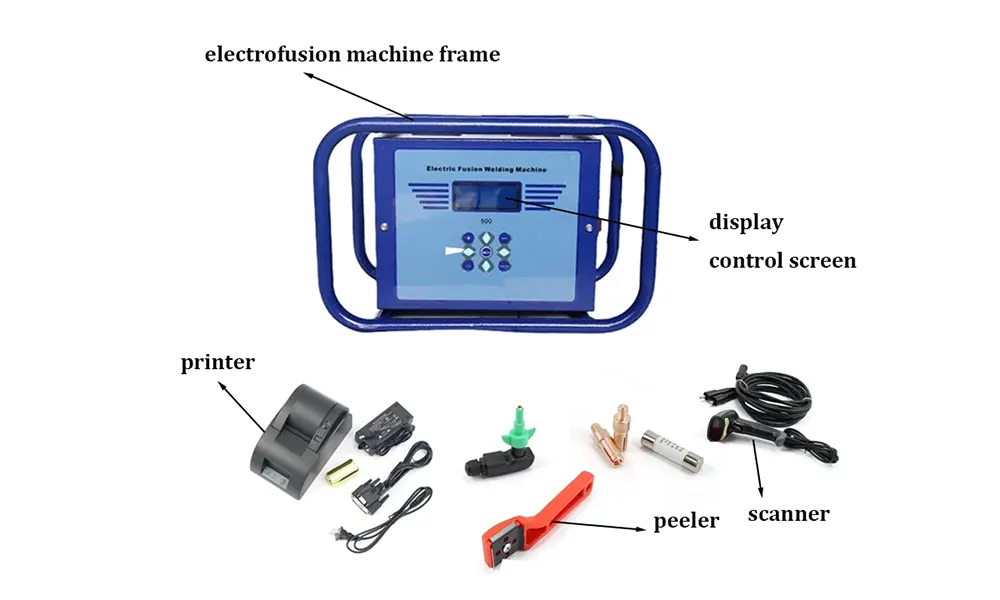
Different projects require different welding solutions. A trusted supplier should help you choose the right machine based on pipe size, application, and budget. Common categories include manual butt fusion machines, hydraulic butt fusion machines, CNC automatic systems, electrofusion welding machines, and multi-angle pipe fitting welding machines.
Manual machines are often suitable for smaller jobs and limited budgets. Hydraulic models are widely used for more demanding site work because they improve pressure stability. CNC automatic machines are ideal for projects that need precision, repeatability, and reduced operator dependence. Electrofusion equipment and multi-angle fitting machines can expand your capability across different installation scenarios.
A supplier should help you choose based on
- Pipe diameter range
- Project environment
- Required welding precision
- Budget and timeline
- Training and maintenance capability
Why Global Support and Training Are Essential
Even the best welding machine will underperform if the operator does not understand correct procedures. That is why training and technical support are essential. A dependable supplier provides product guidance, operating instructions, and practical after-sales assistance so customers can achieve stable welds in the field.
Global support is especially important for international buyers. Time zone differences, shipping issues, and language barriers can slow down project progress if the supplier is unresponsive. Manufacturers with strong export experience usually have better systems for communication, documentation, and logistics support.
If you are comparing suppliers, ask how they handle installation guidance, spare parts, technical questions, and warranty claims. A supplier that can respond quickly and clearly is often worth more than one offering a slightly lower price.
Why JQ-Fusion Is a Strong Example of a Certified Supplier
JQ-Fusion stands out because it combines specialized manufacturing with a practical service model. The company focuses on HDPE pipe welding machines and provides butt fusion solutions for global pipeline projects. Its experience covers manual, hydraulic, and CNC automatic machines, which means it can support both small contractors and large industrial buyers.
The company also emphasizes advanced manufacturing technology, strict quality control, flexible OEM and ODM customization, and reliable global support. Its products are manufactured in compliance with international standards and certified by SGS, which adds confidence for buyers seeking consistent performance and safety assurance.
Highlights: stable welding performance, customized solutions, strict quality assurance, fast delivery, and professional technical support are the core reasons many buyers prefer specialized manufacturers.
How to Compare Suppliers Before You Buy
Before placing an order, compare suppliers using a structured approach. Check company background, certifications, product range, testing standards, customization capability, inventory strength, and technical response speed. If possible, request product manuals, inspection reports, and photos or videos of production and testing processes.
Also evaluate communication quality. A professional supplier should answer questions clearly and confidently, without vague claims. They should understand your application and recommend the right machine instead of pushing the most expensive option. This consultative attitude often indicates genuine expertise.
Useful comparison checklist
✔ Certification and test documentation
✔ HDPE welding specialization
✔ OEM/ODM customization support
✔ Delivery speed and inventory strength
✔ Technical support and after-sales service
Final Thoughts
If you want to find certified HDPE welding equipment suppliers, focus on more than the product catalog. A trustworthy supplier should prove its certification, show manufacturing strength, offer the right machine categories, and support you before and after the sale. In this industry, the best supplier is usually the one that understands both engineering and project delivery.
For buyers who need reliable butt fusion solutions, specialized manufacturers such as JQ-Fusion provide a strong example of what to look for: professional experience, strict quality control, global support, customization capability, and proven performance in real pipeline applications. When you choose carefully, you reduce risk and gain a long-term equipment partner rather than just a one-time vendor.
FAQ
Q1: What documents should a certified HDPE welding equipment supplier provide?
They should provide certification records, quality inspection reports, product specifications, and if needed, compliance documents for international projects.
Q2: Is SGS certification important for HDPE welding machines?
Yes, SGS certification can help confirm that the product meets recognized quality and safety expectations, especially for export and infrastructure projects.
Q3: Should I choose a manual, hydraulic, or CNC automatic butt fusion machine?
It depends on pipe size, project scale, budget, and precision requirements. A reliable supplier should help you select the right option.
Q4: Why is customization important when buying welding equipment?
Customization helps match the machine to local voltage standards, branding needs, and project-specific working conditions.
Q5: How can I tell if a supplier is reliable after purchase?
Check their response speed, spare parts support, technical guidance, and willingness to help with installation or troubleshooting.



