
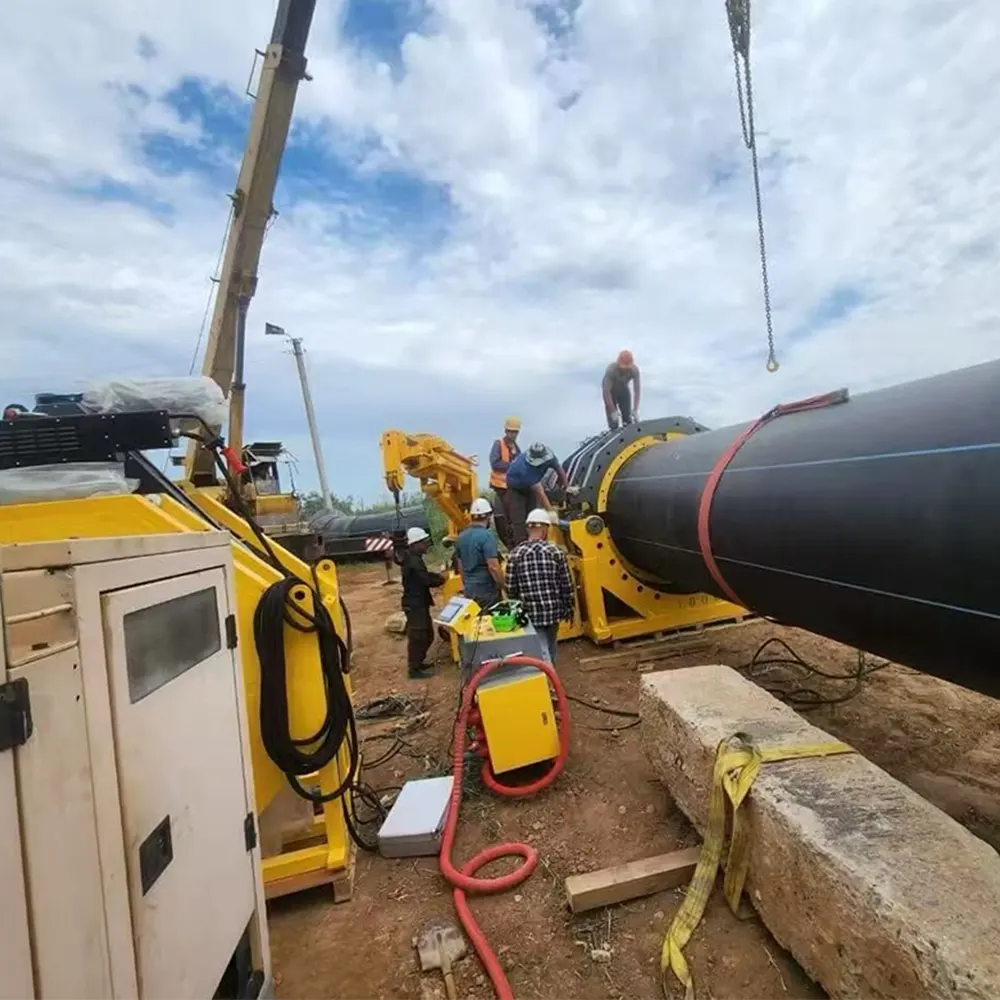
Electrofusion welding is one of the most trusted joining methods for HDPE pipelines in water, gas, mining, and industrial networks. Yet many installers still ask the same practical question: Where can I download a free electrofusion welding guide PDF for HDPE pipe installation? The real goal behind that search is simple—find a clear, safe, and field-ready reference that helps you avoid failed joints, rework, and compliance issues.
This article explains what a “good” electrofusion guide should include, where you can legally find free resources, and how to use a PDF guide effectively on-site. It also clarifies when you should consider butt fusion as an alternative method and how professional manufacturers support training and quality control.
What an Electrofusion Welding Guide PDF Should Help You Do
A downloadable PDF is useful only if it matches real installation conditions. A strong electrofusion guide should provide practical steps that technicians can follow in the trench, on the road, or inside a plant—without guessing.
Key sections a reliable guide typically includes:
✔ HDPE pipe and fitting compatibility checks (material class, SDR, size range)
✔ Surface preparation requirements (scraping depth, cleaning rules, contamination control)
✔ Clamping and alignment do’s and don’ts (ovalization correction, gap limits)
✔ Fusion cycle basics (barcode reading, voltage/time logic, ambient temperature considerations)
✔ Cooling and handling rules (minimum cooling time before de-clamping and pressure testing)
✔ Inspection and documentation (weld data recording, visual checks, traceability)
When you download a “free guide,” confirm that it is aligned with recognized practices and includes safety warnings. A PDF that only lists generic steps but ignores preparation, traceability, and environment risks can lead to weak joints—especially in gas distribution or critical industrial systems.
Where You Can Download a Free Electrofusion Welding Guide PDF (Legally)
Free guides are commonly published for training, product support, and installer education. Below are the most legitimate sources—focused on content you can use, rather than random file-sharing sites that may contain outdated or incorrect instructions.
1) Equipment Manufacturers’ Technical Libraries
Many professional welding machine manufacturers publish downloadable manuals, quick-start sheets, and troubleshooting checklists. These documents are usually written to match the machine’s control logic, recommended clamps, and real field risks.
If your project uses both electrofusion and butt fusion methods, it can help to review broader joining documentation from an experienced welding equipment supplier. For example, JQ-Fusion provides global pipeline contractors with welding equipment and technical support, including product documentation and guidance related to HDPE joining workflows. You can explore their site and product range here: butt fusion machine.
2) Electrofusion Fitting Brands and Distributors
Fitting manufacturers often publish electrofusion installation PDFs because the fitting is the “active component” in the weld (embedded resistance wires). These guides typically emphasize correct scraping, alignment, and barcode-based fusion cycles, and they may include fitting-specific limitations such as allowable ovality or special preparation tools.
3) Contractor Training Handouts and Jobsite SOPs
Large contractors sometimes release simplified SOP-style PDFs for internal training or public safety initiatives. These can be useful checklists, but you should verify they match your fittings, pipe specification, and the standards applicable in your region.
4) Standards Organizations (Often Paid, Sometimes Summarized)
Full standards documents are frequently paid, but you can sometimes find free summaries, safety advisories, or condensed best-practice notes. Even when the full standard isn’t free, reputable summaries can still help you confirm what a correct process should cover (preparation, fusion control, cooling, traceability).
Important: Avoid “free PDF download” pages that do not identify the author, date, equipment compatibility, or revision history. In HDPE joining, using outdated parameters or ignoring preparation rules can cause leaks that may not appear until pressure testing—or months later.
What to Check Before You Trust Any Free PDF Guide
Even a well-designed guide can be wrong for your project if it is not aligned with your pipe, fittings, power supply, environment, or inspection requirements.
Check the document revision and scope
Look for a publication date, version number, and the intended pipe material and fitting family. A guide for one fitting type may not apply to another, especially with different coil designs and fusion control requirements.
Confirm size/SDR compatibility guidance
Electrofusion couplers and saddles are designed with specific tolerances. A useful guide explains how to manage pipe ovality, ensures correct insertion depth, and addresses SDR matching where relevant.
Verify scraping and cleaning instructions are specific
The most common cause of electrofusion failures is poor surface preparation. A strong PDF guide clearly states:
✔ Scrape uniformly around the circumference and along the fusion zone
✔ Do not touch scraped areas with bare hands
✔ Use approved cleaning materials and allow proper drying time
How to Use a PDF Guide Effectively on the Jobsite
A PDF is most valuable when it becomes part of a repeatable routine—especially for crews working across multiple sites with changing weather, pipe storage conditions, and trench constraints.
Build a “pre-fusion” checklist from the guide
Convert the PDF’s steps into a short list your crew can follow consistently. Include preparation tools (scraper, clamps, re-rounding tools), cleaning supplies, generator/power readiness, and weld data recording.
Use the guide to standardize documentation
Many electrofusion control units can record weld parameters. If your PDF includes a weld log template, adopt it. Traceability is often a contract requirement and can also protect you during commissioning or dispute resolution.
Train around the “failure points,” not the “happy path”
Most guides explain the ideal sequence; excellent guides also explain what to do when things go wrong. Use your PDF to teach:
• What contamination looks like and how to respond
• How to handle misalignment, ovality, and poor insertion depth
• When to cut out and redo a joint rather than “hoping it passes”
Electrofusion vs. Butt Fusion: When the Guide Should Mention Alternatives
Electrofusion is highly effective where space is limited, where tie-ins and repairs are frequent, or where fittings like saddles are required. Butt fusion is often preferred for long straight runs and larger diameters when a uniform joint is desired without couplers.
Practical rule-of-thumb comparisons:
✔ Electrofusion: excellent for repairs, branch connections, constrained trenches, and complex tie-ins
✔ Butt fusion: efficient for continuous pipelines, cost-effective on straight runs, and common in large-scale installations
If your project includes both joining methods, it can be beneficial to source equipment and technical guidance from a manufacturer with broad capability (manual, hydraulic, and automatic solutions). JQ-Fusion, for instance, supplies manual, hydraulic, and CNC automatic butt fusion welding machines, plus electrofusion welding machines, supporting a wide range of diameters for global pipeline projects. Explore more details here: butt fusion machine.
What a High-Quality Manufacturer Adds Beyond the Free PDF
A free electrofusion guide PDF is a great start, but real-world weld quality depends on equipment stability, testing, and support. This is where reputable manufacturers differentiate themselves—especially on international projects where consistency matters.
Stable performance and repeatability
Modern manufacturing lines and precision machining help ensure clamps align properly, heating systems remain accurate, and pressure/control stability is consistent. These details reduce variation between operators and job sites.
Quality control that reflects field conditions
When machines are comprehensively tested—such as temperature accuracy verification, hydraulic pressure stability checks, and clamp alignment inspection—installers get more predictable results and fewer “mystery failures.”
OEM/ODM customization for project realities
Large pipeline projects often require different voltage, branding, size ranges, or special configurations. A supplier with flexible OEM & ODM capability can reduce downtime and improve crew efficiency by matching equipment to the job.
Tip for procurement teams: When you request a “free installation guide,” also ask whether the supplier provides technical support, training, and pre-delivery testing records. A guide is helpful, but support prevents recurring errors.
Common Mistakes a Good Electrofusion Guide Will Warn You About
Many failures are preventable, and the best PDFs highlight them clearly. If the guide you found does not mention these risks, consider using a different reference.
Mistake 1: Inadequate scraping (or polishing instead of scraping)
Electrofusion requires removal of the oxidized surface layer. Scraping must be controlled and uniform across the fusion zone. Random “shaving” or sanding may not remove oxidation consistently.
Mistake 2: Touching prepared surfaces or letting dust settle
Once scraped and cleaned, the joint area is sensitive. A guide should emphasize contamination control—from gloves to wind-blown dust to wet conditions.
Mistake 3: Poor alignment or no re-rounding on oval pipe
If pipe ends are oval or misaligned, the heating cycle may not create a uniform melt interface. A strong guide should specify when to use re-rounding clamps and how to maintain alignment during cooling.
Mistake 4: Moving or de-clamping too early
Cooling time is not optional. A good PDF provides cooling guidance and explains that handling too soon can create micro-gaps or stress cracks that may fail later.
How to Choose Between Multiple “Free PDF” Options
If you find several guides online, select the one that best matches your operational needs. Use these selection criteria:
Selection checklist:
✔ Clear, step-by-step sequence with preparation and cooling emphasized
✔ Troubleshooting section (error codes, power issues, incomplete fusion cycle handling)
✔ Safety notes (hot surfaces, electrical risks, trench safety reminders)
✔ On-site usability (print-friendly pages, checklist format, simple diagrams if present)
✔ Traceability support (weld log fields, data recording recommendations)
If you are standardizing joining methods for multiple crews, consider creating a single internal SOP that references your chosen guide and includes your project’s acceptance criteria. For teams that also deploy butt fusion, a unified SOP can reduce training time across equipment types. For broader HDPE welding equipment and support, you can start here: butt fusion machine.
FAQs (Common Questions at the End of an Installation Guide Search)
1) Are free electrofusion welding guide PDFs safe to rely on for gas pipelines?
They can be, but only if the guide is from a reputable manufacturer, fitting brand, or recognized authority, and it matches your materials, standards, and documentation requirements. For gas work, always confirm compliance with local regulations and project specs.
2) What is the most common reason electrofusion joints fail even when using a guide?
Poor surface preparation (insufficient scraping/cleaning) and contamination are the most frequent causes, followed by misalignment and moving the joint before cooling is complete.
3) Can one PDF guide cover all electrofusion machines and fittings?
Not perfectly. Core principles are consistent, but parameters, barcode workflows, clamp recommendations, and error handling can vary. Use a general guide for fundamentals and a machine/fitting-specific manual for execution.
4) When should I switch from electrofusion to butt fusion?
Electrofusion is excellent for tie-ins, repairs, and constrained spaces; butt fusion is often more efficient on long straight runs and larger diameter pipelines. The best choice depends on site constraints, cost, and required fittings.
5) What should I do if my “free PDF guide” conflicts with the fitting manufacturer’s instructions?
Follow the fitting manufacturer’s instructions and your project specification first, then use the general PDF as a supporting reference. If the conflict is significant, request clarification from the supplier or technical support team.



