
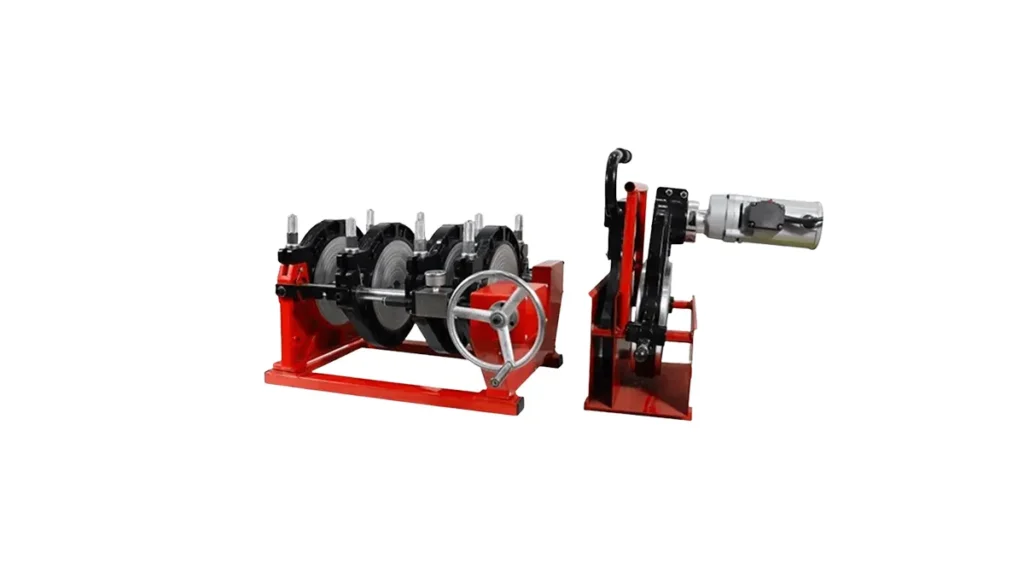
When buying an HDPE welding machine, the first thing to understand is that this equipment is not just a tool; it is the foundation of a reliable pipe joining system. In water supply, gas distribution, mining, and industrial pipeline construction, the quality of the weld determines the long-term safety of the entire network. Choosing the right machine means choosing stable fusion results, lower maintenance risk, and better project efficiency.
Before making a purchase, buyers should look beyond price and focus on performance, pipe compatibility, control accuracy, and after-sales support. A machine that appears economical at first can become costly if it produces uneven joints, requires frequent repairs, or cannot handle the pipe sizes used in your project. For this reason, professional buyers often evaluate the machine as a long-term investment rather than a one-time purchase.
There are many types of HDPE welding equipment available, from manual models to hydraulic systems and fully automatic solutions. Each type serves different job demands and budget levels. Understanding these differences is essential if you want consistent weld quality and practical productivity on site. If you are comparing brands or applications, you may also want to review a proven butt fusion machine supplier with stable manufacturing capacity and global project experience.
Understand the Core Welding Principle First
HDPE welding machines usually work through butt fusion, a process in which pipe ends are heated to a specific temperature and then pressed together under controlled pressure. The result should be a strong and homogeneous joint that performs like the original pipe material. Because the process depends on accurate temperature, pressure, and alignment, the machine must be precise enough to maintain those conditions throughout the welding cycle.
Key point: the machine does not only “heat and press” the pipe. It must control the full fusion sequence with consistency, or the weld may fail under long-term stress.
Choose the Right Machine Type for Your Project
Before buying, determine whether your work involves small-diameter residential pipelines, medium-size municipal systems, or large industrial networks. Manual machines are often suitable for simple or low-volume tasks. Hydraulic machines are preferred for more demanding jobs because they provide better clamping force and more stable pressure control. CNC automatic models are commonly selected for projects that require high repeatability, traceability, and lower operator dependency.
For contractors handling multiple project sites, flexibility is important. A machine that covers a wide range of pipe diameters can reduce the need for additional equipment. If your team works on water distribution lines one month and gas lines the next, machine versatility becomes a major value factor. In many cases, the best purchase is not the cheapest one, but the one that matches your actual project mix.
Check Pipe Size Range and Material Compatibility
One of the most common mistakes is buying a machine without checking the full pipe range. HDPE welding machines are designed for different diameter capacities, and each model has limits. If your projects involve both small and large pipes, confirm that the machine can cover your actual site requirements without forcing you to compromise on joint quality.
Material compatibility also matters. HDPE is the most common target, but project specifications may vary depending on wall thickness, pressure class, and application environment. A good machine should support stable welding across the intended materials and dimensions, not just in ideal test conditions. Buyers should ask for technical charts, clamping specifications, and heating plate details before finalizing the purchase.
Pay Attention to Temperature Accuracy and Pressure Stability
Two of the most important performance indicators are heating temperature accuracy and hydraulic pressure stability. If the heating plate temperature fluctuates too much, the pipe ends may not melt evenly. If pressure control is unstable, the fusion bead can become weak, uneven, or oversized. Both issues can affect weld integrity and shorten the service life of the pipeline.
Important: a machine with strong frame construction but poor control accuracy will still create poor welds. Precision is as valuable as power.
For professional buyers, the best equipment is not only robust but also repeatable. The same parameters should produce the same quality result across different operators and workdays. This is especially critical for contractors working under strict project acceptance standards.
Review Clamp Alignment and Mechanical Build Quality
Clamp alignment is often overlooked, yet it directly affects how well the pipe ends meet during the fusion process. If the alignment is poor, the weld seam may carry stress unevenly, increasing the chance of failure. Strong clamp design, stable structure, and smooth movement are signs of a well-engineered welding machine.
Build quality should also include the frame, hydraulic system, heater surface, planer performance, and electrical components. A durable machine can operate for years in harsh environments if the components are reliable and properly tested. Buyers should ask whether the manufacturer performs alignment inspection, temperature testing, and pressure verification before delivery.
Consider Operation Skill Level and Automation Needs
Your team’s experience should influence your buying decision. If operators have limited technical training, a simpler and more guided machine can reduce errors. On the other hand, experienced teams may benefit from automation and data control features that improve efficiency and standardization.
Automatic and CNC systems can reduce manual variation, which is valuable for large-scale projects and regulated pipelines. They can also improve documentation and make it easier to maintain welding records. If your business serves demanding infrastructure clients, automation may help you meet quality expectations more consistently.
Evaluate Manufacturer Experience and Support
Buying from an experienced manufacturer is often the safest path. A company with long industry experience usually understands real jobsite conditions, common technical problems, and the practical needs of contractors and distributors. That experience can translate into better product design, better spare parts support, and more responsive service.
JQ-Fusion, for example, focuses on HDPE pipe welding solutions and offers manual, hydraulic, and CNC automatic butt fusion welding machines for global projects. With over 20 years of experience, the company supports a wide range of pipeline applications and provides OEM and ODM customization for different market needs. This kind of background can be especially helpful if you need a machine adapted to local voltage, branding, or project requirements.
Buyer tip: ask the manufacturer about technical support, installation guidance, training, and spare parts availability before placing an order.
Look for Customization Options That Fit Real Projects
Many buyers need more than a standard machine. Some require special voltage settings, unique color schemes, project branding, or functional upgrades. Customization can be extremely valuable when you are building your own distribution business or working on region-specific infrastructure contracts.
Flexible OEM and ODM services can also help you respond to different market demands. A supplier that offers customization is usually more capable of handling special requests and large-volume projects. This is particularly useful if your business serves multiple countries or diverse engineering standards.
Inspect Quality Control and Certification
Before buying, ask how the machine is tested. Reliable suppliers typically verify temperature accuracy, hydraulic pressure stability, and clamp alignment before shipment. Quality inspection is not a marketing phrase; it is a critical step that reduces site failures and protects your project schedule.
Certification is another sign of confidence. Products manufactured in compliance with international standards and certified by organizations such as SGS provide an additional layer of trust. While certificates do not replace practical testing, they do show that the manufacturer values consistent quality and global compliance.
Compare Delivery Time, Inventory, and Spare Parts Supply
Even a high-quality machine can become a problem if it arrives too late. Project delays often cost more than the machine itself. That is why inventory availability and shipping speed should be part of your decision. If you work on urgent installations, a supplier with ready stock and efficient logistics can help keep your schedule on track.
A large inventory also makes future maintenance easier. If replacement parts are difficult to obtain, downtime can increase quickly. Ask about spare heaters, clamps, hydraulic components, and consumables before you buy. A dependable supplier should be able to support the machine throughout its full working life.
Understand the Real Value Behind Price
Price matters, but it should never be the only deciding factor. A lower-cost machine may lack precision, support, or durability. A higher-quality machine may cost more initially but save money through lower rework rates, longer service life, and fewer interruptions. When comparing offers, look at the complete ownership cost.
Useful questions include: How long will the machine last under daily use? How stable is the performance? How quickly can you get support if something goes wrong? What is included in the warranty? These questions reveal the real value behind the quote.
Where HDPE Welding Machines Are Commonly Used
HDPE welding machines are widely used in water supply systems, gas distribution networks, mining projects, and industrial pipeline installations. In these environments, safety and durability are non-negotiable. That is why project managers often choose machines that can deliver stable welding performance under pressure and in challenging conditions.
For contractors, the machine must match the environment as well as the pipe specification. Outdoor jobs may require rugged design and easy mobility. Industrial installations may require higher precision and stronger documentation. Thinking about where the machine will be used helps narrow down the best model faster.
Why Working With a Professional Supplier Matters
A professional manufacturer does more than sell equipment. It helps you choose the right model, configure the correct parameters, and maintain the machine over time. JQ-Fusion stands out with advanced manufacturing technology, strict quality control, flexible customization, reliable global support, and a full range of welding solutions including hydraulic, automatic, electrofusion, and multi-angle pipe fitting machines.
That kind of supplier relationship becomes even more important when your business depends on repeat performance. If the machine is part of a long-term pipeline strategy, the supplier should be able to support your growth, not only the initial purchase.
Final buying insight: the best HDPE welding machine is the one that delivers consistent welds, fits your pipe range, supports your operators, and remains dependable after repeated use.
Frequently Asked Questions
Q1: What is the most important factor when buying an HDPE welding machine?
The most important factor is welding consistency. Temperature control, pressure stability, and clamp alignment all affect joint quality, so the machine must perform reliably under real working conditions.
Q2: Should I choose a manual, hydraulic, or automatic machine?
It depends on your project scale and operator skill. Manual machines suit simpler work, hydraulic machines offer better control, and automatic models are best for high-repeatability and large projects.
Q3: Why is manufacturer support important?
Support matters because installation, training, spare parts, and troubleshooting all affect project continuity. A strong manufacturer can reduce downtime and help you use the machine correctly.
Q4: How do I know if a machine is suitable for my pipe sizes?
Check the machine’s diameter range, clamping capacity, and technical specifications. Make sure the model covers your current and expected project requirements.
Q5: Is a more expensive machine always better?
Not always, but a cheaper machine may cost more over time if it lacks precision or durability. The best value comes from balancing performance, support, and long-term reliability.



