
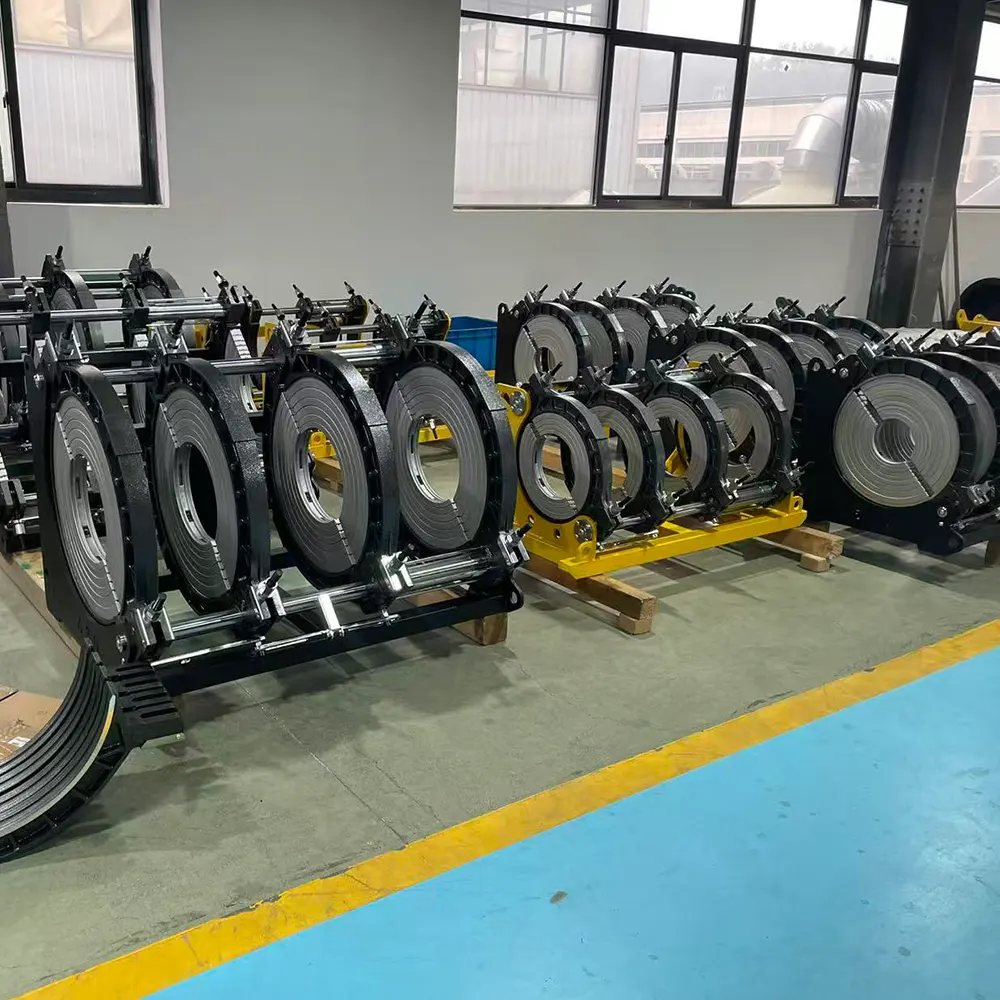
In the world of HDPE pipeline construction, butt fusion welding is a cornerstone technique for creating strong, permanent, and leak-free joints. The process involves heating the pipe ends to a specific melt temperature, applying pressure to fuse them, and then allowing the joint to cool under controlled conditions. While much attention is given to avoiding overheating, a less discussed but equally critical issue is underheating.
Defining Underheating in Butt Fusion Welding
Underheating occurs when the pipe ends are not raised to the correct, uniform temperature required for a proper molecular fusion. This can happen due to several factors:
- Insufficient heater plate temperature or incorrect temperature setting.
- Inadequate heating time (soak time) for the specific pipe material and wall thickness.
- A malfunctioning or uncalibrated heater plate in the butt fusion machine.
- Environmental factors like cold ambient temperatures or wind drawing heat away from the joint area.
The Science Behind a Proper Fusion
For a successful joint, the entire interface of both pipe ends must reach a viscous, molten state. This allows the polymer chains to interdiffuse across the joint line when pressure is applied. Underheating prevents this full interdiffusion, leaving a cold, weak boundary layer at the core of what should be a homogeneous weld.
How Underheating Compromises Joint Quality
The effects of underheating are not always immediately visible, making it a particularly insidious defect. The primary impacts are structural and long-term.
1. Reduced Tensile Strength and Brittleness
The joint will have significantly lower tensile strength than the base pipe material. Instead of a ductile failure, an underheated joint tends to be brittle and can fracture suddenly under stress or pressure surges.
2. Poor Fusion Bead Formation
The internal and external weld beads (sometimes called “rolls”) will be irregular, small, or virtually non-existent. A proper, rounded bead is a visual indicator of sufficient material displacement and fusion.
Key Indicator: A very small, sharp, or string-like bead is a strong visual clue that the joint may have been underheated.
3. Increased Risk of Creep and Fatigue Failure
Over the pipeline’s operational life, joints are subject to constant pressure and cyclic stresses. An underheated joint has poor long-term creep resistance and is highly susceptible to fatigue cracking, leading to premature failure.
4. Susceptibility to Slow Crack Growth (SCG)
This is a critical failure mode for HDPE. The weak, poorly fused interface in an underheated joint acts as a perfect initiation point for slow crack growth, which can propagate over time and cause catastrophic failure without warning.
Preventing Underheating: Process and Equipment Integrity
Prevention is rooted in strict procedural adherence and reliable equipment. Operators must follow the pipe manufacturer’s recommended fusion parameters (temperature, heat soak time, pressure) based on the specific material (PE80, PE100) and pipe dimensions.
Equipment reliability is non-negotiable. Using a well-maintained and precisely calibrated butt fusion machine is paramount. Manufacturers like JQ-Fusion emphasize strict quality control in their machines, ensuring temperature accuracy and hydraulic pressure stability are consistently delivered for every weld.
The Role of Technology and Training
Modern automatic butt fusion welding machines significantly reduce human error by digitally controlling and recording the entire heating and fusion cycle. Investing in such technology, along with comprehensive operator certification programs, is the most effective defense against underheating and other fusion defects.
For contractors, partnering with an experienced manufacturer that provides full technical support and training ensures that crews are equipped not just with hardware, but with the knowledge to use it correctly. This commitment to support helps prevent costly rework and ensures pipeline integrity from the first weld.
Conclusion
Underheating in butt fusion welding creates a joint that is fundamentally weak and unreliable, posing a severe long-term risk to pipeline integrity. Its hidden nature makes it dangerous. Mitigating this risk requires a dual focus: unwavering commitment to validated welding procedures and the use of high-performance, reliable welding equipment from trusted suppliers. By prioritizing precise temperature control and operator competence, the industry can ensure that every fusion joint is as strong as the pipe itself.
Frequently Asked Questions (FAQs)
1. Can a slightly underheated joint pass a visual inspection?
Potentially, yes. The most telling visual sign—a small or missing fusion bead—might be dismissed. However, destructive testing or long-term pressure testing would reveal the weakness. Never rely solely on visual inspection for joint quality assurance.
2. Is underheating worse than overheating?
Both are serious defects, but they cause different problems. Overheating degrades the polymer, making it brittle. Underheating prevents proper fusion, leaving a cold joint. Both result in a joint that is weaker than the base pipe and prone to failure.
3. How can I ensure my butt fusion machine heats correctly?
Regular calibration and maintenance are essential. Use independent temperature probes to verify the heater plate temperature matches the machine display. Choose equipment from manufacturers known for advanced manufacturing technology and strict quality control to ensure inherent accuracy.
4. Does pipe brand or material grade affect underheating risk?
Yes. Different PE resins (e.g., PE80 vs. PE100) and compounds from different manufacturers have slightly different melt temperatures and optimal fusion parameters. Always use the parameters provided by the pipe manufacturer for the specific product being welded.
5. What should I do if I suspect a joint was underheated?
The joint must be cut out and re-welded. There is no reliable field repair for an underheated butt fusion joint. Implementing a rigorous quality control process that includes documented parameters for each weld helps identify and address these issues immediately.



