
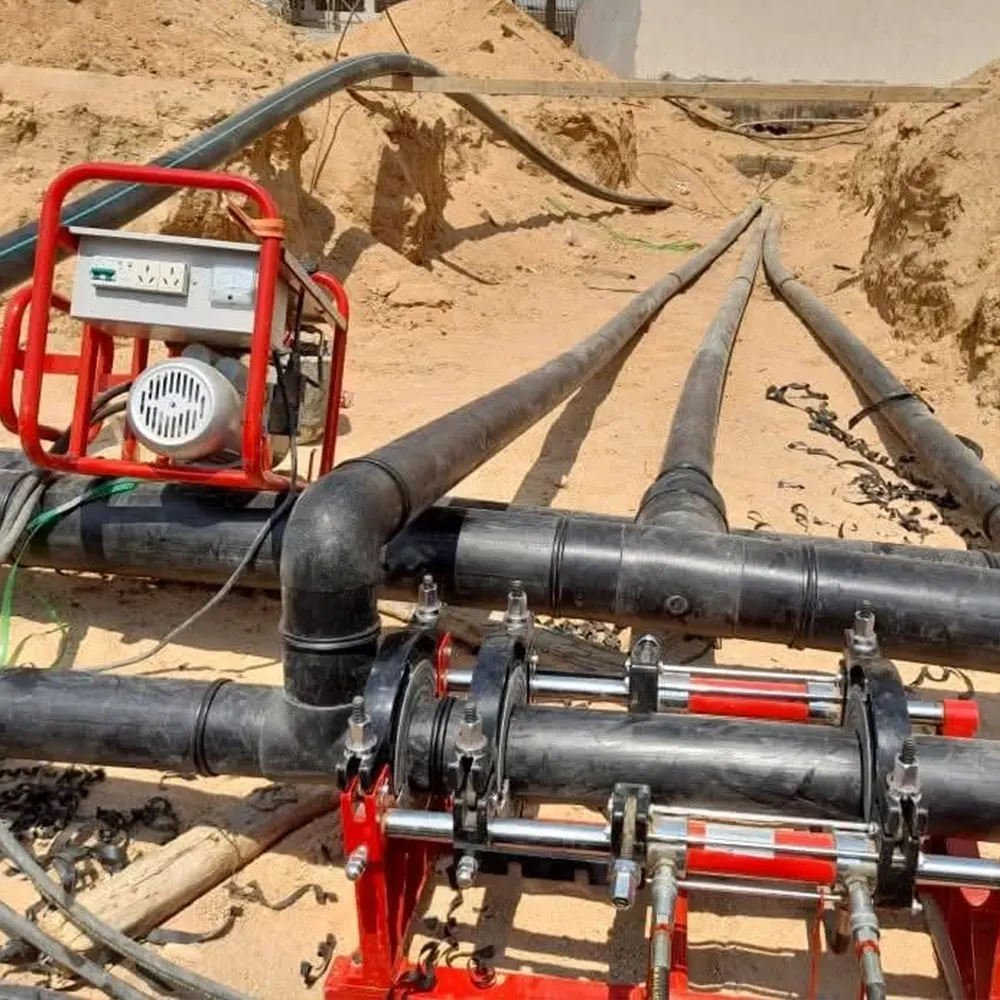
When a pipeline project scales up, every piece of equipment has to do more than simply work—it has to keep pace with long production runs, large pipe diameters, strict quality requirements, and tight deadlines. That is why choosing the right butt fusion machine becomes a critical decision for contractors, distributors, and engineering teams handling large projects. The best machine is not always the most expensive one; it is the one that offers stable performance, accurate alignment, durable construction, and easy operation under demanding site conditions.
For large-scale water supply networks, gas distribution systems, mining pipelines, and industrial installations, the welding process must be consistent from the first joint to the last. A weak fusion joint can lead to downtime, safety risks, and expensive repairs. That is why professional teams often look for machines built with strong hydraulic systems, precise heating control, and dependable clamping force. In this environment, product quality and manufacturer support matter just as much as specifications.
What Defines the Best Butt Fusion Machine for Large Projects?
The best machine for a large project must combine power, precision, and reliability. A machine designed for small jobs may be efficient for limited pipe sizes, but large projects require a different level of endurance. The equipment should support a wide diameter range, maintain stable welding temperatures, and ensure perfect pipe alignment even during repeated cycles. It should also be easy to move, install, and maintain, especially when the worksite changes frequently.
Key point: for large projects, the right choice is a machine that reduces human error, improves welding repeatability, and helps teams finish more joints in less time without sacrificing quality.
Why Machine Stability Matters More in Large-Scale Welding
Large projects often involve long operating hours and many repeated welds. In such conditions, even minor instability can affect the overall result. If the heating plate is inconsistent, the hydraulic pressure fluctuates, or the clamps are misaligned, the fusion quality will suffer. This is why high-end systems are engineered with strict temperature control, stable hydraulic performance, and reinforced structure.
A stable machine helps reduce wasted material and lowers the risk of rework. It also supports operator confidence, because technicians can focus on the welding process instead of constantly adjusting the equipment. When productivity is tied directly to precision, stability becomes one of the most valuable features.
Main advantages of a stable machine
✔ More consistent weld seams across the entire project
✔ Lower risk of deformation during heating and joining
✔ Better performance on long-distance pipeline systems
Hydraulic, Manual, or CNC Automatic: Which Type Is Better?
Different project sizes and site conditions require different machine types. Manual machines can be suitable for smaller or simpler tasks, especially when mobility and budget matter. Hydraulic models are often preferred for medium to large projects because they offer stronger clamping force and better operating efficiency. CNC automatic machines are ideal where precision, production speed, and standardized results are top priorities.
For large projects, hydraulic and CNC automatic machines are generally the most effective options. Hydraulic systems help manage larger pipe diameters with greater force and control, while automatic systems improve repeatability and reduce dependence on manual skill. In many cases, the decision depends on the project timeline, budget, and the technical expectations of the client.
Practical tip: if the project involves frequent high-volume welding, automation can save labor costs and improve consistency. If the project requires flexible field use, a robust hydraulic machine may be the better fit.
Diameter Range and Project Compatibility
Large projects often require a machine that can handle multiple pipe diameters. This is especially important for contractors working on mixed infrastructure systems, where pipe sizes may vary from one section to another. A versatile machine minimizes the need for separate equipment and helps teams move faster from one stage to the next.
JQ-Fusion offers machines covering a wide range of pipe diameters from small to large sizes, making them suitable for diverse industrial and municipal applications. This flexibility is valuable for contractors who want to standardize their welding process across different project segments.
What to check before selecting diameter capacity
Before choosing a model, verify the maximum and minimum pipe sizes required by the project, expected wall thickness, and the number of joints to be completed each day. Matching the machine’s capacity to real job needs avoids overspending and reduces operational bottlenecks.
Why Manufacturing Quality Should Be a Top Priority
The best butt fusion machine is not only about visible features; it is also about how well it is built. Precision machining, high-grade components, and strict quality control directly affect performance. Machines produced with modern manufacturing systems tend to offer better alignment accuracy, smoother hydraulic operation, and longer service life.
According to the reference information, JQ-Fusion uses advanced production lines and precision machining equipment to ensure stable performance and high efficiency. Each machine undergoes comprehensive testing, including temperature accuracy, hydraulic pressure stability, and clamp alignment inspection. These processes are essential because large projects demand consistent results across many hours of operation.
Important: machines that pass strict inspection are less likely to create unexpected downtime, which is especially costly on large job sites.
Customization Can Improve Project Efficiency
Large projects are rarely one-size-fits-all. Some require special voltage configurations, unique branding, specific colors, or modified control systems. That is why OEM and ODM capability has become a major buying factor for professional buyers. A manufacturer that can adapt the machine to project requirements offers a clear advantage.
JQ-Fusion provides flexible OEM and ODM customization, including machine size, voltage, color, design, branding, and project-specific configurations. This is useful for contractors who need equipment tailored to the local power system, jobsite environment, or market strategy. Customization can also help distributors build stronger brand identity when reselling equipment in different regions.
Customization benefits for large projects
It improves machine compatibility with local standards, reduces setup time, and supports smoother training for operators working on the same project.
Technical Support and After-Sales Service Are Essential
A high-performance butt fusion machine is only truly valuable when backed by reliable support. On large projects, even a short delay can disrupt schedules and increase costs. That is why buyers should evaluate the manufacturer’s ability to provide technical guidance, troubleshooting support, training, and logistics assistance.
Reliable global support is one of JQ-Fusion’s key strengths. The company emphasizes fast response, professional technical guidance, and efficient logistics support to help customers complete projects smoothly. This matters for overseas contractors who may need quick solutions for installation, operation, or maintenance questions.
Support also affects long-term value. A machine with good service backing typically lasts longer in practical use because operators learn to use it correctly and resolve issues early. For large projects, that level of support can be as important as the machine itself.
The Role of Inventory and Delivery Speed
Project timelines are often fixed, and delays in equipment delivery can cause expensive setbacks. The best supplier is one that can respond quickly and maintain stock for common models. Large inventory support is especially useful when the project starts earlier than planned or when additional machines are needed mid-project.
JQ-Fusion maintains a large and well-organized inventory of key models to ensure fast delivery for both small and bulk orders. This is a practical advantage for contractors managing urgent schedules. It also helps reduce downtime when replacement or additional units are required.
★ Fast delivery is not just a convenience; for large projects, it can protect the entire schedule.
Product Range That Supports Large Pipeline Projects
When a supplier offers a complete product range, it becomes easier for buyers to match tools to specific needs. JQ-Fusion’s product lineup includes hydraulic butt fusion welding machines, automatic butt fusion welding machines, electrofusion welding machines, and multi-angle pipe fitting welding machines. This wide selection is helpful for companies handling different stages of pipeline construction.
Having access to multiple machine types from one manufacturer also improves procurement efficiency. It simplifies sourcing, technical communication, and maintenance planning. For organizations managing large-scale infrastructure, supplier consistency can create real operational value.
Useful links for buyers
butt fusion machine solutions for HDPE pipeline applications
JQ-Fusion manufacturer information and product support
custom butt fusion welding machine options for project-specific requirements
Certifications and Compliance Build Trust
For international projects, compliance is not optional. Buyers need confidence that equipment meets recognized standards and performs safely under demanding conditions. JQ-Fusion states that its products are manufactured in compliance with international standards and certified by SGS, helping assure buyers of quality, reliability, and consistent performance.
This is especially important when machines are used in critical infrastructure such as gas networks and municipal water systems. Certification supports procurement decisions and makes it easier for contractors and distributors to satisfy project specifications.
How to Choose the Best Machine for Your Project
Choosing the best butt fusion machine starts with understanding the real demands of the project. Consider pipe diameter, material type, operating environment, production volume, power supply, and operator experience. Then compare these needs with the machine’s clamping force, temperature control, mobility, automation level, and after-sales support.
It is also wise to evaluate the manufacturer’s experience in global markets. A supplier with more than 20 years in the industry and a proven track record on international projects can provide valuable insight during selection and implementation. That experience often translates into more practical machine design and more reliable support.
Best practice: choose a machine that matches your current project needs, but also leaves room for future jobs with similar or larger requirements.
Why JQ-Fusion Is a Strong Choice for Large Projects
JQ-Fusion combines industry experience, manufacturing capability, customization options, fast delivery, and technical support in a way that suits large-scale pipeline work. The company’s focus on stable welding performance, strict quality assurance, and global service makes it especially relevant for contractors who cannot afford repeated failures or slow response times.
Its ability to provide customized solutions, maintain inventory, and support both OEM and ODM requests gives buyers more flexibility. For large projects, that flexibility can shorten lead times, improve project coordination, and reduce the risk of equipment mismatch.
In practical terms, the best machine is the one that helps teams deliver safe, strong, and repeatable welds while keeping the project on schedule. That is the standard large-project buyers should use when evaluating suppliers.
Frequently Asked Questions
Q1: What type of butt fusion machine is best for large projects?
Hydraulic and CNC automatic machines are usually the best choices because they provide stronger clamping force, better precision, and higher efficiency for long production runs.
Q2: Why is temperature accuracy important in butt fusion welding?
Accurate temperature control ensures the pipe ends melt properly and fuse evenly, which is essential for producing strong and durable joints.
Q3: Can one machine handle different pipe sizes on the same project?
Yes, if the machine is designed with a suitable diameter range. Versatile models help contractors work on mixed-size pipeline systems more efficiently.
Q4: What should buyers look for in a manufacturer?
Buyers should look for industry experience, quality control, customization capability, certifications, fast delivery, and dependable technical support.
Q5: Is customization useful for large pipeline projects?
Yes. Custom voltage, design, branding, and configurations can improve compatibility, efficiency, and project-specific performance.



