
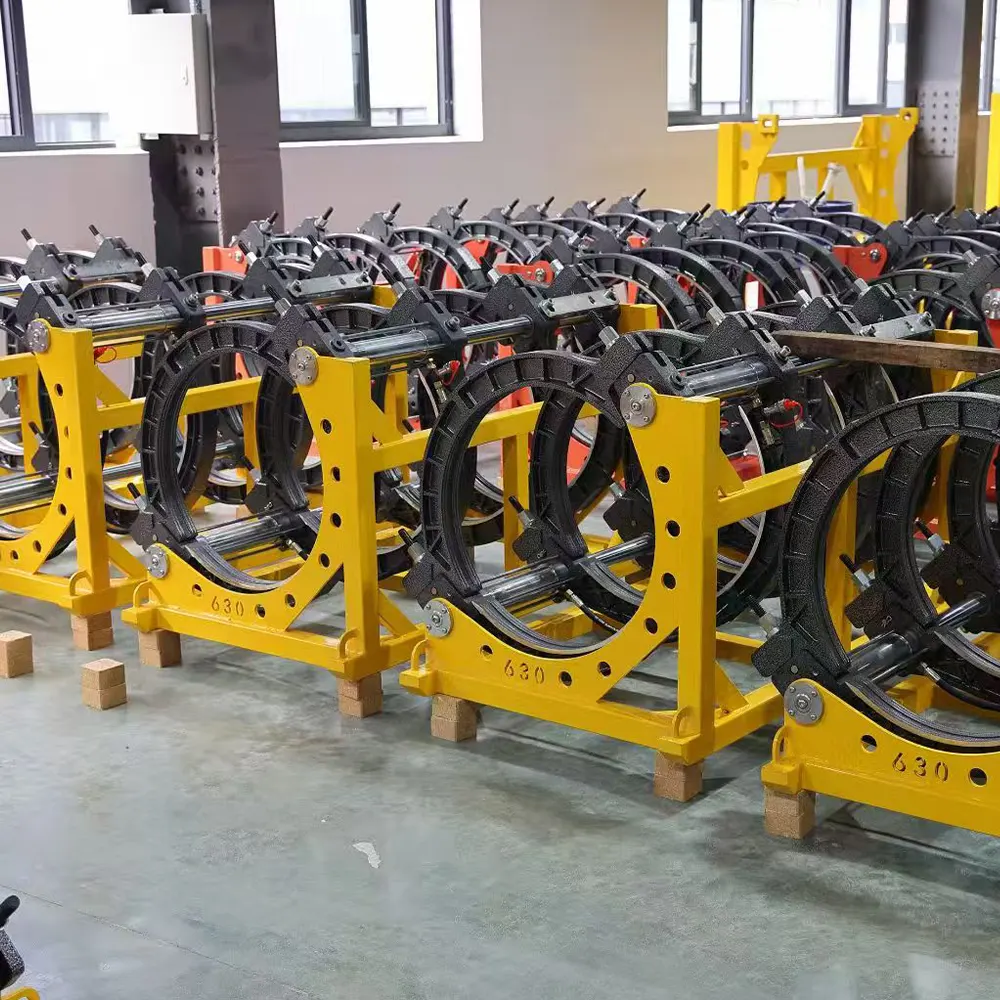
In modern pipeline construction, welding quality directly affects the safety, durability, and long-term performance of a project. As industrial demand continues to grow, companies are seeking smarter ways to improve welding accuracy, reduce labor intensity, and increase production speed. This is where smart welding machine technology has become a game changer. By combining automation, digital control, precision monitoring, and process optimization, these systems help operators achieve more stable welds while reducing wasted time, materials, and energy.
For contractors, manufacturers, and project engineers, the value of smart welding technology goes far beyond convenience. It creates a more controlled environment, lowers the risk of human error, and supports consistent welding results across different pipe sizes and project conditions. In applications such as water supply networks, gas distribution systems, mining pipelines, and industrial installations, efficiency is not only about speed. It is also about reliability, repeatability, and safety.
At the center of this transformation is a new generation of equipment designed to make welding easier to manage and more productive in real-world construction environments. Whether the job requires manual operation, hydraulic assistance, or fully automatic control, smart systems are helping users improve output without sacrificing quality. For companies looking to upgrade their welding capabilities, choosing the right solution can have a major impact on project success.
What Smart Welding Machine Technology Means
Smart welding machine technology refers to equipment that uses intelligent control systems to automate or improve key stages of the welding process. Instead of relying only on operator experience, these machines use sensors, digital interfaces, programmed settings, and real-time feedback to guide the welding cycle. This helps ensure that temperature, pressure, timing, and alignment remain within the required range throughout the operation.
In butt fusion applications, for example, the machine can regulate heating plate temperature, control hydraulic pressure, and maintain clamp stability more accurately than traditional manual methods. This is especially important when joining HDPE pipes, where even small deviations can affect weld strength. Smart systems reduce variability and support consistent welding results from one joint to the next.
Key idea: smart welding technology does not replace the operator; it enhances decision-making, improves control, and makes every welding stage more predictable.
Why Welding Efficiency Matters in Pipeline Projects
Efficiency in welding is not only about completing more joints in less time. It includes minimizing rework, reducing energy consumption, lowering labor costs, and avoiding unexpected delays. In large pipeline projects, inefficient welding can quickly lead to schedule overruns, material waste, and quality issues that affect the entire installation process.
Smart welding machines help address these challenges by standardizing the process and reducing dependence on manual guesswork. When the machine manages the critical parameters, operators can focus on preparation, positioning, and monitoring instead of constantly adjusting settings. This creates a faster workflow and a more stable result.
For project managers, improved efficiency also means better resource planning. A welding process that is repeatable and reliable allows teams to estimate job duration more accurately and maintain higher productivity across long installation cycles. In industries where downtime is costly, this advantage is significant.
How Smart Welding Machines Improve Accuracy
Accuracy is one of the biggest benefits of smart welding technology. Traditional welding often depends heavily on operator skill, which can lead to inconsistent results when working under pressure or across multiple shifts. Smart systems reduce this problem by using digital controls and automated feedback to maintain the desired welding conditions.
For example, in a butt fusion machine, alignment accuracy is critical. If pipes are not clamped correctly or the heating phase is not controlled precisely, the weld may be weak or uneven. Smart machines can monitor these variables and alert the operator if something falls outside the acceptable range. This helps prevent defective joints before they happen.
To learn more about advanced pipeline welding solutions, visit butt fusion machine systems designed for modern construction requirements.
Accuracy advantage: better control of temperature, pressure, and timing means fewer welding defects and less rework.
Automation Reduces Labor Strain and Human Error
One of the most practical benefits of smart welding technology is reduced labor strain. Welding can be physically demanding, especially in large-scale projects where workers must repeat the same process many times. Automation helps relieve this burden by taking over repetitive and precision-sensitive tasks.
When a machine manages heating, pressure application, and timing automatically, the operator is no longer required to manually fine-tune every step. This not only makes the job easier but also reduces fatigue-related mistakes. In long shifts or harsh site conditions, this can have a major impact on weld quality and worker safety.
In addition, smart systems make it easier to train new operators. Because the machine provides clearer guidance and more consistent process control, less experienced workers can achieve better results with proper supervision. That lowers the learning barrier and improves overall team performance.
Real-Time Monitoring Improves Process Control
Another major advantage of smart welding equipment is real-time monitoring. Modern machines can display important process data during operation, allowing operators to check pressure, temperature, and cycle progress instantly. This visibility helps teams respond quickly if adjustments are needed.
Real-time monitoring is especially useful in demanding industrial environments where site conditions may change quickly. If the pipe surface, ambient temperature, or material behavior affects the weld, the machine can help detect irregularities early. Instead of discovering a problem after the joint cools, the operator can correct the issue during the process.
Monitoring benefit: immediate feedback helps prevent costly defects and supports more consistent welding outcomes.
Stable Performance Across Different Project Conditions
Pipeline projects often take place in challenging environments. Weather changes, limited working space, and different pipe specifications can all affect welding performance. Smart welding machines are designed to handle these variations more effectively by maintaining stable process control under changing conditions.
This stability is especially important for contractors working on water supply systems, gas distribution projects, mining infrastructure, and industrial pipeline installations. When a machine performs reliably across different conditions, it helps ensure that welding quality remains high even when the job site is difficult.
JQ-Fusion is one example of a manufacturer focused on delivering this kind of reliable performance. With more than 20 years of industry experience, it provides manual, hydraulic, and CNC automatic butt fusion welding solutions for a wide range of pipe diameters. Its emphasis on quality control, customization, and global support reflects the direction of modern welding technology.
How Smart Technology Supports Quality Assurance
Quality assurance is one of the strongest reasons companies invest in smart welding equipment. In pipeline construction, a single weak joint can create long-term risks and lead to expensive repairs. Smart systems help lower that risk by making the welding process more controlled and traceable.
Many advanced machines undergo strict testing before delivery, including temperature accuracy checks, hydraulic pressure stability tests, and clamp alignment inspection. These quality measures help ensure the machine performs as expected in the field. In this way, smart technology works hand in hand with manufacturing discipline.
Some suppliers also offer certified products that comply with international standards, which is especially valuable for projects that require verified performance. For global contractors, this means better confidence in equipment selection and more predictable project outcomes.
Customization Makes Smart Machines More Useful
No two pipeline projects are exactly the same. Pipe sizes, voltages, working conditions, and customer preferences can vary widely. That is why customization is an important part of smart welding machine technology. The ability to adapt the machine to specific project needs increases both efficiency and usability.
Manufacturers with strong OEM and ODM capability can adjust machine size, color, branding, design, and functional settings. This makes it easier for distributors and contractors to build a solution that fits their market or project requirements. Customized machines can also improve operational workflow by matching local standards and site conditions.
For companies managing large or specialized projects, this flexibility can save time and improve integration across the entire welding process. It also helps reduce unnecessary features and focuses the equipment on what the job truly needs.
Customization value: the right machine configuration can improve productivity, reduce waste, and support better project outcomes.
Fast Delivery and Global Support Add to Efficiency
Efficiency is not only found in the welding process itself. It also depends on how quickly equipment can be delivered, installed, and put into use. Smart welding suppliers with strong inventory and organized manufacturing systems can help reduce project delays and keep construction schedules on track.
Global support is equally important. Fast response, technical guidance, and after-sales service make it easier for customers to solve problems and maintain productivity. When a machine is supported by an experienced team, users can focus more on the project and less on equipment issues.
JQ-Fusion’s global approach includes reliable logistics, technical support, and custom solutions for different pipeline applications. These services help contractors and distributors work more efficiently, especially when they need dependable equipment for urgent or large-volume projects.
Common Applications of Smart Butt Fusion Technology
Smart butt fusion machines are widely used in industries where joint reliability is essential. Their ability to control temperature, pressure, and alignment makes them suitable for many demanding applications.
- Water supply systems: stable pipe joints help prevent leakage and improve long-term service life.
- Gas distribution networks: precision and consistency are critical for safety and regulatory compliance.
- Mining projects: durable equipment supports tough field conditions and heavy-duty use.
- Industrial pipeline installations: automation and control improve productivity in large-scale operations.
Because these applications require high reliability, advanced welding machines have become an essential part of modern pipeline work. Smart control features help ensure that each weld meets the necessary performance standards without slowing down the overall workflow.
The Role of Certification and Long-Term Reliability
When choosing welding equipment, buyers should consider not just performance but also long-term reliability and certification. Machines that are manufactured under strict standards and tested thoroughly are more likely to perform consistently over time. This lowers maintenance needs and helps protect project investment.
For international buyers, certifications provide additional confidence. They show that the equipment has been developed with quality and safety in mind. This is especially important when machines are used in critical infrastructure projects where failure is not an option.
Long-term reliability also means lower operating cost. A machine that continues to perform well after repeated use delivers more value and supports better return on investment. In that sense, smart welding technology is not just a productivity tool; it is a strategic asset.
How Smart Welding Technology Will Continue to Evolve
The future of welding will likely involve even more intelligent systems, greater automation, and deeper integration with digital management tools. As construction projects become more complex, the need for accurate, data-driven welding will continue to grow. Smart machines will probably become more connected, more adaptive, and easier to operate.
For companies that want to stay competitive, adopting advanced welding technology now can create an important advantage. It improves current output while preparing teams for future demands in infrastructure development and industrial fabrication. In this environment, efficiency and quality are no longer separate goals. They are connected outcomes powered by better equipment.
Frequently Asked Questions
Q1: What is the biggest benefit of a smart welding machine?
The biggest benefit is consistent control over the welding process, which improves accuracy, reduces human error, and increases overall efficiency.
Q2: Are smart welding machines suitable for HDPE pipe projects?
Yes. They are especially useful for HDPE butt fusion applications because they help maintain precise temperature, pressure, and alignment.
Q3: Do smart machines reduce the need for skilled operators?
They reduce the difficulty of the process, but skilled supervision is still important for setup, monitoring, and quality control.
Q4: Why is customization important in welding equipment?
Customization allows the machine to match project-specific requirements such as pipe diameter, voltage, branding, and workflow needs.
Q5: How does smart welding improve project efficiency?
It speeds up operation, reduces rework, improves consistency, and helps teams complete more joints with fewer errors and delays.



