
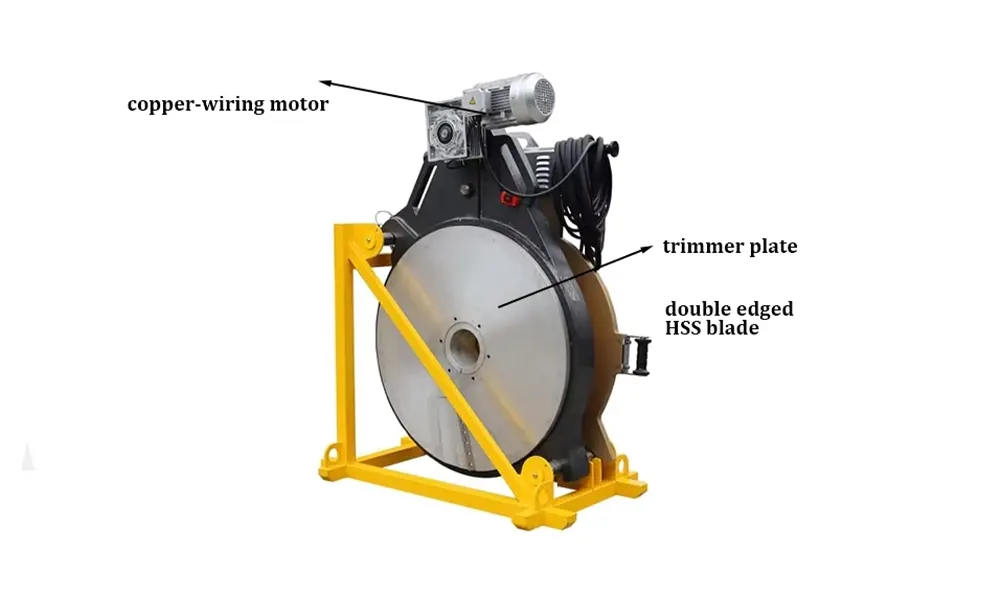
Pipe welding for trenchless construction is a critical joining process used to assemble long, durable pipeline sections before they are installed underground without open excavation. In modern infrastructure projects, this method supports water supply, gas distribution, mining, and industrial pipeline systems by creating strong, leak-resistant joints that can handle pressure, soil movement, and long-term operation. Among the many welding methods available, butt fusion is especially important because it creates a continuous pipe structure with excellent strength and reliability.
Trenchless construction is designed to reduce surface disruption, minimize traffic interruption, and protect landscapes, buildings, roads, and public utilities. Since the pipeline is often pulled, pushed, or drilled into place after welding, the quality of each joint matters greatly. A weak weld can cause serious failures after installation, which is why contractors depend on precise equipment and stable welding procedures. For projects that require dependable joining performance, a butt fusion machine is one of the most practical and widely used solutions.
Key idea: In trenchless projects, pipe welding is not just a fabrication step. It is the foundation that determines whether the pipeline can survive installation forces, operating pressure, and decades of service underground.
What Pipe Welding Means in Trenchless Construction
Pipe welding in trenchless construction refers to the process of joining pipe sections into a continuous line before or during installation. Because trenchless methods often involve long pipeline runs, the welded pipe string must be straight, uniform, and strong enough to be inserted into the ground through directional drilling, pipe bursting, sliplining, or other no-dig techniques. The welded joints need to match the pipe body in strength as closely as possible, reducing the risk of separation or leakage once the line is in service.
For thermoplastic pipes such as HDPE, butt fusion welding is the dominant technique. It works by heating two pipe ends until they reach a molten state and then pressing them together under controlled force. After cooling, the two ends become a single continuous piece of pipe. This method is especially valuable in trenchless construction because it creates a joint that is smooth, robust, and highly suitable for underground installation.
⚙️ Why it matters: The installed pipeline often experiences pulling force, bending stress, vibration, and soil pressure. A properly welded line helps reduce failure risk in all of these conditions.
How Butt Fusion Welding Works
Butt fusion welding follows a carefully controlled sequence. First, the pipe ends are cleaned and aligned in a fusion machine. The machine clamps the pipes securely to prevent movement. Next, a facing tool trims the pipe ends so they are perfectly flat and parallel. This step is essential because even a small alignment error can weaken the final joint.
After facing, a heated plate is inserted between the pipe ends. The plate raises the surface temperature of both ends until a uniform melt bead forms. Once the proper heating time has passed, the plate is removed and the molten ends are pressed together with controlled pressure. The material cools under pressure, forming a single fused joint with strong molecular bonding.
Important point: Successful butt fusion depends on four variables working together: temperature, pressure, heating time, and cooling time. If one of them is incorrect, joint quality may be reduced.
The result is a seamless pipe line that can be handled, transported, and installed as one structural unit. This is especially useful for trenchless applications where the pipeline may need to pass through long underground paths with limited access for repair.
Why Butt Fusion Is Ideal for Trenchless Projects
Trenchless construction places unusual demands on pipe joints. The pipeline is often assembled above ground and then installed in one continuous run, so every joint must be highly reliable. Butt fusion offers several advantages that make it a preferred choice for HDPE pipe systems.
✅ Strong leak resistance
✅ High joint strength
✅ Smooth internal flow
✅ Excellent corrosion resistance
✅ Suitable for long pipe strings
Unlike mechanical joints, fusion joints do not rely on gaskets, bolts, or sealants that can degrade over time. This makes them particularly suitable for buried infrastructure. The welded pipe interior also remains smooth, which helps preserve hydraulic efficiency and lowers the risk of pressure loss or debris accumulation.
Main Steps in a Trenchless Pipe Welding Job
A trenchless welding project generally includes planning, pipe preparation, welding, inspection, and installation. Each step contributes to final quality and should be managed with careful attention.
1. Project Planning
Before welding begins, engineers determine pipe size, layout, joining method, and installation requirements. Trenchless routes can be long and complex, so the pipe string must be designed to match the drilling or pulling plan. Material compatibility, wall thickness, and site conditions are all evaluated during this stage.
2. Pipe Preparation
The pipe ends must be clean, dry, and free from dust, oil, and contamination. Proper preparation improves fusion quality and helps ensure a smooth, even weld. Pipe ends are then aligned tightly in the machine so the heating and joining phases can proceed accurately.
3. Welding and Cooling
During fusion, operators monitor heating plate temperature, pressure levels, and timing parameters. Once joined, the pipe must remain stationary during cooling. Moving the joint too early can reduce strength and compromise the fusion bond.
4. Inspection and Documentation
Weld inspection is a vital part of trenchless work. Operators may check bead appearance, alignment, fusion consistency, and machine records to confirm that the weld meets project requirements. In many projects, documentation is needed for quality assurance and compliance.
Machines Used in Pipe Welding
The quality of fusion welding depends heavily on the machine used. Different projects require different equipment configurations, from small manual machines to larger hydraulic and CNC automatic systems. Manual machines are often used for smaller diameters and simpler site conditions. Hydraulic machines provide better clamping force and control for larger pipes. CNC systems improve consistency and reduce operator error, which is valuable in demanding infrastructure work.
JQ-Fusion is a professional manufacturer focused on HDPE pipe welding machines for global pipeline projects. Their product range includes manual, hydraulic, and automatic solutions suitable for different pipe sizes and project needs. With over 20 years of experience, they support contractors and distributors with stable, customizable equipment designed for reliable performance in the field.
Useful note: Projects involving water supply, gas networks, mining, and industrial piping often need different machine capacities. Choosing the right equipment helps improve weld stability and installation efficiency.
If you want to explore product options, technical support, and customization services, JQ-Fusion provides complete solutions for global buyers. Their machines are built with advanced manufacturing technology, strict quality control, and strong OEM and ODM flexibility, which can be helpful for contractors who need project-specific equipment.
For more information, you can also visit their pages on butt fusion machine, HDPE pipe welding solutions, and trenchless pipeline equipment.
Common Challenges and How to Avoid Them
Even though butt fusion is reliable, poor workmanship or poor machine condition can create problems. One common issue is incorrect alignment, which can lead to uneven fusion beads and weak joints. Another issue is unstable heating temperature, which may cause underheating or overheating. In both cases, the weld may look acceptable at first but fail under long-term stress.
Contamination is another major risk. Dust, moisture, and grease can interfere with the fusion bond. This is why pipe ends must be carefully cleaned before welding. Operators also need to follow the machine’s process parameters closely. Skilled training and consistent procedures are essential for dependable results.
Best practice: Use well-maintained equipment, keep the work area clean, and verify every setting before starting a weld. Small checks can prevent expensive failures later.
The Role of Quality Control
Quality control is essential in trenchless pipe welding because the pipeline may be buried in locations that are difficult or impossible to access later. Manufacturers and contractors therefore use testing and inspection methods to confirm machine performance and weld consistency. Temperature accuracy, hydraulic pressure stability, and clamp alignment are all important factors in ensuring reliable welds.
JQ-Fusion emphasizes strict quality control in manufacturing and testing, helping customers receive equipment that performs consistently in real project conditions. Their commitment to durable construction and global support gives contractors more confidence when completing demanding pipeline installations.
Why Trenchless Construction Depends on Good Pipe Welding
Trenchless construction reduces excavation, but it increases the importance of pipeline integrity. Since the buried line is harder to repair after installation, the welding stage must be completed correctly from the beginning. A well-fused pipeline is easier to install, safer to operate, and more economical over the full life of the project.
In practical terms, this means pipe welding is not a background task. It is a decisive part of the project that influences structural strength, installation speed, service life, and maintenance costs. When contractors invest in proper training and reliable equipment, they improve both project performance and long-term asset value.
In short: High-quality pipe welding makes trenchless construction safer, faster, and more durable. It is one of the most important factors behind successful underground pipeline installation.
Frequently Asked Questions
Q1: What is the most common welding method for trenchless HDPE pipelines?
Butt fusion welding is the most common method because it produces strong, leak-resistant joints that are ideal for buried pipeline systems.
Q2: Why is pipe alignment so important during fusion welding?
Proper alignment ensures even heating and a uniform joint. Misalignment can weaken the weld and reduce long-term reliability.
Q3: Can fusion-welded pipes be used in gas and water projects?
Yes. Fusion-welded HDPE pipes are widely used in water supply, gas distribution, mining, and industrial pipeline applications.
Q4: What affects the quality of a butt fusion joint?
Temperature, pressure, heating time, cooling time, pipe cleanliness, and operator skill all affect joint quality.
Q5: How do I choose the right welding machine for a trenchless project?
Choose based on pipe diameter, material type, project scale, and required automation level. Hydraulic and CNC machines are often used for larger or more demanding applications.



