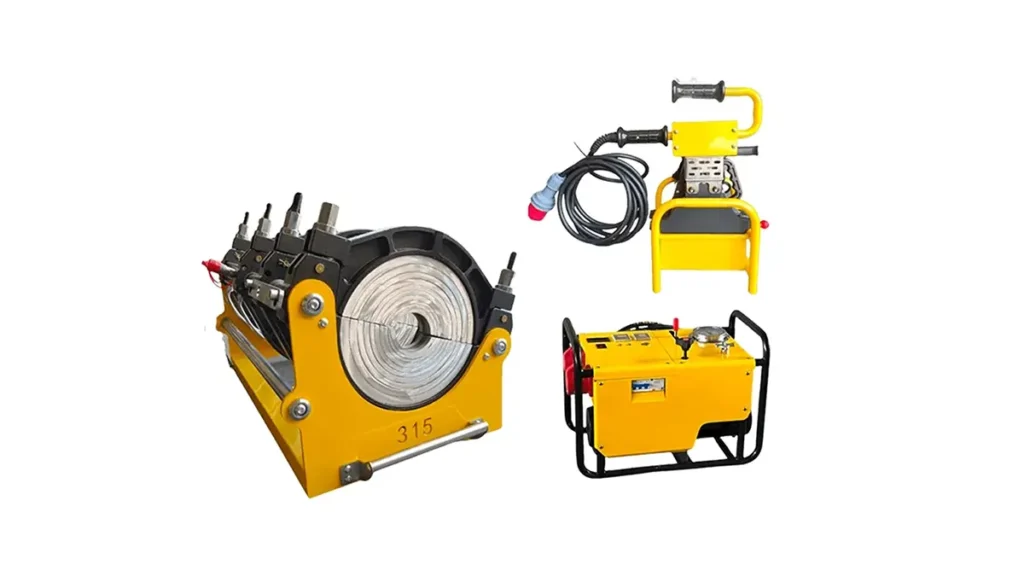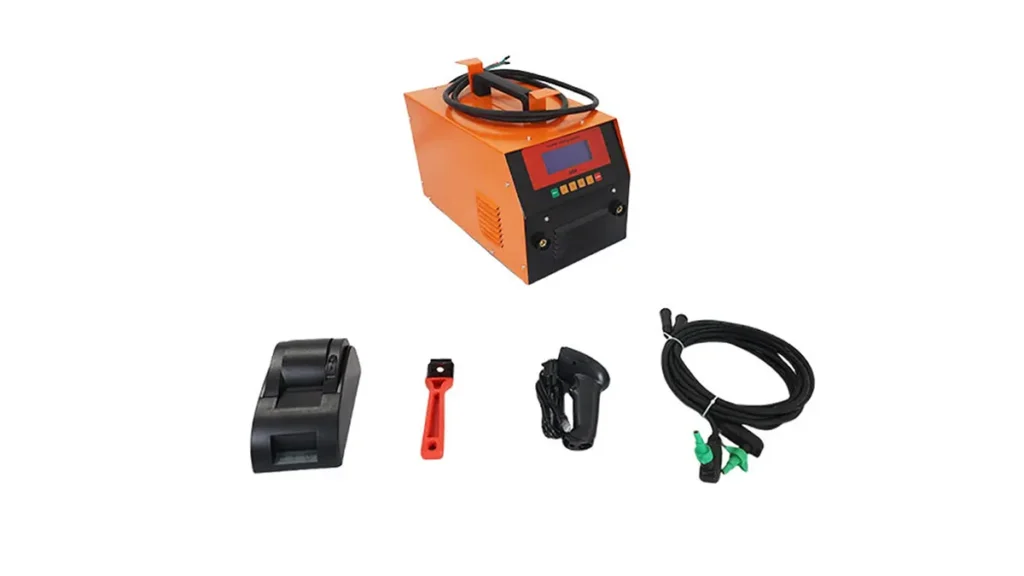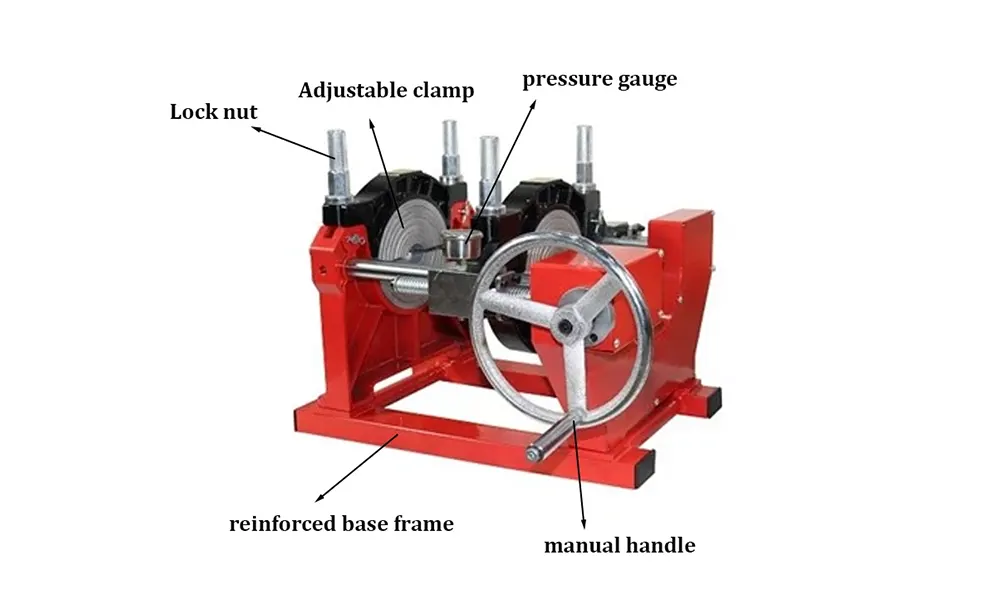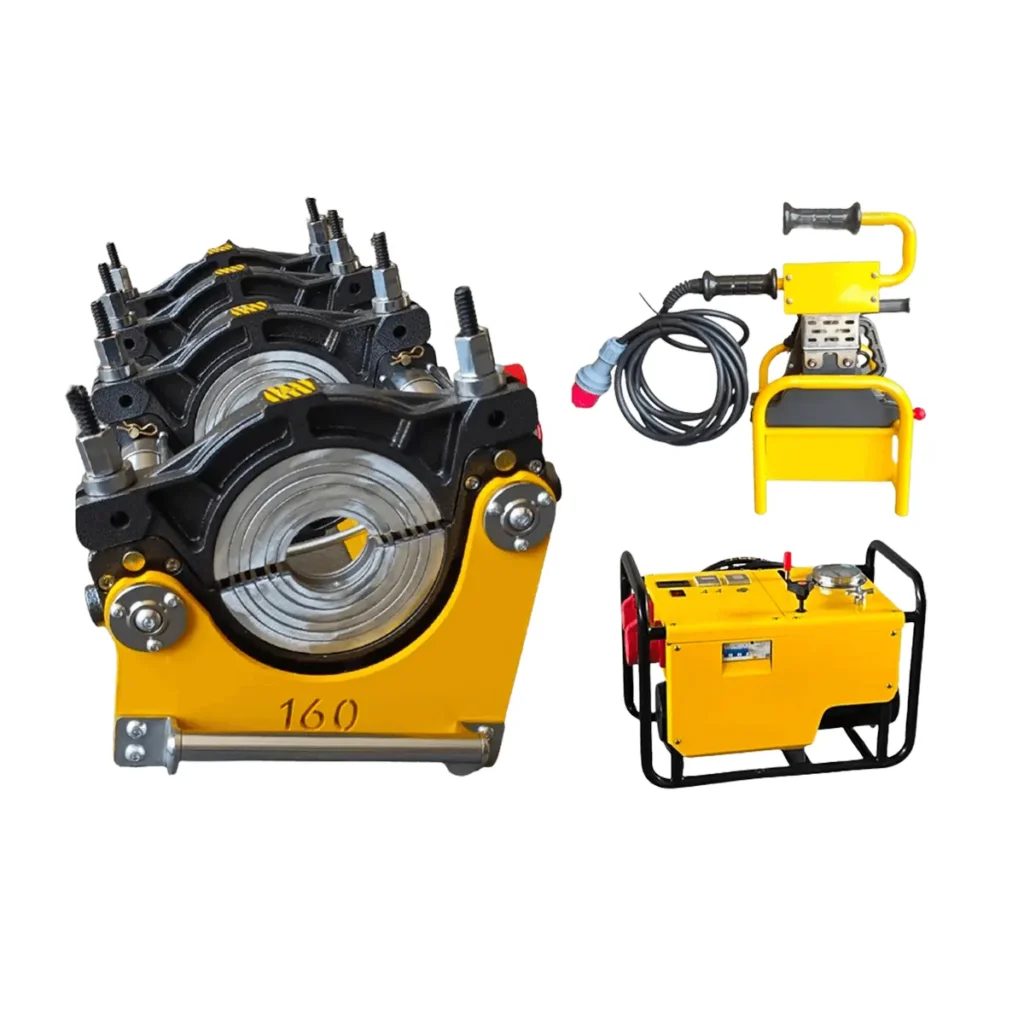
HDPE pipe butt fusion equipment is the specialized machinery used to join high-density polyethylene (HDPE) pipes by heating and fusing their ends to form strong, leak-free joints. This method is widely adopted across water supply, gas distribution, mining, and industrial pipeline systems for its durability and reliability. Understanding the types, components, operation steps, and selection criteria helps contractors, engineers, and procurement teams choose the right welding solution for each project.
Types of HDPE Butt Fusion Machines
Manual Butt Fusion Machines — Simple, lightweight frames for small-diameter pipes. Best for repair work and low-volume field projects where portability and low cost are priorities.
Hydraulic Butt Fusion Machines — Provide consistent clamping force and controlled heating for medium to large diameters. Popular on construction sites and for projects requiring repeatable weld quality.
Automatic/CNC Butt Fusion Machines — Programmable controls manage heating time, pressure, and cooling cycles for high-precision welding on large-diameter pipelines and factory settings.
Electrofusion Units — Use specialized fittings with embedded heating elements; ideal for complex joints, fittings, and locations where butt fusion is impractical.
Multi-angle and Fittings Welding Machines — Designed for welded fittings and specialty angles, reducing on-site fitting assembly time.
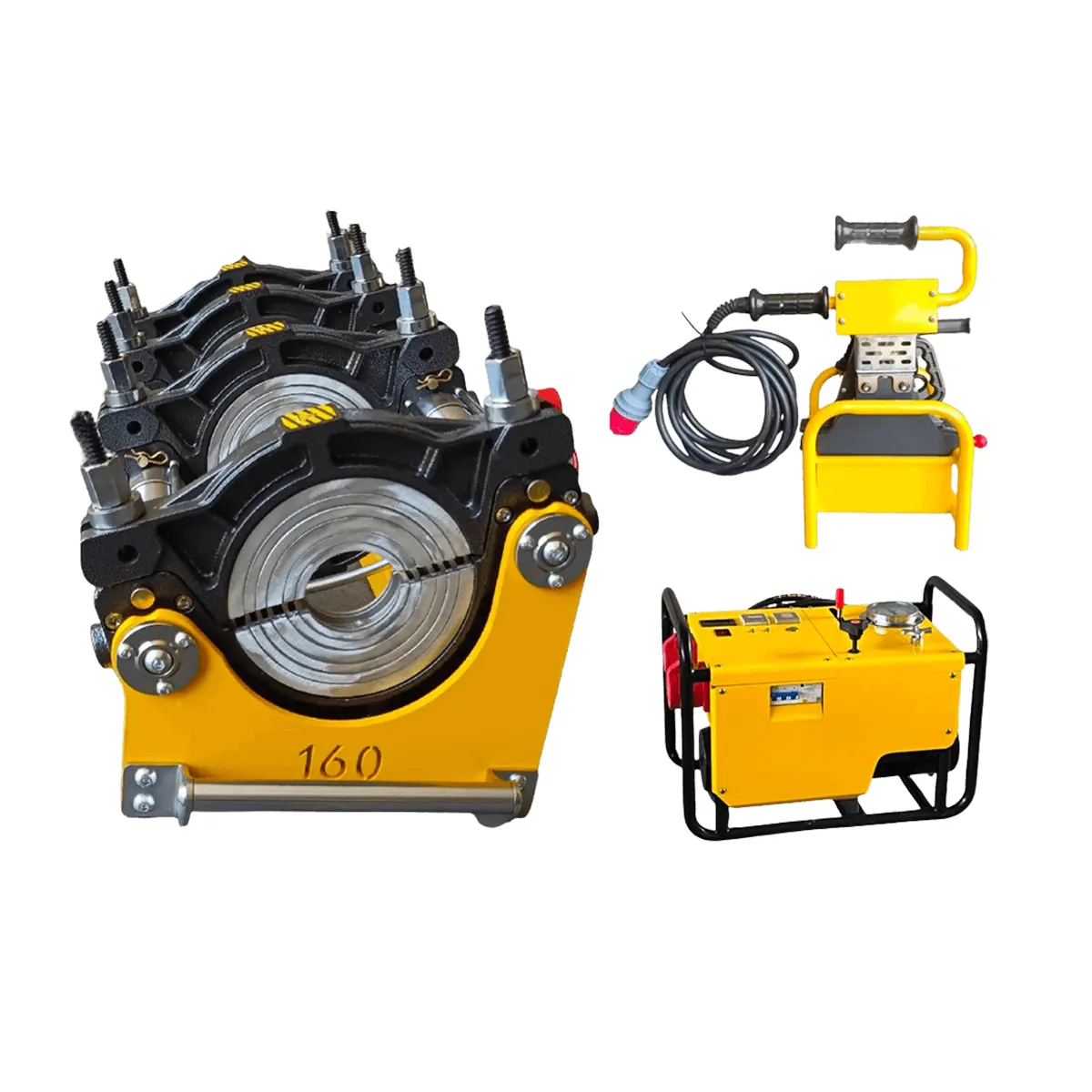
Key Components of Butt Fusion Equipment
Clamping Frame: Holds pipe ends aligned and provides the reaction force for fusion. Frames vary by pipe diameter capacity.
Heating Plate / Heater: Non-stick, temperature-controlled plate used to melt pipe ends uniformly.
Facing Tool (Trimmer): Prepares pipe ends by removing oxides and ensuring flat, concentric faces for welding.
Hydraulic Power Pack / Manual Gear: Supplies the axial pressure needed during fusion — hydraulic models give improved consistency.
Control Unit (for automatic models): Programmable interface to set temperature, pressure, and time parameters for repeatable results.
Typical Machine Specifications
| Machine Type | Pipe Range (mm) | Power / Drive | Control | Typical Use |
|---|---|---|---|---|
| Manual Frame | 20–250 | Hand/Manual | Operator | Small repairs, rural sites |
| Hydraulic Machine | 63–1000+ | Hydraulic Power Pack | Manual / Semi-auto | Municipal & industrial lines |
| Automatic / CNC | 90–2250 | Electric / Hydraulic | Programmable | Large diameter pipeline fabrication |
| Electrofusion | 20–630 (fittings) | Direct Electric | Controller / Timer | Fittings, repairs, constrained spaces |
How Butt Fusion Works — Step by Step
Step 1 — Preparation: Clean and align pipe ends in the clamping frame and secure them concentrically.
Step 2 — Facing: Use the facing tool to trim and square the pipe ends for full contact.
Step 3 — Heating: Bring the heater plate to the specified temperature and press it between the pipe ends until a uniform melt bead appears.
Step 4 — Fusion: Remove the heater and apply fusion pressure; the molten surfaces join and are held until the joint cools to a safe handling temperature.
Step 5 — Inspection: Visually and, where required, non-destructively inspect the bead and joint for integrity before commissioning.
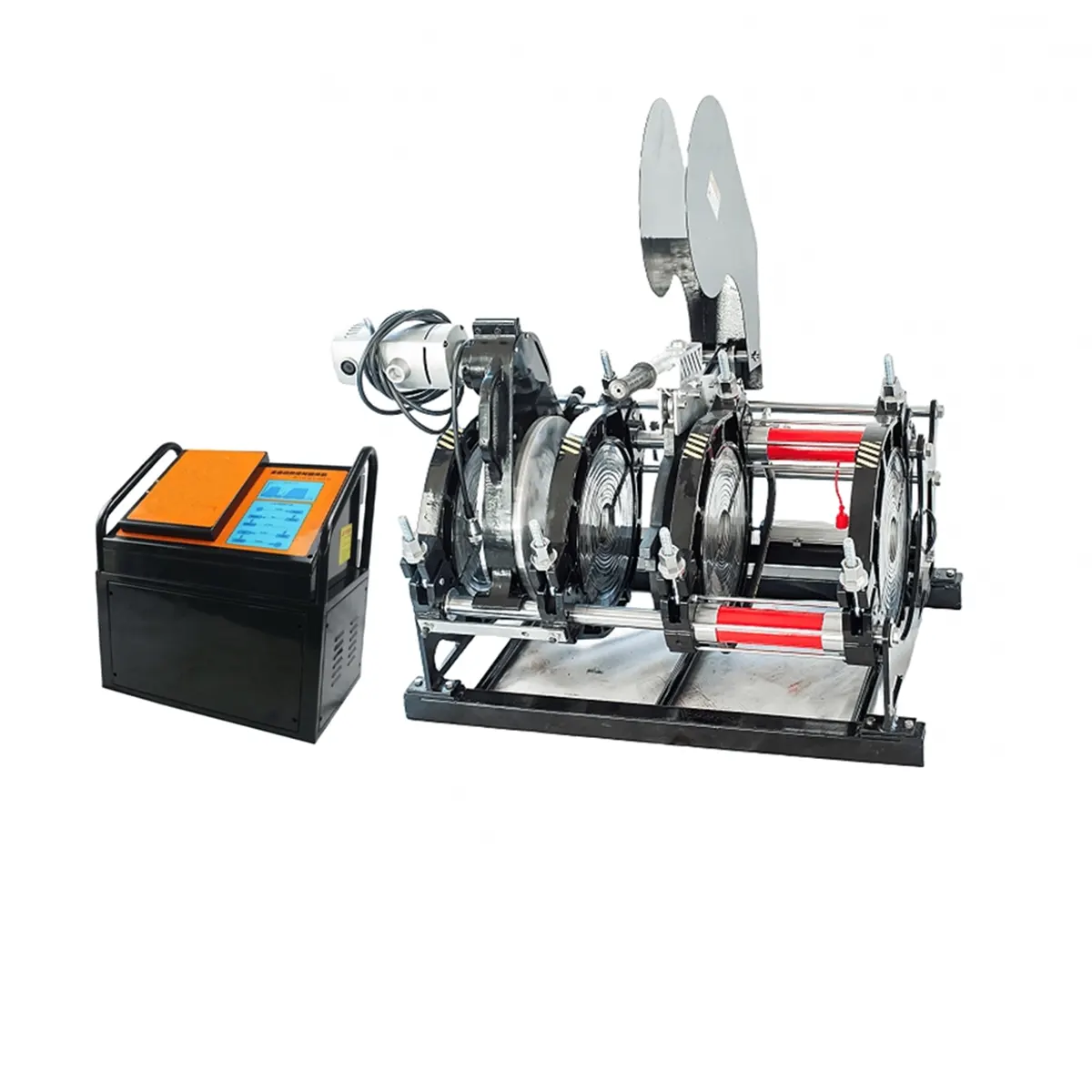
Choosing the Right Butt Fusion Machine
Project Scale: For frequent, large-diameter work choose automatic/CNC machines; for occasional repairs a manual or portable hydraulic unit may suffice.
Required Accuracy: Automatic machines deliver programmable consistency for critical pipelines where repeatability matters.
Site Conditions: Consider portability, power availability, and operator skill. Hydraulic units balance power and field mobility.
Budget vs ROI: Higher initial cost for automated systems is often offset by faster cycle times and reduced rework.
Maintenance and Safety Tips
Routine Checks: Inspect heaters for non-stick surface wear, maintain hydraulic oil and seals, and calibrate control units regularly.
Cleanliness: Keep facing tools and heater plates free of contaminants to prevent poor welds.
Operator Training: Ensure welders are trained in the specific machine model and in HDPE welding standards.
Safety Equipment: Use gloves, eye protection, and follow lock-out procedures for hydraulic and electrical systems.
Benefits and Common Applications
Long-term Leak Resistance: Butt fusion produces joints that are as strong as the pipe itself, ideal for potable water and gas mains.
Corrosion Resistance: HDPE systems resist chemical corrosion and soil conditions, lowering lifecycle costs.
Versatility: Suited to municipal water networks, gas distribution, mining slurry lines, irrigation systems, and industrial piping.
Frequently Asked Questions
Q: Can all HDPE pipe sizes be butt-fused? A: Most sizes from small diameters up to very large diameters can be butt-fused; choose the frame and heater size that match your pipe range.
Q: How important is heater temperature control? A: Extremely important — precise temperature control and consistent heating time are critical to achieving reliable, reproducible joints.
Q: When should I use electrofusion versus butt fusion? A: Electrofusion is preferred for fittings, restricted access joints, or repair work; butt fusion is generally used for straight pipe runs and large-diameter connections.
Manufacturer Note
For a wide range of HDPE welding machines including manual, hydraulic, and automatic butt fusion solutions, consider equipment from JQ-Fusion to match project needs and quality expectations.