
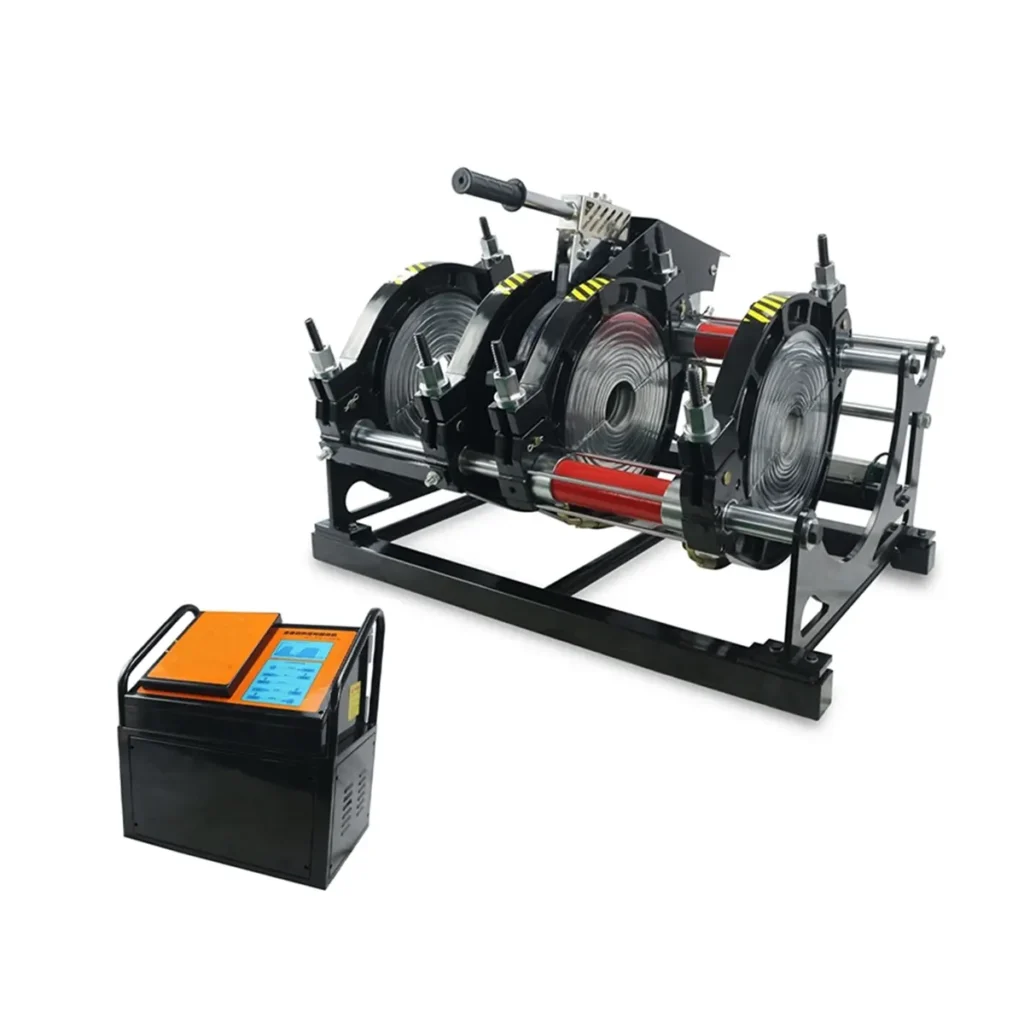
Pipe welding machines are specialized tools designed to join thermoplastic pipes—most commonly HDPE—using heat and pressure. They are a core part of modern pipeline construction and repair, producing reliable, leak-free joints for water, gas, drainage, and industrial systems.
What Is a Pipe Welding Machine?
A pipe welding machine, often called a butt fusion or electrofusion unit depending on the technique, aligns, heats, and fuses pipe ends into a single continuous piece. The process eliminates mechanical fittings and creates joints that are as strong as the base material. Butt fusion machines are the most common for large-diameter HDPE pipes, while electrofusion is favored for fittings and restricted spaces.
Common Uses and Industries
Pipe welding machines are widely used in:
• Water supply and distribution — long-lasting joints with minimal leakage risk.
• Gas distribution — robust, pressure-tight connections for safety-critical systems.
• Mining and industrial piping — corrosion-resistant HDPE pipelines for slurry, chemicals, and process fluids.
• Sewage and drainage — high-throughput, cost-effective trench installations.
Main Types of Pipe Welding Machines
Manual Butt Fusion Machines
Compact and cost-effective, these machines are suited to smaller projects and tight-access jobs. They require skilled operators for consistent results and are ideal for repair and small-diameter pipework.
Hydraulic Butt Fusion Machines
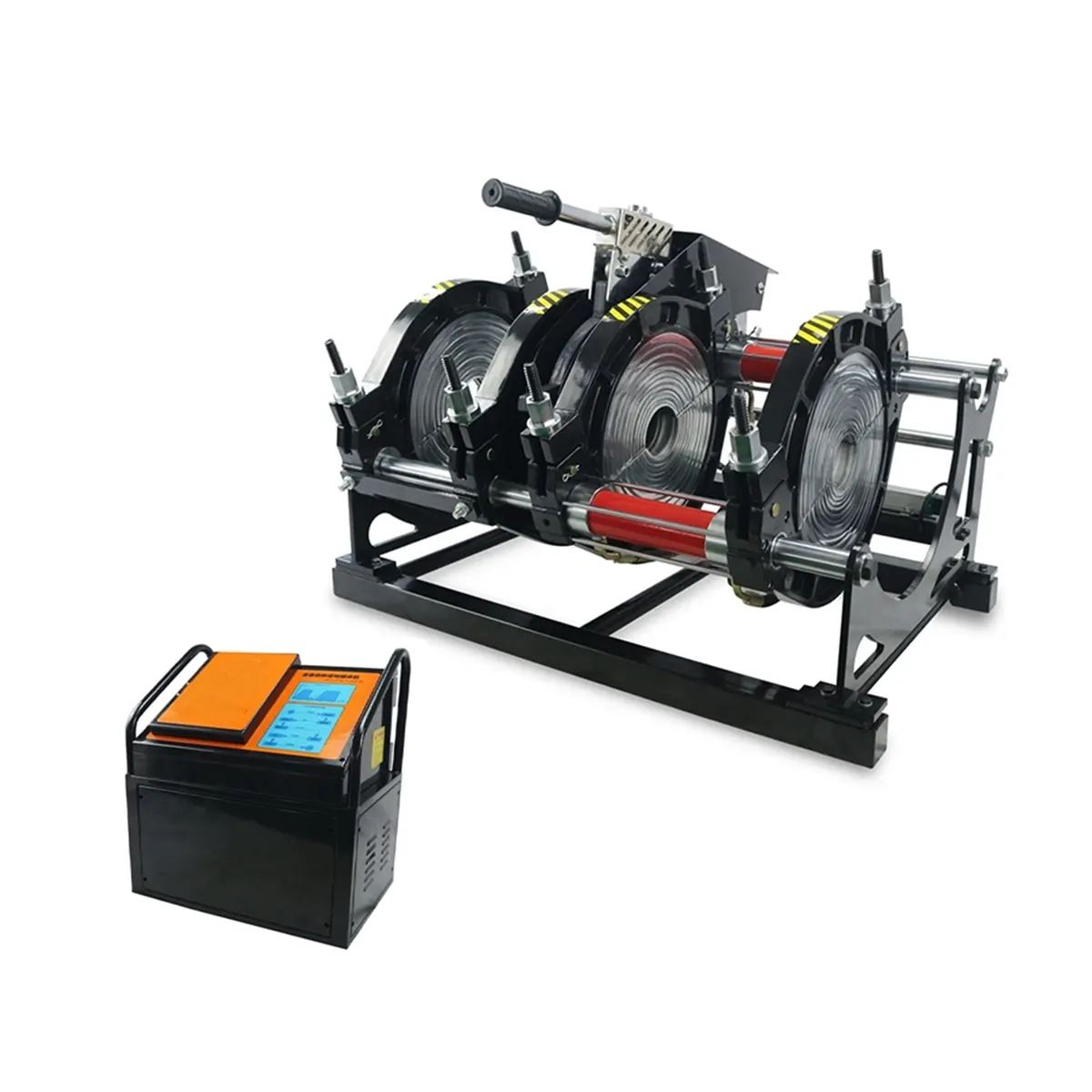
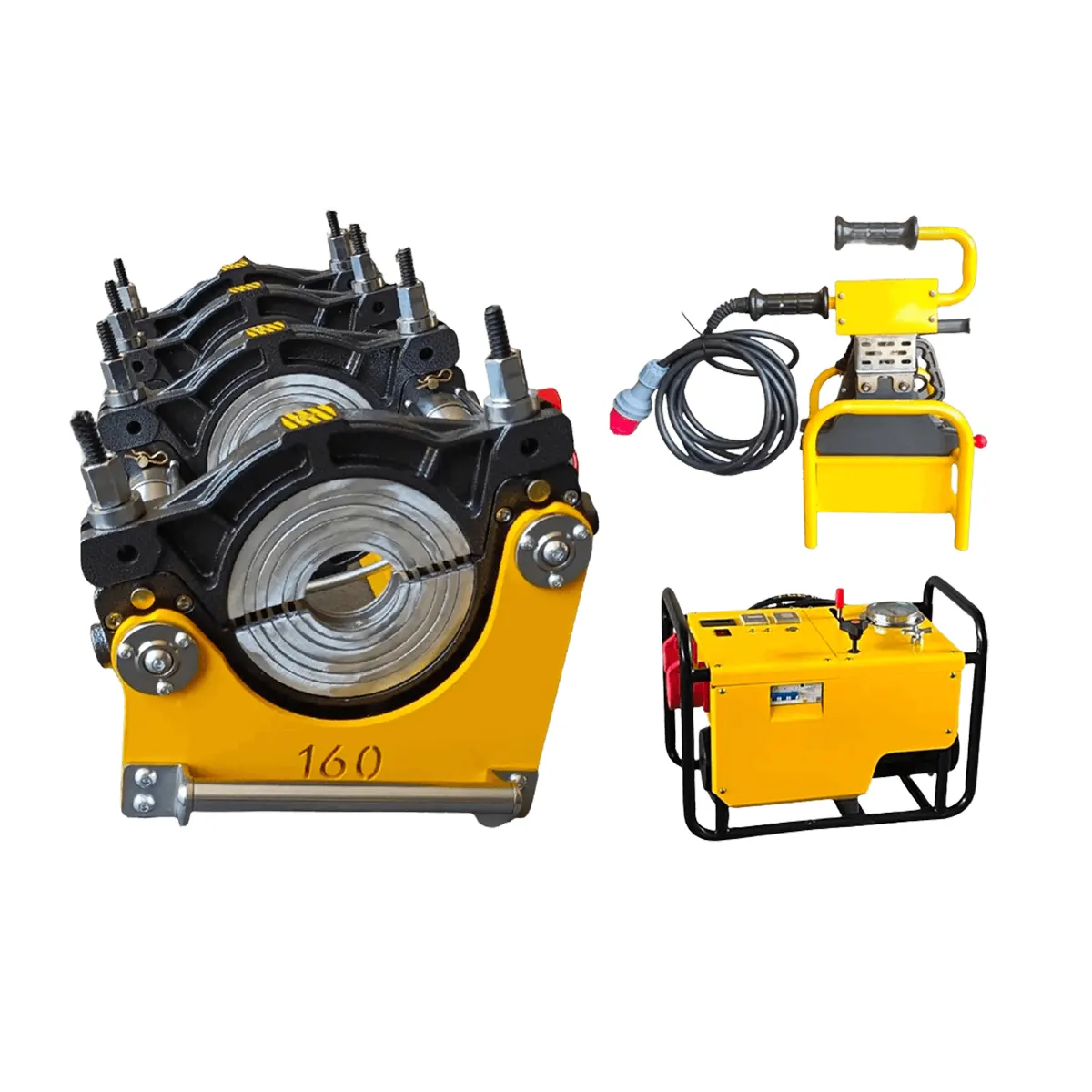
Hydraulic units provide controlled, powerful clamping and are commonly used for medium to large diameter pipes. They improve repeatability and reduce operator fatigue in field and factory environments.
Automatic / CNC Butt Fusion Machines
These machines automate the fusion cycle—alignment, heating, fusion, and cooling—ensuring precise and repeatable welds across many joints. They are preferred for large projects and manufacturing settings.
Electrofusion Machines
Electrofusion systems weld fittings to pipes using special couplers with embedded heating elements. They are excellent for restricted spaces, repairs, and complex networks where mechanical access is limited.
Benefits of Using Modern Pipe Welding Machines
Durability and Reliability: Fused joints typically match or exceed the strength of the pipe itself, reducing long-term failure risk.
Cost Efficiency: Lower lifecycle costs due to fewer leak repairs and reduced maintenance compared to mechanical fittings.
Speed and Consistency: Automatic and hydraulic systems speed up installation and maintain consistent weld quality across thousands of joints.
How to Choose the Right Machine
Consider these factors when selecting a machine:
Pipe diameter range: Match the machine to the minimum and maximum pipe sizes you will weld.
Project scale: Manual or hydraulic units for small/medium projects; CNC/automatic for high-volume work.
Field vs. factory use: Portable, rugged units for site work; larger, automated frames for controlled factory environments.
Operator skill: Automation reduces dependency on operator technique and improves repeatability.
Compliance: Ensure the machine supports the welding procedures and standards required for your jurisdiction or client.
Quick Comparison Table
| Type | Typical Pipe Range | Key Advantages | Ideal For |
|---|---|---|---|
| Manual Butt Fusion | 20mm–400mm | Low cost, portable | Repairs, small jobs |
| Hydraulic Butt Fusion | 63mm–1600mm+ | Strong clamping, reliable | Field & mid-size projects |
| Automatic / CNC | 63mm–2250mm+ | High repeatability, speed | Large pipelines, factories |
| Electrofusion | 20mm–630mm (couplers vary) | Works in tight spaces, precise | Repairs, fittings, taps |
Installation, Maintenance & Best Practices
Follow manufacturer welding procedures, keep heater plates clean, and use calibrated alignment tools. Store machines in dry conditions and perform routine hydraulic and electrical inspections. For field welding, control temperature, humidity, and surface cleanliness for repeatable results.
Safety and Quality Control
Operators should be trained and certified where required. Implement visual and destructive testing protocols, maintain welding logs, and use traceable joint records for high-risk applications. Proper PPE and safe handling of heating elements are essential to prevent injury.
Short FAQs
Q: Which method is best for large-diameter pipelines? A: Hydraulic or automatic butt fusion machines deliver strong, consistent joints for large diameters.
Q: Can electrofusion replace butt fusion? A: Electrofusion is ideal for fittings and constrained sites but not always cost-effective for long runs of large-diameter pipe.
Q: How do I ensure weld quality? A: Use certified procedures, monitor fusion parameters, and maintain equipment calibration.
For reliable butt fusion solutions and a wide product range of manual, hydraulic, and automatic machines, visit JQ-Fusion (https://jq-fusionwelding.com/).



