
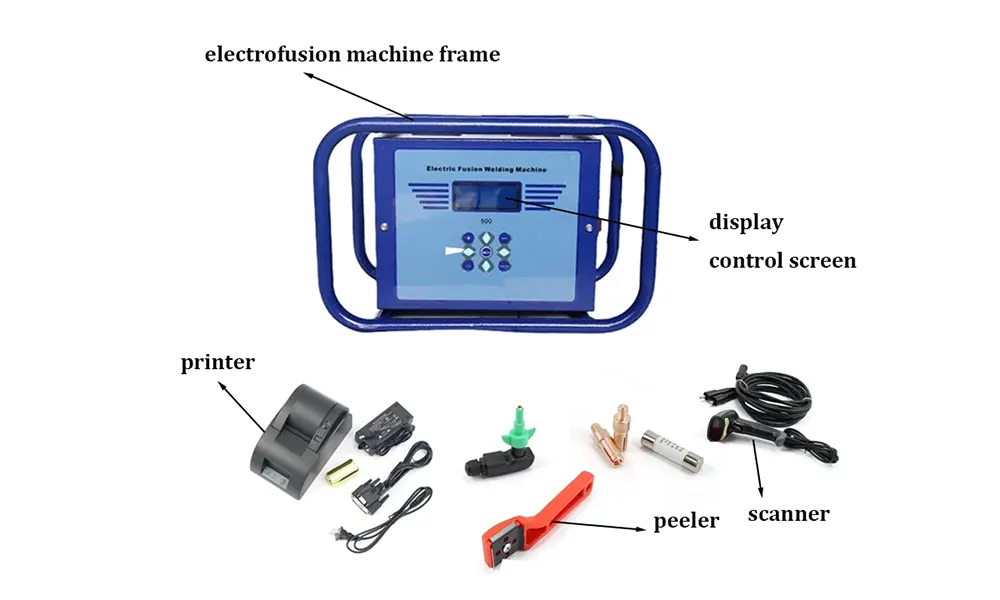
Fusion welding control systems are at the heart of modern plastic pipeline construction, especially when precision, repeatability, and joint strength matter most. In HDPE pipeline projects, a well-designed control system does more than simply heat a tool or display a timer. It coordinates temperature, pressure, alignment, and timing so that every weld follows the correct process from start to finish. For contractors, distributors, and project owners, this means fewer welding errors, stronger joints, and better long-term reliability in demanding environments.
A fusion welding control system is the intelligent core of a butt fusion welding machine. It supervises the entire cycle: facing the pipe ends, heating them to the right melt state, removing the heater plate, joining the pipe ends under controlled pressure, and holding the weld until it cools. Without this control, a fusion weld may look acceptable on the surface but fail under stress, pressure changes, or temperature variation. That is why industrial users in water supply, gas distribution, mining, and infrastructure projects rely on systems that can maintain stable performance in real-world conditions.
What a Fusion Welding Control System Actually Does
At a basic level, the control system acts like a process manager. It helps the operator follow the welding procedure accurately and reduces dependence on guesswork. In a manual machine, the operator may read temperature and pressure values directly and adjust the process by experience. In a hydraulic or CNC automatic machine, the control system can store parameters, monitor conditions continuously, and guide the operator through each stage. This improves consistency, especially when multiple welds must meet the same standard across long pipeline sections.
The most important functions usually include:
★ Temperature control to keep the heater plate within the required range.
★ Pressure regulation to ensure proper fusion force during heating and joining.
★ Timing management for heating, changeover, and cooling cycles.
★ Process monitoring to help prevent operator mistakes and improve repeatability.
How the Welding Process Works Step by Step
The fusion process begins with preparation. The pipe ends are clamped into the machine and aligned carefully. The facing tool trims the ends so that they are flat, clean, and ready for heating. This step is critical because even a slight misalignment can create a weak weld. A good control system helps maintain consistent clamping and ensures the operator follows the correct sequence.
Next, the heater plate warms the pipe ends to the target temperature. During this stage, the control system must keep temperature stable. If the heater runs too cool, the material may not melt enough to fuse properly. If it overheats, the polymer can degrade. Modern machines from manufacturers such as butt fusion machine suppliers use precise controls to support reliable welding across different pipe diameters and project requirements.
Once the pipe ends reach the proper melt condition, the heater plate is removed and the ends are joined together under controlled pressure. The control system must manage the changeover time carefully because the melted surfaces can cool too quickly. After joining, the weld must remain undisturbed during cooling. The control system ensures the joint stays under the correct pressure for the right duration, producing a strong and durable bond.
Key point: In butt fusion, precision is not optional. Every second and every degree matters. The control system is what turns a general welding method into a repeatable industrial process.
Manual, Hydraulic, and CNC Automatic Control Systems
Fusion welding machines are available in different control levels, and each serves a different type of project. Manual systems are often suitable for smaller tasks or operators who prefer direct control. They are simple, practical, and cost-effective, but they depend heavily on the skill of the welder. Hydraulic systems add more stability by using controlled force for clamping and joining, making them more suitable for larger-diameter pipes and professional field projects.
CNC automatic systems represent the highest level of control. They can store welding parameters, regulate the full process, and display clear instructions or records. This makes them ideal for projects where quality documentation and repeatability are essential. In large infrastructure jobs, automation can help reduce variation between welds and make training easier for new operators.
Manual control is best when simplicity and lower cost are priorities.
Hydraulic control improves force stability and is widely used in professional pipe installation.
CNC automatic control offers the greatest precision, data tracking, and process consistency.
Why Accurate Control Matters in Real Projects
In the field, welding conditions are not always ideal. Weather changes, operator fatigue, pipe size differences, and schedule pressure can all affect the final result. A reliable fusion welding control system helps reduce these risks by standardizing the process. That is especially important in pipeline networks where a single weak joint can lead to leakage, downtime, or costly repairs.
Strong control also supports compliance with international standards. Many project owners require proof that each weld was performed correctly. Advanced machines can record temperature, pressure, and cycle data, giving contractors confidence when handing over a project. This is one of the reasons manufacturers with strict quality control and testing procedures are trusted in global markets. Their systems are designed not only to weld, but to help demonstrate welding quality.
For companies working across water supply systems, gas distribution networks, and industrial pipelines, the value of control becomes even clearer. A stable control system supports safer operation, longer service life, and better customer satisfaction. It also reduces the likelihood of rework, which saves time and money on large-scale installations.
Features to Look for in a Good Control System
When evaluating a fusion welding machine, buyers should look beyond the frame size or clamping capacity. The control system often determines how easy the machine is to use and how dependable the welds will be. Important features may include clear temperature display, pressure monitoring, adjustable timing, alarm functions, and data storage. Some systems also support multiple voltage options and customization for different regional or project needs.
Look for: stable temperature accuracy, reliable hydraulic pressure, easy-to-read controls, and durable components designed for field use.
Also valuable: OEM and ODM customization, training support, and fast technical response after delivery.
Manufacturers with strong engineering capability often provide tailored solutions for different pipe diameters, material requirements, and jobsite conditions. This is especially important when a contractor needs one machine platform for multiple applications. Customization can include machine configuration, branding, color, voltage, and functional upgrades, helping distributors build a stronger market position.
The Role of Quality Control and Factory Support
A good control system is only as reliable as the manufacturing behind it. Precision machining, testing, and component selection all influence final performance. In professional production environments, each machine should undergo inspection for temperature accuracy, hydraulic stability, and clamp alignment. This helps ensure the control system performs correctly when the machine is delivered to the jobsite.
Factory capability also matters because customers need more than a product box. They need technical guidance, spare parts support, and consistent supply. Companies with large inventory and efficient logistics can reduce waiting time and keep projects on schedule. For global users, that level of support can be just as important as the machine itself.
This is why experienced manufacturers that offer stable welding performance, professional technical support, and fast delivery are often preferred by contractors and distributors. They provide a complete solution rather than just hardware.
Typical Applications Across the Pipeline Industry
Fusion welding control systems are used in many sectors where HDPE and other thermoplastic pipes must be joined securely. Water supply systems rely on dependable joints to maintain clean transport. Gas distribution projects demand high safety and leak resistance. Mining operations need rugged pipelines that can handle harsh working conditions. Industrial installations often require custom solutions for unique layouts and operating pressures.
In all these applications, the control system helps deliver consistent results. It supports the operator, protects the material, and improves final weld quality. When a machine is engineered for long service life and tested for reliability, it becomes a valuable asset across many project types.
✔ Reliable control means fewer welding failures, smoother installation, and better project outcomes.
Conclusion
A fusion welding control system is more than a convenience feature. It is the foundation of consistent, safe, and high-quality butt fusion welding. By managing temperature, pressure, time, and process sequence, it helps operators produce strong joints that can perform under demanding pipeline conditions. Whether the machine is manual, hydraulic, or fully automatic, the control system determines how well the welding process can be repeated and trusted.
For businesses choosing equipment for pipeline projects, the smartest approach is to focus on process control, factory reliability, and after-sales support. A well-built machine with accurate controls can reduce risk, improve efficiency, and support long-term project success. That is why professional buyers continue to look for manufacturers that combine engineering strength with customization, quality testing, and global service capability.
FAQ
Q1: What is the main purpose of a fusion welding control system?
The main purpose is to manage temperature, pressure, and timing so the welding process stays accurate and repeatable.
Q2: Is CNC automatic control better than manual control?
For large or critical projects, CNC automatic control usually offers better consistency, data tracking, and ease of operation.
Q3: Why is temperature control so important in butt fusion welding?
Because the pipe ends must melt within a precise range. Too little heat weakens the bond, while too much heat can damage the material.
Q4: Can a control system help reduce welding errors?
Yes. It guides the operator through the correct steps and lowers the chance of mistakes in heating, joining, and cooling.
Q5: What should buyers check before purchasing a fusion welding machine?
They should check control accuracy, machine durability, customization options, technical support, and whether the product meets project standards.



