
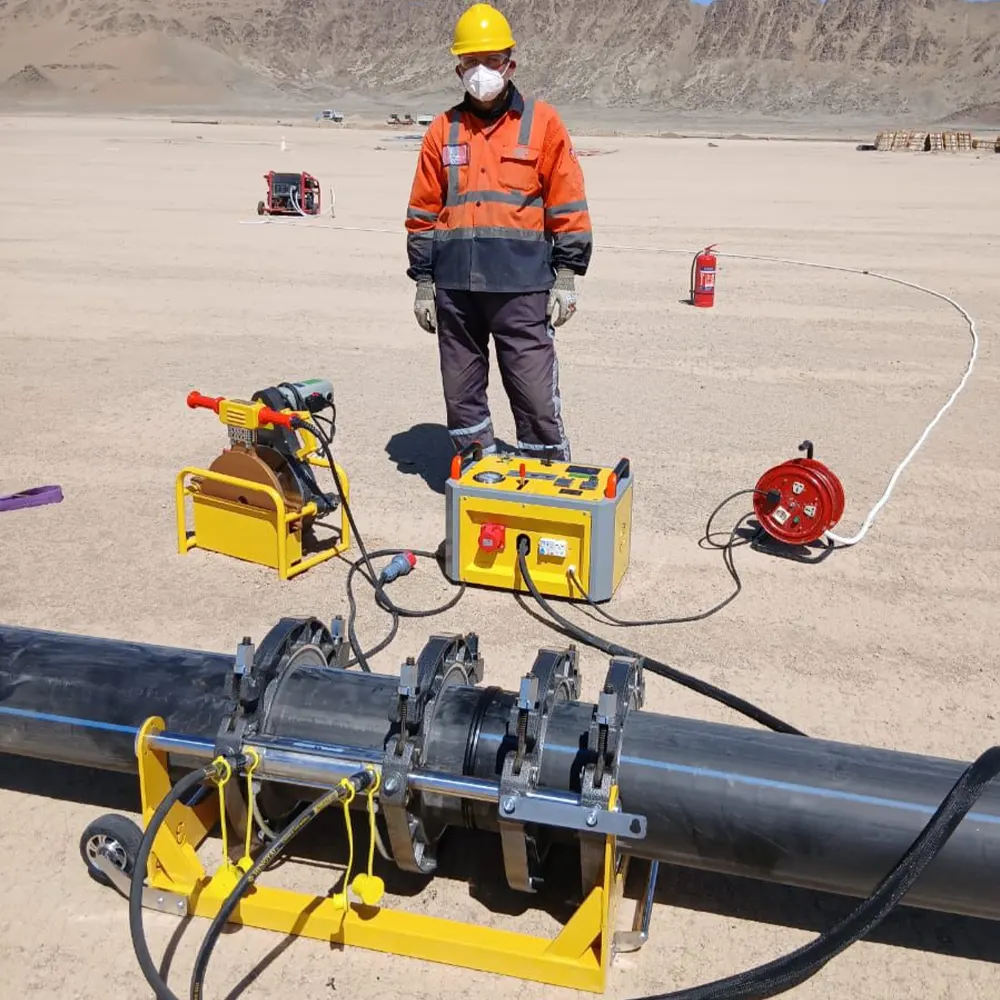
When you invest in an HDPE pipe welding machine, the certification list is not just a technical detail; it is a direct reflection of safety, performance, and long-term value. A well-certified machine can help you reduce welding failures, improve operator confidence, and meet project requirements across water supply, gas distribution, mining, and industrial pipeline applications. For contractors, distributors, and procurement teams, understanding which certifications matter most is the first step toward choosing equipment that will perform reliably in real-world conditions.
In today’s competitive pipeline market, buyers are no longer comparing machines only by price or appearance. They are looking for proof that the equipment is built to international standards, tested under strict quality systems, and supported by a manufacturer with real production capability. That is especially important for a butt fusion machine, where precision temperature control, hydraulic pressure stability, and clamp alignment directly affect weld quality. Certifications can help confirm that the machine is suitable for demanding job sites and global project use.
Before examining specific certificates, it is useful to understand why they matter so much. HDPE butt fusion welding depends on controlled heat, exact timing, and stable pressure. If a machine is poorly manufactured, even the best operator may struggle to produce consistent joints. Certifications do not replace engineering quality, but they do provide external evidence that the machine has been examined against recognized requirements. For buyers, that evidence can reduce risk and simplify supplier selection.
Why Certifications Matter in HDPE Pipe Welding Equipment
Certifications help verify that a machine meets established standards for safety, reliability, and production consistency. They also indicate that the manufacturer has organized quality systems in place, which is especially important when equipment is used in large-scale infrastructure projects. In many cases, project owners or engineering consultants will ask for certificate documents before approving a machine for use.
For distributors, certifications also strengthen market credibility. A certified machine is easier to promote, easier to tender, and more likely to be accepted by customers who demand documented quality. This is particularly true when supplying international projects where compliance requirements can vary from one region to another.
Key point: A certification is not only a label. It is a signal that the machine has been designed and tested with professional standards in mind.
1. ISO 9001 Quality Management Certification
One of the most important certifications to look for is ISO 9001. This certification focuses on quality management systems rather than a single product feature. A manufacturer with ISO 9001 certification has demonstrated that it follows structured processes for design, production, inspection, and customer service. For HDPE pipe welding machines, this means a better chance of receiving equipment that is consistent from one unit to another.
ISO 9001 matters because welding equipment must perform with precision. A machine that passes one inspection but varies widely in the next production batch creates unnecessary project risk. With ISO 9001, buyers can feel more confident that the manufacturer maintains repeatable procedures and continuous improvement practices.
When reviewing ISO 9001 documentation, check whether the certificate is issued by a recognized authority and whether it is still valid. You should also confirm that the scope covers the manufacturer’s welding machine production activities, not just unrelated business operations.
2. CE Certification for European Market Access
If the machine will be used in Europe or sold to customers who require European compliance, CE certification is essential. CE marking indicates that the product meets relevant European safety, health, and environmental protection requirements. For HDPE pipe welding machines, this can cover electrical safety, mechanical safety, and operational risk considerations.
CE certification is especially important for international distributors because it can expand market access and improve buyer trust. Many procurement teams see CE marking as a minimum standard for industrial equipment. Without it, a machine may face delays in customs, sales, or project approval.
📌 Look for clarity: A legitimate CE certificate should be supported by technical documentation, test records, and a declaration of conformity.
Because CE requirements can differ based on machine structure and electrical configuration, it is wise to ask the supplier for detailed compliance files. This is especially valuable when the machine includes hydraulic systems, heating components, or automatic control modules.
3. SGS Testing and Verification
Independent testing by organizations such as SGS can provide another layer of confidence. SGS verification is valued in global trade because it helps confirm that a product has been inspected or tested against defined standards. For HDPE pipe welding machines, SGS-related testing may relate to structural reliability, electrical performance, temperature accuracy, or general quality assessment.
According to the reference information, JQ-Fusion products are manufactured in compliance with international standards and certified by SGS, which is a strong indicator of quality control discipline. For buyers, this kind of third-party validation can be useful when evaluating suppliers from different countries or comparing equipment for critical pipeline projects.
Third-party testing is especially beneficial when you need proof for clients, project consultants, or government tender documents. It adds credibility beyond the manufacturer’s own claims and helps support more transparent purchasing decisions.
4. Electrical and Safety Compliance Documents
In addition to major certifications, buyers should ask for the machine’s electrical and safety compliance documents. These may include insulation testing, grounding verification, emergency stop performance, overload protection, and control cabinet safety information. While not all of these appear as separate certificates, they are still essential indicators of product readiness.
HDPE pipe welding machines often operate in demanding environments where dust, moisture, and temperature changes can affect performance. A machine with strong electrical safety design is less likely to suffer operational interruptions or pose hazards to the operator. This matters even more for hydraulic and automatic models, which may involve more complex control systems.
A good supplier will explain how the machine is tested before shipment. They should be able to provide inspection records for key items such as temperature calibration, pressure consistency, and clamp alignment. These records support the overall certification value and show that quality is not limited to paper documentation.
5. Factory Quality Inspection Reports
Although factory inspection reports are not the same as formal certification, they are highly relevant when selecting an HDPE pipe welding machine. A strong manufacturer should test every machine before delivery. This includes confirming that heating plates reach stable working temperatures, hydraulic pressure remains steady, and the machine structure operates smoothly under load.
For example, JQ-Fusion emphasizes strict quality control, including temperature accuracy, hydraulic pressure stability, and clamp alignment inspection. These factory tests are particularly important for buyers who want predictable performance in the field. Without them, even a certified production system may still ship a poorly adjusted unit if final inspection is weak.
Practical tip: Ask the supplier for a sample inspection report. It should clearly show test items, results, and the date of testing.
What a Reliable Manufacturer Should Be Able to Show You
Certification is only one part of the buying process. A trustworthy manufacturer should also provide evidence of engineering capability, production strength, and after-sales support. When you evaluate a supplier, you are not just choosing a machine; you are choosing a long-term equipment partner.
For example, a manufacturer with over 20 years of industry experience, modern production lines, and a large inventory can often deliver more stable support than a trader with limited technical background. This matters because HDPE pipe welding projects often involve urgent timelines, special voltage needs, and custom machine configurations.
- Production capability: Modern machinery, skilled technicians, and controlled manufacturing processes.
- Customization support: Options for voltage, color, branding, structure, and project-specific design.
- Technical support: Guidance before purchase, during installation, and after delivery.
- Delivery reliability: Ready stock and efficient logistics for urgent projects.
How Certifications Relate to Different Machine Types
Not every HDPE pipe welding machine is used in the same way. Manual models, hydraulic models, and CNC automatic models each have different control requirements and buyer expectations. That is why certification should be viewed in relation to the machine’s function.
Manual butt fusion welding machines may require stronger focus on mechanical accuracy and build quality. Hydraulic machines need reliable pressure control and stable frame alignment. CNC automatic models often require more attention to software, sensors, electrical safety, and repeatable operating logic. In each case, certification should reflect the type of machine and the environment in which it will operate.
If your project involves government infrastructure, gas networks, or export sales, certification becomes even more critical. The higher the risk and compliance burden, the more important it is to request full documentation before purchase.
Warning Signs That a Machine May Not Be Properly Certified
There are several red flags buyers should watch for. A supplier may advertise “international quality” without providing actual certificates. They may show expired documents, unclear testing records, or certificates that do not match the machine model. In some cases, the certificate may cover a different product category entirely.
You should also be careful if the manufacturer refuses to explain test procedures or cannot provide original documents. A genuine supplier will be transparent about their quality process and willing to answer technical questions. This transparency is one of the clearest signs of a reliable partner.
Remember: If the certificate looks impressive but the supplier cannot connect it to real machine performance, you should investigate further before ordering.
Why Global Buyers Prefer Certified Suppliers
Global buyers often choose certified suppliers because certification reduces uncertainty. When a contractor buys welding equipment for multiple project locations, consistency matters. Certified machines are more likely to perform as expected, and certified manufacturers are usually more prepared to support export packaging, shipping documents, and technical communication.
For distributors, certification can also help with brand positioning. It supports better marketing language, improves acceptance in tenders, and creates a more professional customer experience. This is one reason why manufacturers such as JQ-Fusion emphasize compliance, testing, and global support.
In addition, a supplier with OEM and ODM capability can often adapt certifications and technical documents to suit special market needs. This can be important when serving different voltage standards, languages, or regional regulations.
What Certifications Should You Prioritize First?
If you are shortlisting suppliers, the most practical order is usually this: first confirm the manufacturer’s quality management system, then check regional compliance, then review third-party testing, and finally request machine-specific inspection reports. This sequence helps you separate broad company credibility from actual equipment readiness.
For most international buyers, ISO 9001 and CE are the first two certifications to verify. If the supplier also offers SGS verification or equivalent third-party testing, that adds an extra level of reassurance. Beyond these, request factory inspection records, calibration data, and any safety-related documentation that supports the model you plan to buy.
How to Compare Suppliers More Effectively
When comparing HDPE pipe welding machine suppliers, it is not enough to ask whether they have certificates. You should ask how those certificates are applied in production, which models are covered, how recent the documents are, and whether the supplier can provide supporting test reports. This approach gives you a more realistic picture of product quality.
You can also compare after-sales support, inventory capacity, customization ability, and delivery speed. A supplier that offers fast shipping, technical guidance, and tailored solutions can save you time and reduce project interruptions. Certification should be part of a larger evaluation, not the only factor.
Conclusion: Choose Proof, Not Promises
The best certifications for an HDPE pipe welding machine are the ones that can be verified, explained, and connected to real manufacturing quality. ISO 9001, CE marking, SGS testing, electrical safety compliance, and factory inspection records all play an important role in helping buyers make safer, smarter choices. When these documents are backed by strong engineering and transparent support, they become powerful indicators of machine reliability.
For global projects, especially those requiring durable and precise butt fusion performance, certification is not optional decoration. It is part of the foundation of trust between buyer and manufacturer. A well-certified machine can reduce risk, improve weld consistency, and support long-term project success.
Frequently Asked Questions
Q1: Is ISO 9001 enough to guarantee machine quality?
No. ISO 9001 shows the manufacturer has a quality management system, but you should also check product-specific tests, safety documents, and actual machine performance.
Q2: Do all HDPE pipe welding machines need CE certification?
Not always, but CE is essential if the machine will be sold or used in markets that require European compliance or if the buyer specifically requests it.
Q3: Why is third-party testing important?
Third-party testing provides independent verification that supports the manufacturer’s claims and helps buyers trust the machine’s quality and safety.
Q4: What should I ask for before buying a welding machine?
Ask for certificates, machine inspection reports, calibration records, electrical safety information, and confirmation that the documents match the exact model you want.
Q5: Can a certified machine still fail in the field?
Yes. Certification improves confidence, but correct operation, maintenance, installation, and operator training are still necessary for reliable field performance.



