
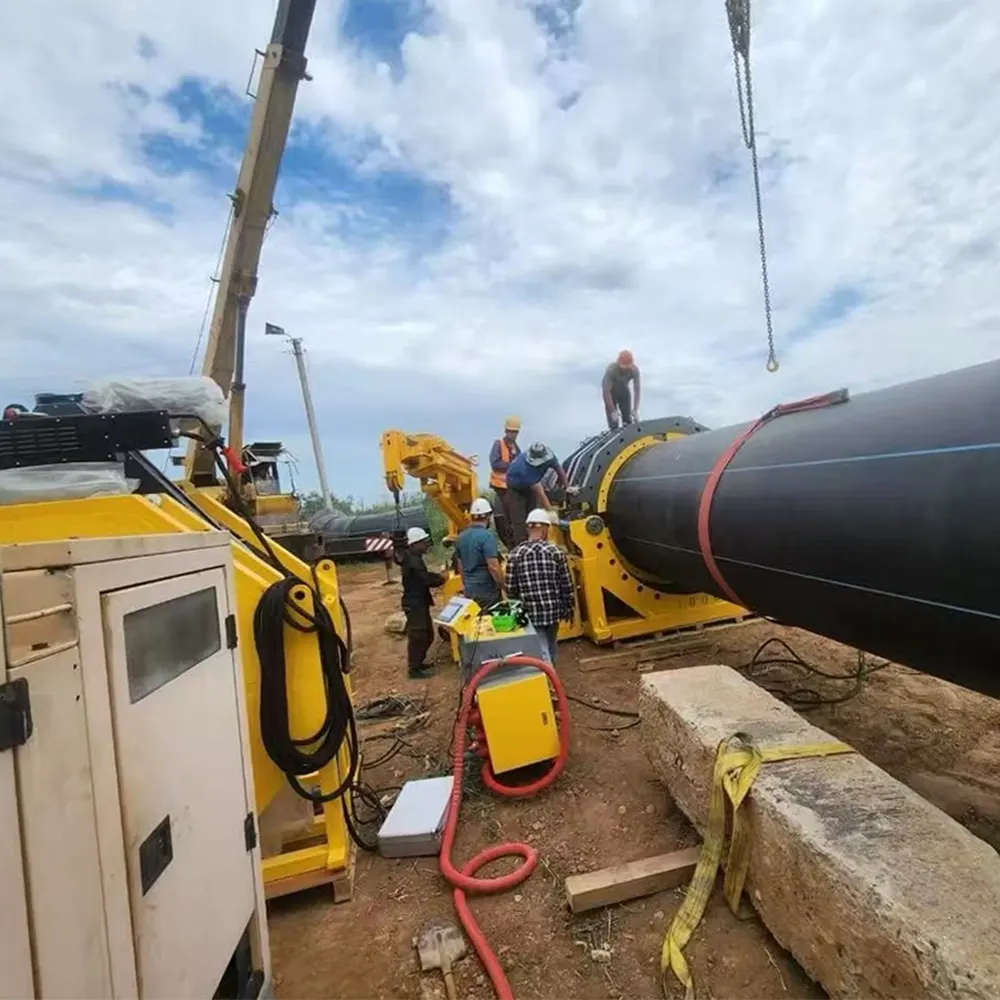
Electrofusion welding is a widely used method for joining polyethylene pipes, especially in gas and water distribution networks. While it offers advantages such as speed and suitability for confined spaces, failures can occur if proper procedures are not followed. Understanding the root causes of these failures is crucial for ensuring pipeline integrity and safety.
Primary Causes of Electrofusion Welding Failures
The success of an electrofusion weld depends on a precise combination of material, equipment, and technique. Deviations in any of these areas can lead to joint failure.
1. Improper Surface Preparation
This is arguably the most common cause of failure. The pipe and fitting surfaces must be perfectly clean, dry, and free of contaminants.
- Oxidation: Failure to scrape off the oxidized surface layer of the pipe prevents proper fusion.
- Contaminants: Dirt, grease, moisture, or dust act as a barrier between the melting materials.
- Incorrect Scraping: Using the wrong scraping tool or technique, or not scraping to the correct depth and length.
2. Incorrect Clamping and Alignment
Poor alignment creates stress points and uneven heating within the fitting.
Misalignment: Axial or angular misalignment prevents uniform contact between the pipe and the fitting’s heating element.
Insufficient Restraint: If the pipe is not properly clamped or if it moves during the cooling phase, the molten material can be disturbed, creating a weak joint.
3. Welding Parameter Errors
Electrofusion fittings are designed to be welded at specific voltages and for a predetermined time.
Incorrect Voltage/Time: Using a welder with the wrong output or setting an incorrect welding time leads to under-heating (cold weld) or over-heating (degradation of the polymer).
Ambient Temperature Ignorance: Cold environments require longer cool-down times. Failing to adjust for this can cause the joint to be stressed before it has fully solidified.
4. Equipment and Material Issues
The quality of the tools and materials used is fundamental.
Faulty or Uncalibrated Welder: A welder that does not deliver the correct, stable voltage will produce inconsistent results.
Non-Compatible Materials: Using pipes and fittings from different manufacturers or with different melt flow indices (MFI) can prevent proper fusion.
Damaged Fittings: Using fittings with exposed, damaged, or dirty heating coils.
Comprehensive Prevention Strategies
Preventing electrofusion welding failures requires a systematic approach focused on training, procedure, and quality control.
1. Rigorous Training and Certification
All operators must be formally trained and certified in electrofusion techniques. Training should cover not just the “how” but the “why” behind each step, emphasizing the consequences of shortcuts.
2. Strict Adherence to Procedures (WPS)
Develop and follow a detailed Welding Procedure Specification (WPS) for every project. This document should mandate:
- ✔ The exact scraping procedure (tool, depth, length).
- ✔ Cleaning methods (approved cleaning agents, wiping direction).
- ✔ Clamping and alignment tolerances.
- ✔ Welding parameters (voltage, time) adjusted for ambient conditions.
- ✔ Mandatory cooling time before handling.
3. Investment in Quality Equipment
Use only well-maintained, calibrated welding machines from reputable suppliers. Similarly, source pipes and fittings from certified manufacturers that guarantee material compatibility. For other critical joining methods, such as butt fusion, using a reliable butt fusion machine is equally important for project success.
4. Robust Quality Control and Inspection
Implement a multi-stage inspection process:
Visual Inspection: Check for proper scraping marks, cleanliness, alignment, and the presence of the indicator bead (melt bead) around the fitting’s ports after welding.
Process Verification: Use welders with data logging capabilities to record voltage, time, and ambient temperature for each weld, creating an auditable trail.
Destructive Testing: Periodically perform destructive tests on sample welds (e.g., tensile testing, peel tests) to validate the procedure and operator skill.
5. Environmental Control
Protect the work area from wind, rain, dust, and extreme temperatures. Use shelters or tents when working in adverse conditions. Always store fittings in a clean, dry environment.
Partnering for Success: The Role of Equipment Manufacturers
The reliability of welding equipment is a cornerstone of prevention. Partnering with a professional manufacturer like JQ-Fusion provides significant advantages. With over 20 years of experience, they focus on delivering high-quality, durable welding solutions. Their commitment to strict quality control ensures every machine, including their range of electrofusion and butt fusion machine units, undergoes comprehensive testing for performance stability. Furthermore, their flexible OEM & ODM customization allows for equipment tailored to specific project needs, while their global technical support ensures operators have the guidance needed to avoid procedural errors. Choosing a partner with proven industry experience and reliable equipment is a proactive step in preventing welding failures.
Frequently Asked Questions (FAQs)
Q1: Can a visually good electrofusion weld still be faulty?
A: Yes. A weld can look perfect on the outside but have internal flaws like cold fusion or contamination. This is why process control (data logging) and occasional destructive testing are essential.
Q2: How critical is the cooling time after welding?
A: Extremely critical. Disturbing the joint before the polyethylene has fully crystallized will introduce stress and weaken the bond. Always follow the manufacturer’s specified cooling time, which increases in cold weather.
Q3: What is the single most important step to prevent failure?
A: While all steps are important, proper surface preparation—specifically correct scraping and cleaning—is the most frequently cited root cause of failure and should be given utmost attention.
Q4: Are electrofusion fittings from different brands interchangeable?
A: Not without verification. Materials and coil designs vary. Always consult the fitting and pipe manufacturers’ guidelines to ensure compatibility of materials and welding parameters.
Q5: How often should welding equipment be calibrated?
A: Welding machines should be calibrated at least annually, or more frequently as per the manufacturer’s recommendation or after any suspected impact or damage. Daily checks of cables and connectors are also advised.



