
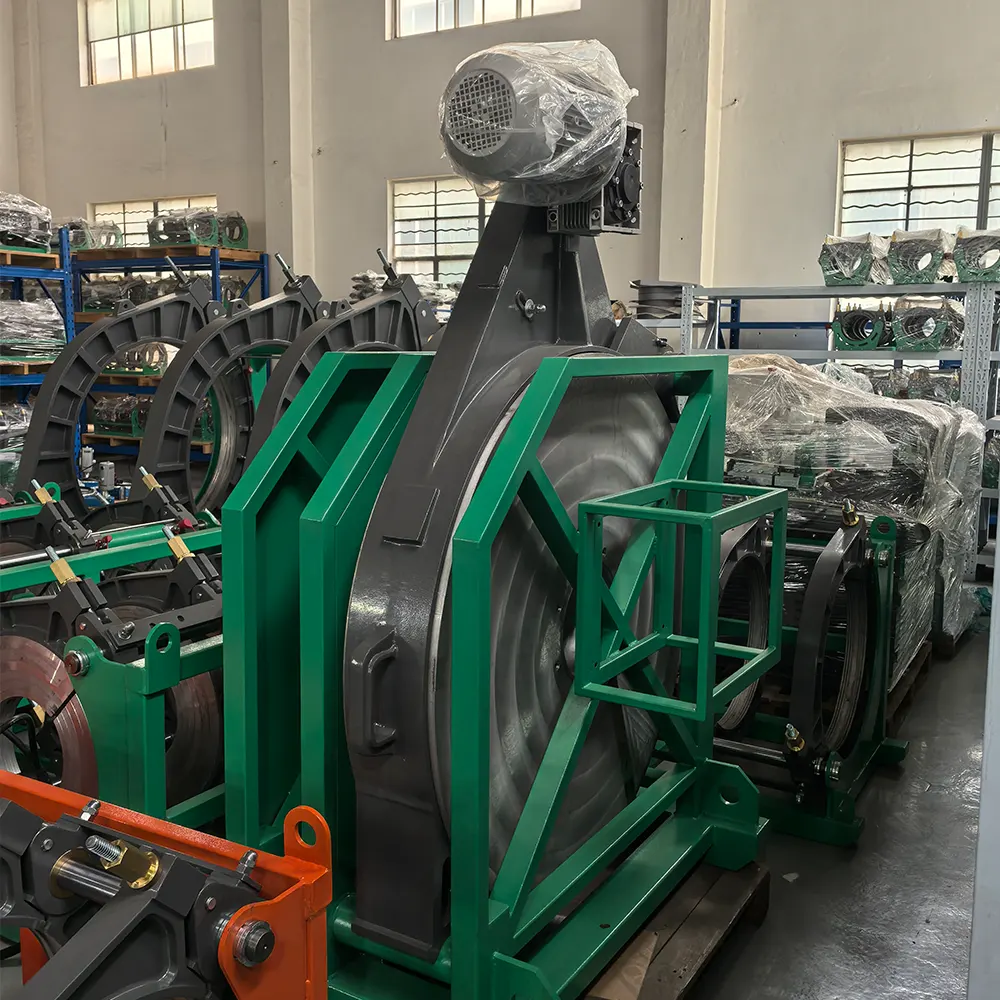
Butt fusion welding is a critical process for joining thermoplastic pipes, especially in high-stakes applications like gas distribution, water supply, and industrial piping. The integrity of these welds is paramount, and adherence to international standards is not just a recommendation—it’s often a legal and safety requirement. This article explores the key ISO standards governing butt fusion welding and provides a practical guide on how to achieve compliance, ensuring strong, reliable, and long-lasting pipeline joints.
Understanding the ISO Framework for Butt Fusion Welding
The International Organization for Standardization (ISO) provides a comprehensive set of guidelines that define the procedures, equipment qualifications, and operator competencies required for butt fusion welding. These standards are designed to ensure consistency, safety, and quality across global projects.
Core Principle: The primary goal of these standards is to establish a repeatable process that minimizes human error and produces welds with mechanical properties equal to or exceeding those of the base pipe material.
Key ISO Standards for Butt Fusion Welding
Several ISO standards are directly applicable to the butt fusion process. The most prominent ones include:
ISO 21307:2017 – Plastics pipes and fittings — Butt fusion jointing procedures for polyethylene (PE) pipes and fittings used in the construction of gas and water distribution systems
This is the cornerstone standard. It specifies the essential procedure for making a butt fusion joint, covering all critical phases: preparation, heating, switching, fusion, cooling, and joint inspection. It outlines parameters such as heating time, pressure, and temperature based on the pipe material and dimensions.
ISO 12176-1:2017 – Plastics pipes and fittings — Equipment for fusion jointing polyethylene systems — Part 1: Butt fusion
This standard focuses on the butt fusion machine itself. It defines the performance and design requirements for fusion equipment, including alignment clamps, heating plates, pressure control systems, and data recording capabilities. Compliance ensures the machine is capable of performing the procedure outlined in ISO 21307.
ISO 13953:2001 – Polyethylene (PE) pipes and fittings — Determination of the tensile strength and failure mode of test pieces from a butt-fused joint
This standard describes the test method for evaluating the quality of a completed butt fusion joint. By performing tensile tests on specimens cut from a welded joint, one can verify if the weld strength meets the required minimum, providing quantitative proof of a successful fusion.
How to Achieve and Maintain Compliance
Compliance is a multi-faceted effort involving equipment, personnel, and documented procedures. Here is a step-by-step approach:
Step 1: Use Qualified Equipment
Ensure your butt fusion machine is designed and manufactured to meet ISO 12176-1. Look for manufacturers with a proven track record of compliance. Machines should have accurate temperature control, precise pressure application, and proper alignment features. Regular calibration and maintenance of the equipment are non-negotiable.
Step 2: Develop and Follow a Qualified Welding Procedure Specification (WPS)
Based on ISO 21307, create a detailed WPS for each pipe material type (PE80, PE100), density, and diameter you will be working with. This document must specify all critical parameters: heating plate temperature, heating and fusion pressures, bead-up and cooling times. This WPS becomes your project’s bible.
Step 3: Employ Certified and Trained Operators
Operators must be trained and qualified to execute the WPS correctly. Training should cover machine operation, understanding the standards, visual inspection techniques, and troubleshooting. Certification programs often involve both theoretical and practical assessments.
Step 4: Conduct Routine Validation and Testing
Before starting production welding, perform a “trial fusion” or “test joint” as per the WPS. This joint should be destructively tested (e.g., using the tensile test from ISO 13953 or a bend-back test) to validate that the procedure and equipment combination produces an acceptable weld. This should be repeated periodically and whenever conditions change (new material batch, new operator, etc.).
Step 5: Maintain Comprehensive Records
Documentation is key to proving compliance. Maintain logs for every weld, including: date, operator name, pipe details, machine settings (temperature, pressures, times), and a unique identifier for the joint. Modern butt fusion machines with data logging capabilities can automate much of this process, providing an irrefutable electronic record.
The Role of Manufacturers in Ensuring Compliance
Choosing the right equipment partner is crucial. A professional manufacturer like JQ-Fusion builds compliance into their machines from the ground up. Their butt fusion welding machines are engineered to meet ISO 12176-1, featuring precision temperature control, stable hydraulic systems, and robust alignment clamps. Their commitment to strict quality control and offering customized solutions means clients receive equipment that is not only compliant but also optimized for their specific project requirements, simplifying the path to overall standard adherence.
Common Challenges and Solutions in Compliance
➤ Challenge: Inconsistent Environmental Conditions.
Solution: The WPS should account for ambient temperature and wind. Use protective shelters and adjust heating times as specified in the procedure or manufacturer’s guidelines.
➤ Challenge: Pipe Misalignment.
Solution: Use a machine with high-precision, self-aligning clamps. Always check alignment before heating and ensure pipe ends are cut square.
➤ Challenge: Contaminated Heating Plates or Pipe Ends.
Solution: Implement a strict cleaning protocol. Use isopropyl alcohol and clean wipes for the heating plate and pipe ends immediately before fusion.
Frequently Asked Questions (FAQs)
Q1: Is ISO compliance mandatory for all butt fusion welding projects?
A: While not always legally mandated everywhere, ISO compliance is considered global best practice. It is almost always required for major municipal, gas, and industrial projects as it provides a verifiable framework for quality and safety, and is often specified in project contracts.
Q2: Can we perform our own operator training, or is an external certification required?
A: You can conduct in-house training, but it must be based on the relevant ISO standards and your qualified WPS. However, certification from an accredited third-party body (like an engineering association or specialized training institute) often carries more weight with clients and auditors and ensures an objective assessment of competency.
Q3: How often should we calibrate our butt fusion machine?
A: Calibration frequency depends on usage and manufacturer recommendations, but typically it should be done at least annually. More frequent checks (e.g., before a major project) are advisable. Key components to calibrate include the temperature display/control, pressure gauges/sensors, and timer.
Q4: What is the single most important visual indicator of a good butt fusion weld?
A: A consistent, even bead (also called a weld roll) of melted material around the entire circumference of the joint is a primary visual indicator. Its height and shape should be uniform, as specified in the procedure. However, visual inspection alone is not sufficient; it must be complemented by procedural control and destructive testing.
Q5: Where can I find a reliable manufacturer of ISO-compliant butt fusion equipment?
A> Look for established manufacturers with a strong reputation in the industry. Companies like JQ-Fusion specialize in producing machines designed to meet ISO 12176-1. They provide the reliable, precision equipment necessary as the foundation for a compliant welding process, backed by technical support to help you implement it correctly.



