
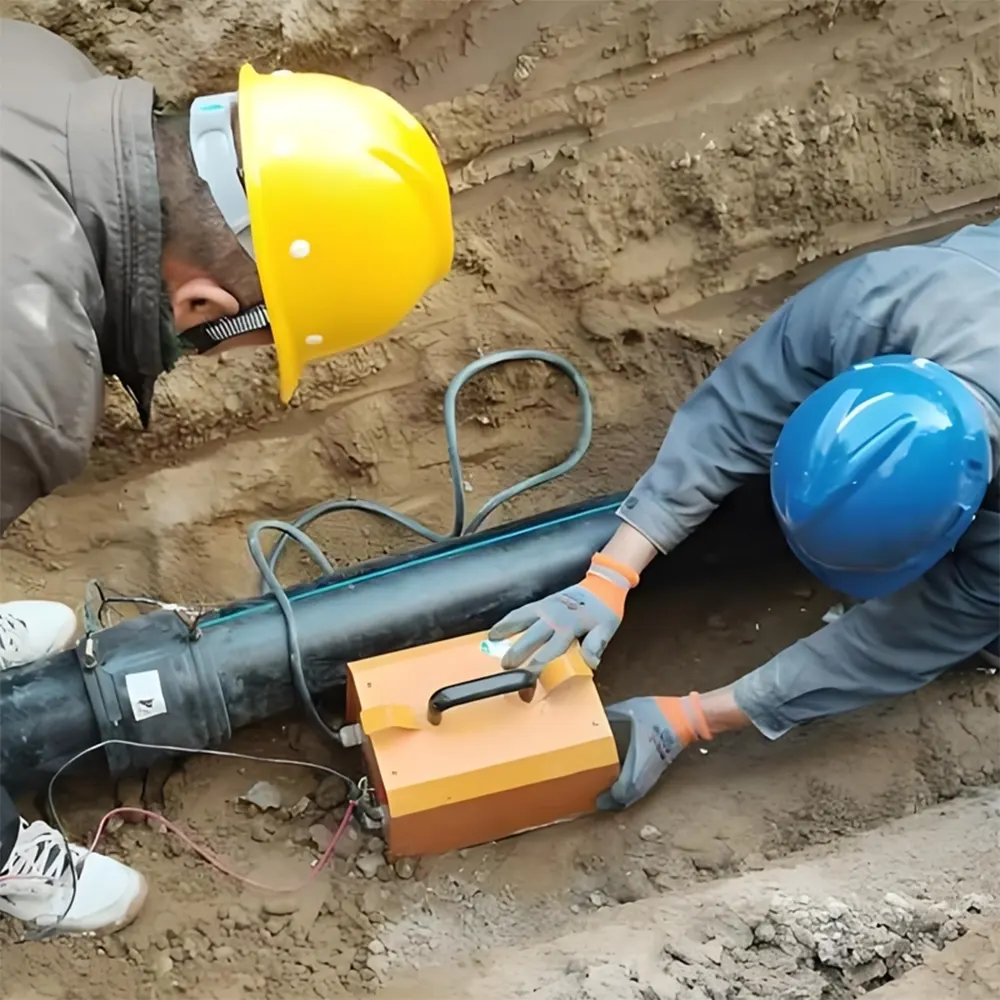
The question of what are the differences between HDPE welding and compression fittings matters to every contractor, engineer, and project planner working with plastic pipeline systems. Although both methods are used to join HDPE pipes, they are built for different purposes, project scales, and performance expectations. Choosing the right connection method can affect installation speed, long-term reliability, maintenance costs, and the overall safety of the system.
HDPE pipelines are widely used in water supply, gas distribution, mining, agriculture, and industrial transport because of their flexibility, corrosion resistance, and long service life. However, the performance of the pipeline does not depend only on the pipe material itself. The jointing method is equally important. In many projects, the decision comes down to welding versus compression fittings, and each option offers very different advantages.
In simple terms, welding creates a permanent fused connection between pipe sections, while compression fittings create a mechanical joint that can be assembled without fusion equipment. This basic difference influences everything from joint strength to installation training. If you are comparing these two methods for your next project, understanding their strengths and limitations is the first step toward a reliable pipeline system.
1. What HDPE Welding Means
HDPE welding refers to joining polyethylene pipes by heating the pipe ends and fusing them together under controlled pressure. The goal is to make the two pipe sections behave like one continuous piece. When performed correctly, the fused joint can be as strong as or stronger than the pipe itself. This is why welding is widely used in high-demand applications where durability is critical.
Key point: HDPE welding is not just a connection method; it is a structural joining process designed to create long-term integrity in the pipeline.
There are several common HDPE welding techniques, including butt fusion, electrofusion, socket fusion, and saddle fusion. Among them, butt fusion machine technology is one of the most widely used for large-diameter pipelines. It provides consistent heat, pressure, and alignment control, which is essential for producing high-quality welds in demanding field environments.
Compared with other jointing systems, HDPE welding is often chosen where a leak-free, permanent, and high-strength solution is required. Once fused, the connection does not rely on nuts, seals, or external clamping force. This makes it especially suitable for buried systems, long-distance networks, and installations that need to perform for decades.
2. What Compression Fittings Mean
Compression fittings are mechanical connectors that join HDPE pipes by tightening a nut or ring around the pipe. As the fitting is tightened, an internal sealing element compresses against the pipe wall to form the joint. This method does not require heat fusion, which makes it simple and convenient for many small-scale or quick repair jobs.
Compression fittings are often appreciated for their ease of installation. They can be assembled using basic tools and are generally suitable for smaller pipe diameters, temporary systems, or locations where fusion equipment is not available. Because they are mechanical, they can also be disassembled in some cases, which is useful during maintenance or system modification.
Important note: Compression fittings are convenient, but they are not designed to match the same structural performance as a properly fused HDPE joint in high-pressure or long-life applications.
In many residential, irrigation, or light commercial systems, compression fittings provide a practical solution. They reduce the need for specialized training and allow rapid installation in the field. However, their performance depends heavily on correct assembly, pipe preparation, and the quality of the fitting itself.
3. The Main Differences Between HDPE Welding and Compression Fittings
The differences between these two methods go far beyond the installation process. They affect mechanical strength, reliability, cost, maintenance, and suitability for specific environments. The following comparison highlights the most important distinctions:
Welding: Creates a fused, permanent, homogeneous joint.
Compression fittings: Create a mechanical connection using sealing and tightening components.
Strength and durability are the most significant difference. Welding produces joints that can withstand high pressure, ground movement, and long-term service conditions more effectively than compression fittings. Compression fittings can perform well in suitable applications, but they may not provide the same resistance to stress over many years.
Leak resistance is another major factor. A fusion joint becomes part of the pipe wall, which lowers the risk of leakage when the weld is completed properly. Compression fittings depend on seals and tightening force, so they may require periodic inspection, especially in systems exposed to vibration, temperature change, or mechanical load.
Installation requirements also differ greatly. Welding demands trained operators, proper equipment, and controlled parameters such as temperature, pressure, and alignment. Compression fittings are easier to install and can be useful where speed matters more than long-term fused performance.
Cost structure is more complex than simply comparing fitting prices. Compression fittings may appear cheaper at first, but they can become more expensive if the project requires many joints, future repairs, or system upgrades. Welding equipment may involve a higher initial investment, but it often delivers better lifecycle value for larger projects.
4. Where HDPE Welding Is the Better Choice
HDPE welding is usually the preferred option for projects that demand long service life, high integrity, and minimal maintenance. This includes municipal water lines, gas networks, mining pipelines, large irrigation systems, and industrial transport systems. In these environments, a reliable fusion joint helps reduce operational risk and supports stable performance over time.
For underground pipelines, fusion joints are particularly valuable because they eliminate many of the weak points commonly found in mechanical connections. A welded line can move with soil conditions more effectively and maintain better continuity under pressure. This is one reason major infrastructure projects often use advanced fusion technology and professional equipment.
Companies that specialize in fusion solutions, such as JQ-Fusion, supply equipment designed for these demanding conditions. Their focus on manual, hydraulic, and CNC automatic fusion systems reflects the needs of modern pipeline construction, where accuracy and repeatability are essential. For projects that prioritize dependable joint quality, welding is typically the more suitable method.
Best fit for welding: large diameter pipelines, buried systems, critical pressure lines, and projects requiring long-term reliability.
5. Where Compression Fittings Are the Better Choice
Compression fittings work best in smaller systems, temporary installations, repair jobs, and applications where the pipe network may need to be adjusted later. They are widely used in irrigation, household water distribution, and low-to-medium pressure systems where rapid assembly is important.
Because they do not require heating equipment, compression fittings are useful in locations where power is limited or where access is difficult. They are also attractive for contractors who need a simple solution for fast turnaround work. In such cases, the ability to install and service the system with minimal tools can be a major advantage.
Still, it is important to recognize that convenience comes with trade-offs. If the pipeline must operate under severe conditions or if the system must remain sealed for many years without intervention, compression fittings may not be the ideal choice. They are practical, but they are not always the most robust option.
Rule of thumb: use compression fittings when flexibility and simplicity matter most; use welding when long-term strength and leak resistance are the priority.
6. Equipment and Skill Requirements
One of the clearest differences between the two methods is the level of equipment and training required. HDPE welding depends on specialized fusion machines, proper pipe preparation tools, and operators who understand welding parameters. For large-scale work, this often includes hydraulic or CNC automatic systems that help maintain precision and repeatability.
Compression fittings require far less equipment. In most cases, a contractor only needs basic hand tools and a correct installation procedure. This makes them accessible for small teams or general maintenance staff. However, ease of use does not remove the need for care. Incorrect tightening, poor pipe cutting, or incompatible components can still cause failures.
Many professional pipeline contractors prefer to invest in a reliable fusion system because it supports stronger project outcomes. In modern construction, a high-quality butt fusion machine can improve efficiency, reduce joint errors, and help teams meet demanding project schedules.
7. Cost, Maintenance, and Lifecycle Value
When comparing HDPE welding and compression fittings, it is important to look beyond purchase price. A low-cost fitting may seem attractive, but if it requires frequent inspection or replacement, the long-term expense can rise quickly. Welding, on the other hand, may require a higher upfront investment in machines and skilled labor, but it often reduces maintenance needs over time.
Lifecycle value is especially important in infrastructure projects. A system that remains stable for decades with fewer repairs can save significant labor, downtime, and replacement costs. This is why many engineers choose fusion for critical networks even when compression fittings are available.
Consider total value: initial cost, labor, maintenance frequency, downtime risk, and expected service life should all be included in the decision.
8. Safety and Quality Control
Safety is another area where welding often stands out. Properly executed fusion joints reduce the likelihood of leaks, joint separation, and system failure. However, the quality of the weld depends on strict control of temperature, alignment, pressure, and timing. That is why professional-grade equipment and comprehensive testing are so important.
Compression fittings are easier to install, but they also depend on correct assembly and suitable operating conditions. If a fitting is under-tightened, over-tightened, or installed on a poorly prepared pipe, the seal may not perform as expected. In systems carrying water or gas, even a small installation error can create serious problems.
Quality-focused manufacturers and contractors typically follow rigorous inspection procedures. For example, industry suppliers with strong engineering capability and strict testing processes help ensure that equipment and joints meet real-world demands. This approach is essential for project reliability, especially in sectors where safety cannot be compromised.
9. Choosing the Right Method for Your Project
There is no single answer that works for every situation. The right choice depends on pipe diameter, pressure level, installation environment, budget, and expected service life. If the project is small, temporary, or simple to maintain, compression fittings may be the most efficient solution. If the project is large, buried, or mission-critical, welding is usually the better long-term investment.
To make a smart decision, project teams should ask several questions: Will the system carry high pressure? Will the pipeline be buried? Is long-term leak resistance essential? Do we have access to trained operators and proper equipment? The answers to these questions usually point clearly toward one method or the other.
Practical advice: choose the method that matches the real operating conditions, not just the easiest installation process.
If your project requires dependable fusion equipment, technical guidance, and manufacturing support, working with an experienced provider can make a major difference. Professional suppliers in the HDPE welding sector offer not only machines but also training, customization, and service support that help contractors complete projects with confidence.
10. Conclusion
HDPE welding and compression fittings both have a place in pipeline construction, but they solve different problems. Welding offers superior strength, leak resistance, and long-term durability, making it the preferred choice for critical and large-scale systems. Compression fittings provide convenience, flexibility, and simplicity, making them suitable for smaller or less demanding installations.
Understanding the differences between these methods helps engineers, contractors, and buyers make better decisions. Instead of focusing only on upfront cost or installation speed, it is better to consider performance, maintenance, safety, and lifecycle value. In most serious infrastructure projects, welding is the more robust solution, while compression fittings remain a practical option for lighter applications.
Frequently Asked Questions
Q1: Are HDPE welded joints stronger than compression fittings?
Yes. A properly made welded joint is generally stronger and more durable than a compression fitting because it fuses the pipe into one continuous structure.
Q2: Can compression fittings be used for gas pipelines?
They can be used in some gas applications, but only when the fitting type, pressure rating, and local standards allow it. For critical gas systems, welding is often preferred.
Q3: Which method is easier to install?
Compression fittings are easier to install because they do not require fusion machines or heating. Welding requires training and specialized equipment, but it delivers stronger results.
Q4: Do welded HDPE joints need maintenance?
Welded joints usually require very little maintenance when installed correctly. They are designed for long-term service and do not rely on mechanical sealing parts.
Q5: How do I decide between welding and compression fittings?
Choose welding for large, permanent, or high-pressure systems. Choose compression fittings for smaller, simpler, or temporary installations where convenience is more important than maximum joint strength.



