
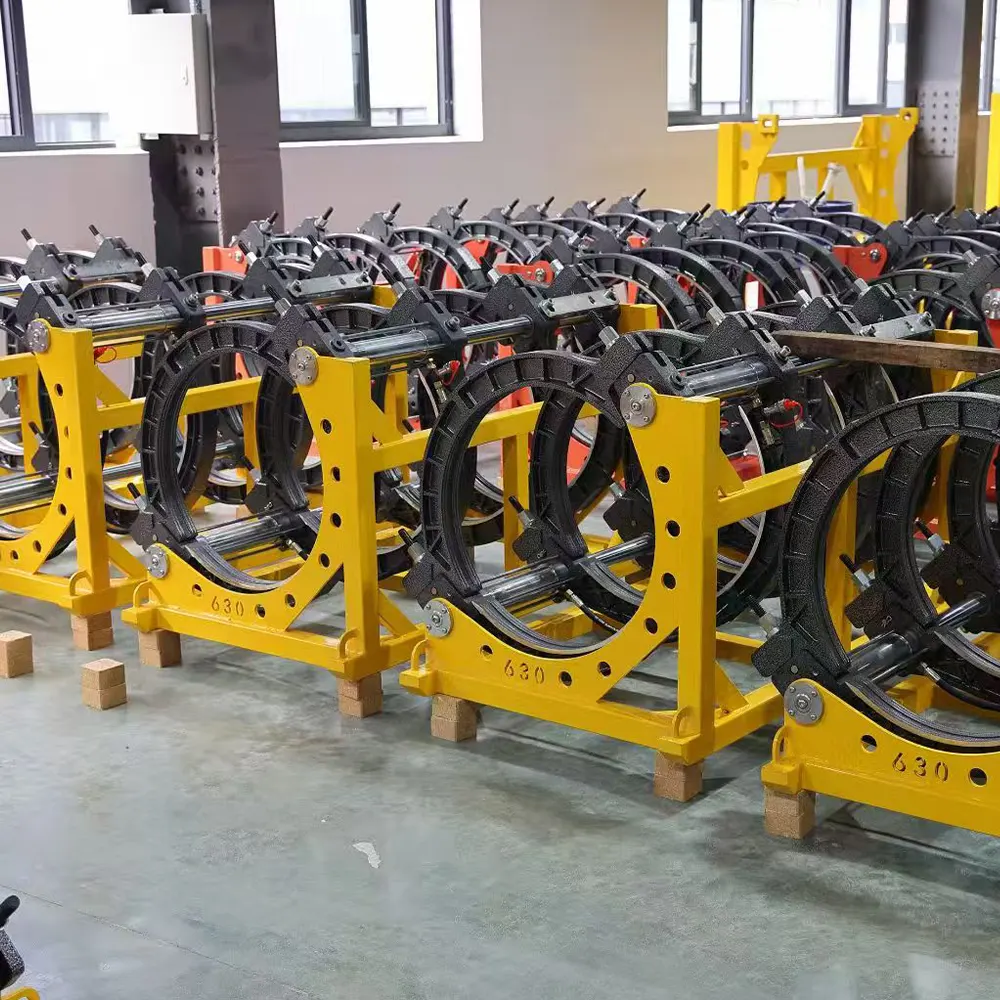
The oil and gas industry demands precision, safety, and durability at every stage of pipeline construction and maintenance. When contractors work in remote fields, harsh weather, or high-pressure environments, the welding equipment they choose can directly affect project quality, schedule, and long-term reliability. This is why selecting the butt fusion machine and other suitable welding solutions is not just a purchasing decision, but a strategic investment in performance and safety.
For oil and gas contractors, welding machines must handle thick-wall materials, deliver repeatable results, and support demanding on-site workflows. A machine that performs well in controlled shop conditions may fail to meet the expectations of field installation. Contractors therefore need equipment that combines stable temperature control, dependable clamping force, and easy operation, while also adapting to different pipe sizes and project specifications.
In pipeline projects, welding quality is often measured not only by appearance but by the strength and integrity of the joint. A weak seam can lead to leaks, production delays, environmental hazards, and costly rework. That is why many pipeline teams focus on machines designed for thermoplastic and HDPE pipe joining, particularly in auxiliary systems, water injection lines, gas distribution support lines, and industrial utility pipelines associated with oil and gas operations.
When comparing the best welding machines for oil and gas contractors, it is useful to look beyond basic price and consider the full project lifecycle. The right machine should improve installation speed, reduce dependency on operator skill, and support consistent output across multiple job sites. It should also be easy to maintain, simple to transport, and backed by responsive technical support.
Key point: In oil and gas work, the best welding machine is the one that balances field durability, precision control, and long-term reliability, not simply the one with the highest output rating.
What Oil and Gas Contractors Need from a Welding Machine
Oil and gas contractors operate under strict deadlines and tough working conditions. Their welding equipment must be able to support heavy-duty tasks without frequent breakdowns or performance drift. A machine that overheats, loses pressure stability, or requires constant recalibration will slow down the job and increase labor costs.
One of the most important requirements is process consistency. Whether a team is welding pipes for a gathering system, a gas distribution support line, or a plant utility network, every joint should meet the same standard. This consistency is especially important on projects where inspections and compliance checks are frequent.
Another critical factor is portability. Many oil and gas projects take place in locations where infrastructure is limited. Equipment may need to be moved across rough terrain, loaded into trucks, or operated in temporary work areas. A practical machine should be robust enough for field use while still being manageable for transport and setup.
Contractors also value adaptability. A welding machine that can support different pipe diameters and configurations gives project managers more flexibility. Instead of buying several different systems, they can use one machine platform across multiple phases of a project, improving efficiency and lowering total equipment cost.
Why this matters: A suitable welding machine helps contractors maintain quality standards, reduce rework, and keep field crews productive even when the job site conditions are challenging.
Best Welding Machine Types for Oil and Gas Contractors
Not every welding machine is ideal for oil and gas applications. The best choice depends on the pipe material, diameter range, project type, and desired automation level. Below are the machine types most often considered for demanding pipeline work.
1. Hydraulic Butt Fusion Welding Machines
Hydraulic butt fusion welding machines are a strong choice for contractors who need dependable performance across a wide pipe size range. These machines use hydraulic pressure to align and fuse pipe ends with accuracy, making them suitable for medium to large pipeline systems. Their stable clamping force helps produce clean, strong joints that support long service life.
For oil and gas contractors, hydraulic models are especially useful in projects where repeatability matters. They can handle demanding site conditions and are often preferred for their balance of power and control. If the project involves HDPE pipe systems or auxiliary process lines, hydraulic fusion equipment is often one of the most practical options.
Best for: contractors handling medium to large diameter pipes, field installations, and projects requiring consistent fusion quality.
2. Automatic Butt Fusion Welding Machines
Automatic butt fusion welding machines are ideal when precision and efficiency are top priorities. These systems reduce operator dependence by controlling welding parameters more accurately, helping contractors achieve uniform results with less manual adjustment. In large projects, this can significantly improve productivity and reduce the risk of human error.
In oil and gas environments, automation brings a major advantage: it helps standardize output across multiple crews and shifts. This is useful for contractors managing large installations or working with tight quality assurance requirements. An automatic machine can also shorten training time for new operators, since the system helps guide key process variables.
For companies focused on long-term efficiency and job-site consistency, automated fusion technology can be a smart investment. It is particularly valuable when the same specifications must be repeated many times across a project.
3. Manual Butt Fusion Welding Machines
Manual butt fusion welding machines remain useful for smaller-scale jobs or special situations where simplicity and lower initial cost are important. These systems are often easier to transport and operate in compact environments. Although they require more operator attention, they can still deliver reliable results when used by trained personnel.
For contractors working on limited-access sites, emergency repairs, or smaller support pipelines, manual systems can be a practical option. They are especially effective when the project does not justify a larger automated setup. However, success depends more heavily on the skill of the operator, so training and supervision remain important.
4. Electrofusion Welding Machines
Electrofusion welding machines are widely used for joining fittings in gas and fluid pipeline systems. They are valued for their ability to create reliable connections in tight spaces or areas where traditional fusion equipment may be difficult to use. Contractors often choose electrofusion solutions for repair work, branch connections, and special installation conditions.
In oil and gas related infrastructure, electrofusion can be especially useful where precise fitting connections are needed. The method supports clean installation and can reduce the complexity of some field tasks. While it is not always a replacement for butt fusion, it is an important complementary solution in many pipeline projects.
Important Features to Look For
When comparing welding machines, oil and gas contractors should evaluate the machine as a complete working system rather than focusing on one feature alone. Several technical and practical details can make a major difference on the job site.
Temperature accuracy is one of the most important factors. If heating is unstable, the fusion joint may be weak or inconsistent. Reliable temperature control helps ensure that each pipe end is heated properly before joining.
Hydraulic pressure stability is equally important for butt fusion systems. Stable pressure helps maintain proper alignment and fusion force throughout the cycle, reducing the chance of defects. This is essential for applications where long-term sealing performance matters.
Clamp alignment should also be carefully assessed. Good alignment helps prevent joint distortion and makes the fusion process more repeatable. Machines with precise clamps are often easier to work with in demanding field conditions.
Durability and build quality matter because oil and gas jobs often involve dust, vibration, temperature changes, and rough handling. A machine built with strong materials and tested components will last longer and require less downtime.
Control simplicity can improve productivity. Operators should be able to understand the workflow quickly, especially when multiple teams are working on the same site. Clear interfaces and logical controls reduce mistakes and training time.
Practical tip: Ask whether the machine has been tested for temperature accuracy, hydraulic stability, and clamp alignment before purchasing. These three checks often reveal whether the equipment is ready for real project demands.
Why JQ-Fusion Is a Strong Option for Contractors
JQ-Fusion has built a reputation as a professional manufacturer specializing in HDPE pipe welding machines and butt fusion solutions. With more than 20 years of industry experience, the company focuses on manual, hydraulic, and CNC automatic machines designed for a variety of pipeline applications. This makes it a useful supplier for contractors seeking dependable equipment for oil and gas related infrastructure work.
The company’s product range covers a wide selection of pipe diameters, which is helpful for contractors handling both smaller support lines and larger installations. Their machines are used in water supply systems, gas distribution networks, mining projects, and industrial pipeline installations worldwide, showing that they are designed for practical, real-world use.
One of the main strengths of JQ-Fusion is its manufacturing capability. The factory uses modern production lines and precision machining equipment to support stable performance and consistent product quality. For contractors, this means fewer surprises in the field and more confidence in long-term machine reliability.
JQ-Fusion also emphasizes strict quality control. Each machine undergoes testing for temperature accuracy, hydraulic pressure stability, and clamp alignment. These checks are especially important for contractors who cannot afford welding defects or extended equipment downtime on critical projects.
Another advantage is customization. Many contractors need equipment that matches their local voltage requirements, branding strategy, or project-specific configuration. JQ-Fusion offers flexible OEM and ODM support, allowing buyers to tailor the machine to different market and site needs.
Standout advantage: For contractors and distributors, OEM and ODM flexibility can turn a standard machine into a project-ready solution with stronger market value.
How Contractors Can Choose the Right Machine
Choosing the best welding machine begins with understanding the project scope. Contractors should first identify pipe material, diameter range, installation environment, and production volume. A smaller support line may only require a compact machine, while a large pipeline job may demand a hydraulic or automatic system.
Next, they should evaluate operator experience. If the crew includes less experienced workers or if multiple teams will use the equipment, an automatic system may provide better consistency. If the job is straightforward and the team is highly skilled, a manual or hydraulic model could be sufficient.
Maintenance support should also be considered. A machine that is easy to inspect, clean, and service will save time over its lifecycle. Spare parts availability, technical guidance, and response speed from the supplier are all important in reducing project risk.
Cost should be evaluated in terms of total value rather than purchase price alone. A lower-cost machine that causes frequent downtime or poor-quality joints can quickly become more expensive than a higher-quality option. Contractors should think about reliability, operating efficiency, and expected service life when making the final decision.
In addition, it is helpful to confirm whether the supplier offers training and after-sales support. Even the best machine performs better when operators understand how to use it correctly. Good support can also help contractors solve field issues faster and keep projects moving.
The Role of Certifications and Quality Assurance
For oil and gas contractors, certifications are more than a marketing detail. They are evidence that the machine has been produced under recognized standards and tested for safety and performance. This matters greatly in pipeline work, where quality assurance requirements are often strict.
JQ-Fusion’s products are manufactured in compliance with international standards and certified by SGS, which supports confidence in reliability and consistency. For buyers, this adds an important layer of trust when selecting equipment for global projects.
Quality assurance also helps reduce operational uncertainty. When machines are checked before delivery and built with controlled processes, contractors are less likely to face unexpected failures on site. That kind of reliability can save both time and money across the full project cycle.
Conclusion
The best welding machines for oil and gas contractors are the ones that deliver precision, durability, and dependable field performance under pressure. Hydraulic butt fusion machines, automatic butt fusion systems, manual models, and electrofusion equipment each serve different needs, but all must be chosen with project requirements in mind. Contractors who focus on stability, quality control, and supplier support will be better prepared to complete jobs safely and efficiently.
For companies working across pipeline installations, support networks, and industrial infrastructure, partnering with a manufacturer that offers strong engineering capability, customization, and fast delivery can create a real competitive advantage. A reliable machine is more than equipment; it is a tool that protects schedules, improves welding quality, and strengthens project outcomes.
FAQ
Q1: What type of welding machine is best for oil and gas contractors?
Hydraulic butt fusion and automatic butt fusion machines are often the best choices for demanding pipeline work because they offer strong control, consistency, and durability.
Q2: Can manual welding machines be used on oil and gas projects?
Yes, manual machines can be used for smaller jobs, repairs, or limited-access sites, but they require more operator skill and are usually better suited for less complex applications.
Q3: Why is temperature accuracy important in butt fusion welding?
Accurate temperature control ensures pipe ends are heated correctly, which is essential for forming strong and reliable fusion joints.
Q4: What makes JQ-Fusion a suitable supplier for contractors?
JQ-Fusion offers over 20 years of experience, a wide product range, strict quality testing, OEM and ODM customization, and reliable global support for pipeline projects.
Q5: Should contractors prioritize price or performance when buying welding machines?
Performance should come first, because poor equipment can cause defects, downtime, and rework that cost more than the initial savings from a lower purchase price.



