
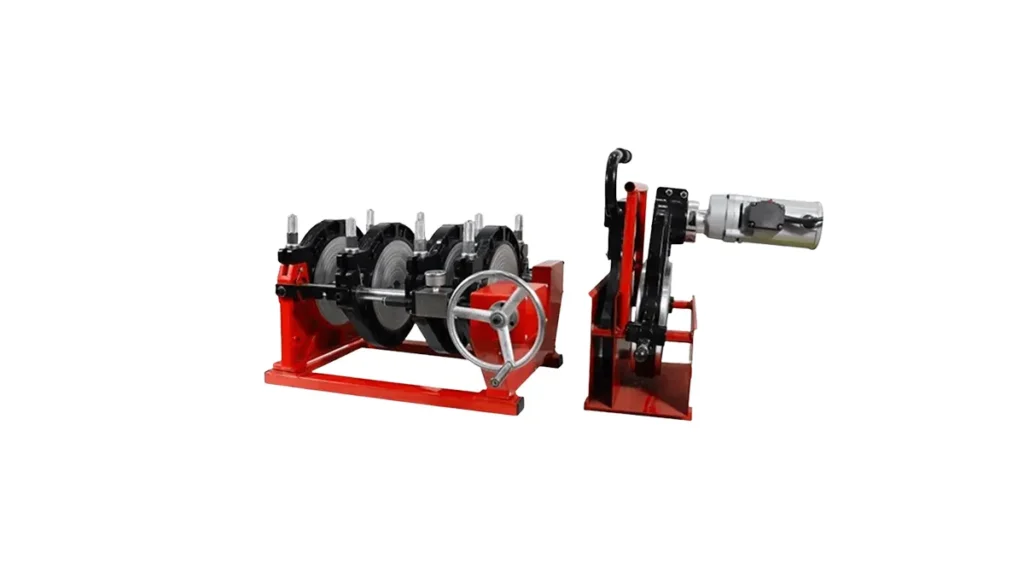
Water pipeline welding plays a decisive role in the safety, service life, and operating efficiency of modern water supply systems. For contractors, engineers, and distributors, choosing the right welding solution is not only about joining pipes; it is about creating a pipeline network that can resist pressure, avoid leakage, and remain stable for decades. In water projects, even a small welding defect can lead to costly repairs, water loss, and service interruptions. That is why the most reliable approach combines the right welding equipment, proper process control, skilled operators, and strict quality inspection. If you are looking for a dependable butt fusion machine for water pipeline work, understanding the complete solution is the first step toward better project results.
Today, water pipeline projects are becoming larger, more demanding, and more quality-sensitive. Municipal networks, industrial water systems, agricultural irrigation pipelines, and long-distance transmission lines all require joints that can perform under continuous stress. Among the available joining methods, butt fusion welding has become one of the most widely used solutions for HDPE pipelines because it creates a strong, seamless connection between pipe ends. When done correctly, the fused joint can be as strong as or even stronger than the pipe itself, making it an ideal choice for durable and leak-free pipelines.
Key advantage: butt fusion welding eliminates many of the weak points commonly found in mechanical connectors and makes it easier to achieve long-term reliability in buried or exposed water pipeline systems.
Why Water Pipeline Welding Quality Matters
Water pipelines often operate for years without easy access. Once installed underground or within complex industrial layouts, repairs become expensive and time-consuming. A weak weld can result in seepage, pressure loss, contamination risks, and damage to surrounding infrastructure. In high-volume systems, a single leaking joint may compromise the efficiency of the entire network. For this reason, the welding method used in water pipelines must produce a uniform joint structure with excellent sealing capability.
Butt fusion welding is especially effective because it uses heat and controlled pressure to join the pipe ends after the surfaces are carefully prepared. The process forms a molecular bond instead of relying on adhesives or mechanical fastening. This means the joint behaves like a continuous section of pipe, offering strong resistance to internal pressure, vibration, ground movement, and long-term wear.
Important: In water pipeline projects, welding quality directly affects operating safety, maintenance cost, and project reputation. Choosing the right equipment is essential for consistent results.
What Makes Butt Fusion the Preferred Solution
Butt fusion is preferred in HDPE water pipeline construction because it offers a combination of strength, simplicity, and long-term performance. Compared with socket fusion or mechanical coupling, butt fusion can handle larger diameters, provide smoother internal flow, and reduce the number of potential leak points. This is especially valuable for municipal water mains and industrial pipeline systems where flow efficiency and durability are both critical.
The basic process is straightforward: the pipe ends are aligned, faced to create smooth surfaces, heated with a precision-controlled plate, and then pressed together under proper pressure. After cooling, the welded joint becomes a permanent bond. The quality of each step matters, which is why professional-grade machinery is so important. Manual machines may suit smaller jobs, while hydraulic and CNC automatic machines deliver greater accuracy and repeatability for larger or more demanding projects.
- Strong molecular bonding for durable pipeline joints
- Reduced risk of leakage compared with many traditional methods
- Suitable for a wide range of HDPE pipe diameters
- Excellent performance in buried water pipeline systems
- Improved long-term flow stability and maintenance efficiency
Core Elements of a Durable and Leak-Free Welding Solution
A truly reliable water pipeline welding solution is not just a machine; it is a complete system. The first element is the machine itself. High-quality butt fusion machines provide stable heating, accurate alignment, consistent clamping force, and reliable hydraulic control. The second element is operator skill. Even the best machine can produce poor results if the pipe surfaces are contaminated or if the heating cycle is not followed correctly. The third element is inspection and testing, which confirm whether each weld meets project standards before the line is put into service.
For water projects, temperature control is especially important. If the heating plate is too cold, fusion will be incomplete. If it is too hot, the pipe material may degrade. Pressure control is equally critical because too little pressure can create gaps, while too much pressure may deform the joint. Alignment also matters because even slight misalignment can weaken the final bond. Reliable welding solutions are designed to manage these variables with precision.
Pro tip: stable temperature, correct pressure, and clean pipe surfaces are the foundation of leak-free butt fusion welding.
Manual, Hydraulic, and CNC Automatic Solutions
Different water pipeline projects require different welding solutions. Manual butt fusion machines are often used in smaller-diameter pipelines and on sites where mobility and simplicity are important. They are cost-effective and practical, especially for basic installations. Hydraulic butt fusion machines offer greater control over clamping and pressure, making them suitable for medium to large pipelines where accuracy becomes more important.
CNC automatic butt fusion machines represent the highest level of precision and efficiency. These systems automate key process parameters and reduce the risk of human error. They are particularly useful for large projects, repeated production tasks, or contractors who need uniform weld quality across many joints. Automated systems also help improve productivity and consistency, which can be a major advantage in time-sensitive water infrastructure projects.
When choosing the right option, project managers should consider pipe diameter, installation environment, labor skill level, budget, and required output speed. A small rural water line may not need the same level of automation as a citywide distribution system. However, all projects benefit from a machine that delivers stable performance and easy maintenance.
Why Equipment Quality Changes the Final Result
The quality of welding equipment has a direct impact on joint consistency. High-end machines are engineered with precision components that improve heating uniformity, hydraulic stability, and alignment accuracy. These technical advantages translate into better welds and fewer failures. In contrast, low-quality equipment may cause uneven heating, poor clamping, unstable pressure, or inaccurate temperature readings, all of which increase the risk of defective joints.
This is why many buyers prefer suppliers with manufacturing experience, strict testing procedures, and customization capability. A trusted manufacturer can provide solutions that match the technical needs of the project, including machine size, voltage, branding, and special configurations. For global contractors and distributors, this flexibility is valuable because it helps them serve different market requirements with one dependable equipment source.
Highlight: Stable machine performance reduces weld defects, saves rework time, and improves the overall reliability of the water pipeline network.
How JQ-Fusion Supports Water Pipeline Projects
With over 20 years of industry experience, JQ-Fusion focuses on reliable HDPE pipe welding machines for global pipeline applications. The company provides manual, hydraulic, and CNC automatic butt fusion solutions designed for a wide range of pipe diameters. Its machines are used in water supply systems, gas distribution networks, mining projects, and industrial pipeline installations, showing strong adaptability across different working environments.
The manufacturer emphasizes advanced production technology, strict quality control, OEM and ODM customization, and reliable global support. Each machine undergoes testing for temperature accuracy, hydraulic pressure stability, and clamp alignment. This ensures that the equipment delivered to customers is ready for real-world project demands. For contractors, that means fewer surprises on site and a better chance of completing water pipeline installations on time and within quality standards.
JQ-Fusion also maintains a strong inventory and efficient supply chain, which helps support urgent project schedules. Whether the requirement is a standard model or a customized solution, the focus remains on delivering stable welding performance, fast delivery, and dependable technical support. More information about the company’s solutions can be found at https://jq-fusionwelding.com/.
Best Practices for Leak-Free Water Pipeline Welding
Even with excellent machinery, the success of a welding project depends on proper execution. Pipe ends should be clean and dry before welding. The operator should verify pipe dimensions, machine settings, and environmental conditions before starting. The heating plate must be clean and at the correct temperature. Cooling time should never be shortened, even if the site schedule is tight, because rushing the process can weaken the joint.
Inspection is another essential step. Visual checks, alignment checks, and pressure tests help ensure that the fused joint is fit for service. For critical projects, documentation and traceability can provide additional confidence. Training also matters because experienced operators are better at identifying issues early and maintaining consistent weld quality across multiple joints.
- Keep pipe ends clean, dry, and properly aligned
- Use the correct temperature and pressure settings
- Allow full cooling time before moving the pipe
- Inspect each weld before pressure testing
- Train operators on machine operation and safety procedures
The Role of Customization and Project Support
Water pipeline projects differ widely across regions and industries. Some require compact machines for field work, while others need high-capacity equipment for large-scale utility construction. Customization helps match the welding solution to the project instead of forcing the project to fit the machine. Adjustable voltage, machine size, color, design, and function upgrades can all improve usability and business value.
Strong technical support is equally important. Buyers benefit from guidance on product selection, installation, operation, and after-sales service. This is particularly valuable for international projects where logistics, timelines, and local conditions can be challenging. A supplier that offers responsive support and practical training helps reduce downtime and increases confidence throughout the project lifecycle.
Conclusion: The Smartest Choice for Long-Term Water Infrastructure
The best water pipeline welding solutions are the ones that combine strong equipment, precise process control, and reliable support. Butt fusion welding has become a leading choice because it creates durable, leak-resistant joints that are well suited for modern HDPE pipeline systems. When paired with high-quality machines and proper operating practices, it can significantly improve the life span and performance of water networks.
For contractors, distributors, and project owners, investing in a professional welding solution is not just a technical decision; it is a long-term value decision. Better equipment leads to better joints, fewer failures, lower maintenance costs, and greater trust from end users. Whether the project is small or large, selecting the right butt fusion system is one of the most important steps in building durable and leak-free pipelines.
In short: durable water pipelines start with precise welding, dependable equipment, and consistent quality control.
FAQ 1: What is the most reliable welding method for HDPE water pipelines?
Butt fusion welding is widely considered one of the most reliable methods because it creates a seamless, high-strength joint with excellent leak resistance and long-term durability.
FAQ 2: Why do water pipeline joints leak?
Leaks often occur because of poor alignment, incorrect temperature, inadequate pressure, contaminated pipe surfaces, or insufficient cooling time during the welding process.
FAQ 3: Is CNC automatic butt fusion better than manual welding?
CNC automatic machines usually provide higher consistency, better precision, and reduced operator error, making them ideal for large or repetitive projects. Manual machines may still be suitable for smaller or simpler installations.
FAQ 4: How can I improve the durability of welded water pipelines?
Use high-quality equipment, follow the correct welding procedure, train operators well, inspect each joint carefully, and ensure proper pressure testing before commissioning the pipeline.
FAQ 5: What should I look for in a butt fusion machine supplier?
Look for experience, stable product quality, customization capability, testing standards, fast delivery, and strong technical support to ensure the machine performs well in real project conditions.



