
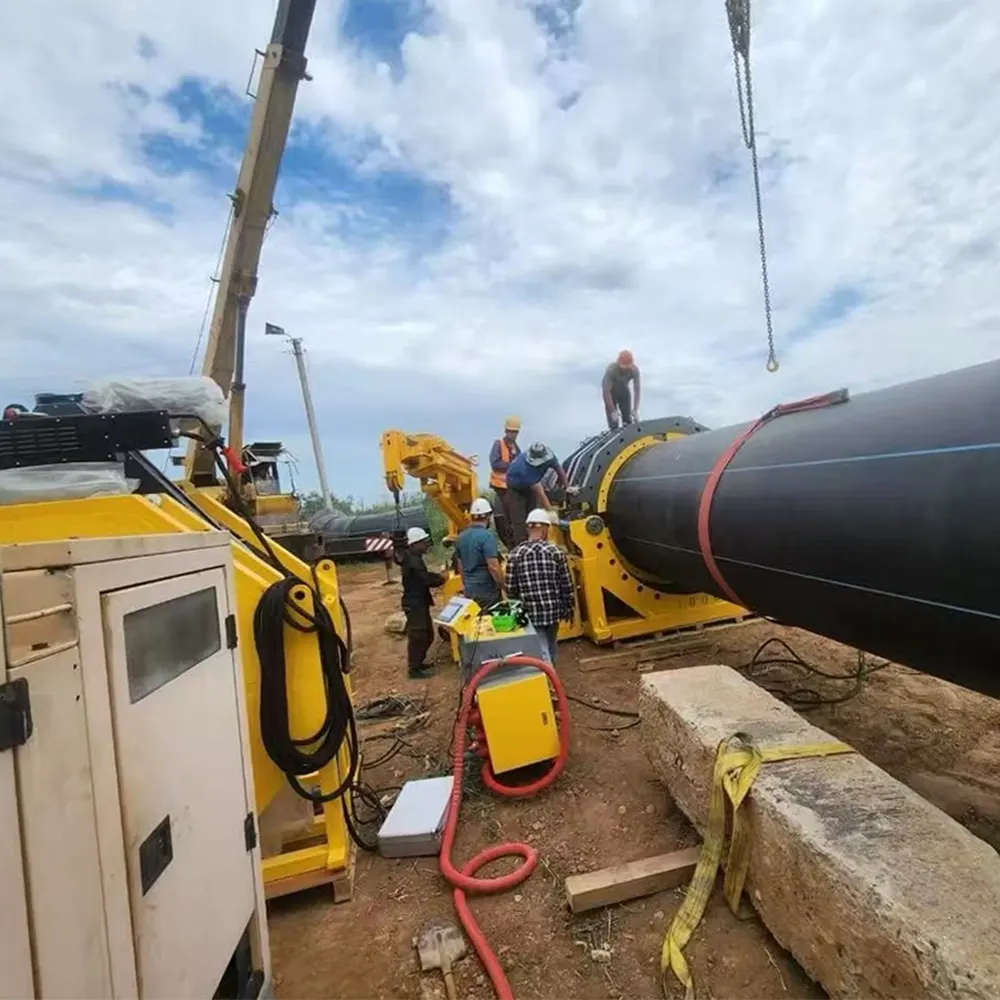
When a pipeline project moves from drawings to the field, one of the most important decisions is how the pipes will be joined. The joining method affects strength, leak resistance, installation speed, maintenance needs, and even the long-term cost of ownership. Whether you are building a water supply line, a gas distribution network, or an industrial pipeline, choosing the right pipe joining technology is not just a technical detail—it is a project decision that can influence safety, performance, and budget for years.
There is no single “best” pipe joining method for every situation. The right choice depends on pipe material, diameter, pressure rating, operating environment, budget, available labor, and project timeline. In some cases, mechanical joints are the fastest option. In others, a fused connection offers the most durable and leak-free result. For HDPE systems in particular, fusion-based technologies have become a preferred solution for many contractors because of their strength and long service life.
Why Pipe Joining Technology Matters
Every pipeline is only as strong as its joints. A poor joint can create leaks, reduce pressure performance, and increase downtime. In underground systems, repairs may require excavation, which adds major cost and delays. In industrial plants, a failed joint can interrupt production or create safety risks. That is why comparing joining technologies early in the design stage is essential.
Good joining technology should provide consistent quality, be practical for the site conditions, and match the expected service life of the system. It should also fit the skill level of the installation team and the available equipment. For large-scale projects, repeatability becomes especially important because hundreds or thousands of joints may need to perform the same way.
Key idea: the best pipe joining technology is the one that balances structural performance, installation efficiency, and total project cost—not just the lowest upfront price.
Common Pipe Joining Technologies to Compare
Before selecting a system, it helps to understand the most widely used joining methods and what each one does best. Below are the main technologies that project managers, engineers, and contractors often compare.
1. Butt Fusion
Butt fusion joins thermoplastic pipes by heating the pipe ends and pressing them together under controlled pressure. After cooling, the joint becomes a continuous, strong bond. This method is widely used for HDPE pipelines in water, gas, mining, and industrial applications because it creates a joint with strength close to the pipe itself.
Butt fusion is especially valuable for projects that require long-term reliability and low leakage risk. It is suitable for larger diameters and is often the preferred method for permanent buried systems. The process requires proper temperature control, alignment, and hydraulic pressure management, which is why equipment quality matters greatly.
If you are comparing equipment options for fusion work, a reliable butt fusion machine can make a major difference in weld consistency, productivity, and operator confidence.
2. Electrofusion
Electrofusion uses special fittings with embedded heating coils. When electrical current passes through the fitting, heat is generated and fuses the pipe and fitting together. This technology is often chosen when space is limited, when repairs are required, or when complex pipe layouts make butt fusion difficult.
Electrofusion is popular for service connections, branch lines, and retrofit work. It is also useful in situations where precise alignment is difficult to maintain with larger fusion equipment. However, it usually depends on clean pipe preparation, accurate scraping, and correct electrical control. Because the fitting itself is an active part of the process, fitting cost can be higher than other methods.
3. Mechanical Couplings
Mechanical couplings connect pipes using compression, gasket seals, clamps, or threaded elements. They are common in temporary systems, maintenance repairs, and situations where welding is not possible. Installation is often fast and does not require heat or fusion equipment.
The main advantage is convenience. Mechanical couplings can be installed in many conditions and are easier to remove or replace. The tradeoff is that they may not offer the same long-term integrity as a fused joint, especially in high-pressure or buried applications. They are best suited for flexible, lower-risk, or non-permanent connections.
4. Solvent Cement Joining
Solvent cement joining is widely used in PVC and CPVC systems. A chemical solvent softens the pipe and fitting surfaces, allowing them to bond as the solvent evaporates. This method is common in plumbing, irrigation, and certain low-pressure fluid systems.
It is relatively low-cost and simple to apply, but it is highly dependent on surface preparation, drying time, and proper handling. It is not ideal for high-temperature or heavy-duty industrial use. In projects where chemical resistance and pressure performance are critical, other methods may be more suitable.
5. Flanged Joints
Flanged joints use bolted connections and sealing gaskets. They are often found where equipment must be removed for maintenance, or where pipes need to connect to valves, pumps, and tanks. Flanges provide a strong and serviceable connection that can be dismantled when needed.
Flanged systems are practical in plant environments and transition points, but they require more components and careful tightening. If gasket selection or bolt torque is inconsistent, leakage can occur. For that reason, flanges are often best used in combination with other joining technologies rather than as the primary method for every connection.
How to Compare Technologies for Your Project
To choose the right joining method, compare each technology against the real demands of your project. A method that works well for a small municipal repair job may not be suitable for a large mining line or a long buried transmission pipeline.
Compare these factors: pipe material, pipe diameter, working pressure, installation environment, labor skill level, maintenance expectations, and total lifecycle cost.
Pipe Material Compatibility
Not every joining method works with every pipe material. HDPE, PVC, steel, ductile iron, and composite systems each have different joining requirements. Fusion methods are mainly used for thermoplastic pipes, while mechanical and flanged joints are more universal across materials. Material compatibility should always be verified before specifying equipment or fittings.
Diameter and Wall Thickness
Larger diameter pipes often require technologies that can deliver strong, uniform connections over a wide contact area. Butt fusion is particularly effective in this range because it produces a continuous joint. Smaller diameter lines may allow more joining options, including mechanical or electrofusion methods, depending on pressure and application.
Pressure and Safety Requirements
For high-pressure systems, joint integrity becomes a top priority. The joining method must withstand internal pressure, external loads, and environmental stress over time. Fusion joints typically perform well because they create a homogeneous connection. Mechanical joints can also work well in the right application, but they usually need more frequent inspection.
Site Conditions and Accessibility
Field conditions may limit your choices. Narrow trenches, remote locations, uneven terrain, and harsh weather can affect installation quality. Electrofusion may be the better option where space is limited. Mechanical couplings may be preferable for emergency repairs. Butt fusion works best when equipment can be positioned safely and alignment can be controlled accurately.
Labor Skill and Training
The best technology can still fail if the crew does not understand the process. Butt fusion requires trained operators and calibrated equipment. Electrofusion demands careful preparation and correct electrical settings. Mechanical and solvent-based methods may be easier to learn, but they still require proper technique. Training is a major factor in achieving repeatable quality.
Advantages of Fusion-Based Joining for Modern Projects
In many HDPE projects, fusion-based joining is considered the gold standard because it creates a joint that is highly resistant to leakage and separation. The connection can perform very well in buried systems, water networks, and demanding industrial environments. It also reduces the need for seals, bolts, or external fasteners that can fail over time.
Fusion methods are especially attractive for projects that prioritize long service life and low maintenance. Once the system is installed correctly, the joints can remain stable for decades with minimal intervention. For contractors working on large pipeline systems, this can help reduce future service costs and improve client satisfaction.
JQ-Fusion is a professional manufacturer focused on HDPE pipe welding solutions, including manual, hydraulic, and CNC automatic systems for a wide range of project needs. Their equipment is used in water supply, gas distribution, mining, and industrial pipeline installations worldwide. With strong OEM and ODM support, they can also help contractors and distributors adapt equipment to local market requirements and project specifications.
When Mechanical or Flanged Joints Make More Sense
Even though fusion methods offer excellent performance, they are not always the most practical choice. Mechanical couplings and flanged joints can be better in situations where the pipeline must be disassembled, where equipment access is limited, or where the line connects to other components such as pumps and valves.
For example, a maintenance team may prefer a flanged connection at a pump station so the pump can be removed without cutting the pipe. A repair crew may choose a mechanical coupling when a fast response is more important than a permanent welded connection. The best project design often uses multiple technologies in different sections of the same pipeline system.
Cost Is More Than the Purchase Price
Many teams compare joining technologies only by equipment or fitting price, but this can lead to poor decisions. The true cost includes labor, training, installation time, inspection, maintenance, and the risk of future failure. A low-cost joint that needs frequent repair may become expensive very quickly.
Butt fusion and electrofusion may require more specialized equipment, but they can lower lifecycle costs by reducing leaks and service interruptions. Mechanical joints may save money at installation, but they may require more ongoing attention. A smart comparison looks at total value rather than immediate expense.
Practical rule: choose the simplest technology that still meets the required pressure, durability, and maintenance expectations.
How to Build a Shortlist for Your Project
A good selection process starts with project requirements and narrows options using technical and operational criteria. You can build a shortlist by asking a few key questions: What pipe material is being used? What pressure will the line carry? Is the system permanent or temporary? How much space is available? What is the acceptable maintenance level?
Once those factors are clear, compare the technologies based on welding quality, speed, repeatability, and cost. If the project involves HDPE and long service life, fusion methods will often rise to the top. If the project requires frequent disassembly or mixed materials, mechanical or flanged connections may be more appropriate.
Why Equipment Quality Affects the Final Result
Even the best joining method can fail if the equipment is inaccurate or unstable. In butt fusion, temperature control, hydraulic pressure, and clamp alignment all influence weld quality. A machine that heats unevenly or presses incorrectly can produce weak joints. That is why reputable manufacturing, strict quality control, and proper calibration are essential.
JQ-Fusion emphasizes advanced manufacturing technology, strict inspection, and stable performance across its product range. Their machines are designed to support consistent results in real project environments, where reliability matters as much as speed. For contractors handling multiple job sites, dependable equipment can reduce rework and improve productivity.
Choosing the Right Technology for Different Project Types
Water supply systems: Butt fusion is often a top choice for HDPE mains because of its leak resistance and durability. Flanged joints are commonly used at pump stations and equipment connections.
Gas distribution networks: Fusion technologies are widely preferred because joint integrity is critical for safety. Electrofusion may be useful for service connections and branch work.
Mining projects: High abrasion, movement, and challenging site conditions make strong joints essential. Butt fusion can provide the reliability needed for demanding field conditions.
Industrial pipeline installations: The best choice may vary by fluid type, temperature, and maintenance requirements. Many industrial systems use a combination of fusion, flanged, and mechanical connections.
Final Thoughts
Comparing pipe joining technologies is not about finding a universal winner. It is about matching the joining method to the real needs of your project. For many HDPE applications, butt fusion offers the best combination of strength, leak resistance, and long-term value. Electrofusion can solve space and repair challenges. Mechanical couplings and flanged joints remain useful where flexibility and serviceability matter most.
When the right technology is paired with the right equipment, trained operators, and clear project standards, the result is a safer, more efficient, and more durable pipeline system. The most successful projects are those that evaluate joining options early and choose based on performance over the entire life of the pipeline.
Frequently Asked Questions
Q1: What is the strongest pipe joining technology?
For many thermoplastic pipelines, butt fusion is considered one of the strongest options because it creates a continuous joint with excellent long-term performance.
Q2: When should electrofusion be used?
Electrofusion is often used for repairs, branch connections, and locations where butt fusion equipment cannot be positioned easily.
Q3: Are mechanical couplings a permanent solution?
They can be used in some long-term systems, but they are usually chosen for flexibility, maintenance, or repair rather than maximum joint integrity.
Q4: Why is butt fusion popular for HDPE projects?
Because it offers strong, leak-resistant joints that are well suited to water, gas, mining, and industrial pipeline applications.
Q5: How do I know which joining method is best for my project?
Compare pipe material, pressure, diameter, site conditions, labor skill, and lifecycle cost to identify the most suitable technology.



