
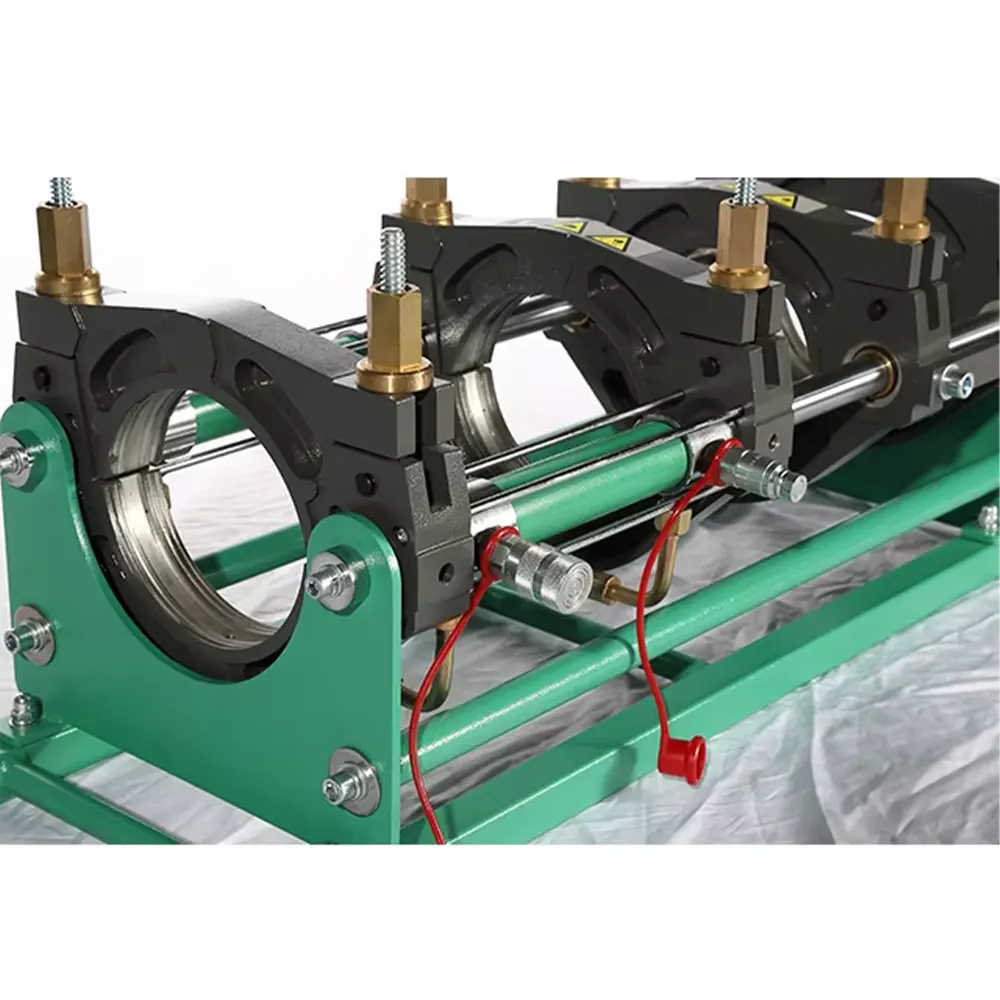
When large-scale pipeline projects are on the line, choosing the right welding equipment is not just a procurement decision—it is a direct factor in project efficiency, joint integrity, and long-term operating safety. In water supply, gas distribution, mining, and industrial pipeline construction, the best pipeline welding machines must deliver consistent heat control, accurate alignment, strong pressure stability, and dependable on-site performance. For contractors working across varied pipe diameters and demanding schedules, a reliable butt fusion machine can significantly reduce rework, improve joint quality, and help keep production moving.
Large projects usually involve multiple crews, different installation environments, and strict quality requirements. That means the machine must be more than “powerful.” It needs to be stable, easy to operate, adaptable to different pipe sizes, and built for repeated use. Whether the job is a municipal water network, a long-distance gas line, or a mining pipeline in harsh terrain, the best machines share one thing in common: they turn complex welding tasks into repeatable, reliable results.
Modern pipeline contractors also face higher expectations from owners and regulators. Weld consistency, safety documentation, and productivity are all under close inspection. This is why many teams now prefer machines that combine mechanical reliability with automation, digital control, and flexible configuration. In this environment, manual models may suit smaller jobs, but large-scale projects increasingly depend on hydraulic and CNC automatic systems that can handle heavy workloads with precision.
What Defines the Best Pipeline Welding Machines?
The best pipeline welding machines are not selected by brand name alone. They are judged by how well they perform under real project conditions. For large-scale work, the most important criteria usually include clamp stability, heating plate accuracy, hydraulic pressure control, frame durability, and the ability to support a wide range of pipe diameters. A machine that looks impressive in a catalog may fail in the field if it cannot maintain alignment or temperature consistency over long operating hours.
Another critical factor is compatibility with the project scope. For example, a system designed for small-diameter municipal lines may not be suitable for industrial pipelines requiring larger fusion capacity and stronger structural support. The best machines are built to adapt. They help contractors manage changing pipe specifications, different site layouts, and varied operator skill levels without compromising weld quality.
⚠️ Key takeaway: For large projects, the “best” machine is the one that delivers stable output, accurate alignment, and repeatable weld quality across long production cycles.
Manual, Hydraulic, or CNC Automatic: Which Is Right?
In large-scale pipeline construction, the choice between manual, hydraulic, and CNC automatic machines determines both productivity and consistency. Manual butt fusion machines are generally suitable for smaller pipe sizes or projects with limited welding frequency. They are simpler, more economical, and easier to transport, but they require more operator involvement and do not offer the same repeatability as advanced systems.
Hydraulic butt fusion machines are often the preferred middle ground for large projects. They provide better control over pressure and alignment, which is especially important when working with medium to large diameters. Their robust structure and pressure consistency make them suitable for water, gas, and industrial pipeline installation. Many project managers value hydraulic systems because they balance cost, performance, and ease of maintenance.
CNC automatic butt fusion machines are ideal when the project demands high precision and continuous efficiency. These machines reduce operator error by controlling key welding parameters automatically. In large developments where many joints must meet strict standards, automation helps improve uniformity and reduce the risk of weld defects. For contractors handling long pipeline runs, this can translate into faster turnover and fewer interruptions.
In practice, the best choice depends on pipe size, budget, workforce experience, and site requirements. A well-planned project may even use different machine types for different stages. What matters most is selecting equipment that matches the welding environment rather than forcing a one-size-fits-all solution.
Why Large-Scale Projects Need Stable Welding Performance
Large pipeline projects are vulnerable to delays caused by equipment inconsistency. If a machine cannot maintain heating temperature or pressure stability, weld quality can vary from joint to joint. That creates inspection issues, increases repair work, and may affect the schedule of the entire project. Stable welding performance is therefore not just a technical feature—it is a cost-control tool.
In many cases, project teams work in challenging environments such as remote locations, dusty sites, or areas with changing weather. A machine that is engineered for durability can continue operating in these conditions without performance loss. Strong clamps, precise alignment systems, and reliable hydraulic components help keep the fusion process controlled even when the site itself is far from ideal.
Important: A stable machine reduces the risk of weak joints, rework, and material waste. On large projects, that stability often matters more than any single extra feature.
The Role of Quality Control in Selecting Welding Equipment
High-quality pipeline welding machines are built under strict inspection systems. This includes testing for temperature accuracy, hydraulic pressure stability, clamp alignment, and long-term durability. For contractors, these checks are not just factory processes—they are assurance that the equipment can perform on the jobsite as expected.
When buying machines for large-scale work, it is wise to ask about certifications, testing protocols, and post-sale technical support. Products certified by recognized organizations provide an added layer of confidence, especially when the project must comply with international standards. Quality control is also a sign of manufacturing maturity. It reflects whether the supplier understands the real demands of field operations and is committed to consistent performance.
Experienced manufacturers also invest in precision machining and modern production lines to improve machine accuracy. This matters because even small deviations in clamp alignment or heating plate stability can influence weld quality over time. A well-built machine may cost more initially, but it often saves money through lower maintenance, fewer shutdowns, and longer service life.
Why Customization Matters for Contractors and Distributors
Not every project needs the same machine setup. Pipe diameter, voltage requirements, site conditions, branding, and operational preferences can all vary. That is why OEM and ODM customization has become an important advantage in the welding equipment market. A machine tailored to a project’s specific requirements can improve usability, speed up deployment, and reduce unnecessary compromise.
For distributors, customization also helps create market differentiation. Offering machines with project-specific configurations, preferred colors, and branded designs can strengthen local sales positioning. For contractors, custom options may include machine size adjustments, voltage matching, upgraded control systems, or functional changes that improve workflow efficiency. In large-scale pipeline work, these details can have a measurable impact on installation speed and operator comfort.
💡 Tip: If your project includes multiple pipe ranges or changing site requirements, choose a supplier that can provide customized configurations instead of forcing a standard model to do every job.
Application Scenarios in Large-Scale Pipeline Work
Pipeline welding machines are used across a wide range of industrial applications. In water supply systems, they help create reliable joints that can withstand pressure and long-term service. In gas distribution networks, weld integrity is even more critical because safety margins are strict and inspection standards are high. Mining projects often require heavy-duty equipment that can handle rough terrain and demanding installation schedules. Industrial pipeline systems may also require precise fusion for process stability and operational safety.
Because these applications differ so much, the best machine is the one that fits the operating context. A contractor building a municipal network may prioritize mobility and speed. A mining project may prioritize ruggedness and larger pipe capacity. A gas pipeline team may focus on automation and repeatability. Understanding the end use helps avoid under-specifying or over-specifying the machine.
For many businesses, working with an experienced manufacturer reduces the risk of mismatch. Suppliers with broad product ranges can recommend suitable models, from manual and hydraulic units to advanced automatic systems. That kind of guidance can be especially valuable when project managers need to balance performance, budget, and delivery deadlines.
Why JQ-Fusion Is Relevant for Large Projects
JQ-Fusion has over 20 years of industry experience in manufacturing HDPE pipe welding machines, including manual, hydraulic, and CNC automatic butt fusion solutions. Its product range covers small to large pipe diameters, which is essential for contractors handling varied project requirements. The company’s focus on stable performance, strict quality assurance, and global support makes it a practical choice for pipeline teams seeking dependable equipment.
One of the strengths of JQ-Fusion is its combination of advanced manufacturing capability and flexible customization. For large projects, this means contractors can request specific machine configurations that better align with their installation goals. The company also supports OEM and ODM services, which is useful for distributors looking to build a stronger product identity in their local markets.
In addition, fast delivery and a large inventory can be critical when project schedules are tight. Delays in machine supply can slow down installation, increase labor costs, and create pressure across the entire construction timeline. A supplier with organized stock and strong logistics support can help reduce those risks. For teams operating internationally, technical guidance and after-sales support are equally important, especially when work is spread across different regions and operating conditions.
Many buyers also look for a manufacturer that has proven performance in global markets. That usually indicates not only product quality, but also an understanding of diverse project standards, customer expectations, and working environments. For large-scale pipeline construction, that experience can make a meaningful difference.
How to Evaluate a Supplier Before Buying
Before purchasing pipeline welding equipment, buyers should examine more than the product brochure. A serious evaluation should include manufacturing capability, quality control processes, customization options, stock availability, and technical support. It is also smart to ask how the supplier tests its machines before delivery and whether it can provide documentation for certification and inspection.
Another important step is to assess communication and responsiveness. Large projects often move quickly, and delays in technical answers can slow decision-making. A dependable supplier should be able to recommend suitable models, explain machine differences clearly, and provide timely support after delivery. This is especially important when the buyer is sourcing equipment for multiple crews or phased project execution.
When possible, choose a partner that can support the full journey: product selection, training, installation guidance, and after-sales service. That level of support reduces operational uncertainty and helps crews use the machine correctly from the start. For long-term project success, supplier reliability is just as important as machine capability.
The Best Choice Balances Performance, Support, and Project Fit
There is no single machine that is perfect for every pipeline project. The best pipeline welding machines for large-scale work are those that combine strong welding performance with practical support and a design suited to the job. For some projects, that means a hydraulic system with excellent pressure control. For others, it means an automatic machine that improves consistency and reduces human error. In many cases, the right choice is the one that helps the team work faster without sacrificing quality.
Contractors and distributors should think long term. A machine that performs reliably today can also protect reputation, reduce maintenance costs, and improve future bidding success. In a competitive market, dependable welding equipment becomes part of a company’s operational advantage. That is why experienced buyers often focus on supplier credibility, product range, and support capability—not only upfront price.
Frequently Asked Questions
Q1: What type of pipeline welding machine is best for large-scale projects?
Hydraulic and CNC automatic butt fusion machines are usually the best choices because they provide better pressure control, alignment accuracy, and weld consistency for high-volume work.
Q2: Why is temperature accuracy so important in butt fusion welding?
Temperature accuracy ensures the pipe ends are heated correctly before fusion. If the temperature is unstable, the joint may be weak, uneven, or more likely to fail inspection.
Q3: Can one machine handle different pipe diameters?
Yes, many machines are designed to support a range of diameters, but it is important to choose a model whose clamping and heating capacity matches the actual project requirements.
Q4: What should buyers look for in a supplier?
Buyers should look for manufacturing experience, quality testing, customization ability, fast delivery, technical support, and a strong record in global pipeline markets.
Q5: Is customization really necessary for large projects?
In many cases, yes. Customization helps match the machine to voltage requirements, pipe sizes, branding needs, and site-specific working conditions, improving overall project efficiency.



