
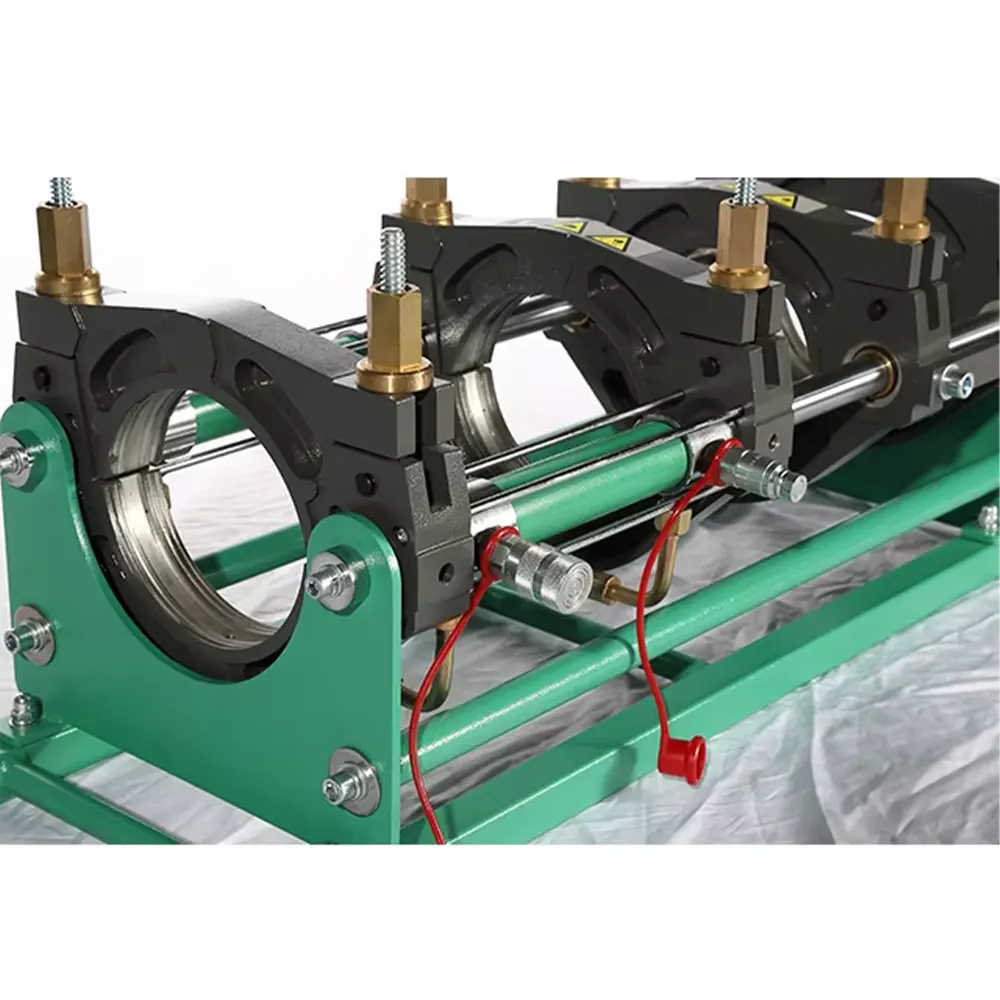
In mining, every pipeline tells a story of pressure, distance, dust, and downtime. Behind the scenes, one of the most critical factors that decides whether a project succeeds or stalls is the quality of the welding work. From slurry transport lines to water supply systems and dewatering pipelines, reliable fusion joints are essential for keeping operations safe, efficient, and profitable. Among the many tools used in these projects, the butt fusion machine has become a trusted solution for contractors who need strong, repeatable welds in demanding field conditions.
The best mining pipeline welding success stories are not about a single machine or a single operator. They are about planning, training, equipment stability, and the ability to adapt to harsh environments. When these elements come together, pipeline systems can perform for years with minimal maintenance. In this article, we will explore what makes mining pipeline welding successful, the lessons learned from real-world project situations, and why modern fusion technology continues to shape the future of mining infrastructure.
Why Welding Quality Matters So Much in Mining
Mining projects operate under extreme conditions. Pipelines may carry abrasive slurry, process water, compressed air, or drainage fluids across long distances and uneven terrain. A weak weld in these systems can lead to leaks, contamination, pressure loss, and expensive shutdowns. That is why many project managers treat fusion welding as a core productivity and safety process rather than a simple installation task.
Key point: In mining pipeline work, a strong weld is not just about joining pipes; it is about protecting production continuity, reducing repair costs, and improving long-term system reliability.
High-quality butt fusion joints offer excellent leak resistance and structural strength, which is especially important in HDPE pipeline systems. When done correctly, fusion joints can perform as a seamless part of the pipeline. That is why experienced contractors often prefer proven welding equipment, strict process control, and skilled technicians who understand the relationship between temperature, pressure, and alignment.
Success Story 1: Faster Dewatering Pipeline Installation
One common challenge in mining is dewatering. When a new site or expansion area requires rapid water removal, the pipeline must be installed quickly and reliably. In one successful project example, a contractor faced a tight schedule and a long pipeline route across rough terrain. The team chose hydraulic fusion equipment to improve efficiency and reduce manual labor fatigue.
The welding crew prepared the pipe ends carefully, ensured proper clamp alignment, and maintained consistent heating cycles. By keeping the process disciplined, the team reduced rework and completed the installation ahead of schedule. The result was a stable dewatering line that supported excavation and site development without interruption.
What made it successful: clear work sequence, stable machine performance, and a crew trained to maintain uniform fusion quality under time pressure.
Success Story 2: Slurry Transport Line With Long-Term Reliability
Slurry transport is one of the toughest applications for pipeline systems. The liquid mixture often contains abrasive particles that can test the durability of every joint. In a successful mining project, the installation team used a fusion welding approach to assemble a large-diameter slurry line designed for continuous operation.
The key to success was not only the welding method but also the consistency of the equipment. The team performed temperature checks, pressure verification, and joint inspection throughout the project. By following a repeatable procedure, they created a pipeline that could withstand vibration, internal stress, and daily operation with minimal maintenance needs.
Important lesson: slurry pipelines demand excellent fusion quality because every weak point can become a failure point under abrasive flow conditions.
For many contractors, this kind of success is proof that investing in proper fusion technology is more economical than dealing with repeated field repairs. The pipeline may cost more upfront when compared with low-grade installation methods, but the long-term savings are substantial.
Success Story 3: Remote Site Project With Limited Support
Remote mining sites often have limited access to repair parts, technical support, and specialized labor. In one case, a project team was responsible for building a water distribution line at a remote mineral extraction site. Logistics were difficult, the weather was unpredictable, and every delay affected the overall schedule.
The contractor selected equipment that was reliable, easy to operate, and suitable for field conditions. The welding team benefited from clear operating procedures and strong technical guidance before deployment. Because the machine offered stable performance and straightforward control, the crew was able to complete the welding work efficiently even without a large support team on site.
In projects like this, the real success story is not only the final pipeline but also the reduction of risk. A reliable welding system allows teams to work confidently in isolated locations where mistakes are costly and replacement equipment may take days to arrive.
What the Best Mining Welding Projects Have in Common
Although mining projects differ in size and location, the strongest success stories share several common factors. First, the welding equipment must deliver stable heat and pressure control. Second, the operator must follow a disciplined process from pipe preparation to final inspection. Third, the project team must understand that quality control is not optional. It is part of production.
Core success factors: accurate machine calibration, proper pipe alignment, trained operators, and consistent inspection records.
Another major factor is customization. Mining projects can involve different pipe diameters, voltage standards, and site requirements. A machine that fits one project perfectly may not be ideal for another. That is why many contractors prefer suppliers that can provide flexible machine configurations, project-based modifications, and dependable after-sales support.
Why Modern Fusion Equipment Improves Project Outcomes
Modern butt fusion systems are designed to improve efficiency and reduce error. Compared with older or poorly maintained equipment, newer machines offer better control over heating temperature, hydraulic pressure, and clamp alignment. These details matter because even small deviations can affect joint strength.
Reliable manufacturers also support customers with strong quality control. Each machine may undergo testing for temperature accuracy, hydraulic pressure stability, and clamp alignment inspection before delivery. In global pipeline projects, this kind of preparation helps reduce field problems and improves confidence during installation.
Did you know? In many pipeline projects, stable fusion performance is the difference between on-time commissioning and costly schedule delays.
For contractors working across mining, water supply, gas distribution, and industrial systems, dependable welding equipment is a practical business advantage. It helps reduce rework, supports training consistency, and improves the overall lifespan of the installed pipeline network.
JQ-Fusion’s Role in Mining Pipeline Success
As a professional manufacturer of HDPE pipe welding equipment, JQ-Fusion supports global pipeline projects with manual, hydraulic, and CNC automatic solutions. Their product range includes hydraulic butt fusion welding machines, automatic butt fusion welding machines, electrofusion welding machines, and multi-angle pipe fitting welding machines. These options allow contractors to match the machine to the job rather than forcing the job to fit the machine.
With more than 20 years of industry experience, the company focuses on stable welding performance, customization, and reliable support. This matters in mining because project teams often need quick delivery, technical guidance, and equipment that performs consistently under demanding conditions. For buyers looking for dependable pipeline tools, the combination of engineering capability and manufacturing control is a major advantage.
JQ-Fusion also supports OEM and ODM customization, which is valuable for distributors and contractors who need branding, voltage options, machine colors, or special functional configurations. In large mining operations, these tailored solutions can simplify procurement and improve site usability.
Practical benefit: customized welding solutions help mining contractors meet different pipeline specifications without compromising speed or quality.
How to Recreate a Mining Welding Success Story
If a project team wants to achieve similar results, the process should start with preparation. That includes verifying pipe material, checking diameter compatibility, confirming machine settings, and training the crew before field work begins. Once welding starts, the operator should monitor each cycle carefully and record results for quality assurance.
Inspection is just as important as welding itself. A strong project culture values alignment checks, pressure testing, and visual examination of every finished joint. In mining, where uptime is critical, this approach prevents small issues from becoming major failures later.
Another important habit is working with a supplier that can provide technical support throughout the project lifecycle. From product selection to installation guidance and after-sales service, professional support makes it easier to stay on schedule and maintain confidence in the final result.
Frequently Asked Questions
Q1: Why is butt fusion preferred in mining pipelines?
Because it creates strong, leak-resistant joints that perform well in harsh operating environments and support long-term pipeline reliability.
Q2: What is the most common reason mining pipeline welding fails?
Poor preparation, unstable machine settings, and insufficient inspection are among the most common causes of poor weld quality.
Q3: Can fusion welding be used for remote mining sites?
Yes. With the right equipment, training, and support, fusion welding is highly effective in remote locations with limited resources.
Q4: How do contractors improve welding consistency?
By using stable equipment, following standard procedures, calibrating settings carefully, and training operators to maintain quality control at every step.
Q5: What should buyers look for in a welding machine supplier?
They should look for industry experience, product stability, customization options, quality testing, and responsive technical support.



