
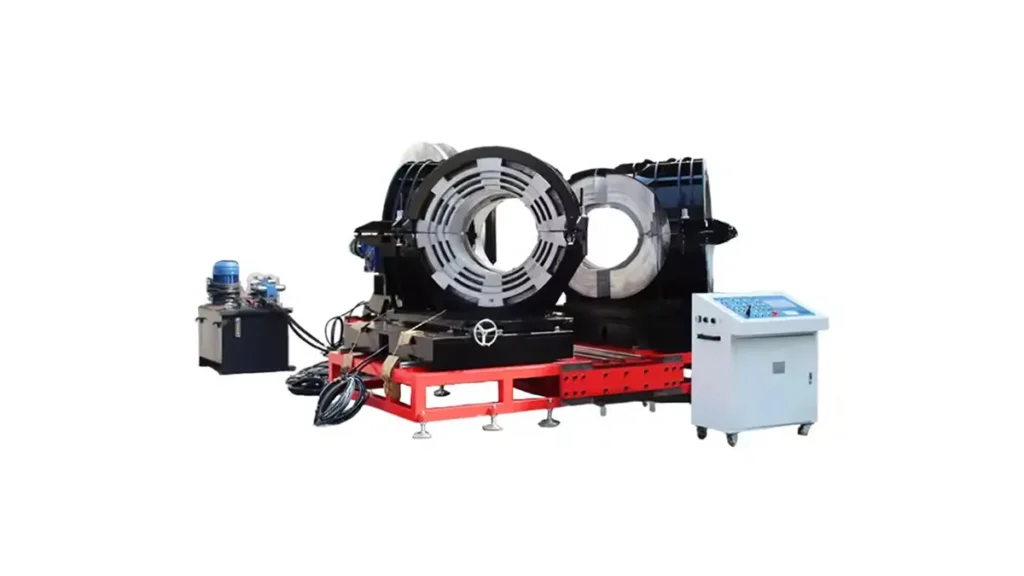
When pipeline contractors, distributors, and project managers search for dependable equipment, the question is rarely just about price. It is about precision, long-term stability, weld quality, ease of operation, and whether the machine can perform consistently under real jobsite conditions. That is why the best high performance HDPE welding machines are not simply defined by power or size, but by how reliably they deliver strong, repeatable butt fusion joints across different pipe diameters and working environments.
In modern infrastructure projects, HDPE pipe systems are widely used in water supply, gas distribution, mining, and industrial pipeline installations. These applications demand fusion equipment that can maintain temperature accuracy, hydraulic stability, clamp alignment, and durable output over time. A machine that looks impressive on paper but fails to produce stable welds in the field can cause costly delays and rework. For this reason, choosing a butt fusion machine from a reliable manufacturer is a critical decision for any project.
JQ-Fusion has built its reputation as a professional HDPE pipe welding machine manufacturer by focusing on performance, customization, and global support. With more than 20 years of industry experience, the company supplies manual, hydraulic, and CNC automatic butt fusion welding machines for a broad range of pipeline needs. Their equipment is designed for contractors who need strong welding consistency, and for distributors who need dependable products that can win market trust.
What Defines a High Performance HDPE Welding Machine?
A high performance HDPE welding machine should do more than heat and press pipe ends together. It should provide stable control at every stage of the fusion process. The most important indicators include temperature uniformity, reliable hydraulic pressure, accurate pipe clamping, and a structure strong enough to handle repeated use without losing alignment. In practical terms, this means the machine should help operators produce welds that are smooth, strong, and consistent from the first joint to the last.
For field applications, performance also means efficiency. A machine that reduces preparation time, simplifies operation, and maintains accuracy under different conditions can significantly improve project productivity. This is especially important when working on long pipelines where delays can affect labor costs and overall delivery schedules. The best machines combine rugged construction with user-friendly design so teams can focus on quality rather than troubleshooting equipment issues.
Key point: A reliable HDPE welding machine is measured by weld consistency, not just machine size or appearance. The real value comes from stable output in actual pipeline projects.
Why Butt Fusion Performance Matters in Real Projects
Butt fusion welding is widely preferred for HDPE piping because it creates a joint with high structural strength and excellent leak resistance when executed correctly. However, the quality of the weld depends heavily on the machine. If temperature control fluctuates, the pipe ends may not fuse evenly. If the clamping system is weak, alignment can shift during the heating or joining stages. If hydraulic pressure is inconsistent, the final bead and fusion interface may be compromised.
This is why project owners often evaluate more than the machine specification sheet. They look for dependable manufacturing quality, proven testing methods, and support that can help operators avoid mistakes. On-site conditions are not always ideal. Dust, humidity, temperature changes, and operator differences can all affect results. A well-designed HDPE welding machine helps reduce these variables and gives teams a more controlled welding process.
For contractors working in water or gas networks, the consequences of poor welds can be serious. Rework adds cost, inspection time, and project risk. In mining and industrial settings, pipeline failure can interrupt operations. Choosing a high performance machine reduces these risks and supports safer, more efficient pipeline construction.
Core Features to Look for in HDPE Welding Equipment
When comparing options, several features stand out as essential. First is the heating system. A precise heating plate with accurate temperature control is necessary to ensure the pipe ends reach the correct fusion state. Second is the hydraulic system, which must provide stable and adjustable pressure during clamping and joining. Third is the frame and alignment structure, which should hold the pipe securely and maintain correct positioning throughout the cycle.
Another major factor is adaptability. Projects often involve different pipe diameters and working environments, so a machine that can be configured for specific requirements is more valuable than a one-size-fits-all solution. Custom voltage, machine size, branding, and configuration options can make a real difference for distributors and contractors seeking a better market fit.
Ease of use is equally important. Operators should be able to understand controls quickly and perform welding steps with minimal confusion. A machine that is straightforward to operate can reduce training time and lower the chance of human error. That is especially useful for companies managing multiple crews or working on fast-moving installation schedules.
⚙ Important: The best equipment balances power, control, and simplicity. If one of these elements is weak, welding quality may suffer in the field.
Manual, Hydraulic, and CNC Automatic Models: Which Is Best?
Different projects require different levels of automation. Manual butt fusion welding machines are often suitable for smaller-scale work, simpler installations, or operations where budget and portability are key concerns. They can be effective, but they usually require more operator involvement and experience.
Hydraulic butt fusion welding machines are a popular choice for mid- to large-scale projects. They offer better pressure control, improved stability, and stronger output consistency than manual systems. For many pipeline contractors, hydraulic models provide an excellent balance between performance and cost.
CNC automatic butt fusion welding machines are designed for organizations that prioritize efficiency, precision, and reduced operator dependence. These machines can help standardize production and improve repeatability, especially in larger or more demanding projects. For clients managing significant volumes or requiring strict process control, automation can be a strong advantage.
JQ-Fusion offers all three categories, allowing customers to choose the best configuration for their specific work. This flexibility is important because the “best” machine is not always the most advanced one; it is the machine that best matches the application.
How JQ-Fusion Supports Reliable Welding Results
JQ-Fusion emphasizes advanced manufacturing technology, strict quality control, and reliable global support. Their production lines and precision machining equipment help ensure every machine is built for stable operation and long service life. Before delivery, each unit undergoes testing for temperature accuracy, hydraulic pressure stability, and clamp alignment inspection. These checks matter because they directly influence welding performance in the field.
In addition, the company’s OEM and ODM customization services allow clients to adapt machines to specific market demands. Whether the need is for voltage adjustment, machine color, branding, or project-specific functions, customization helps businesses create a stronger competitive position. For distributors, this can make a product line more attractive. For contractors, it can improve daily usability and reduce workflow friction.
To explore their product ecosystem, customers often review the company’s main categories, including the Hydraulic Butt Fusion Welding Machine, Automatic Butt Fusion Welding Machine, Electrofusion Welding Machine, and Multi-Angle Pipe Fitting Welding Machine. These product ranges show how a manufacturer can support different project needs under one brand.
Pro tip: If your projects vary in diameter, site conditions, or automation level, choose a supplier that can offer multiple machine types instead of limiting you to one configuration.
Factory Strength, Quality Control, and Global Supply
Behind every reliable welding machine is a factory capable of producing consistent quality. JQ-Fusion’s manufacturing capability includes modern production lines, skilled technicians, and strong engineering support. This matters because good equipment is not made by design alone. It depends on how precisely parts are machined, assembled, and tested before shipment.
Inventory and delivery speed also matter in international business. Large stock availability allows suppliers to respond more quickly to urgent orders and reduce project downtime. For contractors facing strict deadlines, this can be a major advantage. A machine that arrives late is not useful, even if its technical specifications are excellent.
The company also provides full technical support, from product selection to installation guidance and after-sales service. For global buyers, this support reduces risk and increases confidence. The combination of stable stock supply, fast shipping, and technical training is one of the reasons JQ-Fusion is trusted in overseas markets.
Where High Performance Machines Deliver the Most Value
In water supply systems, the priority is leak-free performance and long-term reliability. In gas distribution networks, joint integrity becomes even more critical because safety margins are strict. In mining projects, pipelines often operate in harsh environments where equipment durability is essential. In industrial installations, time efficiency and repeatability can be just as important as raw power.
Across these sectors, a high performance HDPE welding machine helps maintain project quality and reduce operational risk. That is why purchasers increasingly prefer manufacturers with proven experience, certified products, and robust service capabilities. JQ-Fusion’s SGS-certified products reflect a commitment to international standards and dependable performance.
When a machine is designed with practical field use in mind, it supports not only better welds but also better project management. Operators can work faster, inspection teams can trust the output, and project leaders can reduce the chance of costly failures. In this sense, the machine becomes more than a tool; it becomes part of the quality assurance process.
Why Buyers Choose JQ-Fusion
20+ years of industry experience gives the company a strong understanding of global pipeline demands. OEM and ODM capability allows customized solutions for different market and project needs. Stable stock supply and fast shipping help customers stay on schedule. Full technical support and training improve confidence after purchase. Proven performance in global markets gives buyers added assurance that the equipment is built for real-world use.
These advantages matter most when projects are time-sensitive and failure is costly. Rather than selecting a machine based only on initial price, smart buyers evaluate the total value: durability, weld quality, support, and long-term usability. That approach often leads to better outcomes and lower overall operating cost.
Best practice: Compare suppliers by testing standards, customization capability, delivery reliability, and technical support, not only by catalog appearance.
Conclusion
The best high performance HDPE welding machines are the ones that deliver stable weld quality, efficient operation, and dependable performance under real project conditions. Whether the application is water, gas, mining, or industrial pipeline installation, reliable butt fusion results depend on machine accuracy, strong construction, and trusted manufacturer support. JQ-Fusion stands out by combining 20+ years of experience, strict quality control, flexible customization, and global service capability. For buyers seeking a dependable partner and a machine that can perform consistently, the right choice is one that supports both immediate jobsite needs and long-term business growth.
Frequently Asked Questions
Q1: What makes a butt fusion machine reliable for HDPE pipe welding?
A reliable machine offers stable temperature control, accurate hydraulic pressure, secure clamp alignment, and consistent performance across different pipe sizes and jobsite conditions.
Q2: Which type of HDPE welding machine is best for large projects?
Hydraulic and CNC automatic butt fusion welding machines are often preferred for larger projects because they offer better control, higher repeatability, and improved efficiency.
Q3: Why is quality control important in pipe welding equipment?
Quality control ensures the machine performs accurately in real-world applications, reducing the risk of weld defects, rework, and pipeline failure.
Q4: Can JQ-Fusion provide customized welding solutions?
Yes. JQ-Fusion offers OEM and ODM customization, including machine size, voltage, color, branding, and project-specific configurations.
Q5: What industries commonly use HDPE butt fusion machines?
These machines are widely used in water supply systems, gas distribution networks, mining projects, and industrial pipeline installations.



