
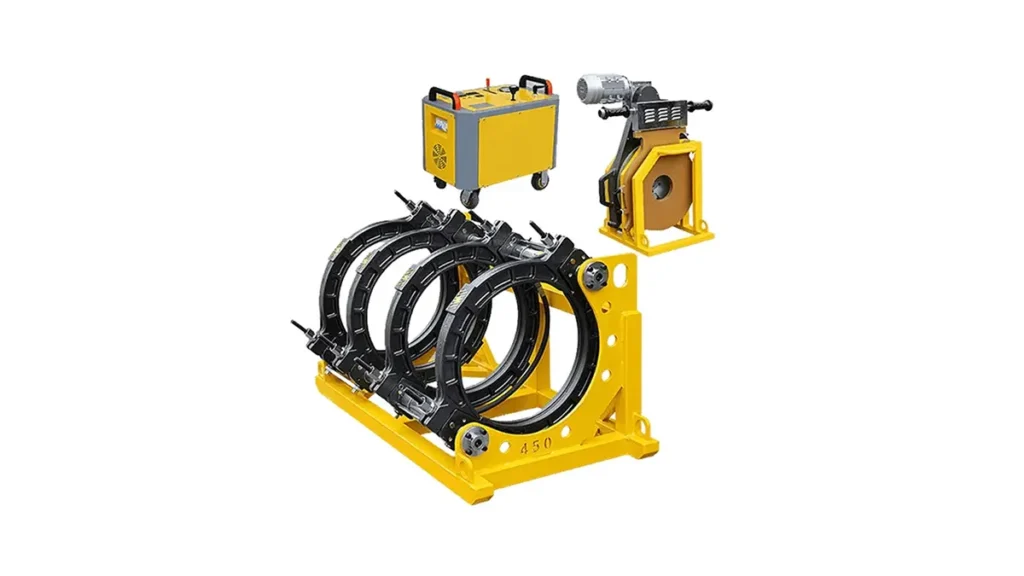
HDPE pipeline projects demand precision, consistency, and equipment that can perform reliably under pressure. For many contractors, distributors, and project managers, purchasing a welding machine outright is not always the most efficient choice. In many cases, HDPE welding equipment rental offers a smarter path by reducing upfront investment, improving flexibility, and helping teams complete projects faster without sacrificing weld quality.
As pipeline construction expands across water supply, gas distribution, mining, and industrial applications, the need for dependable fusion technology continues to grow. Rental solutions can support short-term jobs, emergency repairs, seasonal demand, and specialized project requirements. When used strategically, renting creates an opportunity to access professional-grade equipment while keeping budgets controlled and operations agile.
Key advantage: Rental is especially valuable when you need immediate access to high-performance fusion machinery without the long-term commitment of ownership.
Lower Upfront Investment
One of the most obvious benefits of renting HDPE welding equipment is cost control. Buying a machine can require a significant capital expense, especially if you need hydraulic or CNC automatic models capable of handling larger pipe diameters. Rental allows you to deploy funds where they are most needed, whether that means labor, materials, transport, or project expansion.
For contractors handling multiple projects with different budgets, this flexibility can be essential. Rather than tying money up in equipment that may sit idle after one contract ends, teams can pay only for the period of use. This is particularly effective for short-duration works, pilot installations, and one-time infrastructure jobs.
💡 Best for: temporary projects, budget-sensitive jobs, and companies testing new markets or pipeline categories.
Access to Professional-Grade Equipment
Rental gives you the chance to use equipment that might otherwise be too expensive to buy. This includes manual, hydraulic, and automatic butt fusion machines with features designed for accurate alignment, stable heating, and strong joint formation. For projects where weld quality is critical, having access to the right machine can directly affect long-term system reliability.
If your work requires advanced specifications or specific pipe size ranges, renting helps you match the machine to the job instead of adapting the job to the machine. This can reduce errors, lower rework rates, and improve installation consistency. Many companies also use rental to upgrade temporarily to more capable equipment when project demand increases.
For more background on fusion technology and product options, you can review the butt fusion machine solutions offered by specialized manufacturers.
Reduced Maintenance Burden
Owning welding equipment means taking responsibility for regular servicing, repairs, calibration, and spare parts management. With rented equipment, these obligations are often handled by the supplier. That reduces downtime risk and removes a major operational burden from your team.
This is especially useful when projects are far from your main service base or when in-house maintenance staff are limited. A well-maintained rental machine can arrive ready to use, saving time and lowering the chance of performance issues on site. In practice, this can be one of the most valuable aspects of renting, because it helps preserve schedule certainty.
Important: equipment condition matters. Always confirm that the rental supplier performs inspection, testing, and calibration before delivery.
Better Flexibility for Different Project Sizes
Not every project requires the same welding capacity. A small water line repair and a large industrial pipeline installation need very different levels of equipment performance. Rental makes it easier to scale up or down depending on the job.
This flexibility is especially helpful for contractors who handle diverse pipeline work. Instead of purchasing multiple machines to cover different pipe diameters or function requirements, a company can rent the exact equipment needed for each assignment. That improves utilization, reduces storage requirements, and keeps tool inventory lean.
For businesses that experience seasonal peaks, rental can also provide a simple way to handle extra demand. When workload rises, more equipment can be added quickly. When the peak ends, the rental ends too.
Ideal for Testing New Technology
Some teams are interested in upgrading their workflow but want to validate new machinery before making a purchase. Rental provides a low-risk path to evaluate a machine’s performance in real conditions. This is useful for comparing manual, hydraulic, and automatic fusion systems, as well as for assessing whether an upgrade genuinely improves productivity.
By renting first, project managers and technical teams can measure ease of operation, weld consistency, operator training needs, and compatibility with field conditions. If the equipment performs as expected, the company can then make a more informed purchase decision later.
🔍 Practical benefit: rental helps you evaluate machine performance before committing to long-term ownership.
Faster Project Start-Up
When time is limited, rental can accelerate project mobilization. Instead of spending weeks or months sourcing and purchasing equipment, you can often arrange delivery quickly from a supplier with stock available. This helps reduce delays and keeps work moving according to schedule.
For urgent repairs, emergency response work, and fast-track infrastructure contracts, this speed can be decisive. Rental reduces procurement complexity, shortens setup timelines, and allows crews to focus on installation rather than asset acquisition.
Operational speed can influence profitability
If a job starts earlier, revenue can begin sooner and penalties for delayed delivery can be avoided. In this sense, rental is not only a convenience feature; it can also support stronger financial outcomes by improving project execution speed.
Useful for International and Remote Projects
In remote locations or overseas sites, transporting owned equipment may be expensive and logistically difficult. Rental can simplify project setup by sourcing equipment closer to the work site or by relying on a supplier that supports global delivery and technical service.
This is particularly valuable for contractors working on mining, utility, and industrial infrastructure in geographically challenging regions. With the right rental partner, teams can access professional welding equipment without managing long-distance storage, customs issues, or complex post-project returns on owned assets.
Manufacturers such as JQ-Fusion demonstrate how strong technical support and reliable production capability can make this process easier for global users.
Supports Training and Workforce Development
Rental equipment can also be valuable for training new operators. Instead of assigning a brand-new employee to highly expensive owned machinery, companies can use rented units for instruction and supervised practice. This lowers risk while allowing teams to build competence in a realistic work environment.
Training on rental equipment is especially useful when staff need to learn machine setup, heating cycle management, clamp alignment, and joint preparation. Once the workforce is confident, they can transition to regular field operations with greater consistency and fewer mistakes.
Tip: choose rental machines with clear controls and stable operation if they will be used for staff training or multi-operator work.
Why Rental Works Well in the HDPE Sector
HDPE fusion projects often vary in size, schedule, and technical demand. Because of this variability, ownership is not always the most efficient solution. Rental fits the sector well because it matches equipment availability to actual need. That means lower idle time, lower maintenance responsibility, and better cost control.
For companies focused on performance and reliability, rental can be a strategic bridge between immediate project demands and long-term equipment planning. It allows you to remain competitive without overextending capital or compromising on welding quality.
Choosing the Right Rental Partner
The value of rental depends heavily on the supplier you choose. A strong partner should provide well-tested equipment, responsive service, and clear technical support. Look for providers with industry experience, a broad product range, and the ability to match machine specifications with project needs.
It is also worth evaluating whether the supplier offers machine options for different pipe diameters, project configurations, and jobsite environments. The best rental experience comes from a provider that understands fusion welding, not just equipment logistics.
If you need a reliable source with proven manufacturing strength and broad product support, it may help to explore trusted brands that specialize in HDPE welding systems and related services.
What to confirm before renting
Check machine condition, available accessories, delivery schedule, technical support, voltage compatibility, and whether the machine matches your pipe size and welding requirements.
Conclusion
HDPE welding equipment rental offers a practical mix of financial efficiency, operational flexibility, and technical convenience. It can reduce upfront costs, simplify maintenance, speed up project start-up, and help teams access the right machine for each job. For contractors and businesses navigating changing project demands, rental can be a powerful way to stay agile while maintaining weld quality.
Whether you are managing a short-term installation, evaluating new technology, or handling an urgent pipeline repair, rental can help you complete the work with less risk and more control. The key is choosing a dependable supplier and selecting equipment that truly fits the task.
FAQ
1. When is HDPE welding equipment rental a better choice than buying?
Rental is usually better for short-term projects, budget-sensitive jobs, emergency work, or situations where you need a specific machine only temporarily.
2. What types of HDPE welding machines are commonly available for rent?
Common rental options include manual butt fusion machines, hydraulic butt fusion machines, automatic butt fusion machines, and sometimes electrofusion equipment.
3. Does renting equipment reduce maintenance responsibilities?
Yes. In most cases, maintenance, inspection, and servicing are handled by the rental provider, which helps reduce downtime and operating burden.
4. Can rental equipment support large pipeline projects?
Yes. Rental can support both small and large projects as long as the supplier offers the correct machine size, configuration, and technical support for the job.
5. What should I check before choosing a rental supplier?
You should confirm equipment condition, machine compatibility, delivery speed, technical support, and whether the supplier can meet your pipe diameter and welding requirements.



