
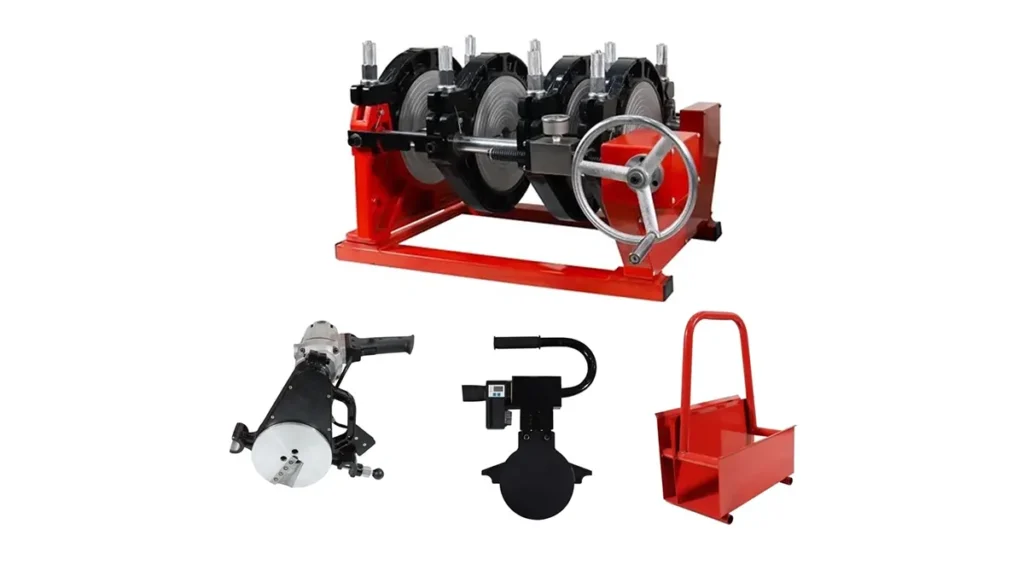
Poly fusion machines (commonly called butt fusion machines) are the industry standard for joining HDPE and other thermoplastic pipes into continuous, leak-free systems. This guide breaks down what poly fusion machines do, how they work, the main types available, practical applications, benefits, and clear buying tips to help pipeline contractors, utility planners, and procurement teams make the right choice.
What Is a Poly Fusion Machine?
Also known as butt fusion welders, poly fusion machines heat the ends of thermoplastic pipes and press them together to form a single homogeneous joint. The process eliminates mechanical fittings at the joint and produces a high-strength, corrosion-resistant connection ideal for water, gas, and industrial piping.
How Poly Fusion (Butt Fusion) Works
1. Preparation
Cut and align pipe ends, clamp them securely in the machine’s jaws, and face-trim the ends to ensure smooth contact surfaces.
2. Heating
A heated plate is inserted between the pipe ends. The plate raises the material to a melting temperature suitable for the pipe type and wall thickness.
3. Fusion & Cooling
After removing the heating plate, the machine brings the molten pipe ends together under controlled pressure. The joint is held until it cools and solidifies into a uniform weld.
Types of Poly Fusion Machines
Choose a machine based on project scale, required speed, precision, and level of automation. The main categories include:
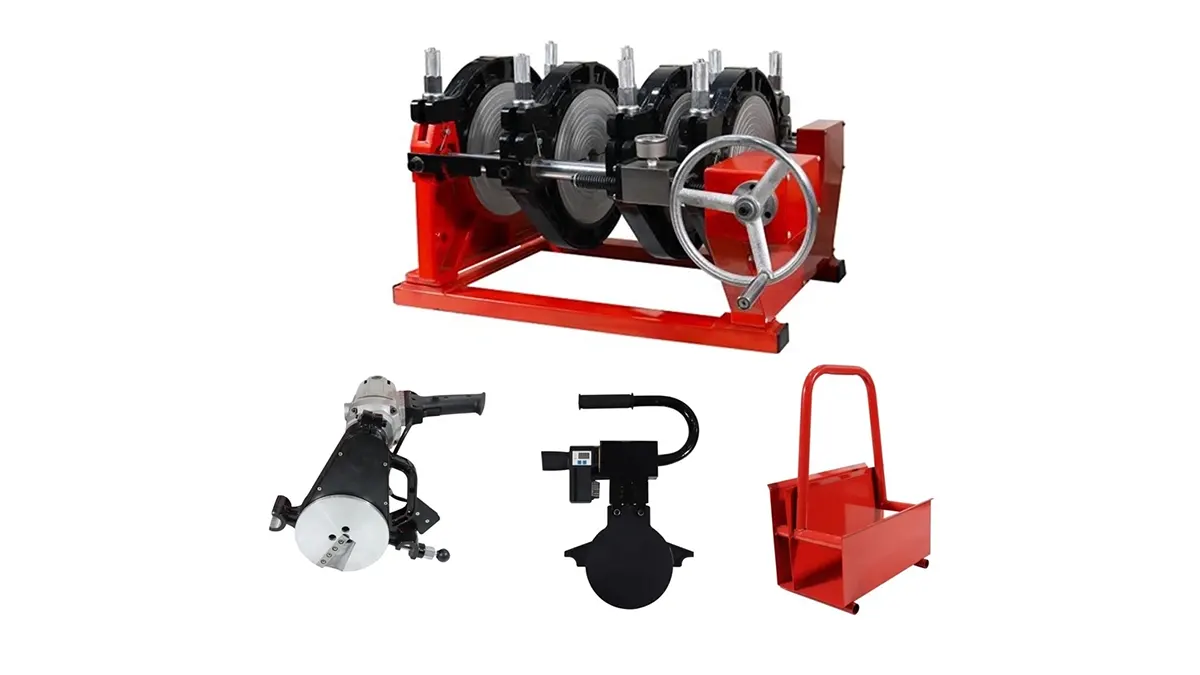
- Manual Machines — simple, portable, ideal for small jobs and tight budgets.
- Hydraulic Machines — deliver consistent pressure for medium to large diameter pipes and heavier duty fieldwork.
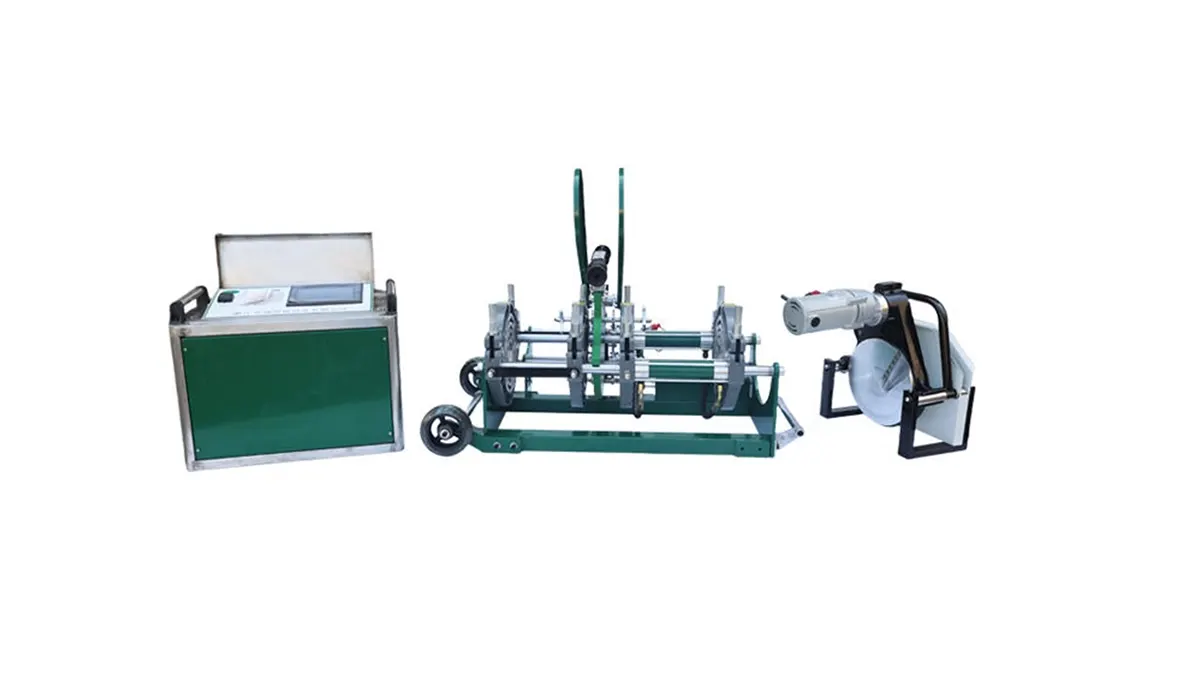
- Automatic / CNC Machines — precise, programmable, best for high-volume production and strict QA/QC requirements.
| Feature | Manual | Hydraulic | Automatic |
|---|---|---|---|
| Typical Diameter Range | Small–Medium | Medium–Large | Small–Very Large |
| Speed | Moderate | Fast | Very Fast |
| Ease of Use | Requires skill | Operator friendly | Highly automated |
| Typical Applications | Repair, small networks | Distribution mains, construction | Plant prefabrication, pipeline production |
Key Applications
Poly fusion is widely used in:
- Water supply and sewer networks
- Gas distribution (with proper certification)
- Agricultural irrigation systems
- Mining and slurry pipelines
- Industrial process piping and chemical transport
Benefits & Advantages
- Leak-free joints: Proper fusion creates a homogeneous bond that is as strong as the parent material.
- Corrosion resistance: HDPE systems avoid the corrosion and scaling issues of metal pipes.
- Long service life: Fusion-welded systems commonly deliver decades of reliable operation.
- Low maintenance: Fewer fittings and mechanical joints reduce inspection and repair needs.
Buying Tips: Choose the Right Machine
When evaluating poly fusion equipment, prioritize the following:
- Pipe diameter range: Match machine capacity to the diameters you will weld most often.
- Pressure & heating control: Precise control systems reduce rework and ensure consistent quality.
- Portability vs. power: Manual machines excel for mobility; hydraulic/automatic units suit fixed or high-volume operations.
- Spare parts & service: Check local availability of consumables, heaters, and repair support.
- Certifications: Ensure equipment supports welding procedures that meet industry standards (ISO/ASTM or regional equivalents).
- User training: Proper operator training is essential to achieve weld integrity and extend machine life.
Procurement checklist
- Confirm pipe SDR compatibility and fusion parameters.
- Request demonstration or weld records from the supplier.
- Compare total cost of ownership, not just upfront price.
- Verify warranty and on-site support options.
Maintenance & Best Practices
Extend machine life and maintain weld quality by keeping heating plates clean and undamaged, lubricating moving parts, storing the unit in dry conditions, and scheduling regular calibration of pressure and temperature controls. Always follow manufacturer guidelines for consumable replacement and periodic inspection.
Common FAQs
Is butt fusion suitable for all HDPE pipe sizes?
Yes — with the right machine and tooling you can butt-fuse a wide range of diameters, from small service lines to very large mains.
How long does a fusion joint take to cool?
Cooling times depend on pipe diameter and ambient conditions. Machines and standards provide recommended cooling times to ensure joint integrity.
Do automatic machines remove operator error?
Automation reduces variability and speeds up production, but operator training and correct setup remain important to ensure proper welds.
About JQ-Fusion: JQ-Fusion is a professional manufacturer specializing in HDPE pipe welding machines, providing reliable butt fusion solutions for global infrastructure projects. With years of industry experience, we focus on the development and production of manual, hydraulic, and CNC automatic butt fusion welding machines, covering a wide range of pipe sizes from small to large diameters. Our products are widely used in water supply, gas distribution, mining, and industrial pipeline systems. We are committed to delivering high-quality, durable, and customizable welding equipment to meet diverse project requirements. Supported by advanced manufacturing facilities, strict quality control processes, and a responsive service team, JQ-Fusion has built long-term partnerships with distributors and contractors worldwide. From standard models to tailored solutions, we help our clients achieve efficient, precise, and reliable pipe welding performance.



