
Installing pipeline welding equipment requires precise planning, disciplined on-site execution, and adherence to safety and quality standards. This guide covers the essential precautions and best practices for butt fusion, electrofusion, and hydraulic welding machines used in HDPE pipeline projects, helping contractors and technicians deliver reliable joints and long-term system performance.
Pre-Installation Planning: Scope, Environment, and Tools
Assess project conditions: map pipe diameters, material types (HDPE classification), ambient temperature, and trenching constraints. Gather manufacturer manuals, welding procedures, and calibration records before equipment arrives on site.
- Site survey: verify level ground, drainage, and stable berms for large-diameter machines.
- Logistics: plan crane or forklift access for heavy hydraulic or automatic units.
- Tools & spares: carry complete trimmer blades, heater plates, alignment clamps, O-rings, grease, and a calibrated thermocouple or IR thermometer.
Permits, Standards & Local Conditions
Confirm local regulations and project specifications. In climates with extreme heat or cold, adjust heating/cooling cycles accordingly to maintain fusion integrity. Keep welding records according to client and regulatory requirements.
Site Preparation & Machine Setup
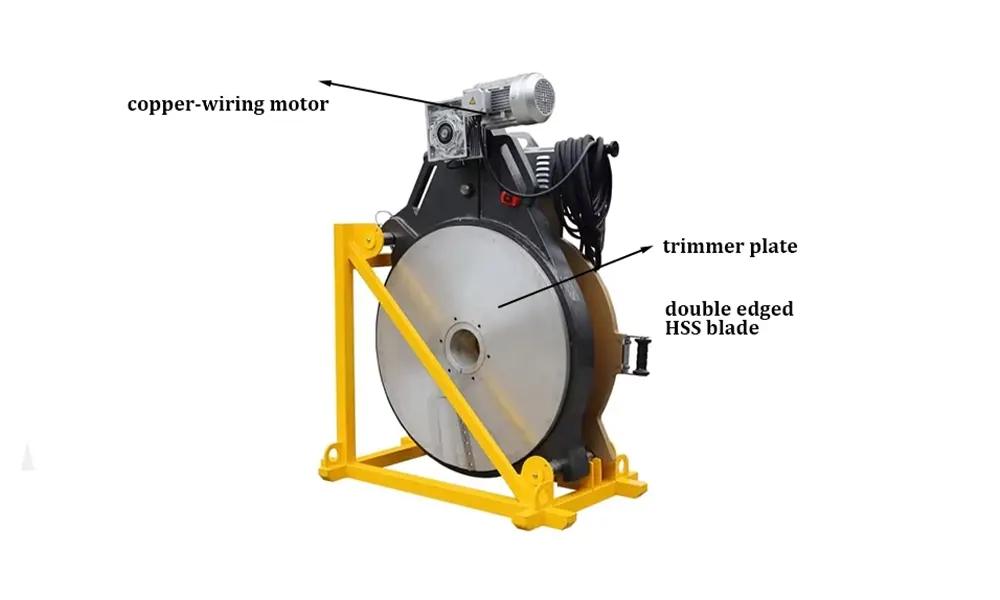
Position welding frames on firm, level surfaces. Ensure proper clearance for operators and material handling. Leveling and alignment directly affect joint concentricity and weld strength.
- Foundation: compact base and use steel plates where soil is soft.
- Environmental protection: use windbreaks or tents for dust control during trimming and heating operations.
- Electrical supply: verify voltage, grounding, and cable protection for automatic/electrofusion units.
Clamping & Alignment
Use accurately machined clamps and aligning tools. Misalignment can create weak beads and leak paths. Always run a dry-fit to verify pipe ends are square and concentric before heating.
Equipment Handling, Assembly & Commissioning
Follow the manufacturer’s commissioning checklist for hydraulic pressures, pump oil levels, and electronic controller calibration. Test-run the machine at no-load to confirm smooth operation.
- Hydraulic systems: purge air, check hoses and fittings for leaks, and set pressure limits per machine specs.
- Heater plates: inspect for flatness and clean any residue to avoid contamination of weld surfaces.
- Trimmer and facing tools: ensure sharp blades and correct feed rates to produce uniform facing.
Welding Procedure Control & Quality Assurance
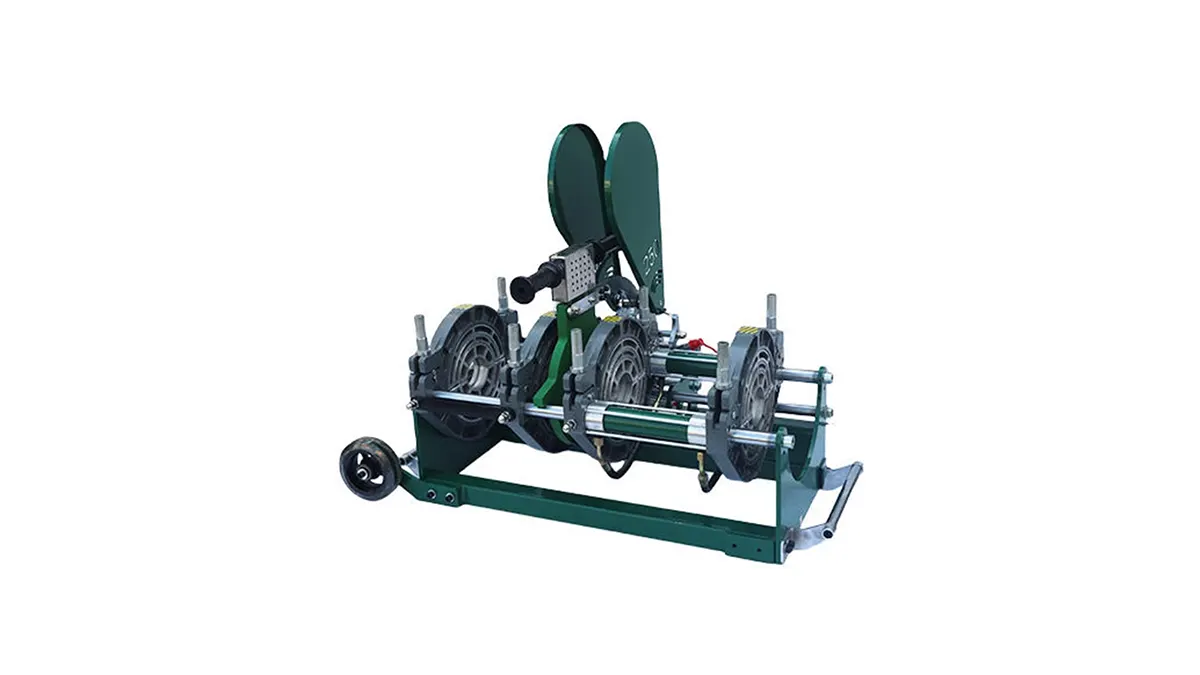
Control variables precisely: surface temperature, alignment pressure, Heater time, and cooling time. Implement a documented welding procedure and capture process data for every joint.
| Step | Typical Parameter | Best Practice |
|---|---|---|
| Facing (Trimming) | Remove 0.5–1.5 mm of material | Ensure smooth, square ends; check concentricity with gauge |
| Heating | Set heater to manufacturer temp (e.g., 200–240°C) | Use calibrated thermostat; avoid overheating and contamination |
| Fusion (Pressure) | Controlled forge pressure per pipe SDR | Monitor pressure ramp and hold times; document readings |
| Cooling | Cooling time according to diameter/DR | Do not disturb joint until fully cooled; mark welds with ID |
Testing & Documentation
Perform visual inspection, non-destructive pressure testing where required, and maintain weld logs including operator, machine ID, temperature, pressure, and timestamps. Traceability is critical for long-term asset management.
Safety Precautions & PPE
Welding operations involve heat, hydraulic pressure, and electrical components. Implement a site-specific safety plan and ensure all personnel wear appropriate PPE.
- Heat-resistant gloves, safety goggles, and face shields.
- Insulated footwear and protective clothing for hot surfaces.
- Lockout/tagout for electrical and hydraulic maintenance.
- Fire extinguisher and first-aid kit readily available.
Common Installation Mistakes to Avoid
- Skipping alignment checks before heating.
- Using worn or contaminated heater plates—results in weak fusion.
- Inaccurate or uncalibrated thermocouples and pressure gauges.
- Rushing cooling time—causes cold joints and brittle beads.
Post-Installation Care & Preventive Maintenance
Clean and protect heater plates, lubricate moving parts with recommended grease, and inspect clamps and hydraulic hoses regularly. Schedule periodic calibration for controllers and thermometers to keep quality consistent across projects.
For reliable welding equipment and technical support, consider suppliers with proven HDPE welding expertise. JQ-Fusion provides a range of manual, hydraulic, and automatic butt fusion machines and aftermarket parts to help you maintain consistent welding quality.



