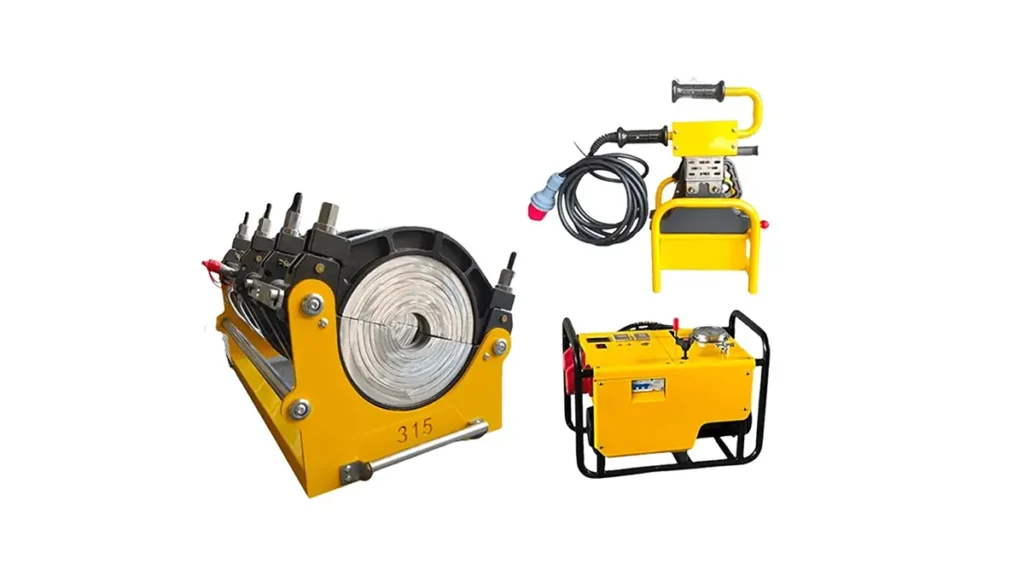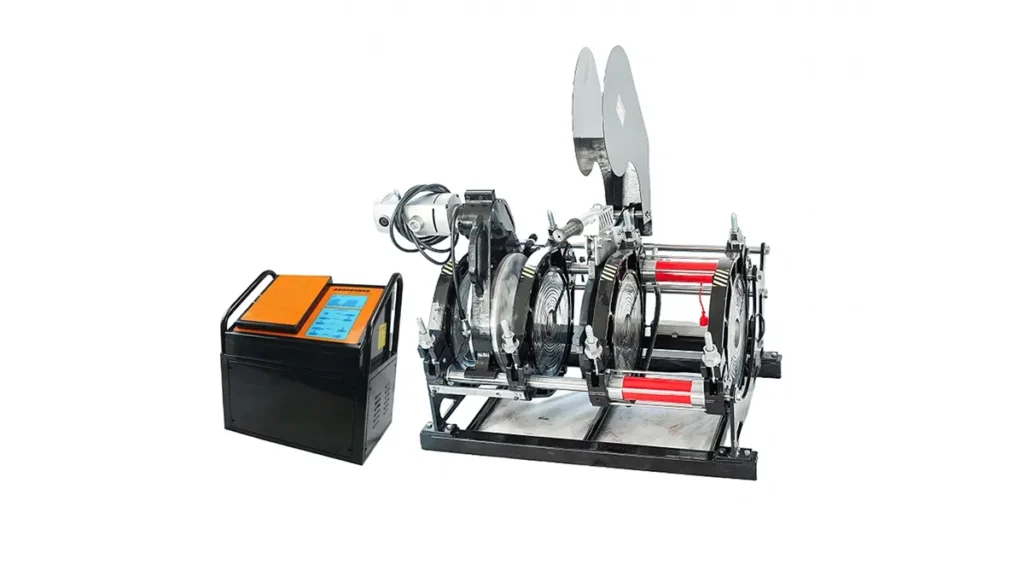
Proper pipe welding machine maintenance is the cornerstone of consistent joint quality and extended equipment lifespan. Whether you operate a manual, hydraulic, or CNC automatic butt fusion welder, a disciplined care routine prevents costly downtime and ensures every fusion meets stringent project specifications. Neglecting regular upkeep can lead to misaligned clamps, inaccurate heating plate temperatures, and premature component failure. This guide outlines essential maintenance practices to keep your butt fusion equipment performing at its peak.
Why Routine Pipe Welding Machine Maintenance Matters
Skipping pipe welding machine maintenance introduces risks that directly impact weld integrity. Contaminated heating plates cause poor melt quality, while worn trimmer blades create uneven pipe ends that prevent proper fusion. Hydraulic systems with degraded oil or leaks lose the consistent pressure required for hydraulic butt fusion machines. Consistent maintenance is not merely a recommendation—it is a necessity for any operation relying on HDPE pipe welding machines.
Daily Pre-Operation Inspection Checklist
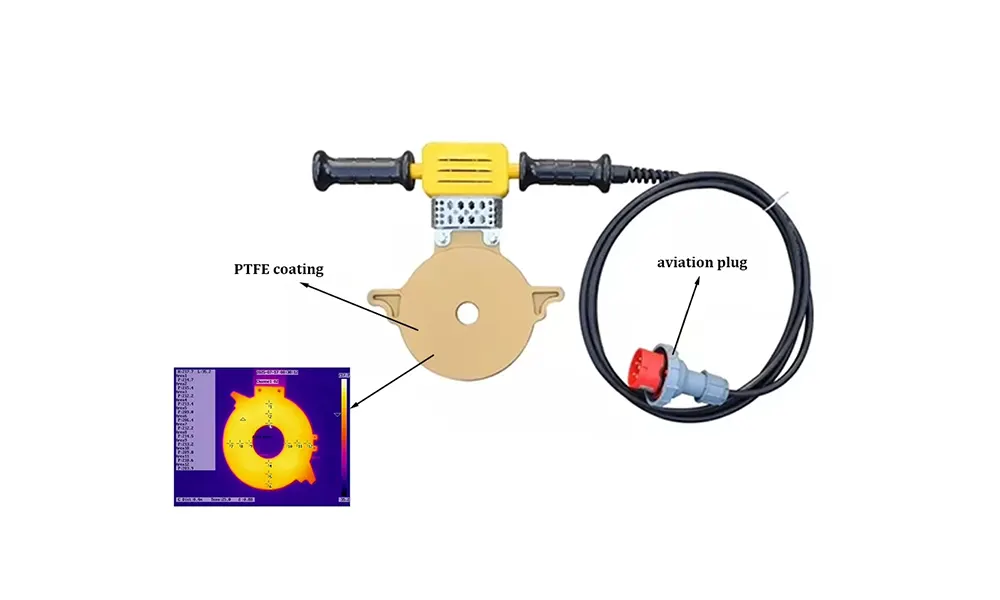
Before every shift, operators should perform a systematic walk-around of their pipe welding machine. Start by examining the power cords and hydraulic hoses for cuts or abrasions. Check the heating plate surface for polymer residue; even a thin layer of burnt plastic will prevent proper heat transfer. Verify the PTFE non-stick coating on the heating plate is intact, as a scratched surface will cause material to cling aggressively, increasing cleaning time and damaging the next joint.
- Heating Plate: Inspect for cleanliness and temperature accuracy using a calibrated surface thermometer. Confirm the temperature matches the display reading.
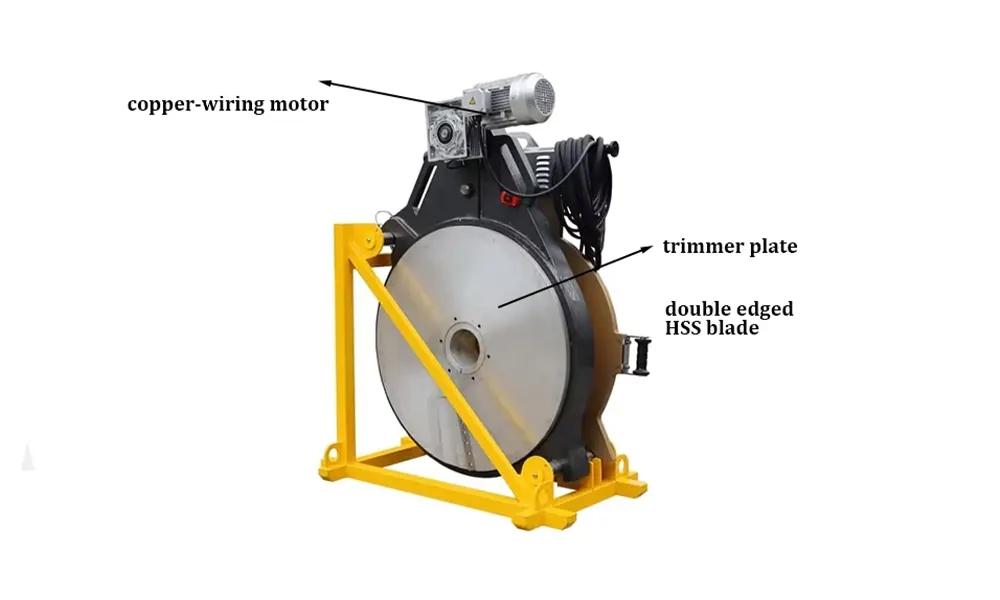
- Trimmer Blades: Rotate the trimmer manually to feel for binding. Check blade sharpness—dull blades gouge the pipe face rather than producing a clean, continuous chip.
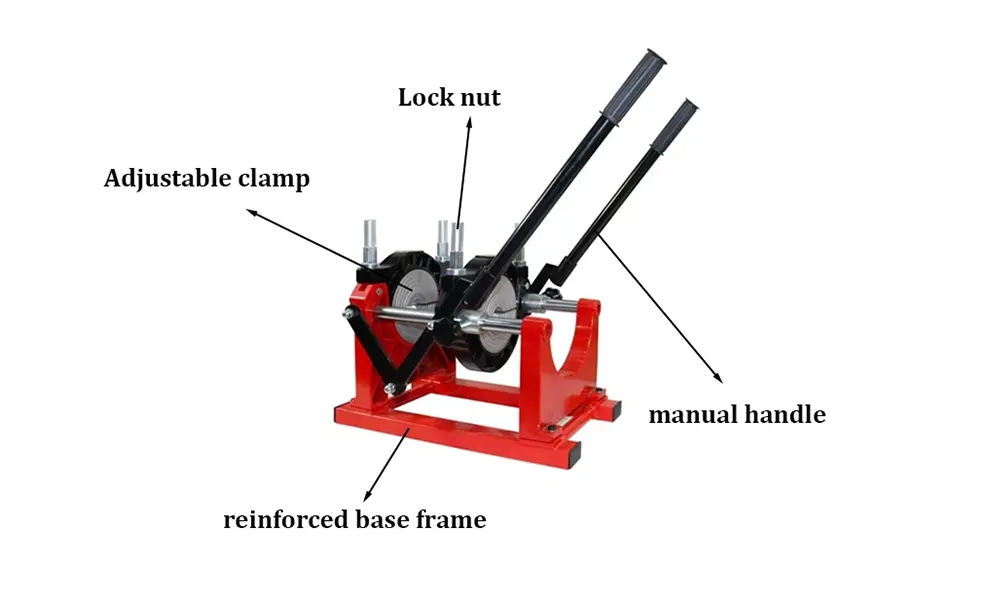
- Clamps and Inserts: Ensure clamp jaws open and close smoothly. Look for cracked inserts or misaligned clamping surfaces that could allow pipe slippage during high-pressure drag stages.
Heating Plate Care for Consistent Butt Fusion Welding
The heating plate is the heart of the butt fusion process. Proper pipe welding machine maintenance for this component requires both daily cleaning and periodic shop-level refinishing. After each weld, use a non-abrasive, lint-free cloth to wipe the PTFE surfaces while the plate is still warm, not scorching hot. For stubborn residue, a wooden or composite scraper is acceptable, but metal scrapers must be avoided entirely to prevent coating damage. At JQ-Fusion, our manufacturing team reinforces the importance of this step, noting that scratches in the non-stick coating are the leading cause of cold fusion joints. If the PTFE coating shows wear or deep scratches, the plate must be professionally re-coated or replaced. An unevenly heated plate will cause inconsistent bead formation and compromise pipe integrity, regardless of how carefully the rest of the procedure is followed.
Temperature Calibration Verification
Do not trust the digital display alone. Use a digital surface probe thermometer weekly to map the heating plate temperature across at least five points (center and quadrants). The reading must fall within the tolerance specified by international standards like ISO 21307 butt fusion procedures. If the temperature variance exceeds ±5°C, the internal thermocouple or control board requires diagnostics before the machine can produce reliable joints. An overheated plate degrades the polyethylene molecular structure, while an underheated plate fails to achieve proper melt depth, two conditions that are indistinguishable in the completed bead but drastically different in long-term performance.
Hydraulic System and Frame Maintenance
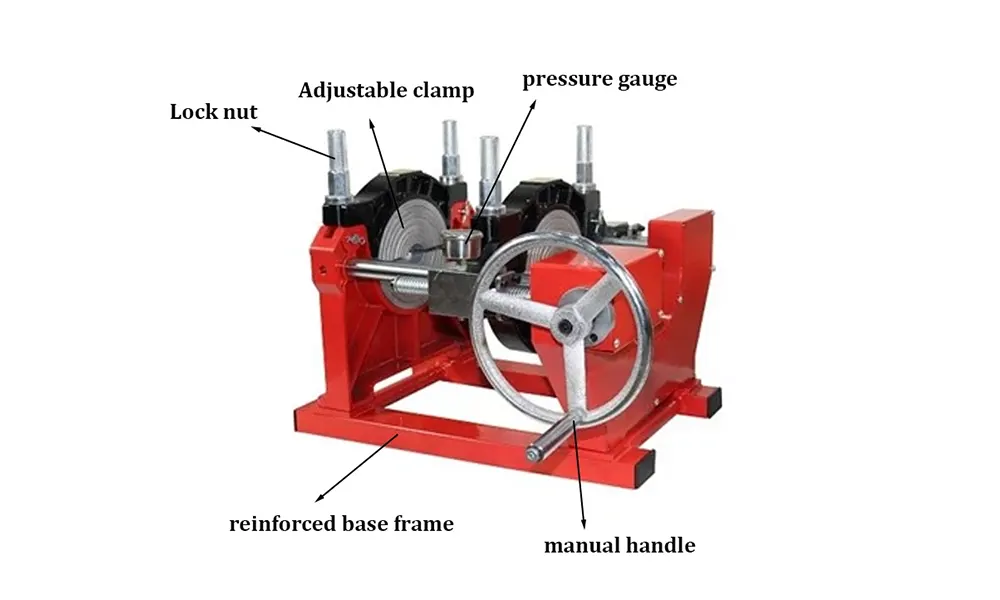
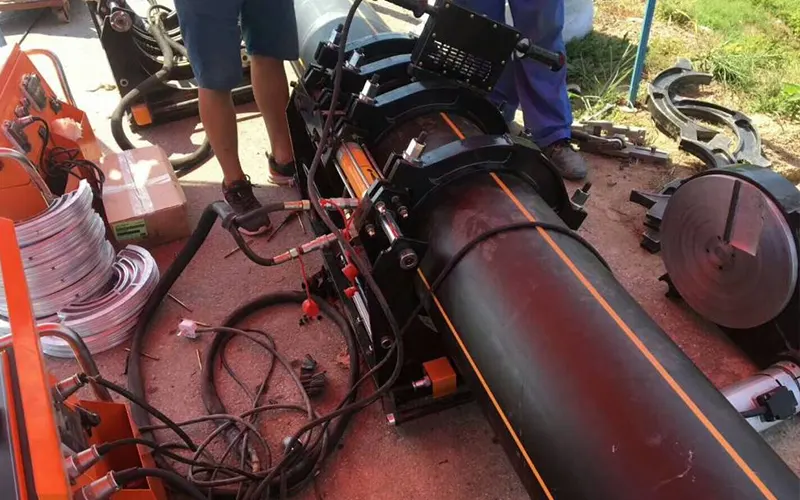
For hydraulic pipe welding machines, the oil quality and frame integrity directly determine joint precision. Our service team frequently identifies clamps that drag because debris accumulated in the slide ways, causing abrupt motion during the critical changeover from heating to joining. This jerkiness disrupts the weld bead and can introduce contamination into the molten interface. Operators should wipe down all guide rods and leadscrews daily, then apply a light coat of dry lubricant. Wet grease traps abrasive dirt that grinds down the surfaces over time.
- Hydraulic Oil Replacement: Change hydraulic oil every 12 months or after 1000 operating hours. Use only the viscosity grade and type specified. Contaminated or oxidized oil causes jerky cylinder movement and reduces the maximum available clamping force.
- Cylinder Rod Inspection: Extend the cylinders fully and run a clean, dry finger along the chrome rod to feel for pitting, scoring, or varnish-like deposits. Any roughness here will shred the rod seal, causing internal bypass and pressure loss.
- Carriage Alignment: With the clamps closed on a straight pipe section, use a feeler gauge to check that the movable and fixed jaw faces are parallel and centered. Misalignment here applies bending stress to the weld during cooling.
Trimmer and Milling Cutter Blade Care
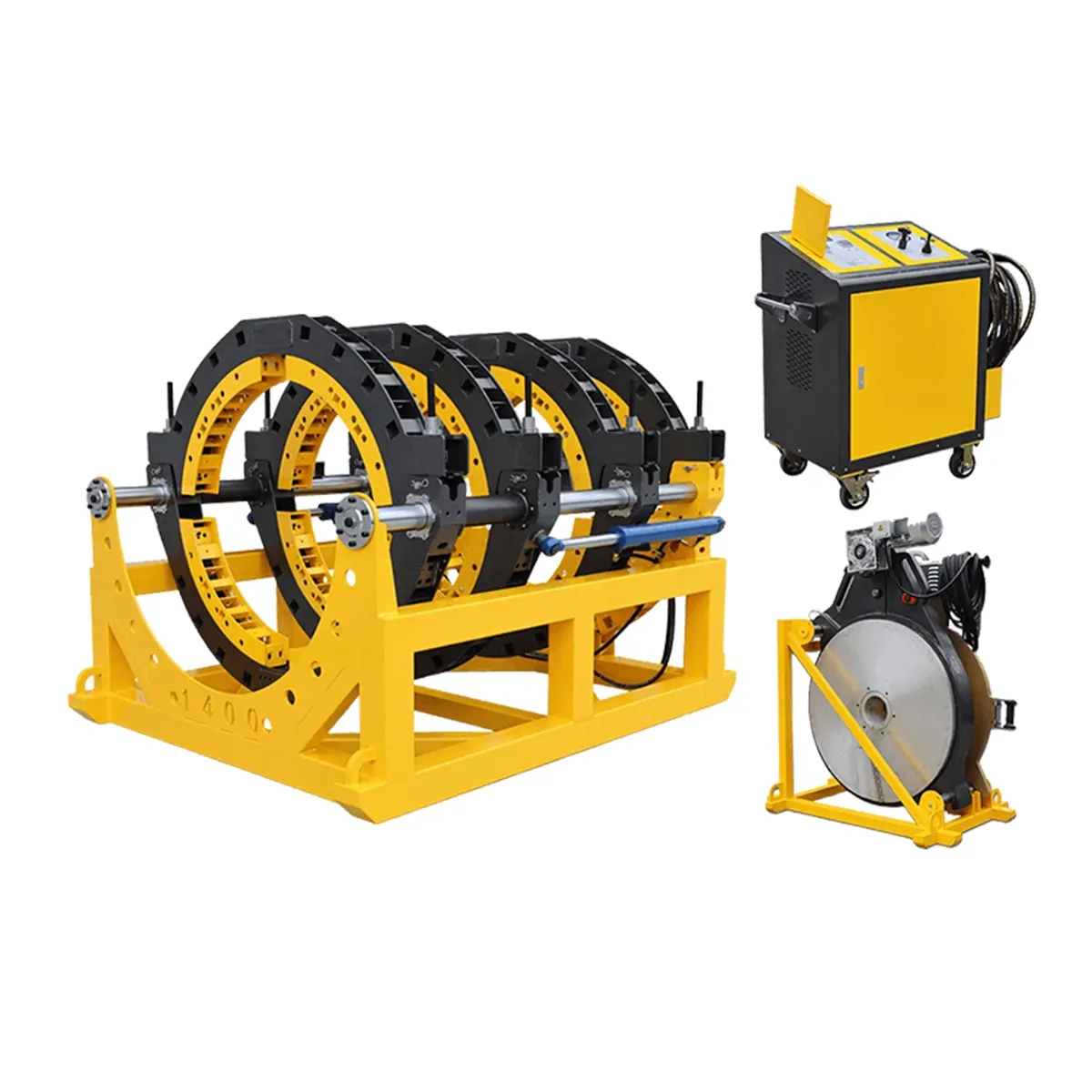
A sharp trimmer is essential for producing flat, parallel pipe faces. Dull blades smear the polyethylene instead of cutting it, creating a glossy surface that does not fuse properly during the heating and bead-up stages. During your pipe welding machine maintenance routine, remove the trimmer from the frame at least bi-weekly, depending on usage volume. Inspect each cutting edge under bright light. If you can see reflected light off the cutting edge, the blade is already rounded and must be replaced. Always replace blades as a complete set to maintain balance and ensure the cutting head runs true. After blade replacement, verify the trimmer faces both pipe ends simultaneously without rocking. If the facing step takes longer than expected to produce a continuous chip all around, the blades are overdue for sharpening.
Cleanliness and Proper Storage of Pipe Welding Equipment
Environmental contamination is an often overlooked factor undermining pipe welding machine maintenance. Construction sites expose equipment to sand, mud, and moisture that accelerate wear on every moving component. Machines stored outdoors or uncovered between shifts develop rust on guide rods, corrosion on electrical connectors, and UV degradation of seals and wipers. Whenever possible, park the machine with the clamp jaws lightly closed, not fully open, to protect the machined surfaces. Cover the heating plate and control panel with fitted, weatherproof covers. If the machine must remain on-site, elevate it on timbers or a pallet to prevent standing water contact, and ensure the electrical enclosure door is tightly latched and gaskets are in good condition. For long-term storage, remove the hydraulic oil, replace it with a preservative fill, and tag the machine with the date to prevent accidental startup without re-commissioning.
Recommended Pipe Welding Machine Maintenance Schedule
The following table organizes the key pipe welding machine maintenance tasks by frequency. Use it as a baseline and adjust based on your operating environment and production volume. A machine welding abrasive slurries or working in desert conditions requires more frequent attention.
| Interval | Task | Key Components |
|---|---|---|
| Daily | Visual inspection, clean heating plate, wipe guide rods | Heating plate, clamps, trimmer, hydraulic hoses |
| Weekly | Temperature calibration check, trimmer blade inspection | Heating plate thermocouple, trimmer blades, carriage slides |
| Monthly | Carriage alignment check, lubricate all pivot points, inspect electrical connectors | Clamp frame, control panel, limit switches, wiring |
| Every 6 Months | Hydraulic oil analysis, cylinder seal inspection, fastener torque check | Hydraulic power pack, cylinders, all bolted joints |
| Annually | Complete hydraulic oil change, PTFE plate recoating, full functional test | Oil reservoir, heating plate, pressure gauge calibration |
Documenting Your Maintenance History
Every pipe welding machine should have a physical or digital logbook tracking all service actions. Record dates, tasks performed, parts replaced, and the technician’s name. This history helps diagnose recurring issues, such as a hydraulic cylinder that requires frequent seal replacement, pointing to a scored rod that needs re-chroming. For projects governed by ISO 12176-1 or PPI technical guidance, documented maintenance demonstrates due diligence and supports the traceability requirements of quality assurance programs. A well-maintained machine with a complete service history also commands a significantly higher resale value and provides peace of mind when bidding on critical infrastructure contracts.
About JQ-Fusion
JQ-Fusion is a professional manufacturer specializing in HDPE pipe welding machines, providing reliable butt fusion solutions for global infrastructure projects. With years of industry experience, we focus on the development and production of manual, hydraulic, and CNC automatic butt fusion welding machines, covering a wide range of pipe sizes from small to large diameters. Our products are widely used in water supply, gas distribution, mining, and industrial pipeline systems. We are committed to delivering high-quality, durable, and customizable welding equipment to meet diverse project requirements.
Common Mistakes That Void Your Warranty and Reduce Equipment Life
Understanding what not to do is equally important as knowing the correct procedures. One of the most damaging practices is using compressed air to blow dust off the machine. The high-pressure stream forces abrasive particles past wiper seals and deep into bearing surfaces where they accelerate wear. Another frequent error is power washing the machine after a muddy job. Water inevitably penetrates electrical enclosures, causing corrosion on circuit boards and connectors that leads to intermittent faults that are difficult to diagnose. Transporting the machine without securing the movable carriage with the factory shipping brackets also causes impact damage to the leadscrew and alignment structure, gradually increasing the clamp misalignment until joints no longer meet ovality requirements. Adhering to the manufacturer’s pipe welding machine maintenance guidelines is the best way to protect your investment and ensure every joint meets project specifications.
Electrofusion Machine Maintenance Essentials
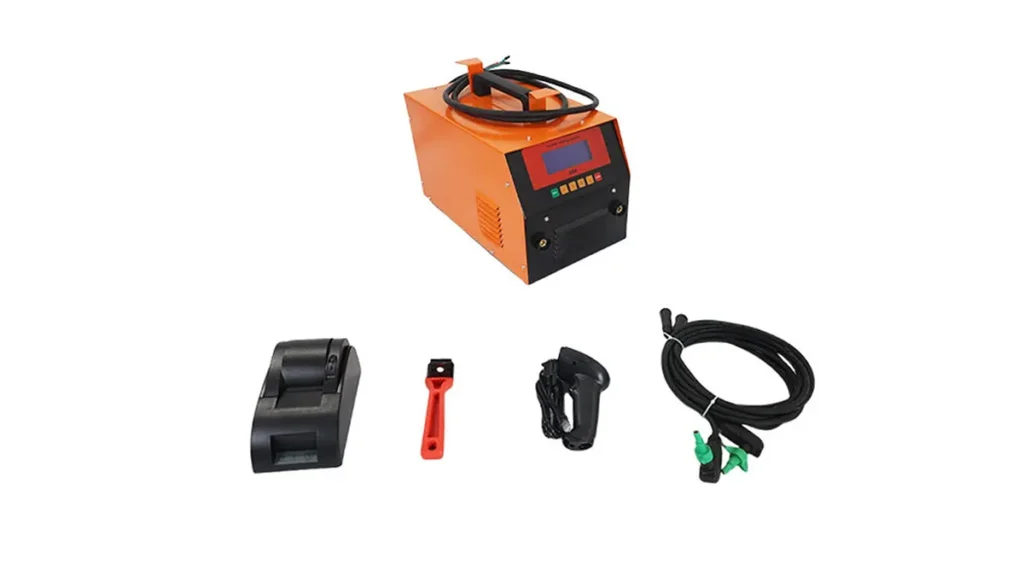
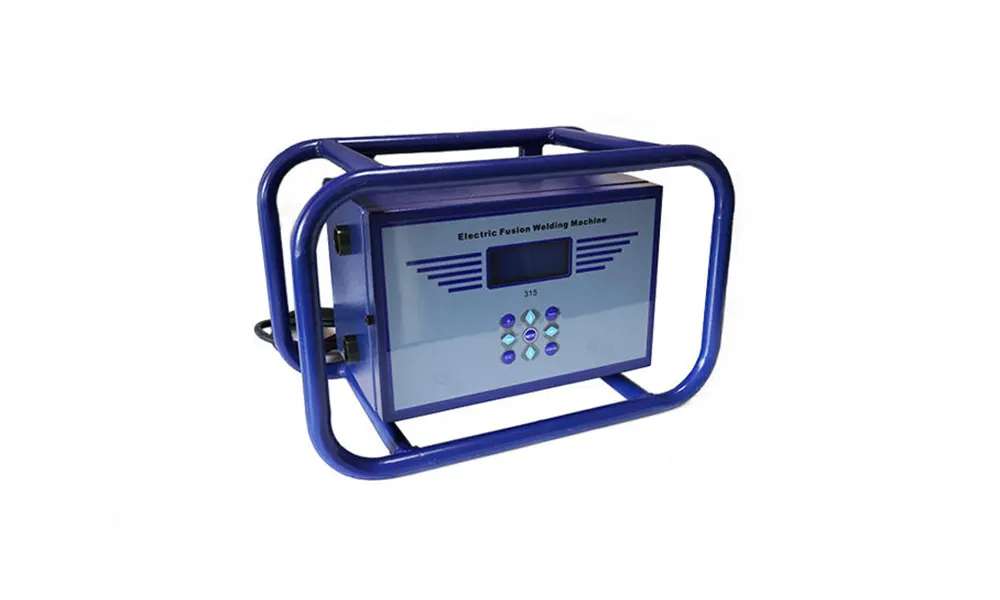
While butt fusion equipment requires mechanical precision, electrofusion machines demand meticulous connector care and software diligence. The output terminals must be cleaned weekly with electrical contact cleaner and a brass brush to remove oxidation that increases resistance and causes inaccurate energy delivery. Inspect the contact pins for signs of arcing or pitting, which create localized hot spots during the fusion cycle. Keep the machine firmware updated, as manufacturers periodically release improved fusion protocols that adapt to evolving fitting designs. A machine with outdated software may apply incorrect energy parameters to newer fittings, leading to joints that appear visually correct but lack the full inter-laminar shear strength required by the pipeline design.
Operator Training and Competency
Even the best-maintained pipe welding machine cannot compensate for an inadequately trained operator. Fusion technicians must understand not just the button-pushing sequence but the underlying material science of polyethylene welding. Knowing how to recognize a proper melt bead, interpret a pressure gauge fluctuation, or detect an irregular trimmer sound are skills developed through structured training and supervised field experience. Many industry bodies offer fusion operator qualification programs aligned with ISO 12176-3 and ASTM F3190 standards. Investing in operator competency reduces the number of rejected joints, minimizes machine abuse, and ultimately lowers the total cost of ownership for your pipe welding equipment fleet. When every fusion operator understands how their actions affect machine longevity and weld integrity, both productivity and safety improve across the entire jobsite.
Contact our service team for personalized pipe welding machine maintenance support: [email protected] | +86 15093385787