
PE pipe fusion machines (HDPE butt fusion machines) are essential equipment for modern pipeline installation and repair. This guide explains how to choose the right machine, operate it correctly, and maintain it to maximize uptime and weld quality. Whether you’re a contractor, utilities engineer, or procurement manager, these practical tips will help you get consistent, safe joints from PE fusion processes.
Why choose a PE pipe fusion machine?
Butt fusion creates homogeneous, leak-free joints by heating and pressing pipe ends together. Compared with mechanical fittings or adhesives, fusion welding delivers superior strength, corrosion resistance, and longevity for water, gas, and industrial pipelines. Consistent fusion parameters and proper tooling minimize rework and reduce lifecycle costs.
Common machine types and when to use them
Manual Butt Fusion
Simple, cost-effective, and portable — best for small diameter PE pipes and occasional field work. Manual machines require operator skill for alignment and pressure control.
Hydraulic Butt Fusion
Hydraulic machines offer stable pressure and faster cycle times, making them ideal for medium-to-large pipe diameters and high-volume site work. They reduce operator fatigue and improve repeatability.
Automatic / CNC Butt Fusion
Automatic units control heating, alignment, and fusion parameters digitally for precision welding, traceability, and minimal operator influence — ideal for contractors focused on productivity and quality assurance.
Multi-angle and Specialty Machines
Designed for fittings and complex geometries, multi-angle machines handle elbows, tees, and branch connections with custom fixturing.
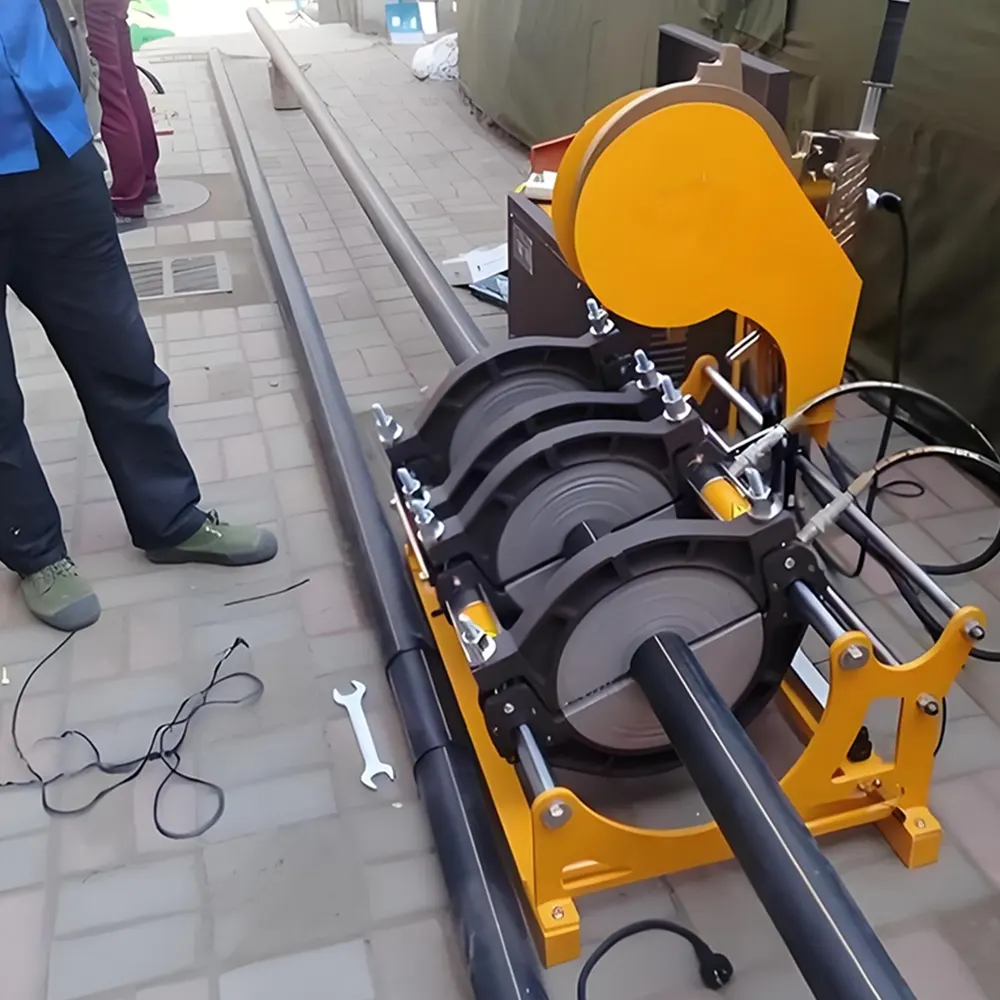
Quick selection checklist
- Pipe diameter range: Confirm minimum and maximum sizes for the machine.
- Material compatibility: PE100, PE80, or other thermoplastics.
- Portability vs production: Manual for portability, hydraulic/automatic for higher throughput.
- Accuracy & traceability: Digital control and data logging for regulated projects.
- After-sales support: Access to spare parts, training, and service.
Specification comparison (typical)
| Machine Type | Typical Pipe Range | Production | Best For |
|---|---|---|---|
| Manual | 16–630 mm | Low | Service & small jobs |
| Hydraulic | 63–2250 mm | Medium | Large pipelines, site work |
| Automatic / CNC | 63–1600 mm | High | High-volume, QA-critical projects |
| Multi-angle | Fittings & complex shapes | Variable | Branching & fittings welding |
Step-by-step operation (best practice)
- Prepare pipe ends: clean, square-cut, and bevel if needed. Use a trimmer for consistent faces.
- Align and clamp: ensure concentric alignment and gap control. Misalignment causes weak joints.
- Facing/heating: face to remove burrs, then heat plate to the correct temperature per material spec.
- Fusion: apply controlled pressure and hold for the specified cooling time. Follow the machine’s parameter table.
- Inspect joint: check uniform bead and conduct visual or destructive testing when required.
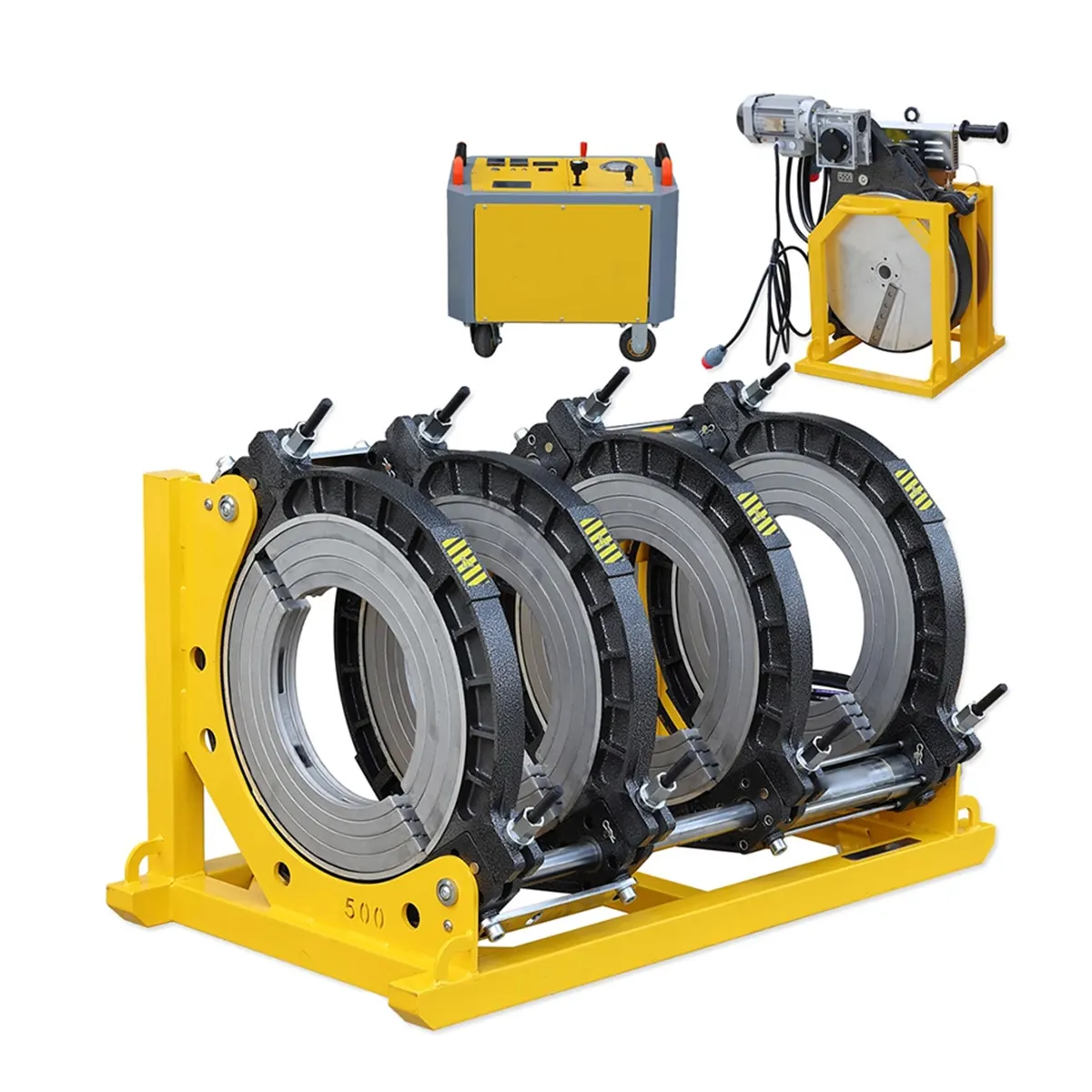
Safety and quality controls
- Wear PPE: gloves, eye protection, and heat-resistant clothing when handling heaters.
- Prevent contamination: keep heating plates and clamps clean; avoid dirt, moisture, or oil on mating surfaces.
- Follow documented procedures: record temperature, pressure, and times for traceability.
- Use calibrated instruments: thermometers, pressure gauges, and alignment tools.
Maintenance schedule (recommended)
| Interval | Task | Why it matters |
|---|---|---|
| Daily | Clean heating plate & clamps; inspect faces | Prevents contamination and poor welds |
| Monthly | Check hydraulic oil levels and couplings; test pressure accuracy | Ensures consistent pressure delivery |
| Annually | Full calibration, replace worn seals and heating elements | Maintains weld quality and machine life |
Troubleshooting: quick fixes
- Uneven beads: Check alignment and facing; ensure heating temperature is correct.
- Cold welds / low strength: Increase heating time/temperature or pressure per spec.
- Hydraulic slow response: Inspect oil level, bleed air, check hoses for leaks.
- Plate sticking: Clean plate surfaces and use release agents as recommended.
Buying and support considerations
Look for clear documentation, spare parts availability, operator training, and local service networks. Machines with digital logging and user-friendly controls reduce operator error and support regulatory compliance. Consider total cost of ownership, not just purchase price.
About the manufacturer
JQ-Fusion is a professional manufacturer specializing in HDPE pipe welding machines, providing reliable butt fusion solutions for global infrastructure projects.
Final tips
Document every weld, retain machine calibration records, and invest in operator training. With the right machine selection, consistent procedures, and routine maintenance, PE pipe fusion welding delivers durable, leak-free pipelines that last for decades.



