
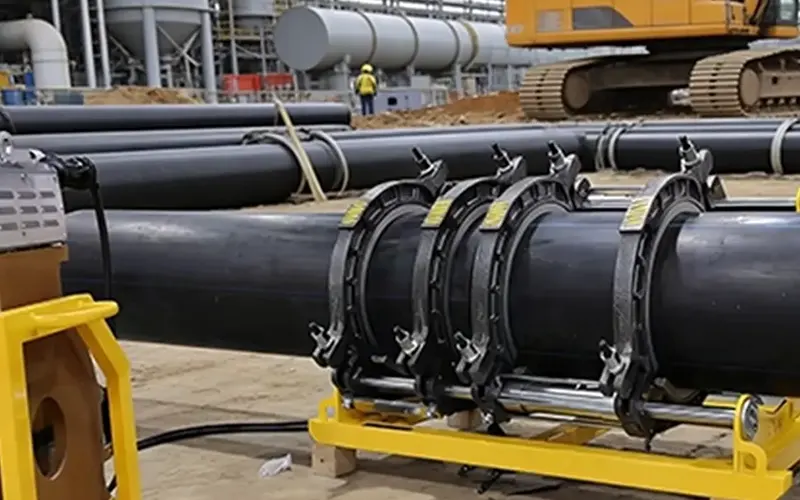
Hydraulic HDPE pipe welding machines deliver factory-grade fusion for polyethylene pipelines — combining controlled pressure, consistent heating, and rugged hydraulics to produce joints that meet demanding infrastructure standards. As a trusted manufacturer, JQ-Fusion supplies a full range of hydraulic butt fusion machines designed for reliable performance across water, gas, mining, and industrial pipeline projects.
Key Features of Hydraulic HDPE Pipe Welding Machines
Stable hydraulic pressure: Precise and steady force during the heating and fusion phases reduces variability and ensures consistent bead formation.
Integrated controls: Digital or analog control systems provide accurate temperature and timing profiles for repeatable weld quality.
Heavy-duty clamping systems: Robust clamps and saddles secure pipes of various diameters and withstand field conditions.
Wide diameter range support: Models are available for small service lines up to large-diameter trunk mains, accommodating common construction needs.
How Hydraulic Systems Improve Fusion Quality
Hydraulic actuation minimizes human error by maintaining constant axial force throughout the fusion cycle. This consistency helps achieve uniform fusion zones and reduces weak spots caused by pressure fluctuations or manual adjustments.
Typical Applications
Hydraulic butt fusion machines are widely used in:
• Municipal water distribution mains and potable water networks
• Gas distribution and mains with stringent safety standards
• Mining and slurry lines that require durable, abrasion-resistant joints
• Industrial process piping where chemical resistance and leak-free performance are critical
Factory-Grade Specifications (Example Models)
| Model | Pipe Range (mm) | Max Pressure | Control Type |
|---|---|---|---|
| JQH160 | 20–160 | 10 MPa | Manual/Hydraulic |
| JQH630 | 160–630 | 16 MPa | Semi-Automatic |
| JQH1800 | 800–1800 | 20 MPa | Hydraulic CNC |
Benefits for Contractors and Project Managers
Faster cycle times: Automated pressure control and quick clamping shorten weld times and increase daily output.
Higher joint reliability: Consistent thermal profiles reduce rework and extend pipeline service life.
Enhanced safety: Reduced manual intervention during high-force steps lowers on-site risk.
Scalability: Modular hydraulic stations and interchangeable clamps support fleet-wide standardization across projects.
Selecting the Right Hydraulic HDPE Welding Machine
Choose based on pipe diameter range, on-site power availability, desired automation level, and project throughput. For remote or rugged sites, look for machines with robust frames, easy maintenance access, and proven hydraulic components.
Quality Assurance & After-Sales
Factory-level QC, documented welding procedures, and accessible spare parts are essential. Prioritize suppliers that provide training, calibration support, and rapid spare-part delivery to minimize downtime on critical projects.
Pro tip:
Document weld parameters (temperature, pressure, time) and keep fusion logs to comply with standards and ensure traceability for long-term pipeline integrity.



