
Operating a pipe welding machine safely and efficiently requires preparation, correct machine setup, and strict adherence to welding parameters. This step-by-step guide walks technicians through the complete butt fusion workflow for HDPE pipes, from inspection and clamping to heating, fusion and cooling. Use it as a practical checklist on the jobsite to improve weld quality and reduce rework.
Safety First: Personal Protective Equipment & Site Prep
Personal protective equipment (PPE) is mandatory: wear impact-rated safety glasses, welding gloves, steel-toe boots, hearing protection and flame-resistant clothing. Ensure site ventilation for enclosed spaces and keep a Class ABC fire extinguisher nearby.
Inspect the work area for trip hazards and ensure pipes and machine sit on stable, level ground. Confirm that the welding machine’s power and hydraulic supply (if applicable) meet manufacturer specs before starting.
Pre-Operation Machine & Pipe Checks
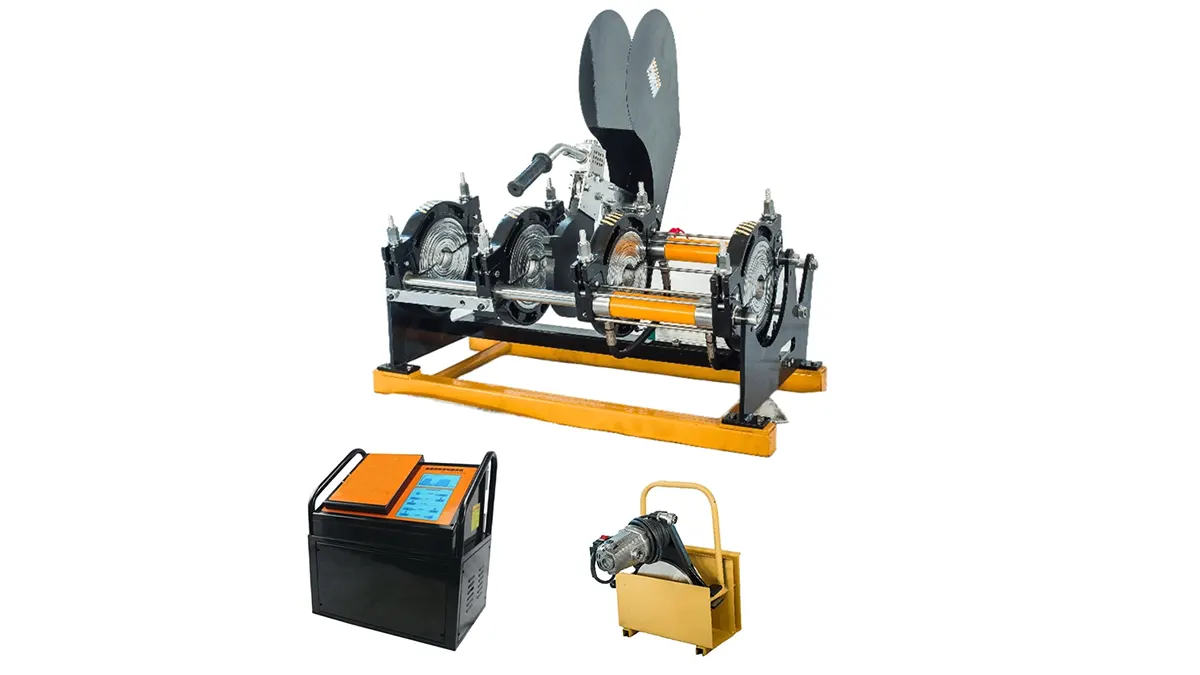
Visual inspection: check clamps, alignment rails, heating plate surface and facer/trimmer for damage or contamination. Remove any burrs, dirt, moisture or oil from pipe ends using clean, lint-free cloths.
Confirm the heating plate temperature and controller calibration. Verify that the facer blade is sharp and rotates smoothly; a dull blade causes uneven facing and poor fusion.
Step-by-Step Welding Procedure
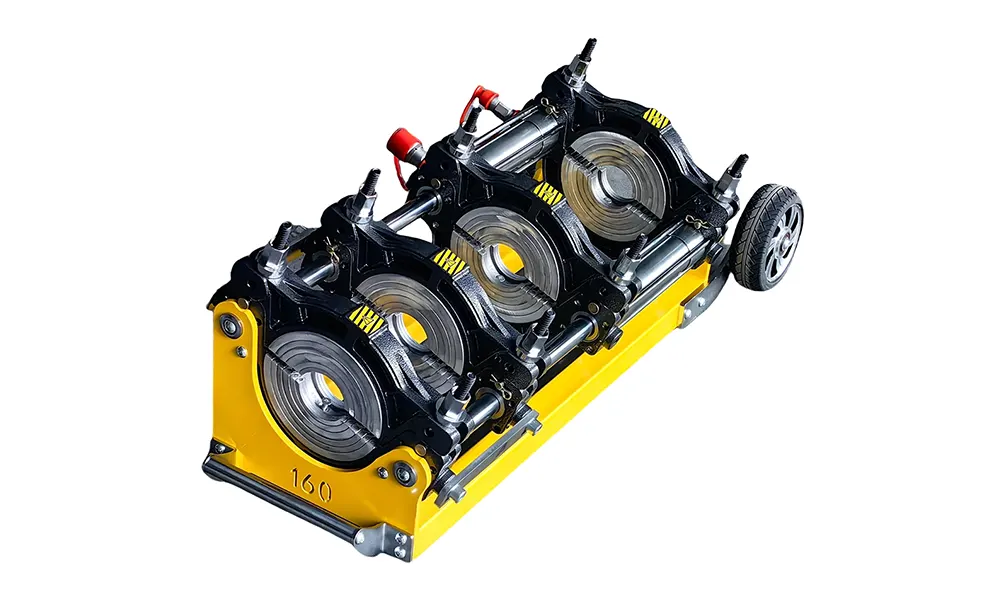
Step 1: Align and clamp pipe ends. Position pipes concentrically in the clamps. Tighten evenly to avoid deformation. Use alignment marks and measure butt gap to ensure it matches the recommended gap for pipe diameter and SDR.
Step 2: Face (trim) pipe ends. Use the facer/trimmer to remove oxidized material and achieve flat, square faces. Inspect faces for uniformity and proper bevel (none for butt fusion). Remove chips and swarf before proceeding.
Step 3: Preheat—apply the heating plate. Place the heating plate between the pipe ends and apply light pressure. Maintain the correct preheat time and temperature based on pipe material and diameter (reference table below).
Step 4: Remove heater and join under pressure. After reaching the preheat condition, quickly remove the heating plate and bring pipe ends together with controlled and even fusion pressure. Hold until the joint cools to the specified time.
Step 5: Post-weld inspection and cooling. Do not disturb the joint during cooling. Inspect the bead (melt flash) for uniformity around the circumference and measure cold-weld time. Document weld parameters for quality control.
Common Problems and Quick Corrections
Non-uniform melt bead: often caused by misalignment or uneven pressure—re-clamp and redo facing. Ensure facer blade is clean and heater temperature stable.
Insufficient fusion depth: may be due to low heating temperature, short heating time, or contamination—verify heater calibration and clean pipe surfaces.
Excessive bead blowout: results from excessive pressure or overheating—reduce fusion pressure and re-check temperature/time settings for the pipe SDR/diameter.
Recommended Parameters (Typical HDPE Butt Fusion)
| Pipe OD (mm) | Heater Temp (°C) | Facing Time (s) | Heating Time (s) | Cooling Time (min) |
|---|---|---|---|---|
| 20 – 110 | 200 – 220 | 6 – 20 | 30 – 120 | 3 – 15 |
| 125 – 355 | 200 – 220 | 8 – 30 | 90 – 600 | 15 – 60 |
| >355 | 200 – 220 | 10 – 60 | 300 – 1800 | 30 – 240 |
Machine Maintenance & Calibration
Regularly clean the heating plate and facer surfaces. Replace worn facer blades and inspect hydraulic hoses and seals for leaks. Calibrate temperature controllers annually or per manufacturer recommendations to maintain weld consistency.
Quality Control and Record Keeping
Log each weld with pipe material, SDR, machine model, heater temperature, heating and cooling times, operator name and visual inspection results. Track rejects and corrective actions to identify patterns and improve processes.
Why Choose Reliable Equipment
Using a dependable butt fusion machine reduces downtime and rework. For high-quality, durable butt fusion equipment trusted by contractors worldwide, consider JQ-Fusion as a source for manual, hydraulic and automatic machines designed for a wide range of pipe sizes and jobsite conditions.



