
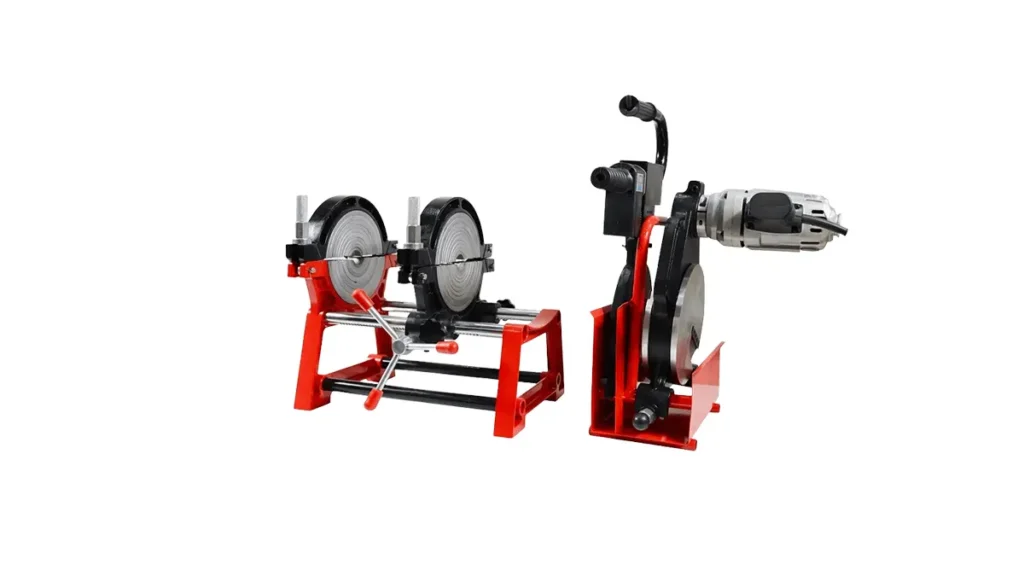
When you are planning to enter international markets with pipeline equipment, choosing the right butt fusion machine is not only a purchasing decision, but also a business strategy. Export buyers, distributors, and project contractors need equipment that can perform consistently, satisfy different regional standards, and support long-term commercial growth. A suitable machine helps you reduce after-sales risks, improve customer satisfaction, and build trust in competitive markets.
For exporters, the challenge is not simply finding a welding machine that works. The real challenge is selecting a solution that can match diverse pipe sizes, voltage requirements, climate conditions, user skill levels, and project environments. If the machine is too limited, it may fail to meet the needs of overseas customers. If it is too complicated, it may increase training costs and installation errors. This is why a careful evaluation process is necessary before making any export purchase.
1. Understand the Target Market Before You Choose
Before selecting a butt fusion welding machine for export, you should first identify the end market. Different countries and industries have different expectations. A water supply contractor may need a reliable hydraulic model for medium and large diameters, while a small distributor may prefer manual models with lower investment costs. Mining projects often require rugged and durable machines, while gas distribution networks usually focus more on accuracy and compliance.
Key point: The export machine should be chosen according to the actual application scenario, not just the lowest price or the most popular model.
It is also important to consider the local operating habits of users. In some markets, customers prefer simple operation and easy maintenance. In other markets, buyers may demand higher automation and digital controls. Understanding these preferences early helps you choose the right model mix and reduces the risk of unsold inventory.
2. Match the Machine Type to Your Export Strategy
Butter fusion welding machines are generally available in manual, hydraulic, and CNC automatic types. Each type serves a different commercial purpose. Manual models are often suitable for entry-level markets, small contractors, and limited-budget customers. They are easier to sell in price-sensitive regions and can be a good starting point for distributors. Hydraulic machines are a balanced choice for most export businesses because they offer stable performance, wider pipe range compatibility, and strong market acceptance.
CNC automatic machines, on the other hand, are better for customers who need high precision, efficiency, and reduced labor dependence. These machines are often favored by large contractors, engineering companies, and high-standard infrastructure projects. If your export market includes advanced industrial users, automation can become a strong selling advantage.
Practical advice: Many exporters succeed by building a product portfolio with three layers: manual for entry markets, hydraulic for mainstream demand, and CNC for premium projects.
3. Pay Attention to Pipe Diameter Range
Pipe diameter range is one of the most important technical factors in export purchasing. A machine that can only handle a narrow range may limit your market opportunities. Global projects often involve different pipe sizes, from smaller utility pipelines to large industrial systems. The more flexible your equipment range is, the more project types you can serve.
JQ-Fusion provides machines covering a wide range of pipe diameters from small to large sizes, which is highly valuable for export customers who need versatile solutions. For distributors, this flexibility helps simplify inventory planning. For contractors, it ensures that one supplier can support multiple project requirements without unnecessary equipment switching.
When reviewing specifications, always check not only the maximum diameter, but also the minimum working size, clamp stability, and compatibility with different PE or HDPE pipe standards. A machine with broad but unreliable compatibility can still create problems on site.
4. Check Quality Control and Welding Accuracy
For export use, quality control should never be treated as a secondary concern. A welding machine may look similar on paper, but performance differences can be significant in real projects. The most important indicators include temperature accuracy, hydraulic pressure stability, and clamp alignment. If these core elements are inconsistent, the welding result may become weak, uneven, or unsafe.
Reliable manufacturers test each machine before delivery. Comprehensive factory testing helps ensure stable operation and reduces the chance of failure after shipment. This is especially important in overseas trade, where returning defective equipment can be expensive and time-consuming.
Remember: Export customers do not buy a machine only for today’s project; they buy confidence for multiple future projects.
JQ-Fusion emphasizes strict quality control, using comprehensive tests to verify temperature, hydraulic stability, and alignment performance. Such processes are particularly valuable for export buyers who want predictable results and strong market reputation.
5. Consider Voltage, Plug, and Regional Compliance
One of the most common mistakes in export sourcing is ignoring local electrical standards. Different countries use different voltage levels, frequency requirements, and plug configurations. If a machine is not configured properly, the customer may need extra adapters or electrical modification, which can create delay and dissatisfaction.
Before you place an order, confirm whether the destination market uses 220V, 380V, 415V, or another standard. Also check whether the machine should support single-phase or three-phase power. For export businesses, voltage customization is not a luxury feature; it is a basic requirement.
Compliance matters as well. Buyers in many regions expect the equipment to align with international safety and performance norms. Manufacturers with certification support, such as SGS compliance, often have an easier time entering global pipeline markets because buyers feel more confident about quality and safety.
6. Evaluate OEM and ODM Customization Capabilities
For export distributors, product customization can be a powerful way to strengthen brand identity. A supplier that offers strong OEM and ODM services gives you more control over the final market appearance and functional design. This may include machine color, nameplate branding, voltage configuration, packaging, and special project-based changes.
Customization is particularly important if you want to build a private-label business or serve special engineering requirements. In some cases, clients may request a modified control system, upgraded clamps, or enhanced mobility features. A flexible manufacturer can support these needs and help you create a more competitive product line.
Business value: OEM and ODM customization helps exporters create differentiation instead of competing only on price.
7. Review Factory Strength and Supply Stability
Export buyers should also pay close attention to factory capability. A strong production base means more reliable lead times, consistent assembly quality, and better support for repeat orders. If the supplier has modern production lines, precision machining equipment, and experienced technicians, it is more likely to deliver stable quality across large batches.
Supply stability is especially important for distributors and project-based buyers. A machine that is available today but unavailable next month can disrupt sales planning and project schedules. That is why large inventory and efficient production capability are major advantages in export trade.
JQ-Fusion maintains a large and well-organized inventory of key models to support fast delivery for both small and bulk orders. This is especially helpful for overseas customers facing urgent deadlines or seasonal demand changes.
8. Look for Technical Support and After-Sales Service
After-sales service can define the success of an export business. Even a good machine may require installation guidance, operational training, or spare parts support. Without proper service, the buyer may feel unsupported and lose trust in the supplier. For international customers, response speed is often as important as the product itself.
A good export supplier should be able to assist with product selection, machine setup, welding guidance, and troubleshooting. If the manufacturer also provides training materials and professional technical support, your customer experience becomes much stronger. This is especially valuable for first-time users or new distributors building their market reputation.
Important: Long-term export success depends on service, not only shipment.
9. Compare Pricing in a Smart Way
Price is always important in export procurement, but it should never be the only factor. The cheapest machine may create higher maintenance costs, shorter service life, and more customer complaints. On the other hand, the most expensive machine may exceed the budget of your target market. The best choice is usually a balanced solution that combines reasonable pricing with dependable performance.
When comparing suppliers, ask what is included in the quotation. Does the price cover spare parts, warranty, manuals, or customization? Are there hidden costs for packaging, testing, or voltage conversion? A transparent quotation helps you calculate true landed cost and protect your profit margin.
For distributors, pricing strategy should also reflect the customer segment. Entry-level customers may need affordable manual units, while premium buyers may be willing to pay more for automatic precision. Export success often comes from matching the right machine to the right buyer, not from selling one model to everyone.
10. Why JQ-Fusion Is a Strong Export Partner
JQ-Fusion has more than 20 years of industry experience in HDPE pipe welding machines, offering manual, hydraulic, and CNC automatic solutions for global pipeline projects. Their products are used in water supply systems, gas distribution networks, mining projects, and industrial pipeline installations worldwide. This wide application background is important for exporters because it shows proven market adaptability.
What makes JQ-Fusion especially relevant for export buyers is the combination of advanced manufacturing technology, strict quality control, flexible customization, and global support. Their commitment to stable welding performance, customized solutions, fast delivery, and professional technical service aligns well with the needs of distributors and contractors.
They also support a broad product range, including hydraulic butt fusion welding machines, automatic butt fusion welding machines, electrofusion welding machines, and multi-angle pipe fitting welding machines. This variety makes it easier for buyers to build a complete pipeline equipment portfolio.
For businesses that want to strengthen branding and market reach, a dependable supplier like JQ-Fusion can be a valuable long-term partner. Their butt fusion machine solutions are designed not only for performance, but also for export readiness.
11. Final Buying Checklist for Exporters
Before making your final decision, review the following points carefully: product type, pipe diameter range, voltage compatibility, quality testing, customization options, delivery timeline, support service, and target market suitability. If all these elements align, the chance of a successful export investment becomes much higher.
Export checklist: choose the machine that fits your customer, your market, and your long-term business plan.
A well-selected butt fusion welding machine can help you build repeat orders, improve customer loyalty, and reduce operational risks. In the export business, those advantages are often more valuable than a one-time low price.
FAQ
Q1: What type of butt fusion welding machine is best for export?
It depends on your target market. Manual models work well for entry-level buyers, hydraulic models suit most mainstream projects, and CNC automatic models are ideal for premium or high-precision applications.
Q2: Why is voltage customization important for export machines?
Different countries use different electrical standards. Matching voltage and plug requirements avoids installation problems and ensures the machine can be used safely and immediately after delivery.
Q3: How can I judge whether a supplier is reliable?
Check their factory capability, quality testing process, customization support, delivery performance, and after-sales service. Experience in global markets is also a strong indicator of reliability.
Q4: Is OEM/ODM customization useful for distributors?
Yes. It helps distributors build their own brand, create product differentiation, and better serve local market needs with tailored specifications and appearance.
Q5: What is the biggest mistake when buying for export?
Focusing only on price while ignoring market fit, quality control, and service support. A low-cost machine can become expensive if it causes failures, complaints, or shipment delays.



